Giovan Battista Foggini, the Grand-Ducal Architect Who Shaped Late-Medici Florence
Florence celebrates the artistic genius of Giovan Battista Foggini (1652–1725) with a major monographic exhibition, promoted by the Città Metropolitana di Firenze and organized by the Fondazione MUS.E at Palazzo Medici Riccardi, with significant participation from the Gallerie degli Uffizi for a “Foggini itinerary” that extends beyond the exhibition venue, among the immovable works held in Florence’s state museums.
Curated by Riccardo Spinelli, the exhibition marks the third centenary of the artist’s death and sets out to restore to the public the extraordinary figure of a man whose “interdisciplinary” work came to shape the artistic language of late-Medici Florence.
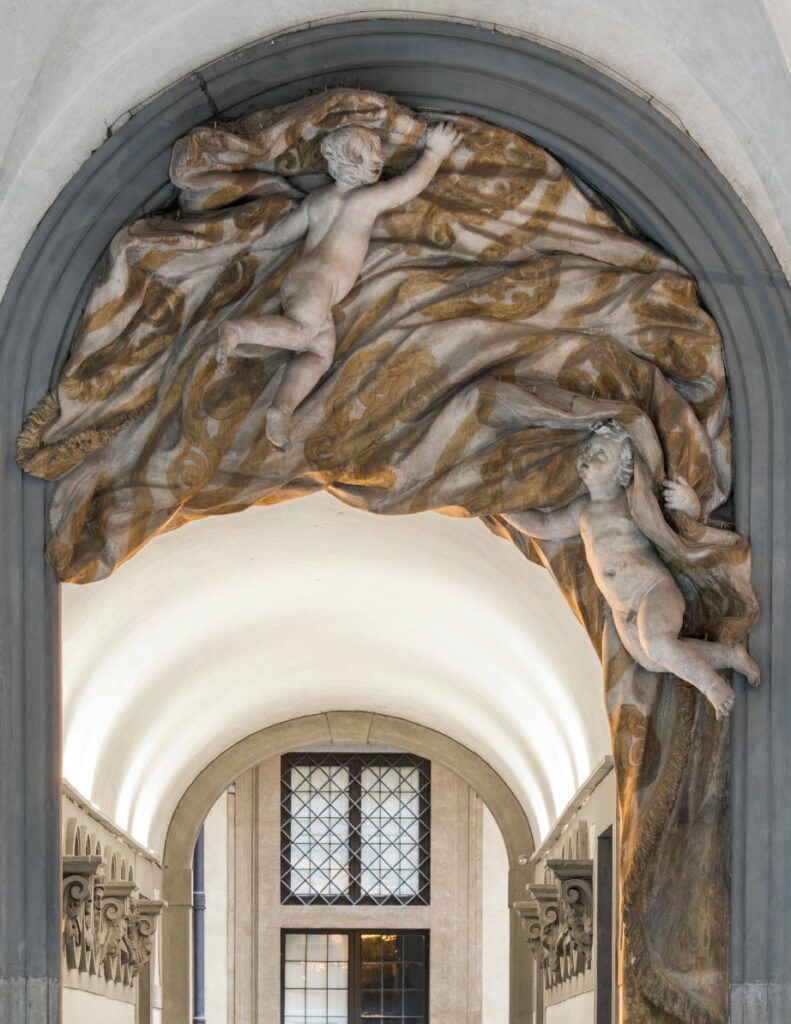
It is a rare opportunity to reveal the design, stylistic and technical stature of Giovan Battista Foggini, highlighting the sheer range of his work and the “signature” that set the tone in Florence. His lofty, grandiloquent style soon took hold here, admired by the Medici and by his contemporaries and imitated by younger practitioners, who found in him a brilliant master of an inventive imagination that was all but inexhaustible.
Through a selection of sculptures, drawings and objects, the exhibition retraces Foggini’s career: his training in Rome at the Accademia Medicea founded by Cosimo III de’ Medici, and, once back in Florence, his roles as grand-ducal sculptor, court architect and director of the Manifatture di Galleria (the grand-ducal workshops), which the prince devoted to producing marvellous objects of pietre dure (semi-precious hardstone inlay) and precious metals. His style — a late-Baroque language shaped by Roman art yet wholly original — defined the image of Florence in the late seventeenth century and served as a guide to the generations that followed.
The exhibition unfolds in thematic sections exploring sculpture in marble, bronze and terracotta, his work as architect and designer, his role in the production of objects in hardstone and precious metals, and his influence on monumental statuary.
Among the works on show, drawn from prestigious international collections, are loans from the Musée du Louvre in Paris, the Bayerisches Nationalmuseum in Munich, the Minneapolis Institute of Art, the Staatliche Kunstsammlungen in Dresden, the Gallerie degli Uffizi and the Museo Nazionale del Bargello in Florence, the Museo Poldi Pezzoli in Milan, the Istituto Centrale per la Grafica in Rome, the Gallerie Nazionali d’Arte Antica, Palazzo Corsini, also in Rome, and many private lenders.
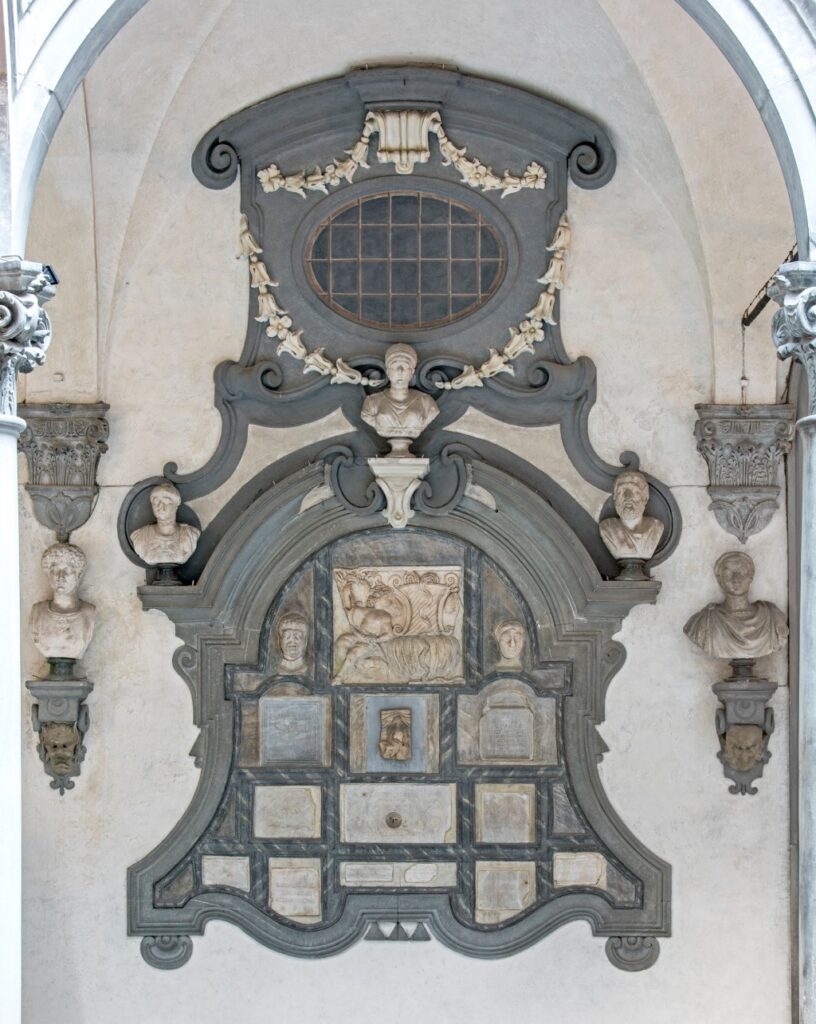
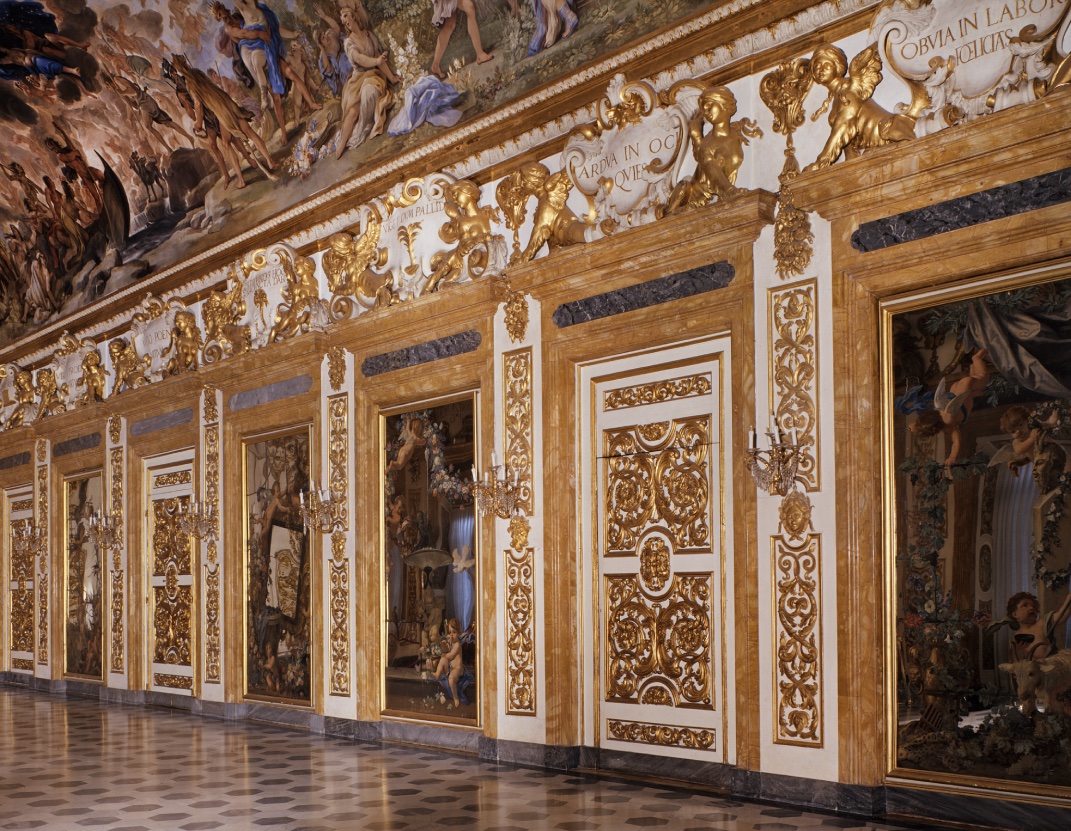
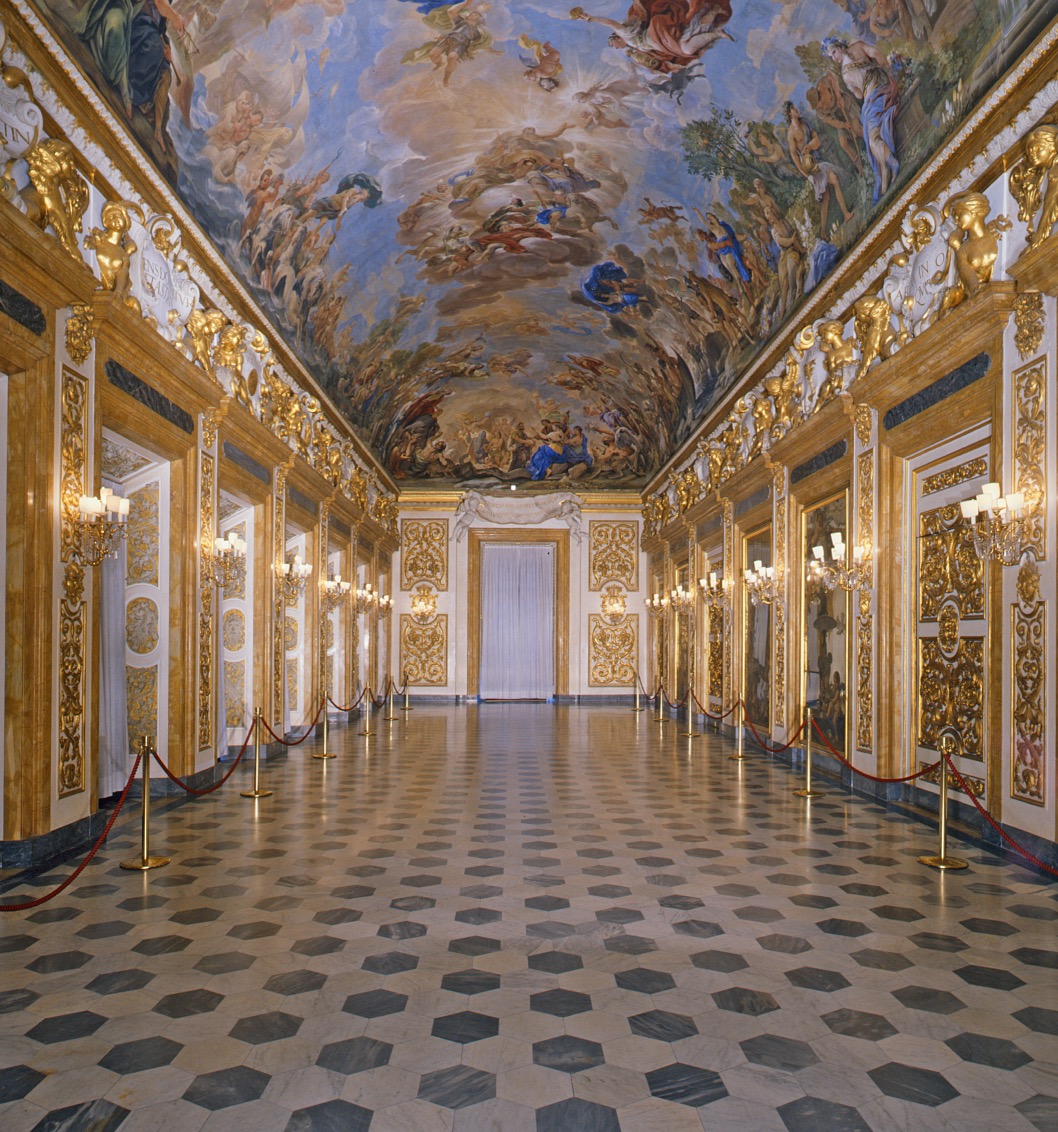
Palazzo Medici Riccardi, one of Florence’s emblematic sites and the first residence of the Medici family, is the ideal setting for this celebration, having housed over time some of the artist’s most significant work: his interventions for the Galleria degli Specchi, frescoed by Luca Giordano, and the adjoining rooms; the neighbouring Biblioteca Riccardiana; the antiquarian arrangement of the fifteenth-century courtyard; and the extension of the Michelozzo façade onto via Cavour.
The catalogue also takes in a selection of immovable works from the Gallerie degli Uffizi which, by agreement with the galleries’ management, could be identified within the museums by signage echoing the exhibition’s visual identity, making the connection clear.
Cover: © Antonio Quattrone — Luca Giordano Gallery, painted mirrors