Objects pass from hand to hand, cross seas, eras and cultural systems, taking on some meanings and shedding others. Their symbolic nature is not fixed: it depends on the context they are placed in, on the gaze of whoever looks at them and on the stories that travel with them.
It is from this idea that we can read the two new exhibitions at Centro Pecci in Prato. If Alex Ayed investigates matter through its history, the places it passes through and the relationships it has with the forms of power, Karen Kilimnik pulls objects and images out of their original context to bring them back into an entirely different aesthetic and narrative system. Two very different ways of relating to reality, matched by as many ways of inhabiting the exhibition space and its political dimension.
Alex Ayed. POMPAMAGNA – The Forms of Power
In The Count of Monte Cristo, Alexandre Dumas describes a Mediterranean in which the French, Italian and North African coasts belong to a single geographic and cultural space. A sea crossed by people, goods and stories, one that unites rather than divides. An image far removed from today’s Mediterranean, marked by national borders and deep inequalities in the freedom of movement.
It is from a particular vantage point on this geography that the latest work of Alex Ayed takes shape: a French-Tunisian artist born in Strasbourg in 1989, here at his first solo exhibition in an Italian institution.
In the years after the pandemic, Ayed decided to buy a boat and set off on a solo voyage from Sweden to Tunis, sailing along the coasts of France, Spain and Italy. Living at sea for a long stretch allowed him to observe, from an unusual angle, the organization of space founded on the idea of the nation-state, the one we move through every day, often without questioning its nature.
The journey thus becomes an experience of withdrawal. Withdrawal from the habits of life on dry land, but also from the dynamics of the art system, from its expectations and from the forms of control it can exert, especially on younger generations of artists. Seen this way, art becomes once again a chance to reimagine the world.
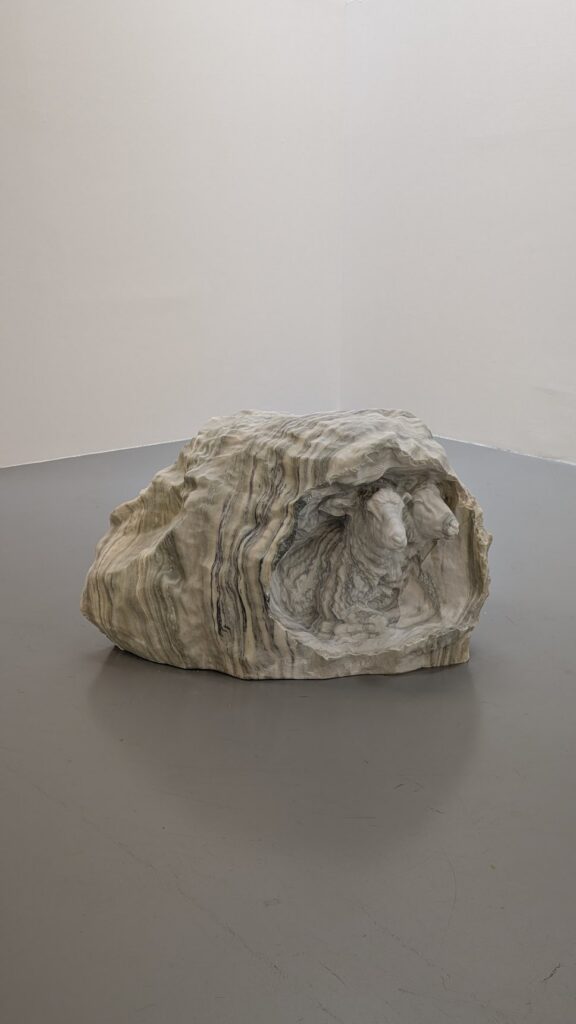
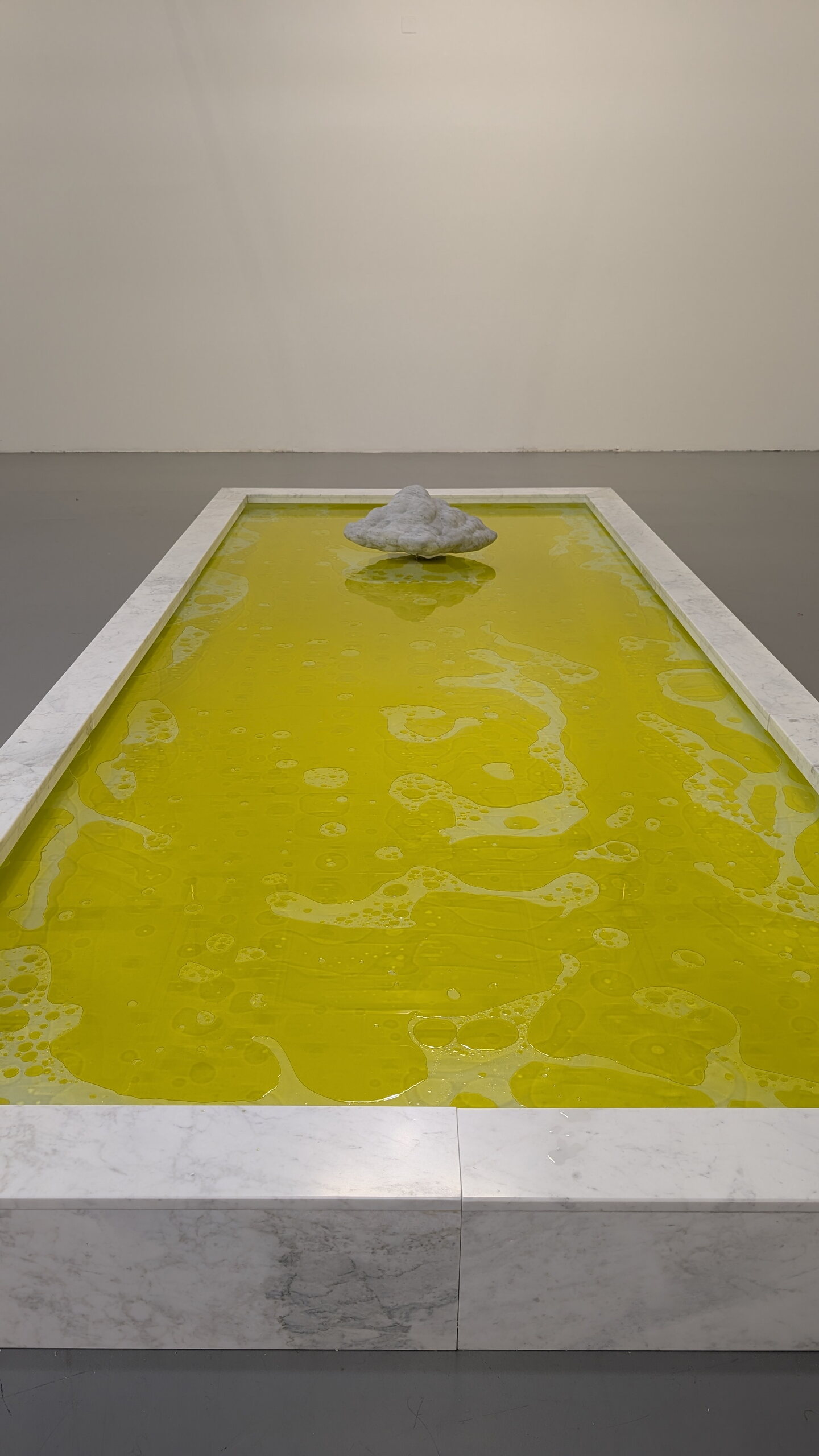
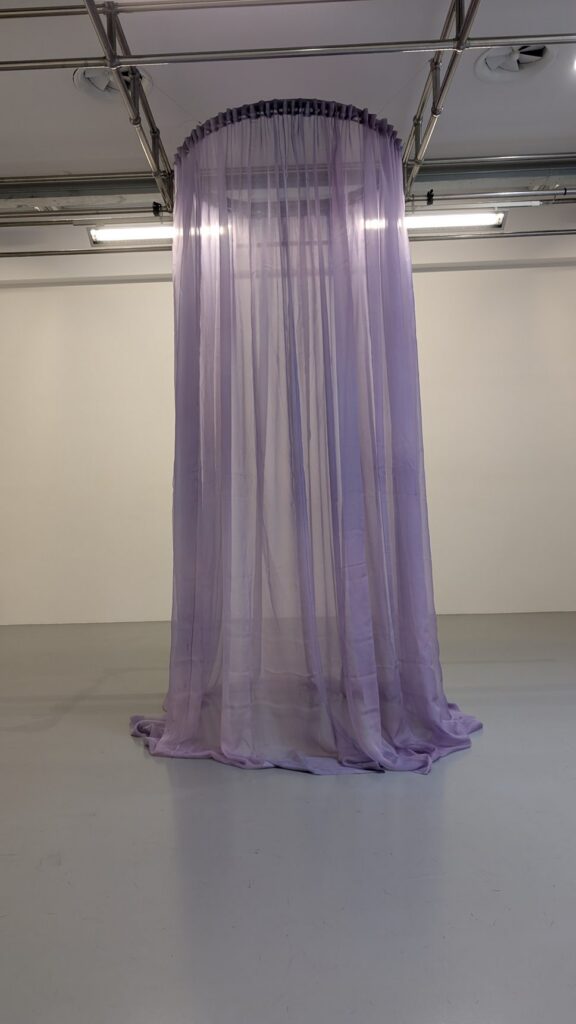
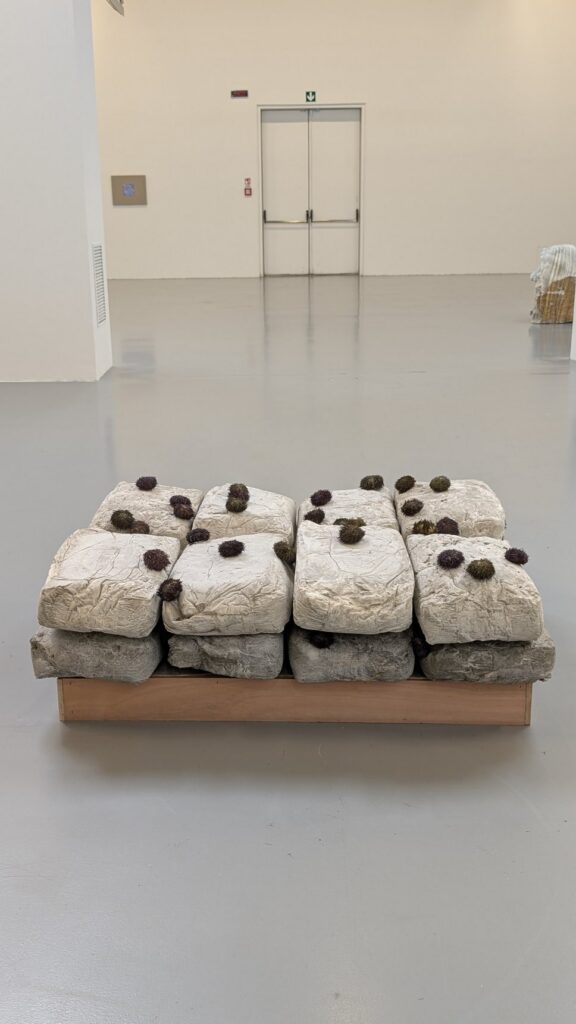
POMPAMAGNA, curated by Stefano Collicelli Cagol, is a reflection on the ways power dresses itself, represents itself and makes itself recognizable. An inquiry that runs through matter and, above all, through color. Coral, marble, cochineal, lapis lazuli, Tyrian purple: materials and pigments that tell of centuries of trade, craft knowledge, desire and display. Their rarity, the complexity of the processes needed to produce them and their preciousness made them, over the course of history, the means through which wealth, prestige and authority were shown. By studying colors and materials, Ayed seems to be trying to pin down the shades of power itself, questioning its ability to dazzle, seduce and assert its dominance.
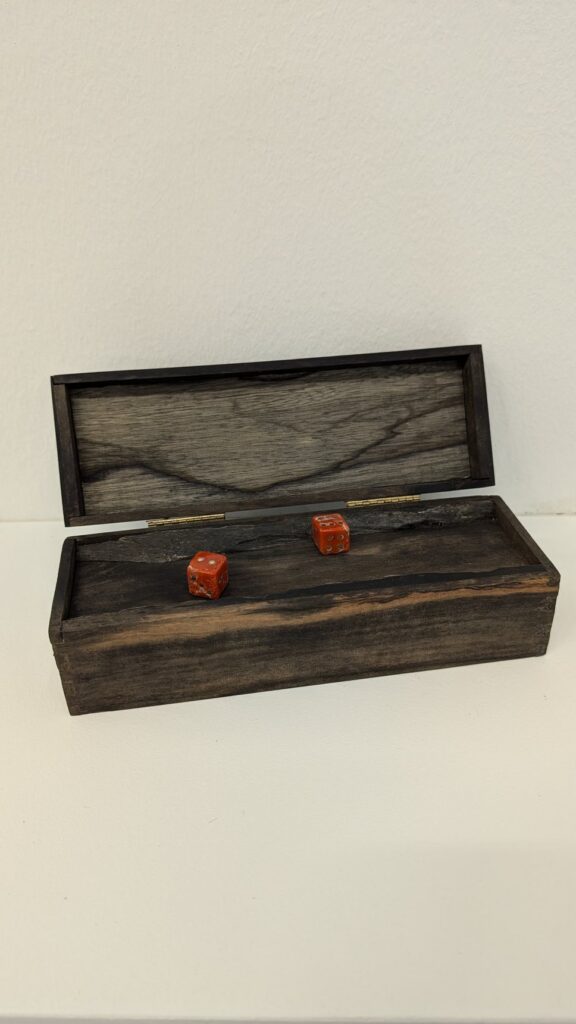
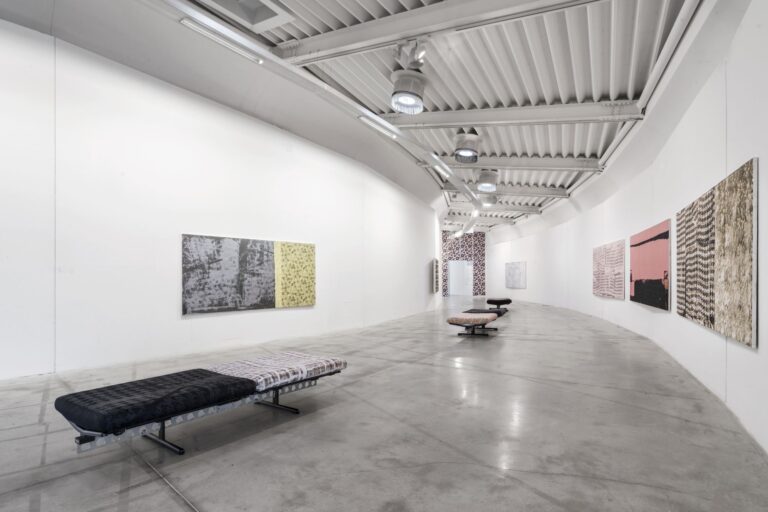
Against this dimension of display, however, the artist sets a refined, measured approach, far from visual overload. The works, made specifically for the spaces of Centro Pecci, create an exhibition ecosystem built on the alternation of full and empty, on the relationship between high-impact pieces and more minimal interventions. The installation thus recalls the experience of sailing, playing on the contrast between the physical presence of the objects, the vastness of the sea and the indeterminacy of the horizon.
Karen Kilimnik. ABRACADABRA – As If by Magic
If for Alex Ayed travel is a way to step outside the systems that represent reality, for Karen Kilimnik it is through magic that this same reality can be rewritten.
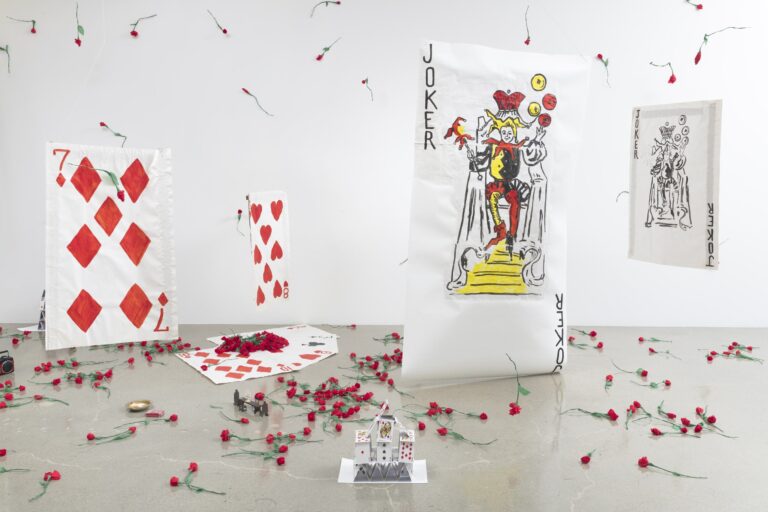
Thirty-four years after taking part in the group show Small Medium Large. Lifesize, Karen Kilimnik returns to Centro Pecci with a large solo exhibition bringing together more than one hundred works, from the 1980s to today, spanning over four decades of artistic research. From that first Prato experience in 1992 remains a work acquired by the museum, inspired by the British TV series The Avengers: oversized playing cards, suspended red roses and objects scattered across the floor make up an enigmatic scene in which theater and fairy tale intertwine.
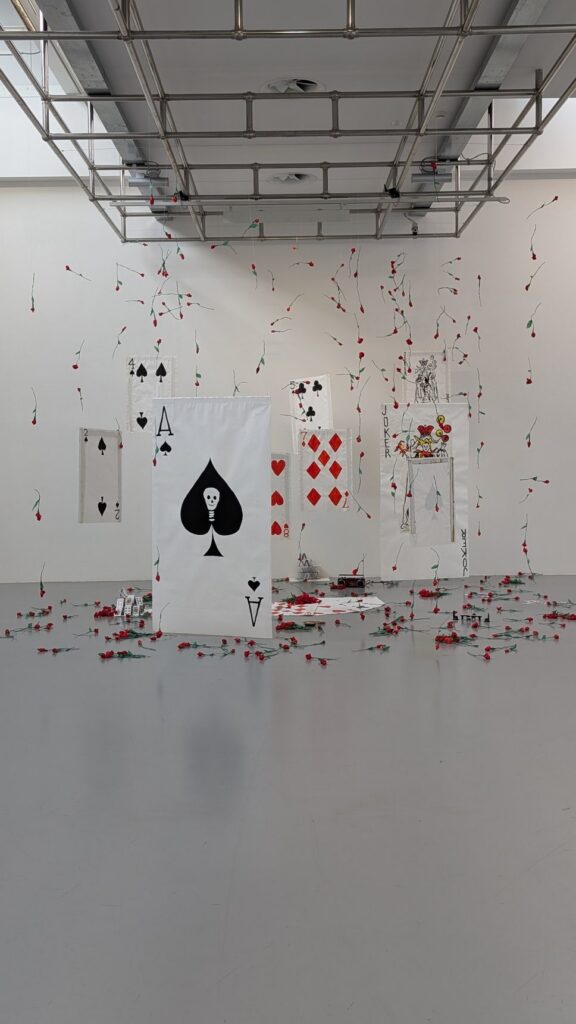
It is precisely this ability to transform everyday objects and place them inside new narratives that lies at the heart of ABRACADABRA, curated by Michele Bertolino and Stefano Collicelli Cagol, with exhibition design by Ibrahim Kombarji.
The possibility of transforming reality through the imagination is contained in the very title of the exhibition, Abracadabra, a magic formula that evokes the idea that what is spoken can come true. In Kilimnik’s work, words serve exactly this purpose: they give images new meanings and suggest possible stories. Starting from the same image, the artist can in fact build different works. What changes is the title, which opens up a narrative possibility that the visual representation only hints at.
In the same way, iconic figures from pop culture, fashion and show business are gradually stripped of their original identity, turning into characters in stories yet to be written.
Fairies, princesses, romantic landscapes, stage sets, TV characters and references to art history coexist in a universe where the line between reality and fiction gradually fades. One of the new productions on view belongs to this world too: a magic piano that plays excerpts from Mendelssohn’s A Midsummer Night’s Dream.
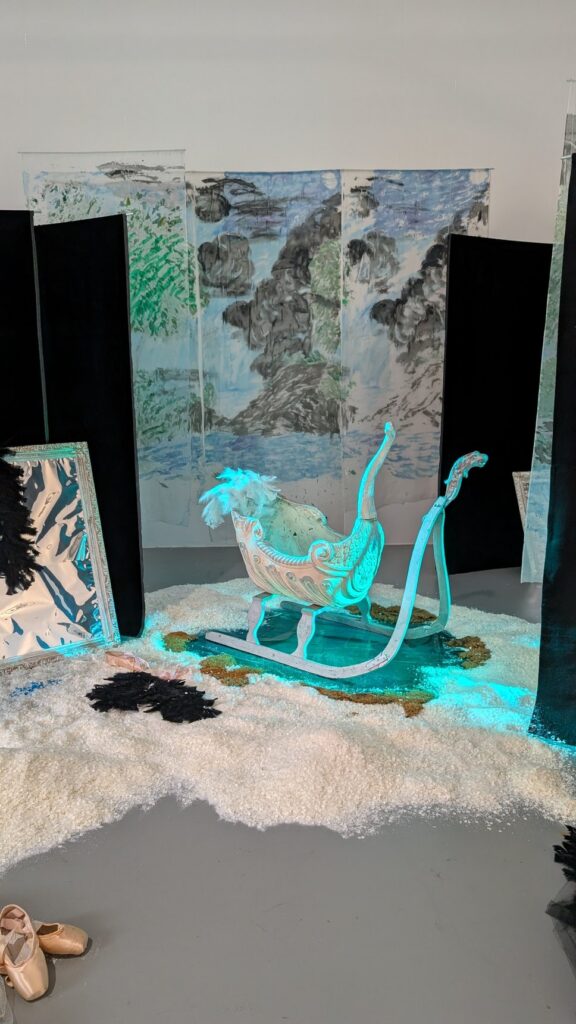
Yet it would be reductive to read Kilimnik’s work merely as an escape into fairy tale. Her aesthetic universe, made of glamour, romance, glitter and a touch of kitsch, takes on a particular resonance when seen in light of today’s cultural and political climate in the United States. At a time when the display of luxury and the spectacle of power are once again taking center stage in the American imagination — think of the plan for the new White House ballroom — Kilimnik’s work offers an interesting lens.
By lifting images and aesthetic codes out of the cultural systems that produced them, the artist reassembles them, alters their narrative proportions and makes us sense something that is off. The glossy, the fairy-tale and the seductive thus become tools for taking a critical look at how desires and collective imaginaries are built.
If Ayed questions the materials through which power makes itself visible, Kilimnik invites us to look at the images through which it can become desirable.
Visitor Information
POMPAMAGNA by Alex Ayed and ABRACADABRA by Karen Kilimnik are on view from November 21, 2026 to April 4, 2027 at the Centro per l’arte contemporanea Luigi Pecci in Prato.
Where: Viale della Repubblica 277, Prato.
Opening hours: Wednesday to Sunday, 10 a.m. to 7 p.m. (last entry at 6:30 p.m.). Closed Mondays and Tuesdays.
More information at centropecci.it.