Inside the 18th-century palazzo whose ground floor is home to the celebrated Enoteca Pinchiorri, holder of three Michelin stars, there’s also a hotel well worth discovering. It’s Palazzo Firenze by Baglioni Hotels & Resorts, which after six months of work is unveiling a new interior design project by Studio Marco Piva. The renovation refreshes the spaces without betraying the charm of the historic residence, weaving together architectural restoration, designer furniture and new atmospheres.
On via Ghibellina, in the Santa Croce neighborhood, Palazzo Jacometti Ciofi houses two separate businesses: on the ground floor, Enoteca Pinchiorri, one of the great names in Italian fine dining, and on the upper floors, Palazzo Firenze by Baglioni Hotels & Resorts. Two independent operations, with separate ownership and management, sharing the same historic setting. And it’s the hotel, not especially well known, partly because it has such a famous neighbor, that is now revealing a new look after a major renovation. Not to be confused with the other Baglioni property on piazza della Libertà: here we’re in the heart of Santa Croce, in a residence with a rather unusual history.
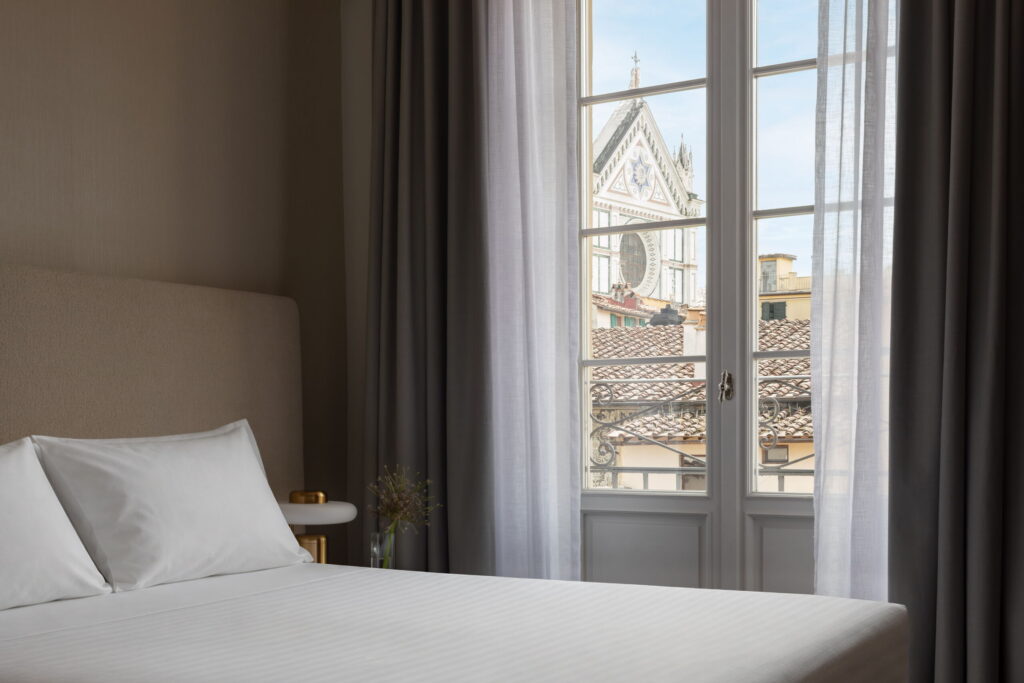
Built in the first half of the 18th century for the Marquis Giovanni Maria Baldinucci, treasurer to the Pope, the palazzo still retains the architectural and decorative features of its origins. Studio Marco Piva’s project started from precisely this heritage, taking in the common areas and the 24 rooms and suites. The challenge was to bring the spaces up to date without turning them into something else, steering clear of both the museum effect and an overly invasive makeover.
Marco Piva’s restyling, between the historic and the contemporary
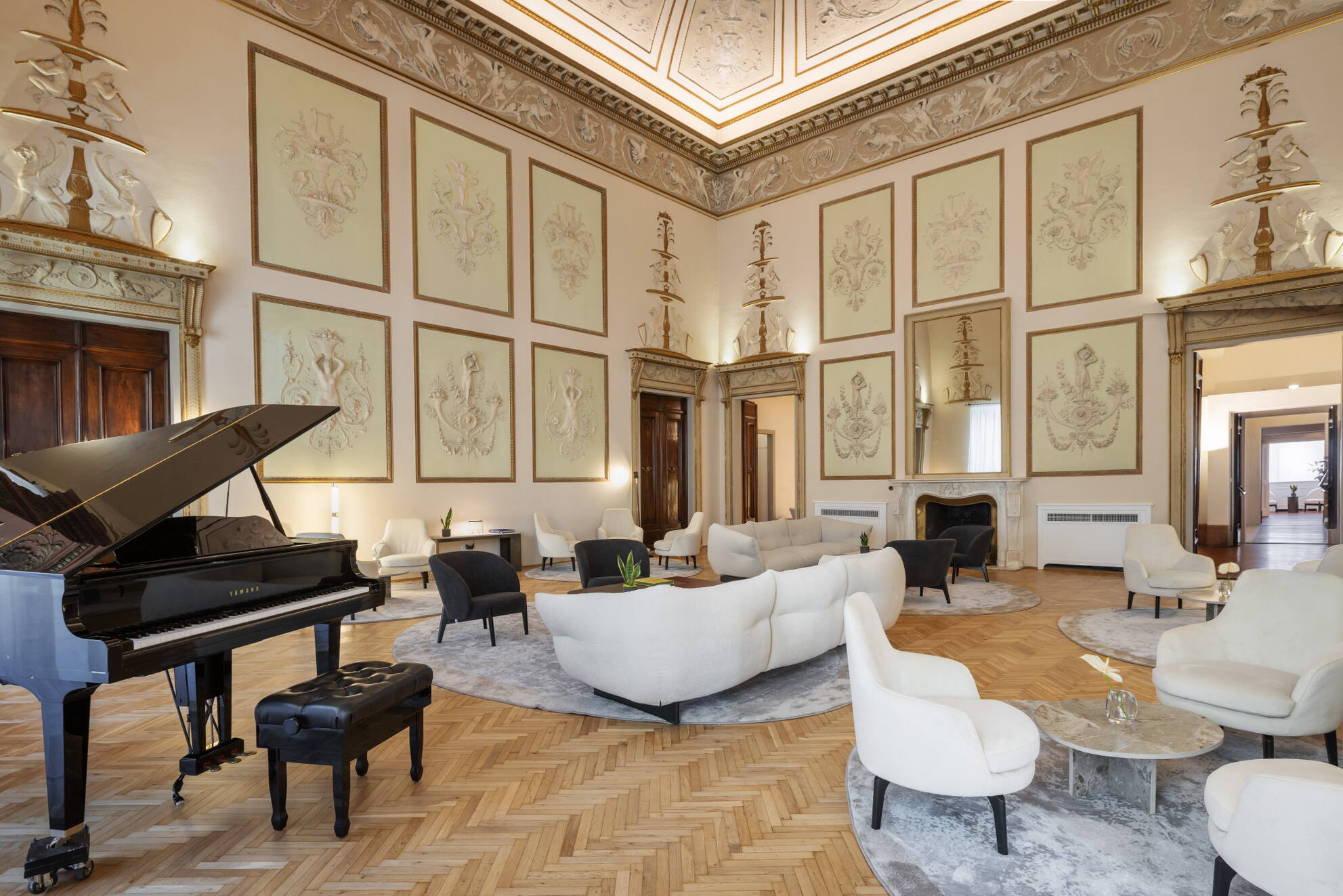
The chosen concept is “beauty by design”: a beauty meant to be lived in, built through details, materials and proportions. Frescoes, stucco work and original decorations remain center stage, but their relationship with the spaces shifts thanks to new color palettes, custom furniture and contemporary lighting.
The most interesting work is perhaps the restoration: doors, terracotta floors and original surfaces were restored and brought back to the fore in constant dialogue with the Soprintendenza, Italy’s heritage authority, as well as restorers and local craftspeople. The new materials, too, were calibrated to the existing decorations, seeking continuity rather than forced contrasts.
The project brings in some major names in Italian design. Rubelli handled the fabrics, Gessi the bathroom fittings and Cassina the seating and furniture. For the lighting, Flos lamps were chosen, including Noctambule and Coordinates, while the Da Verrazzano Suite features Baxter’s Isamu Stone marble table. Contemporary presences that don’t try to overpower the historic backdrop, but help make it feel more current.
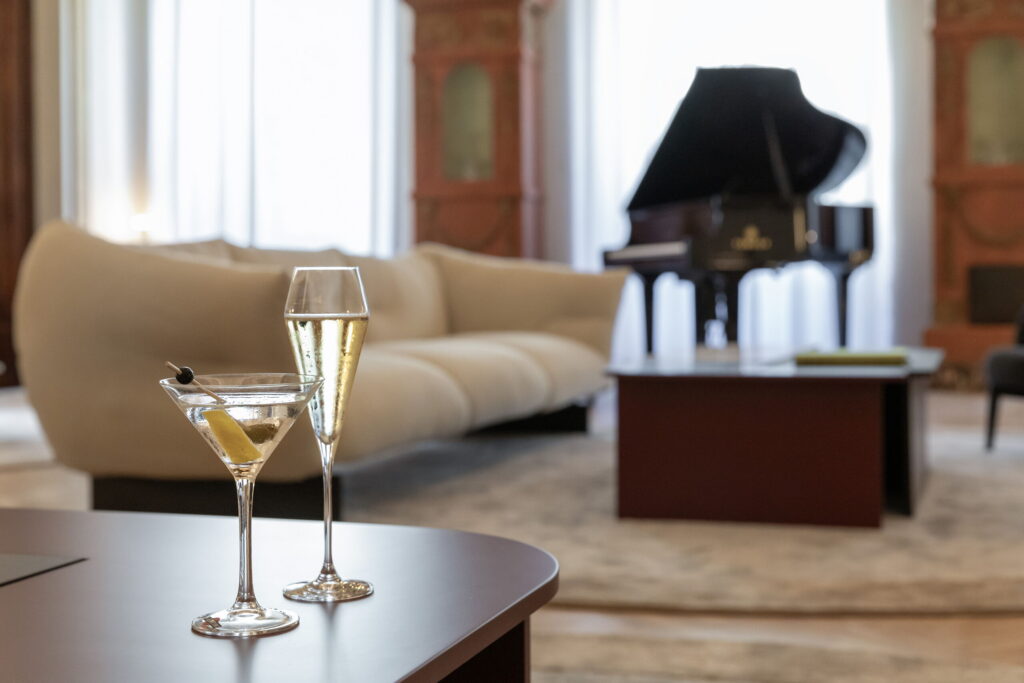
Among the common areas, the standout is the Sala della Musica, the Music Room, conceived as a small private theater. The niches meant to hold the musicians are hidden behind decorative panels, a device that keeps the room’s composition intact while letting it turn into a performance space when needed. Today it also hosts aperitivo concerts devoted to classical music and jazz.
The suites that tell Florence’s story
It’s in the rooms that the project takes on an even more personal character. The Signature Suites, on the upper floors, draw inspiration from figures and stories tied to the palazzo, turning historical references into color palettes, textures and furniture shapes.
The De Pepi Suite, at 91 square meters (about 980 sq ft), pays tribute to the Florentine family linked to the spice trade. Its tones echo the shades of pepper, while the geometry of the furniture evokes tools like mortars and grinders. Eighteenth-century frescoes and parquet floors complete a space where the past converses with a more contemporary aesthetic.
The Da Verrazzano Suite, at 168 square meters (about 1,800 sq ft), turns instead to the theme of travel and navigation. The palette moves between blue and ocher, surfaces take on texture and the lines of the furniture recall the movement of waves. Two large frescoed salons and a bedroom with a decorated coffered ceiling define its character, in homage to the explorer Giovanni da Verrazzano.
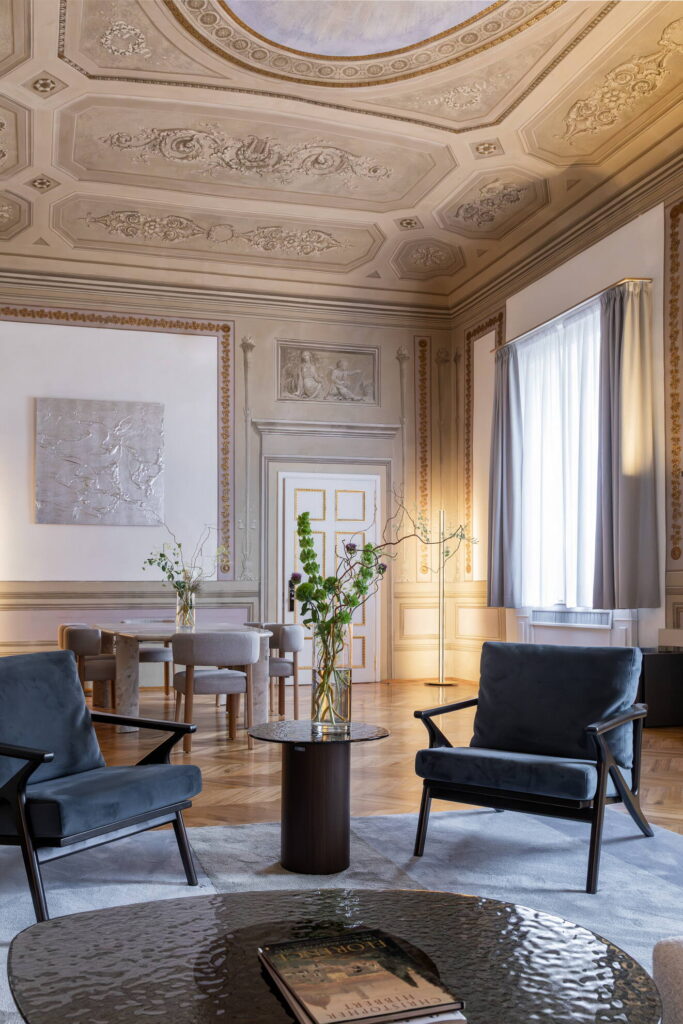
The two suites can be combined into the Santa Croce Royal Suite, a 260-square-meter apartment (about 2,800 sq ft) that takes up an entire floor and includes two bedrooms, en-suite bathrooms and three living rooms. An almost residential-scale option, designed for guests who want more privacy and generous spaces. Among the other accommodations, the Florentine Suite stands out for its bright rooms and the understated elegance of its furnishings, while the Junior Suite Terrace offers a private balcony overlooking the Basilica of Santa Croce.
Guelfi e Ghibellini, the hotel’s other restaurant
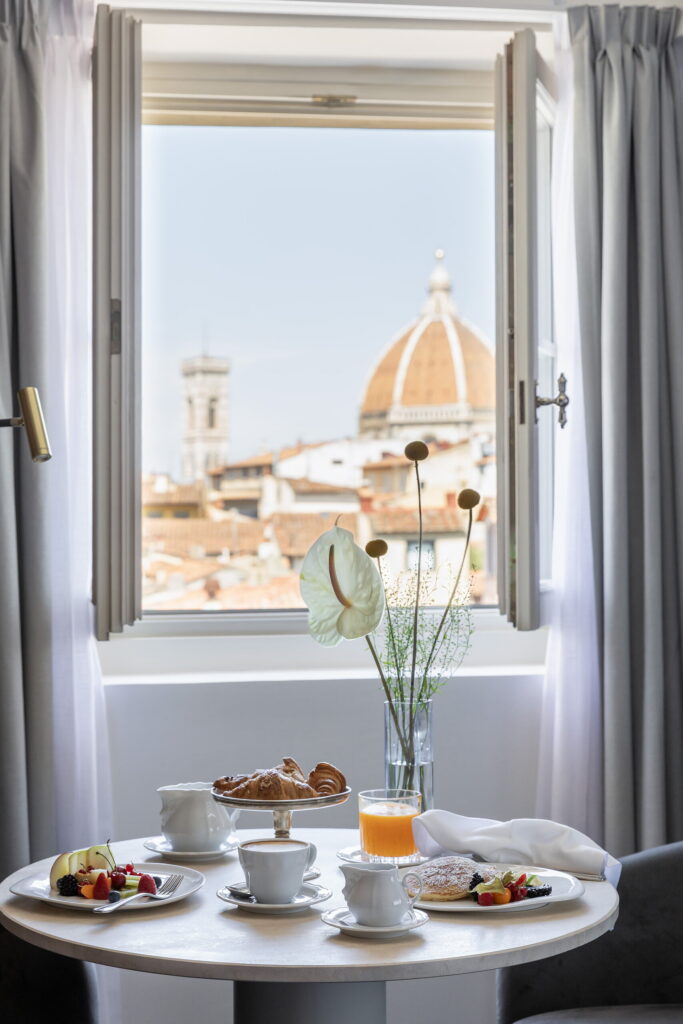
The renovation extends to the dining side too, with Guelfi e Ghibellini, named after the rival factions of medieval Florence: the restaurant and bar one floor up, which, to be clear, has nothing to do with Pinchiorri and serves as the hotel’s in-house restaurant. Between frescoed ceilings and contemporary furniture, the room keeps an intimate, elegant atmosphere. The offering follows the different moments of the day, from breakfast, with fresh pastries, seasonal fruit and local products, through to lunch and dinner.
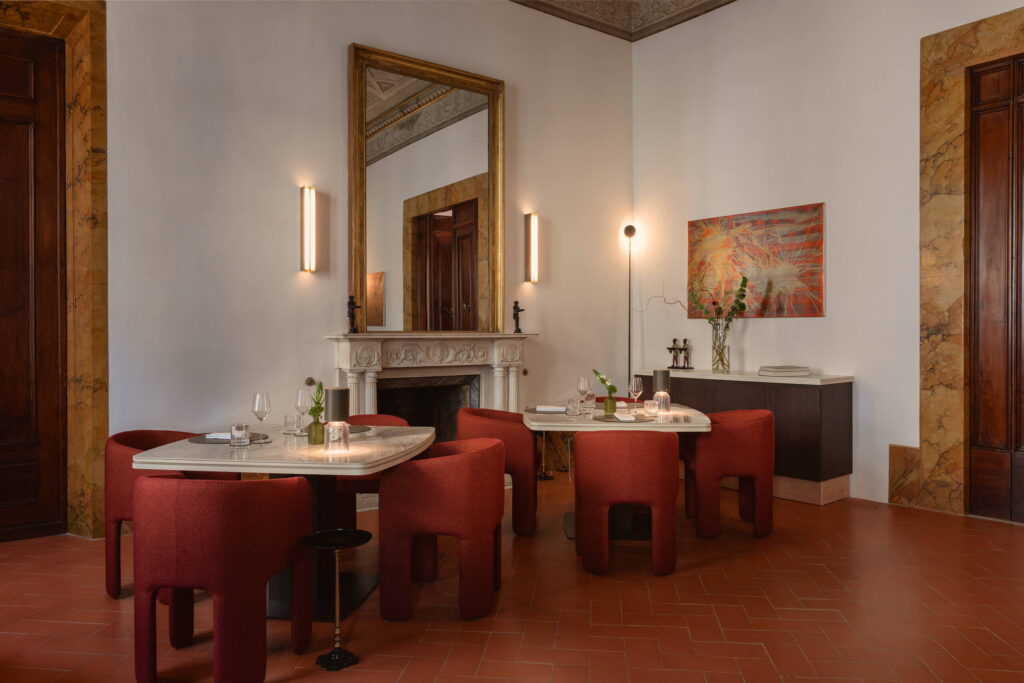
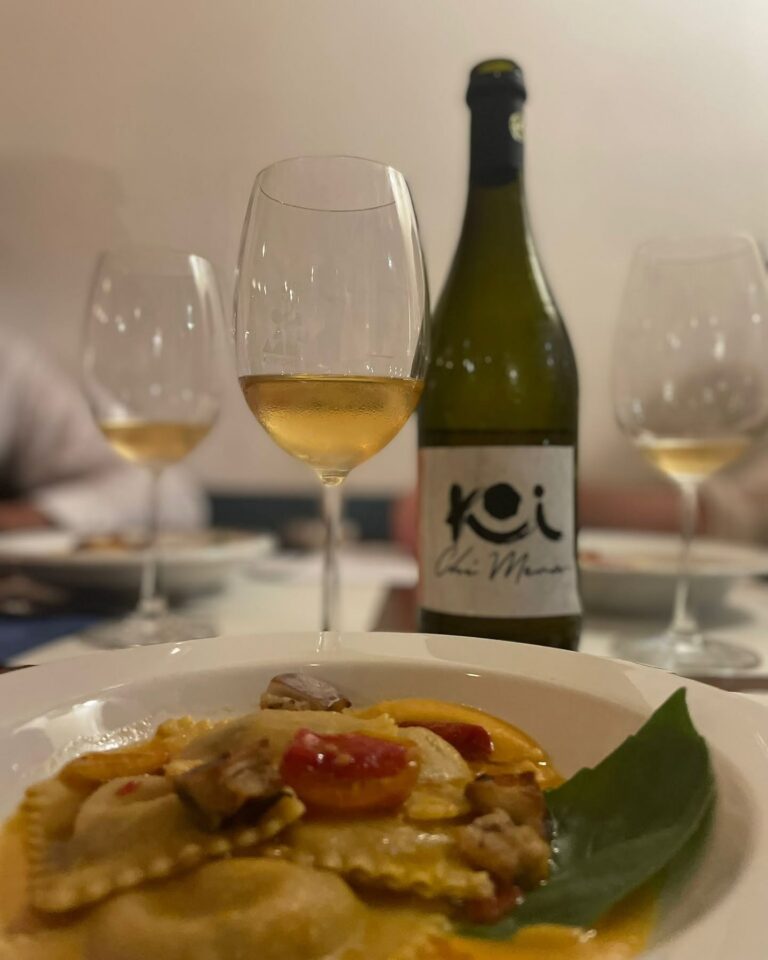
In the kitchen is chef Antonino Pepe, who interprets Tuscan tradition through local, seasonal ingredients, contemporary techniques and a Mediterranean sensibility. The menu also includes vegetarian, vegan and gluten-free options, while the wine list showcases Tuscan and Italian labels alongside a selection of Champagnes. There are plenty of Florentine touches, like the homemade raviolini filled with lampredotto, the city’s signature tripe, served in beef broth, but there’s room for seafood too: from citrus-marinated salmon trout with its roe, lime gel, beet and horseradish yogurt as a starter, to fillet of dentex with saffron sauce and a seasonal-vegetable giardiniera as a main.
Guelfi e Ghibellini is also worth keeping in mind for an aperitivo: the hotel’s cocktail bar serves classic and contemporary cocktails, liqueurs, spirits and a selection of light bites. A convivial side that rounds out the Palazzo Firenze project, where the recent restyling doesn’t stop at refreshing the interiors but breathes new life into the whole hotel experience, opening it up to outside guests too (Florentines first and foremost).