Alberto Ruce, Between Street Art and Symbolist Painting
Alberto Ruce, born in 1988, is an urban artist and painter — Sicilian by birth, but for the past few years based in Marsiglia (Marseille), where he has opened his studio. There he works on a range of projects that let him weave a bond between France and Italy. We first met him last year, on the occasion of the first contemporary-art exhibition of the future Museo Sant’Orsola — which will make its home from 2025 in the ancient convent of the same name — held ahead of the official opening, which will take place only once the complex has been fully restored.
The exhibition that reopened the doors of Sant’Orsola, inaccessible for decades, presented the results of the research of two young contemporary artists: Sophia Kisielewska-Dunbar and Alberto Ruce, who created a singular project inspired by the history of the site, living and working in Florence for a time.
We at FUL were there, and we came away struck by Alberto’s work — by his technique as much as by his poetics — so we decided to meet him and ask a few questions to learn more about him and his practice, while we wait to see him at work again in the Tuscan capital.
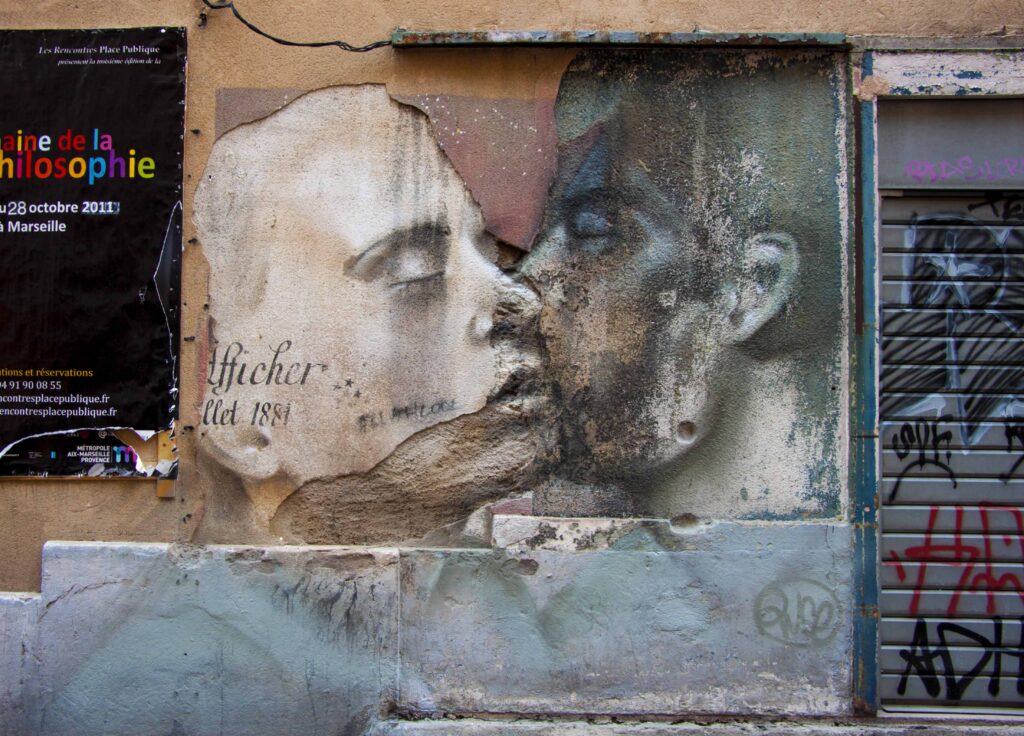
You started out as a teenager, coming to art through spray cans and tagging, then continued self-taught, measuring yourself above all against graffiti writers, and only later took up more academic study at the Atelier des Beaux-Arts de Paris. Can you tell us more about your artistic training?
More than an artistic training, I’d describe my path so far as an evolution. Ever since I was a teenager the hip-hop world fascinated me, and I had fun with lettering. Then I discovered graffiti, which was my very first testing ground. I decided to make my first piece at around thirteen, in middle school; one day someone painted on the walls of my school, and in that moment graffiti and wall works went from the ordinary urban scenery I was used to seeing around the city to something that burst straight into my daily life. Soon after, I met the author of that piece, who explained the first notions of graffiti to me and took me along to make my first spray piece.
From that moment my exploration began, along with an unstoppable urge to paint. So I set out in search of “my own kind,” eventually getting to know the most important writers in Catania and taking part in regional jams. On those occasions, watching the writers paint, I learned the techniques, comparing notes with them about my own work. Then in 2009 I moved to Paris, where I lived for five years, and I started frequenting squats where artists painted, as they did on the “free-expression walls,” and I began to discover a far broader expressive world — no longer just tagging or lettering.
By then I already treated the letter as if it were an object, exploiting its three-dimensionality and studying its light and shadow, and I felt a growing need to deepen my study of painting. So I decided to take the drawing, painting and perspective courses at the Atelier des Beaux-Arts, learning the basic techniques to achieve what I had in mind — structuring and developing an idea and a project properly, building a picture out of many sketches and learning the foundations of painterly craft.
It was then that my work began to drift toward a cartoon, comic-book style, until I moved on to the truly figurative — landscapes and portraits — and started really exploring. This continuous evolution carries on to this day, as I try more and more to pin down my own style, faithful to the memento left to me by the hip-hop world.
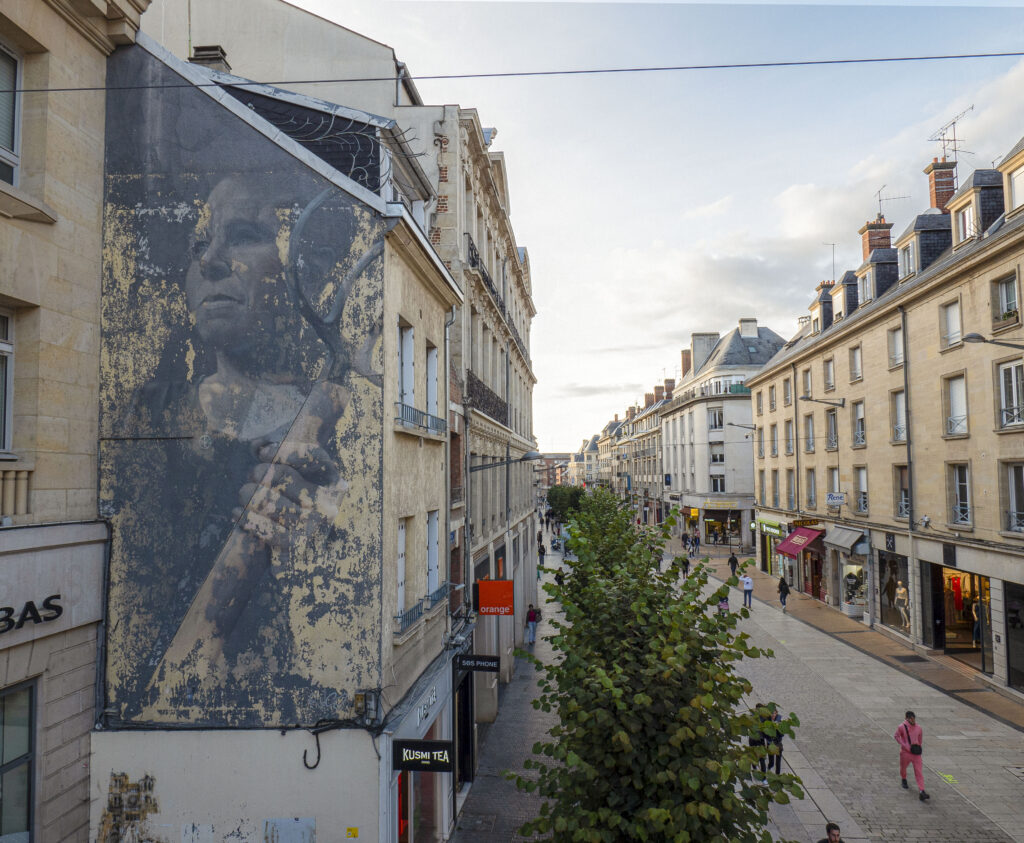
You currently divide your time between interventions in the urban fabric and studio painting. Is there a side of your work that reflects you more than the other? And how does your technical approach change on a wall versus on canvas?
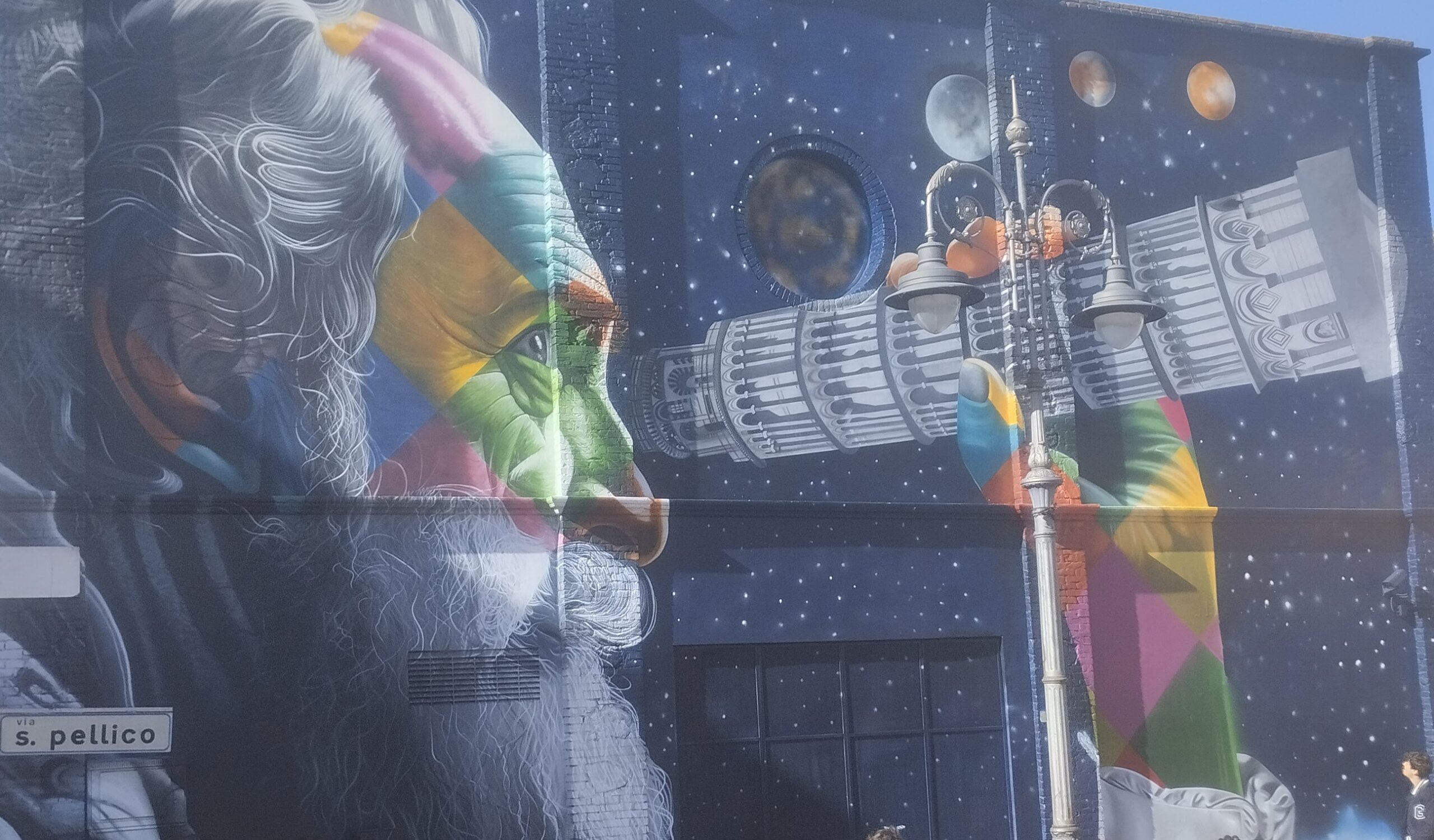
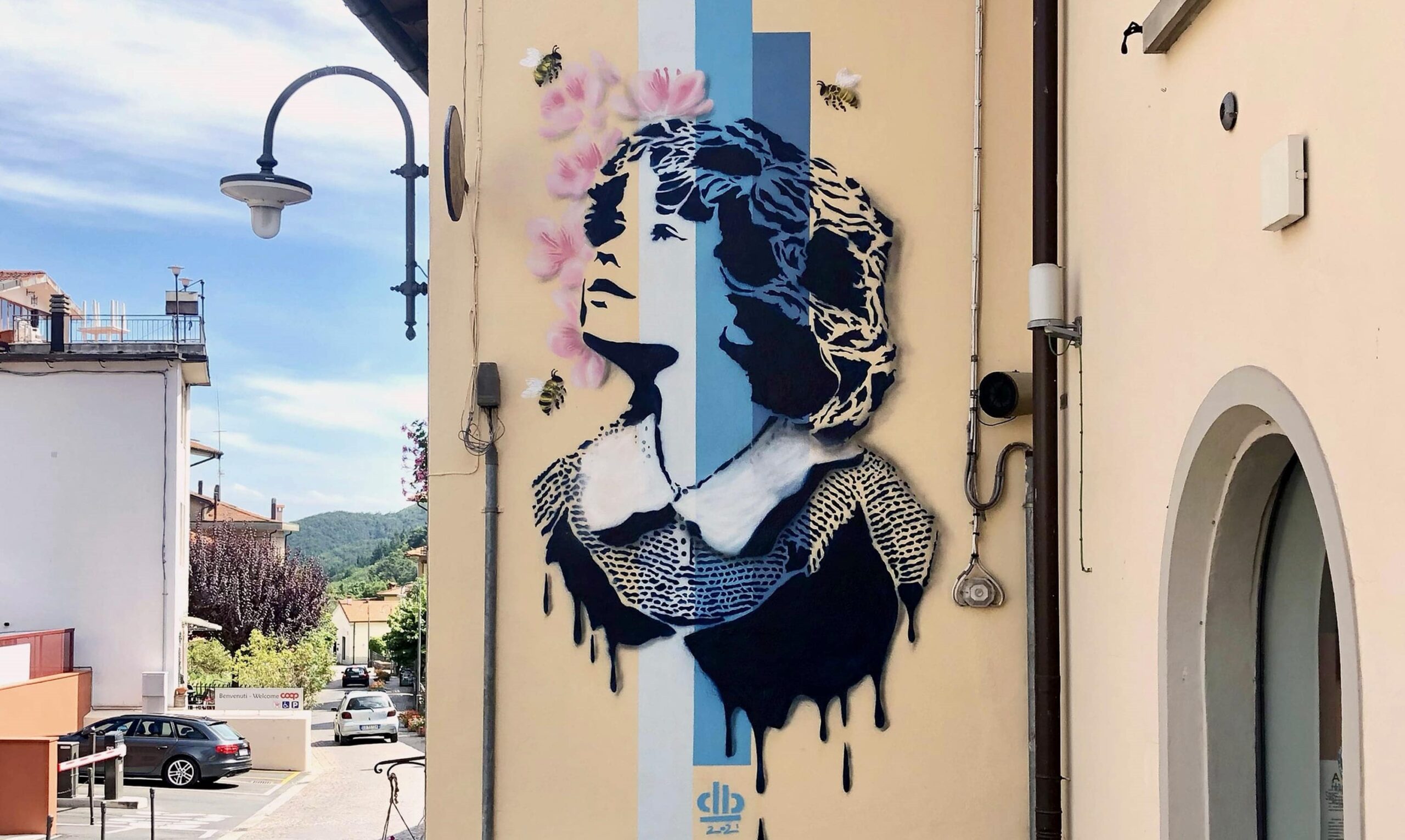
Essentially, I always prefer walls; that’s where I come from, it’s my comfort zone, and it’s there that I best find the meaning of what I do. When I work in the street I come face to face at once with people’s reactions, and I feel a responsibility toward them, because in that moment they have no choice — they simply run into my work; so I feel I have to do it for them too, and not only for my own need to express myself.
What’s more, I believe it’s a social project, a work made with and for the community of the particular neighborhood where I intervene. That’s where my satisfaction lies — in finding that exchange and seeing people’s reactions. Work on canvas, on the other hand, can happen for other reasons: many things were born on the urban fabric and then I brought them into the studio, to leave a trace and a record of the style and work of that particular moment, since sooner or later they’ll disappear from the wall. Other times I do the reverse, going from canvas to wall — and that’s when I’m developing a more complex project, one where I can’t be as fleeting as when I act directly on the wall and I need more planning, though it’s much rarer.
Take the project 4′33″, for example: the title of this series is inspired by the piece by musician John Cage, who in 1952 composed a work of four minutes and thirty-three seconds of absolute silence. Inspired by that piece and by the concept of emptiness — created to listen to everything around us — between 2013 and 2017 I made a series of paintings on canvas and wood using various media, mainly spray and acrylic paint, in a single white monochrome, constantly seeking the balance between what we see and what we don’t perceive, pushing myself toward the threshold of optical perception: the point when an image seems not to exist, and the moment it suddenly becomes perceptible.
Are there themes especially close to your heart that recur in your work?
The main drive behind my painting is always to bear witness to something that speaks to me, that moves me. I always choose the subject and theme of my works, or of a given series, starting from something I’m emotionally attached to. I favor empathetic, poetic, nostalgic themes; I love talking about feelings, about concepts that go beyond the concrete and the tangible, such as politics. In that sense I feel very far from the notion of the political street artist that Banksy embodies; I feel more like a painterly artist, and I use symbolism, not slogans — with all due respect, of course, to those who do.
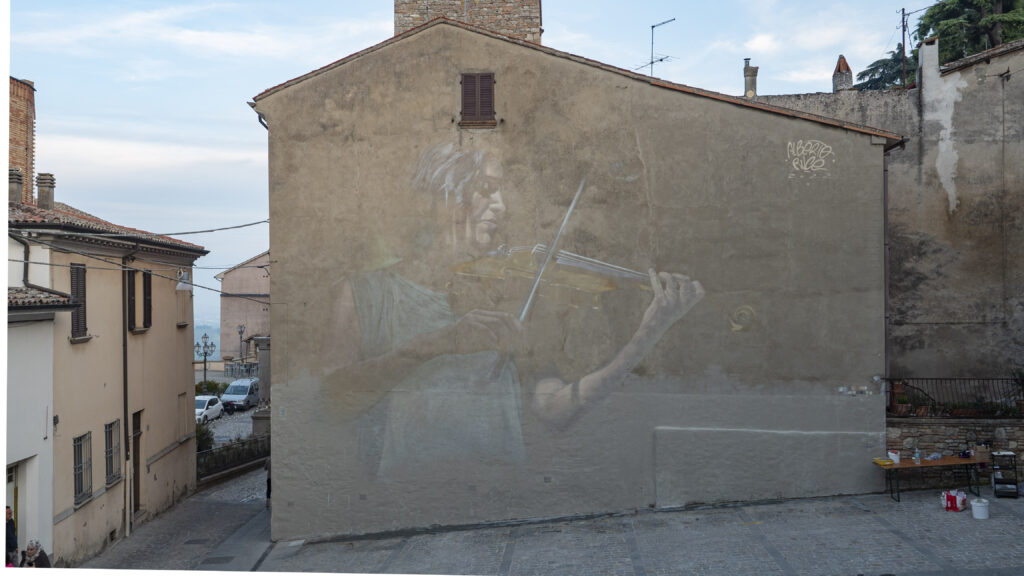
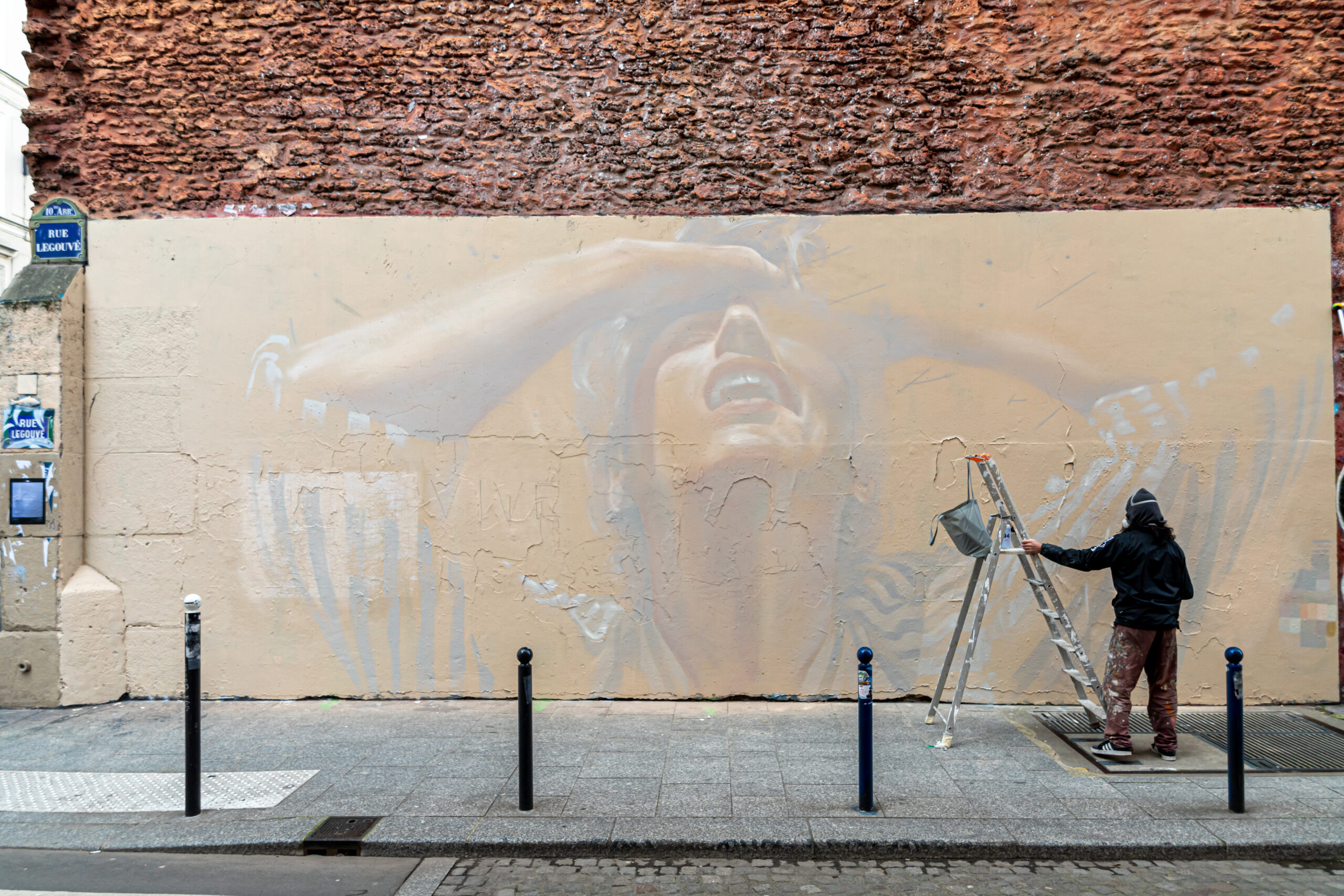
Your style is very distinctive and instantly recognizable. Your works, painted tone on tone in shades of white and gray, are ephemeral and light, and seem to surface delicately, almost rising to the top. The final effect resembles a preparatory sinopia, with all the detail and precision of a finished fresco. Can you explain your technique and how you achieve this effect?
One of the most important things for me is the color palette, so there’s a great deal of study behind the tones I use — whether acrylic, oil or spray — and I do a lot of work to gauge how contrasting a color is, even using Photoshop to test the final effect. On large scales, moreover, I always paint with spray, so time too is one of my tools: the spraying, and the color’s settling time — when and how it deposits and “appears” on the surface. I make no preparatory drawing; I paint as if I were a sculptor: from the flat white wall I have to draw out three-dimensionality, adding and removing the base color, leaving some parts exposed and others as if they were held back.
I paint color by color, layer by layer, bringing some areas into relief, creating glazes of color. In the final stage, sometimes and only in certain pieces, I even erase the work, applying paint over it — not definitively and absolutely, of course, but trying to achieve an effect of semi-transparency as the paint dries. That act is beautiful to me because it represents the element of the unexpected that I can’t fully control. It reminds me not to let technique prevail over emotion, not to feel like an automaton in full command of what it does, a mere decorator — because it’s in the sudden and the unforeseen that we find art.
From March to May 2023 you took part in the Museo Effimero project at Sant’Orsola. Can you tell us about this Florence project?
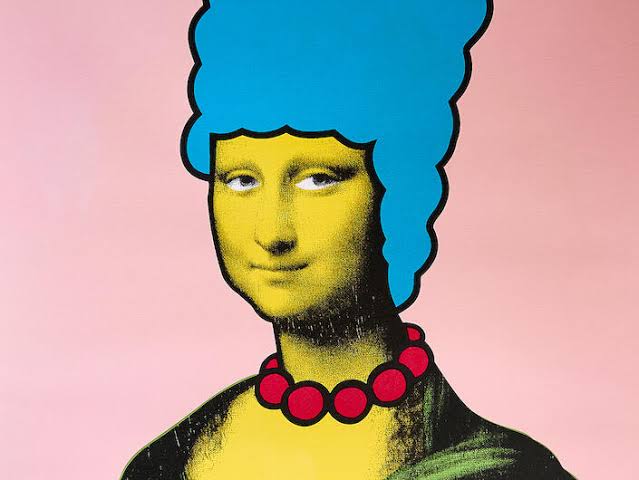
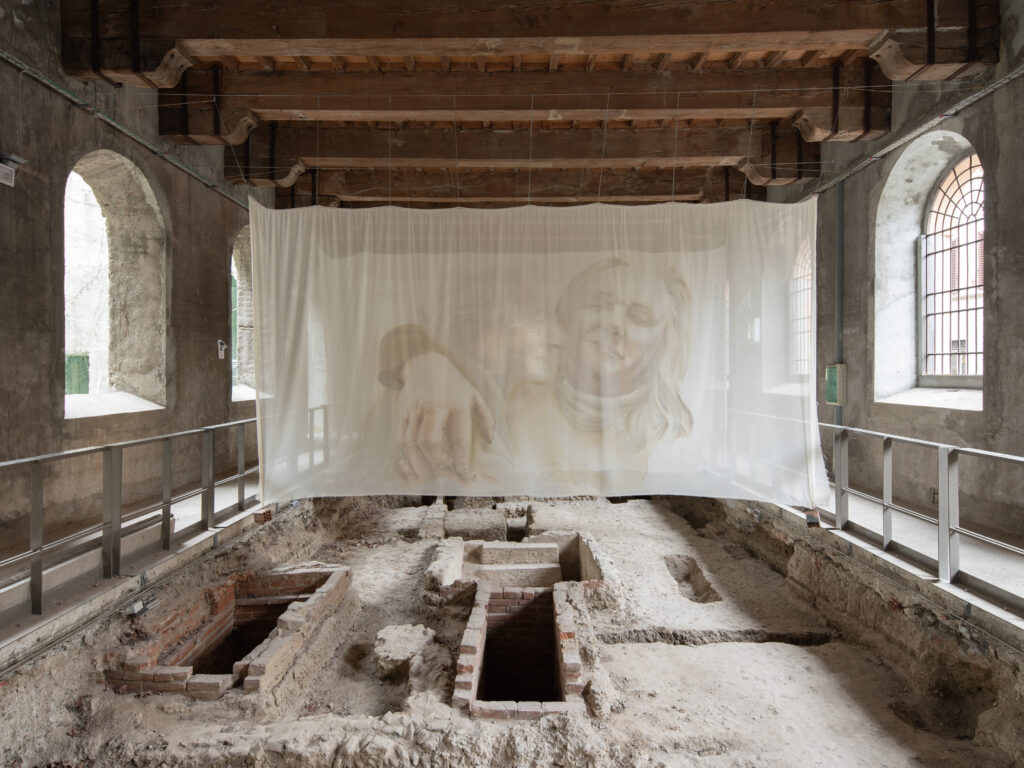
For that project I spent a long time looking for the right subject and researching Sant’Orsola, also in an attempt to blend into the urban fabric and the people who live there, so that they would take in my finished works as their own. The project, titled Al di là di tutto (“Beyond Everything”), unfolded across two spaces: the old conventual church and the former apothecary. Connecting to the different functions of these spaces, I chose the old church to create an installation inspired by the story of Lisa Gherardini, the presumed model for Leonardo da Vinci’s Mona Lisa, who spent the last years of her life in the convent of Sant’Orsola, together with her daughter, who was a nun there. Of the various leads I found, I chose to speak precisely about the Mona Lisa because to me she is the very emblem of painting, and that is what I wanted to pay homage to, using her as a symbol.
There was also a deeply emotional, sentimental side to the work: for this piece I chose as models two women, mother and daughter, who live in the Sant’Orsola neighborhood and work at the San Lorenzo market. It was a way to connect past and present, creating a deep and lasting bond that ties a historic place to today’s collective memory. I really enjoyed meeting people because, as I said, the social dimension of my work is fundamental to me. For that same project I also worked with Rocco Spina, a sculpture professor at the Accademia, who helped me make a mold to cast keys in wax — a material I experimented with to match the ephemeral essence of the project, being changeable and metamorphic, just like the spaces of Sant’Orsola under restoration.
What do you make of the contemporary art scene in the “cradle of the Renaissance”?
Living abroad, I can tell you that Florence and its culture are a universal language, something truly known the world over, and as an Italian it makes me proud that all these people know it and want to visit; at the same time, I’ve also had the sense that Florence is genuinely overrun by tourists and that a great deal else is being lost. Here in France, for instance, there’s a huge investment underway in the contemporary sector, and in street art in particular.
Florence needs to realize that contemporary art today is in the street, and that it’s losing a great deal by not engaging with this ever-growing sector. Street art in Florence is confined to the edges of the historic center, but if it were brought into the heart of the city, its role as the “cradle of the Renaissance” would hardly be compromised. On the contrary — drawing on its very glorious past, the Tuscan capital could turn out any number of artists and talents in the contemporary field too. Instead, my sense is that it isn’t concerned with offering fresh stimulus to the coming generation of artists who study there or come to visit.
Can you tell us about a past project you’re especially attached to? And what about future ones?
In a way the two answers coincide: right now I have a solo show running on a project I hold especially dear, begun in 2018. It’s Transumanze (“Transhumance”), a body of work born after I moved to the south of France, as I tried to rebuild a bond with my native land, Sicily, rich in rural customs and origins. In that moment I realized I was part of a global movement of micro-migration, and so I tried to represent this theme through a parallel with images of animal transhumance — a simile that points back to a world at risk of vanishing.
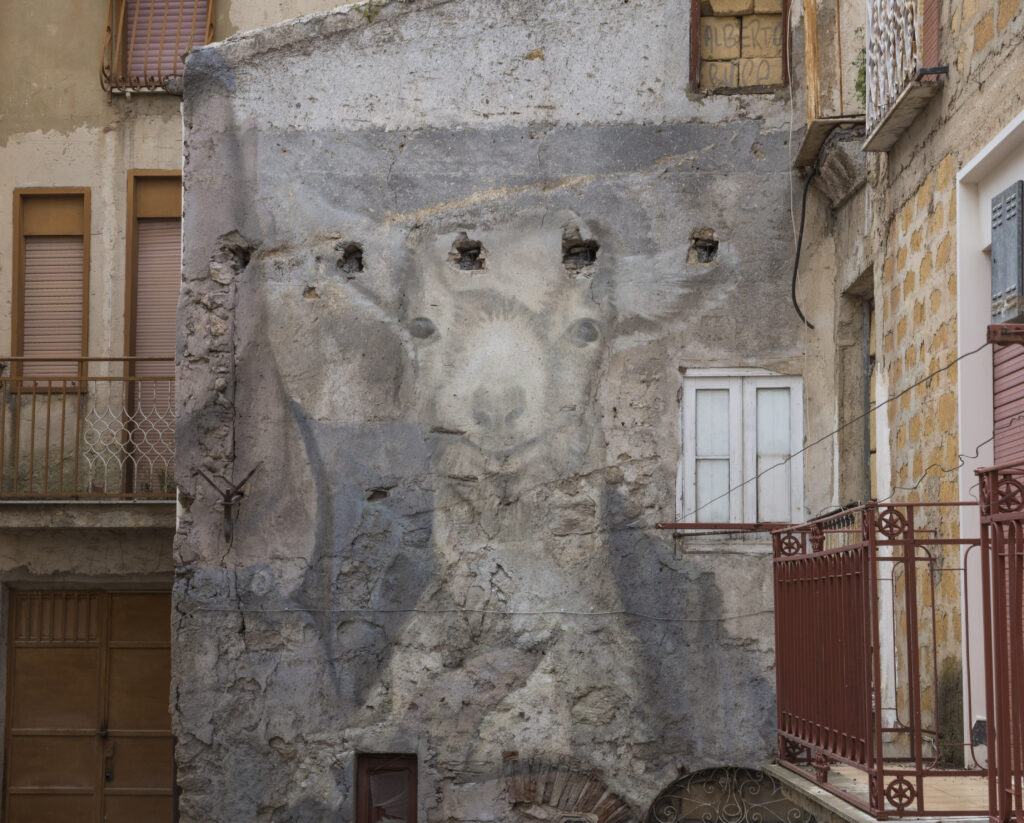
The images that feed this artistic research have been gathered over the years in small villages in Italy and France, coming into contact with local associations and the marginal, native realities of the places where I usually found myself painting my murals. Over several years of work I’ve carried out various interventions in Sicilian villages threatened by depopulation, as well as in small towns and major European cities, to raise people’s awareness of the issue.
Photos courtesy of Alberto Ruce