As the year winds down, right on cue with the holiday feasts and the New Year’s resolutions, the horoscopes arrive. Some people read them with total conviction, others pretend not to care and sneak a look anyway: after all, a quick peek at what the future has in store is a temptation few can resist.
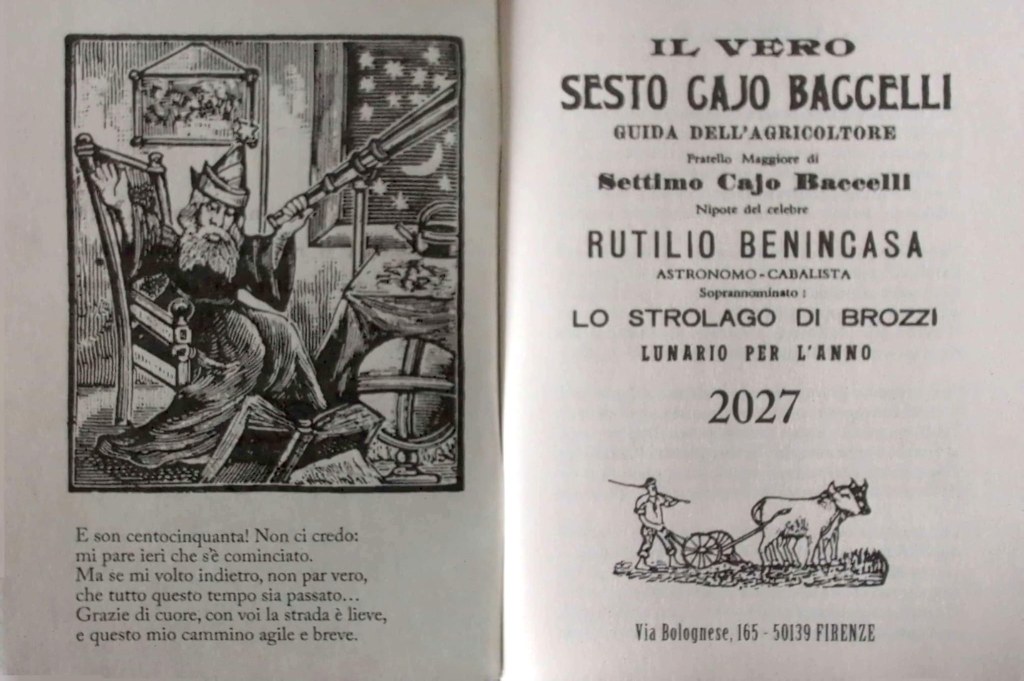
But not everyone knows that Florence has its own astrologer. Or rather, it already had one four hundred years ago. His name was Sesto Cajo Baccelli, known to everyone as the Strolago di Brozzi (the Stargazer of Brozzi), and he is the godfather of one of the best-kept (and best-loved) secrets of Tuscan tradition: a small almanac with a sky-blue cover that, with its 2027 edition, reaches the remarkable milestone of 150 years in print.
Don’t expect the usual glossy-magazine horoscope. This is a genuine survival guide for farmers: an unmissable ritual that, for generations of Florentines, has opened the door to the new year.
Who Was the Strolago di Brozzi?
To get to know Sesto Cajo Baccelli, you have to go back to 17th-century Florence, though not the Florence of grand palazzi and noble families, but rather the one of the villages and countryside that surrounded the city.
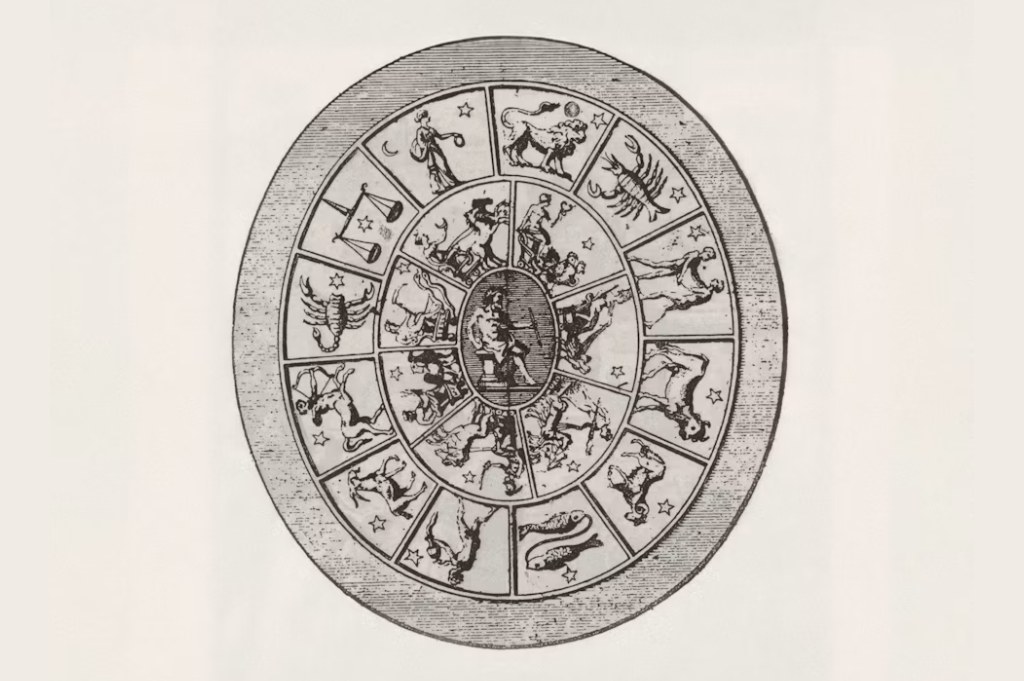
Baccelli was born and lived in Brozzi, which at the time was an independent village just outside the city gates. History has left us very little about him, and what we know of his life comes in fragments. We know he was the nephew of the famous astrologer from Cosenza Rutilio Benincasa, and that by trade he was an astrologer and a cabalist.
Florentines, of course, never miss a chance for a wisecrack, and sure enough a saying about him has stuck around ever since: “Be like the Strolago di Brozzi, who could tell the thornbushes by touch and the shit by the smell.”
The Real Sesto Cajo Baccelli: The Farmer’s Guide
The Strolago’s fame is inseparable from Il vero Sesto Cajo Baccelli – Guida dell’agricoltore (The Real Sesto Cajo Baccelli – The Farmer’s Guide), the historic pocket almanac that comes back every fall to bookstores, newsstands and even supermarkets. For many Florentine families it’s a date not to be missed, and with the 2027 edition it officially reaches 150 years in print.
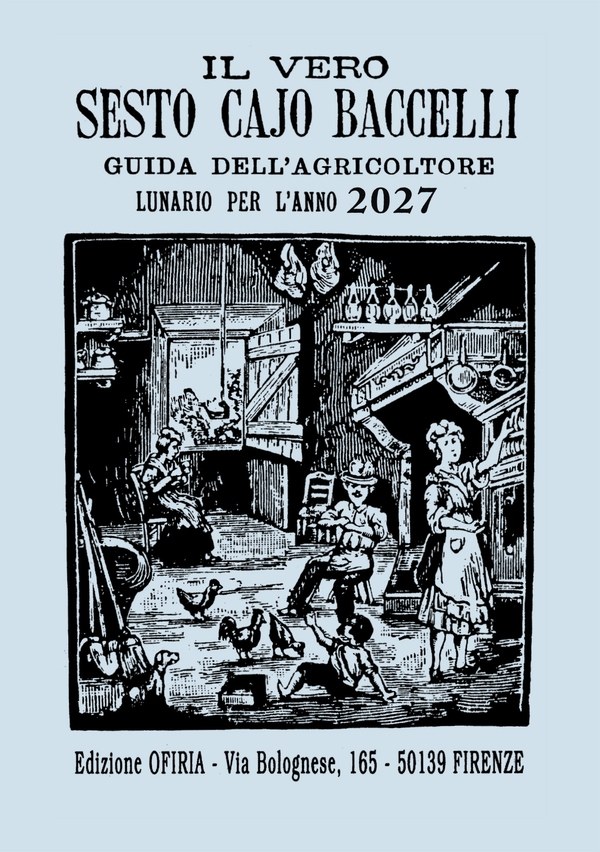
We don’t know whether Baccelli himself came up with an early almanac or whether the publication was dedicated to him later on. What is certain is that the little booklet spawned a host of equally successful imitators, first among them the celebrated Calendario di Barbanera, believed to have been inspired by this very Florentine tradition.
To understand the success of this small, thoroughly Florentine volume (printed today by Giunti, but historically tied to Edizioni Ofiria, the historic Florentine publishing house on via Bolognese founded in 1929 and run for years by the writer Elda Bossi), you have to remember what almanacs meant in the past. Far more than simple calendars, they gathered information on the seasons, the phases of the moon, astronomical events and farm work. In an age when access to information was limited, they were precious tools for organizing daily life, work in the fields and even pilgrimages.
The Sesto Cajo Baccelli still keeps this approach today. The heart of the booklet is devoted to the countryside: month by month, it suggests which jobs to tackle in the vegetable garden, the orchard, the vineyard and the flower garden, following the calendar of the seasons.
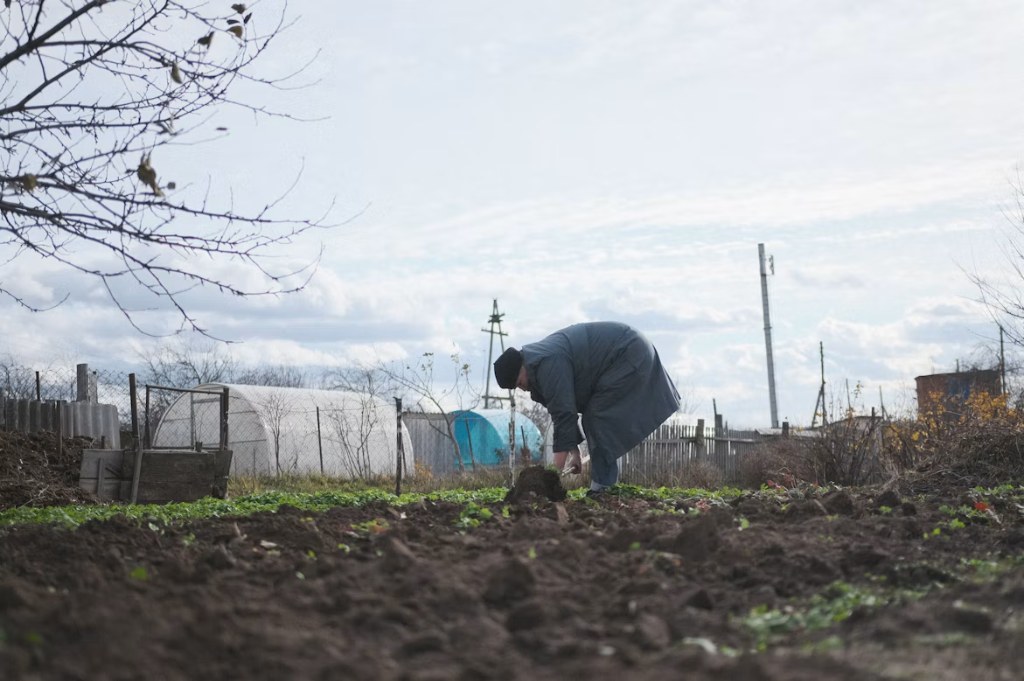
Leafing through the 2027 edition, we learn that January is the time to sow fava beans, peas and spinach, while February is the right month for racking wine in the cellar. March brings a warning: “He who doesn’t prune his vines in March loses the harvest.” April calls for preparing the soil for basil, chard, carrots, green beans, lettuce and tomatoes, as long as the ground isn’t too wet. And in May the farmers’ wisdom returns: “Mud in May, wheat ears in August,” a reminder of how precious water is for the wheat harvest.
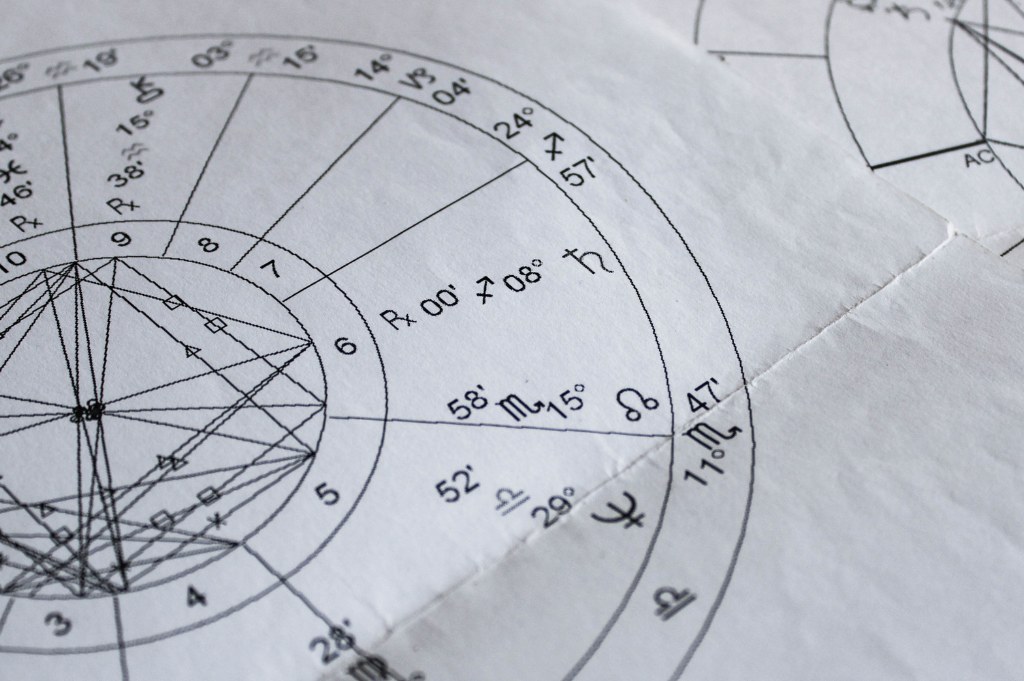
And then there’s everything else: the calendar of saints’ days, the phases of the moon, the eclipses, the inevitable sets of six numbers to play in the Lotto, a pinch of horoscope and an assortment of jokes in strictly Tuscan style. Not to mention the up-to-date map of fairs, sagre (village food festivals) and markets across the region. A small concentrate of practical know-how, folk beliefs and traditions that, while changing over time, keeps the spirit of the almanacs of old.
A Piece of Florentine Heart (and Memory)
Some remember it on their grandparents’ kitchen table, some leaf through it in a house in the country, and some buy it every year out of pure tradition, even if the most they can manage on their balcony is to let a pot of basil dry out.
When we think of Florence’s traditions, what springs to mind right away is the Calcio Storico, the city’s historic costumed football, the Scoppio del Carro, the Easter “explosion of the cart,” or other big events that have long since become tourist draws. But every now and then we should remember that there is also a Florence made of proverbs, trades, household habits and know-how handed down from generation to generation.
This booklet belongs to that world: the world of villages that became neighborhoods, of proverbs repeated at the dinner table, and of a bond with the countryside that, even when it has faded from everyday life, is still part of our identity as a city.
And so, as we get ready to welcome 2027 among planners, calendars and predictions for the new year, it may be worth rediscovering this small piece of Florentine history too. Because in the end, between a moon phase, a sowing and a proverb, the Strolago di Brozzi keeps reminding us of something simple: the future may be hard to predict, but every season there’s always something to learn.