Alessandro Signorini: Songs Far from the Spotlight
There are passions that stay silent for years. Not because they matter less than others, but because life, in the meantime, demands space. Work arrives, family, responsibilities, the daily grind. And yet those passions keep sitting there, in a quiet corner of our lives, waiting for the right moment to emerge.
For Alessandro Signorini that moment came after fifty. Before the songs there was soccer. For years Alessandro wore the captain’s armband for A.S. Vada and scored more than a hundred goals for his hometown team. But if you ask him what really remains of that experience, he probably won’t talk about the goals. He’ll talk about the people. About a group of kids who became friends, about bonds built over time and kept intact well beyond the final whistle.
Even now, more than twenty years later, that team still gets together for a dinner, a laugh, a shared memory. Because some victories don’t end up in the standings: they go on living in the relationships that manage to outlast time.
It’s the same attitude that led him, in the years that followed, to coaching in the youth academies of Fiorentina, Livorno, and Pisa. A path where soccer became above all an educational tool, a way to guide young people as they grow, passing on values like respect, responsibility, and team spirit. The same values that return today, in a different form, in the words of his songs. Music, meanwhile, stayed in the background.
Or maybe it would be more accurate to say the words stayed in the background.
Because Alessandro tells us that the need to write was always there.
“The desire to write and to put emotions into words was always inside me. For a long time they stayed only thoughts. Then, at a certain point, I felt the need to turn them into words and share them with others.”
It’s a simple sentence, but it holds something many people know. How often do we carry thoughts, emotions, or reflections without finding a way to express them? And how often do we give up because we think it’s too late to begin?
Alessandro’s songs come precisely from this need. They speak of hope, of awareness, of the future. They address young people above all, but really they speak to anyone who has been through a hard time and looked for a place to regain their balance. Words like responsibility, community, growth, and care for others recur in his lyrics. Perhaps because they’re the same values that ran through his whole life, long before the writing.
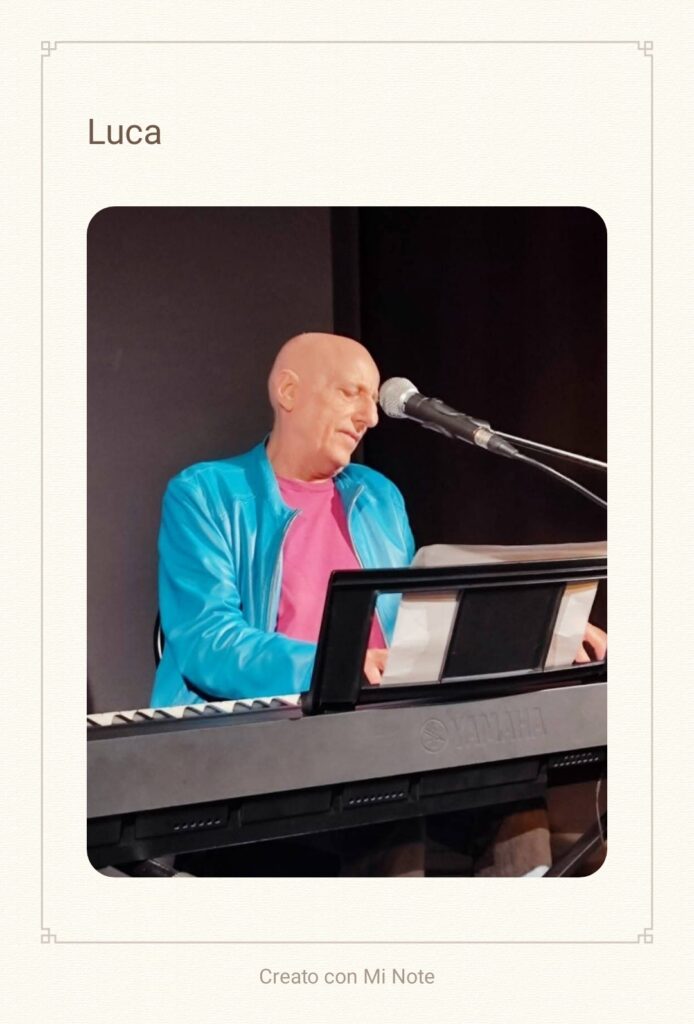
Turning those words into music was Luca Bechelli.
But a song doesn’t truly live until someone lends it their voice.
Because words can move you on the page and music can suggest atmospheres and feelings, but it’s in the interpretation that a song finds its definitive identity. It’s the voice that lets it meet an audience, step out of the private world of whoever wrote it, and become a shared experience.
In the artistic journey born from the meeting of Alessandro Signorini and Luca Bechelli, every track found its performer. Il mio posto nel mondo was entrusted to the sensibility of Gabriella Ferrara and later translated into English and performed by Barbara Santucci. Bum Bum Bum found the voice of Elsa Ghelardoni, while Un pozzo a colori was performed by Bechelli himself. Alessandro Turini also became part of the journey, lending his voice to songs like L’amico vero, Ladra, La valigia, and Più bello del mondo, the last of these soon to be released.
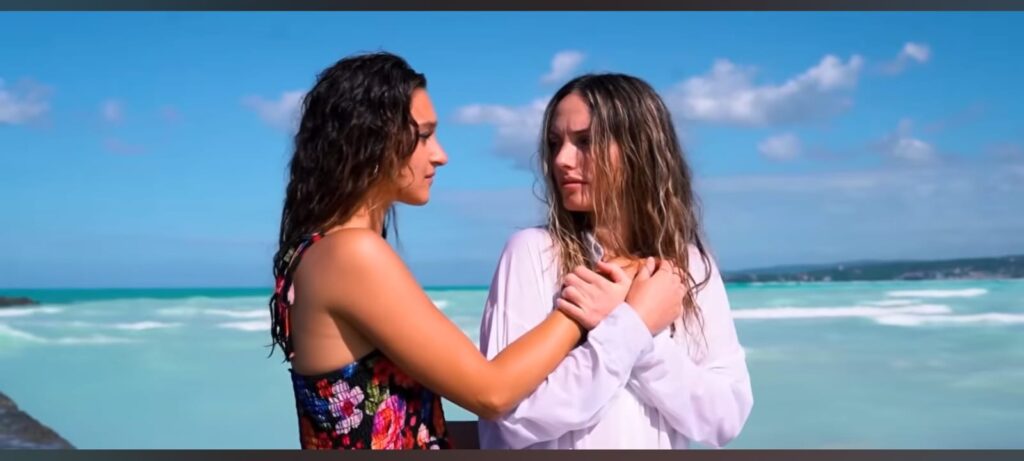
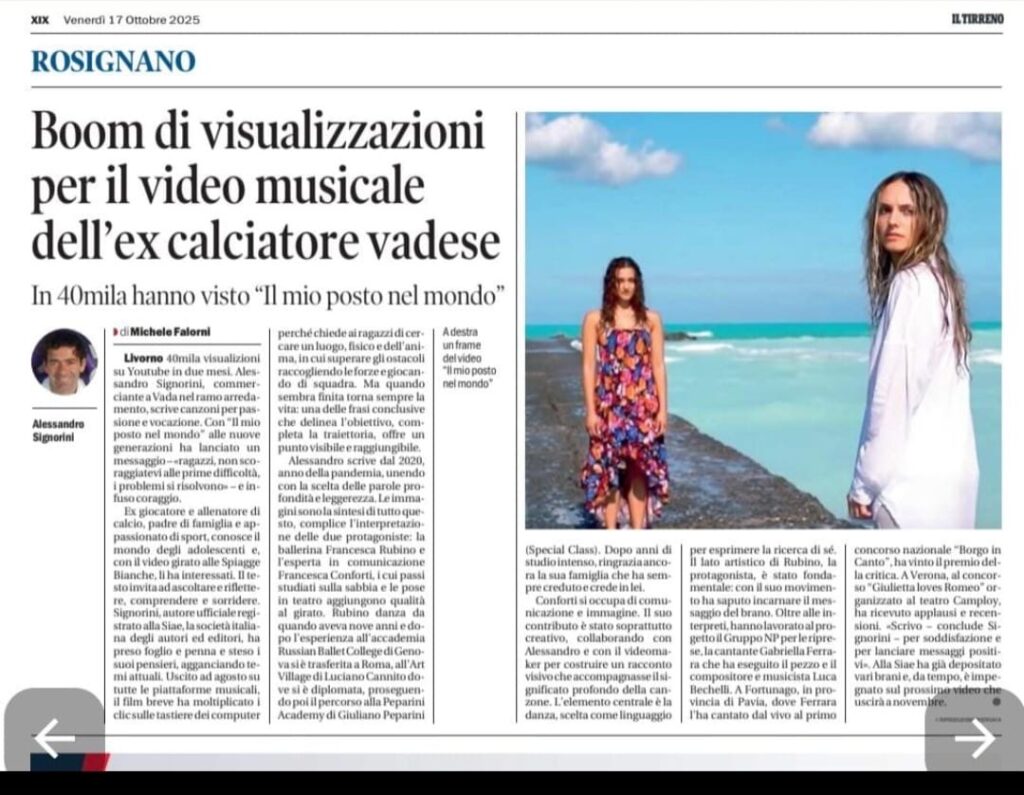
A visual story grew up around the songs, too. The music videos for Il mio posto nel mondo and Un pozzo a colori, made by Florence’s Gruppo NP, helped give shape to the images called up by the words and the music, letting the tracks reach an even wider audience.
And perhaps this is the most fascinating aspect of the path Signorini and Bechelli have built: the awareness that a song is always the result of an encounter. Between the one who writes, the one who composes, the one who performs, and the one who listens. A collective work that keeps transforming every time someone decides to make it their own.
The numbers online show it, too. The music videos for Un pozzo a colori and Il mio posto nel mondo have passed 113,000 and 128,000 views on YouTube respectively, thanks in part to the performances of Francesca Rubino, a classical dancer, and Francesca Conforti. Numbers that tell a simple thing: when words, music, and interpretation manage to speak the same language, they always find someone willing to listen.
Their meeting came about almost by chance, through a mutual friend. A phone call, a first song, then another. Until they built a collaboration that now counts more than ten songs. But the most interesting part of this story isn’t the number of tracks written together.
It’s the way they came to be.
Bechelli belongs to a generation of musicians who have lived through decades of Italian music. He has worked with artists like Ornella Vanoni, Nicola Di Bari, Nada, Marcella Bella, Umberto Tozzi, Pupo, and many others. He has written, arranged, composed, lived through recording studios, stages, and record productions. And yet, when we ask how he defines himself, the word he chooses isn’t “professional,” nor “author” or “composer.” He chooses a much simpler word: craftsman.
“I like to build a song starting from instinct, from listening, from personal sensibility. A song isn’t a product to be made as fast as possible. It’s something that takes shape little by little, through intuitions, attempts, and second thoughts.”
In an age dominated by speed, this is almost a countercurrent statement. Because a song isn’t built in a hurry; it takes time. Just as it takes time to write a lyric, to raise a kid, to coach a team, or to build an authentic human relationship. Perhaps that’s also why, talking about Luca, Alessandro inevitably ends up talking about someone else: his father.
He was a carpenter, a man who worked with his hands and put his experience at the service of others, no matter who stood before him. And in that way of understanding work, relationships, and care for people, Alessandro recognizes something that still belongs to him today.

“In Luca I found that same human generosity, even before the professional kind.”
It’s perhaps the most beautiful moment of this story. Because, at a certain point, music stops being only music and becomes a gesture of care. The carpenter works wood, the writer works words, the composer works emotions — different trades, but joined by the same desire: to give shape to something that didn’t exist before.
And to do it, you always need the same raw material: time.
Maybe that’s exactly what the meeting between Alessandro Signorini and Luca Bechelli tells us. The idea that there’s no right age to start creating. That words still have the power to connect people. And that, in a world constantly racing toward the next stop, pausing to listen to a story, a song, or an emotion can still be a small revolutionary act.
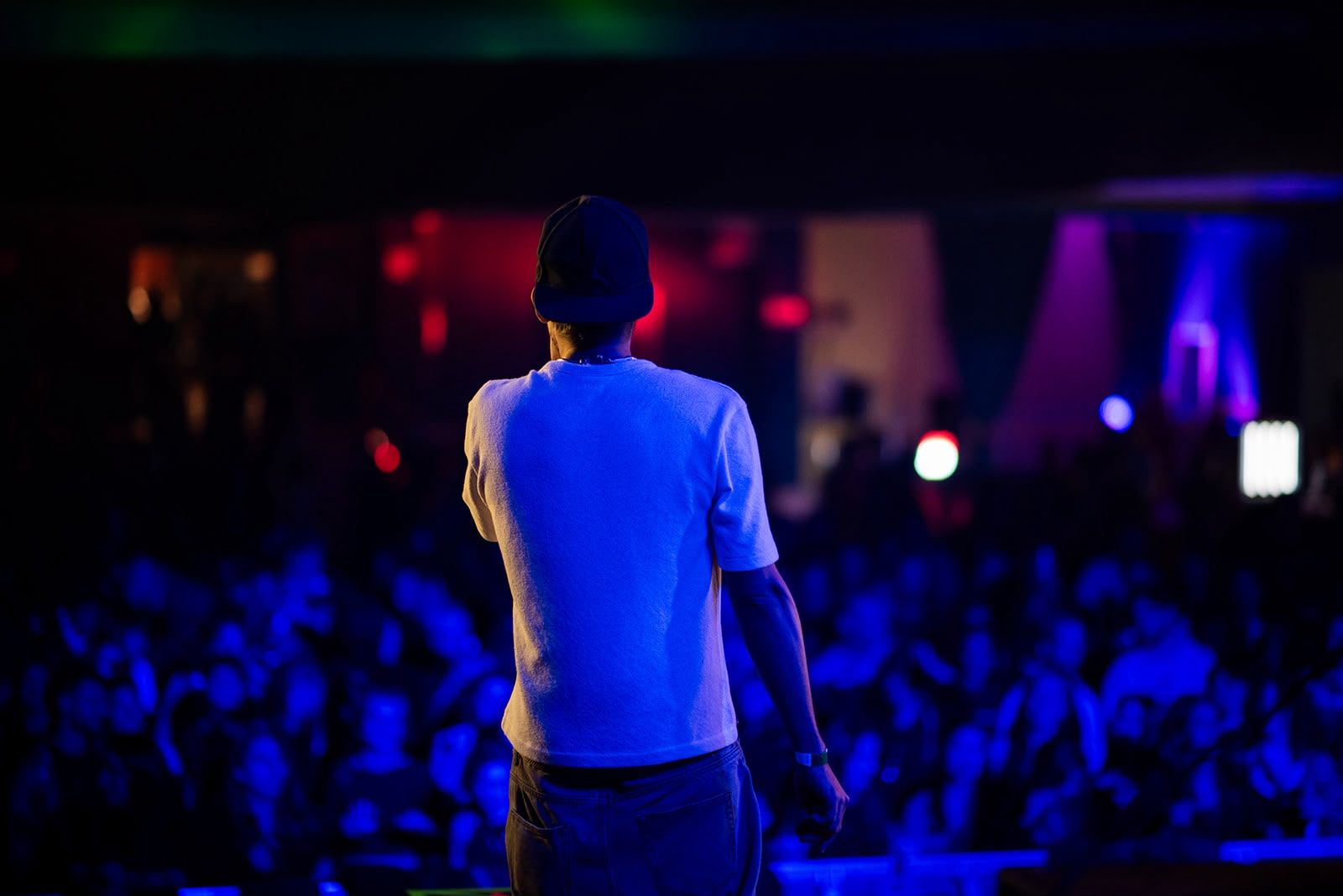
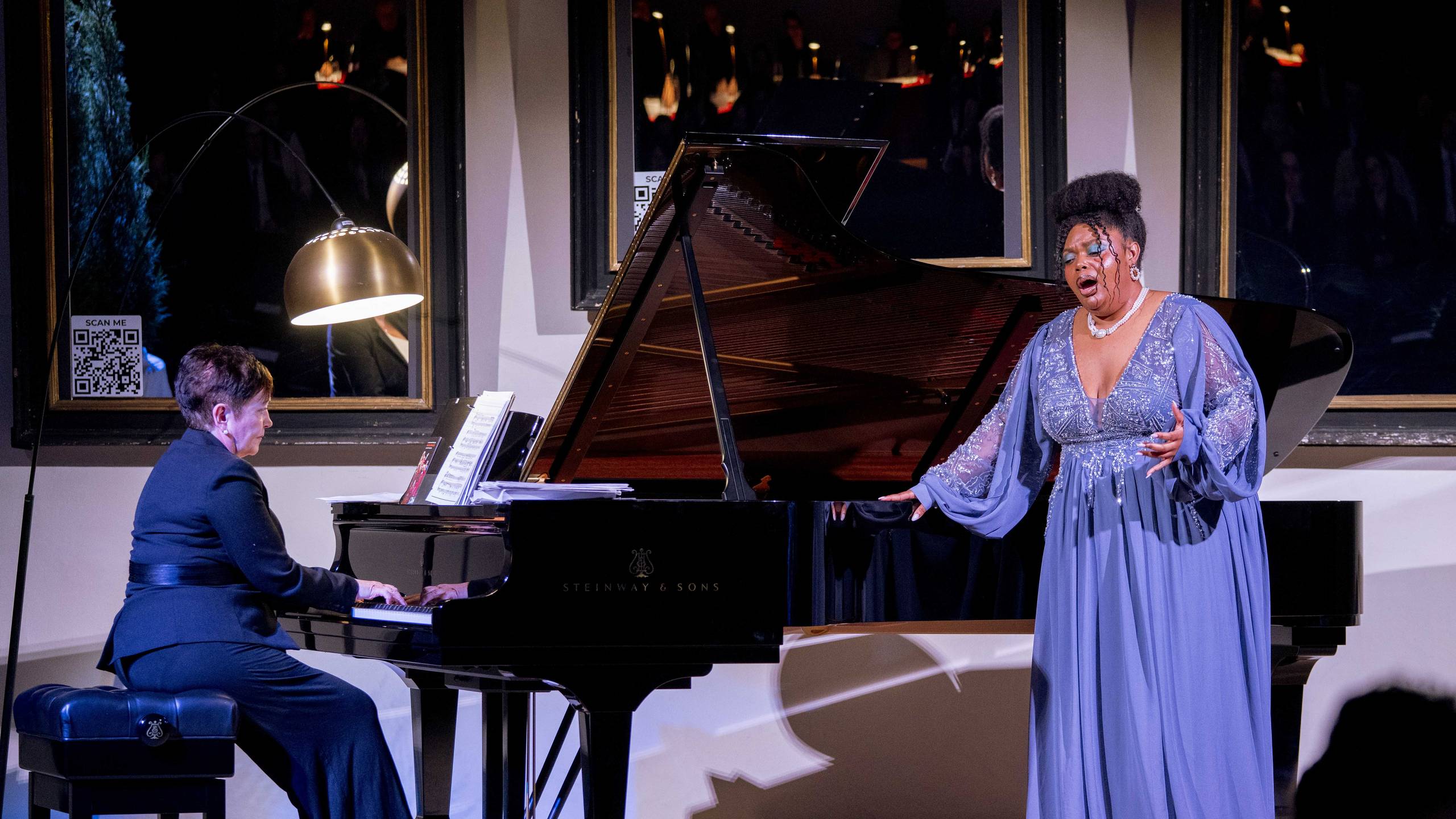
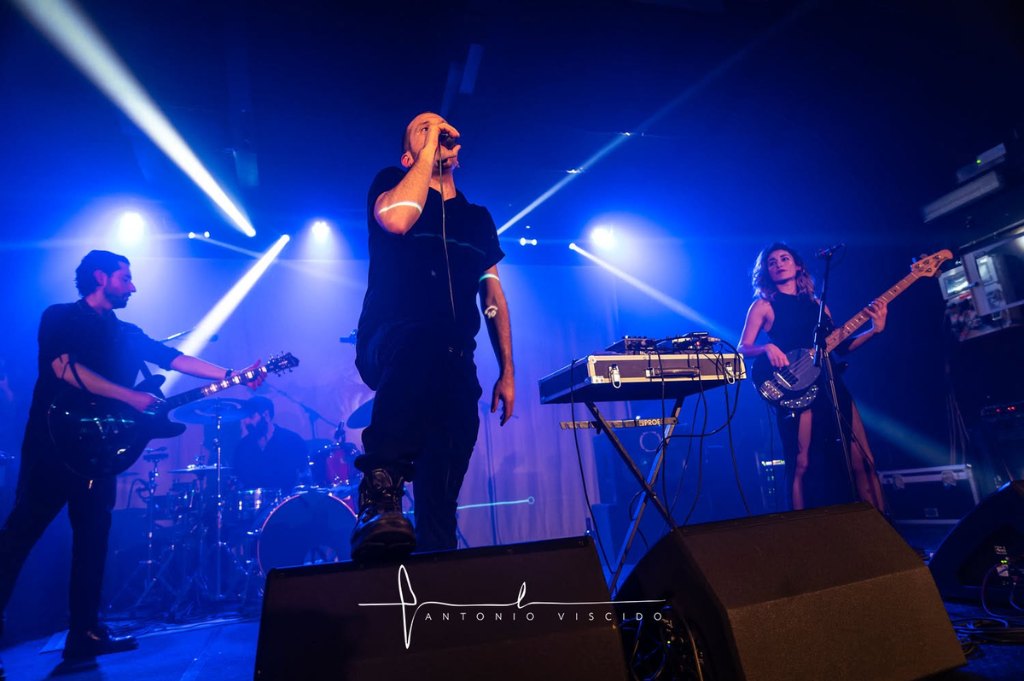
The cover and images are taken from the music videos for Un pozzo a colori and Il mio posto nel mondo.