Where to Buy Local Food in Florence
Two out of three Italians shopped at a farmers’ market at least once during 2025. The figure, from a Coldiretti/Noto Sondaggi survey, says something more than a simple taste for zero-kilometer produce: buying straight from the growers has become a settled habit for a lot of people here.
Buying directly from the person who grows your food means knowing where it comes from, eating closer to the seasons, skipping the transport emissions built into large-scale distribution, and rebuilding a relationship with food that the supermarket has inevitably stretched thin.
In Florence this is easier than you might expect. There are weekly markets in neighborhood squares, gatherings that are by now part of the city’s own history, and farms just outside your door where you can buy whatever has come in from the fields. And if you are short on time, there are services that run the other way around, bringing the produce to you.
This is not a map of places to discover, or an itinerary in search of a more “authentic” Florence. It is a practical resource for people who live here, and a way to support the farms around the city by putting the short supply chain back into the weekly shop — even just part of it.
The farmers’ markets
Porta San Frediano, the covered market
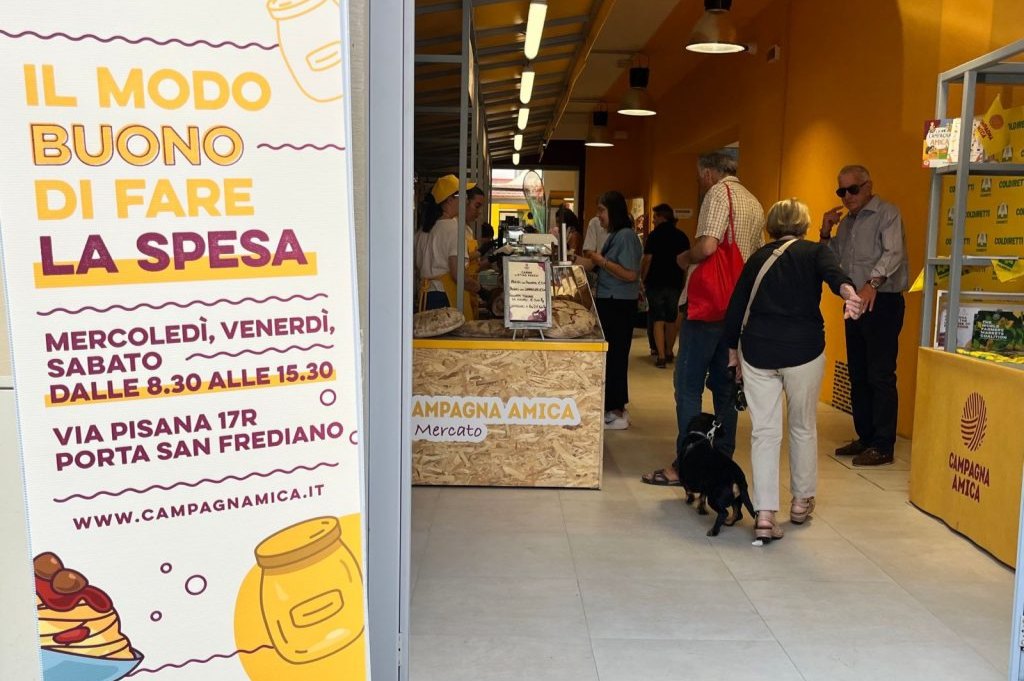
In the restored halls of the former Cartiera Verdi, right under Porta San Frediano, Coldiretti Toscana and Campagna Amica have opened the largest covered farmers’ market in Tuscany. More than a thousand square meters and some fifty growers and cooperatives bring a serious slice of the regional harvest under one roof. You will find seasonal fruit and vegetables, beef, lamb, pork and poultry, fresh fish from Viareggio, olive oil, wine, cheese, dairy, cured meats, honey, preserves, pasta, eggs, flowers, plants and herbs.
What sets it apart from a neighborhood market is the scale, and the idea behind the space: not just buying, but stopping, eating something, sitting in on a tasting. The market has its own dining area and hosts events built around food culture.
Where via Pisana 15-17-19/R
When Wednesday, Friday and Saturday, 8:30 a.m.–3:30 p.m.
La Fierucola, in the squares since 1984
Founded in 1984, La Fierucola still brings small farms, organic growers, biodiversity and craft work into the squares of Florence.
There are two main dates. The Fierucola in Piazza Santo Spirito runs the third Sunday of every month, 9 a.m. to 7 p.m., and the one in Piazza del Carmine the second Sunday, 9 a.m. to 2 p.m. Through the year there are also themed editions built around bread, new olive oil, ceramics and textile crafts.
Where Piazza Santo Spirito and Piazza del Carmine
When third Sunday of the month at Santo Spirito; second Sunday at the Carmine, except in August
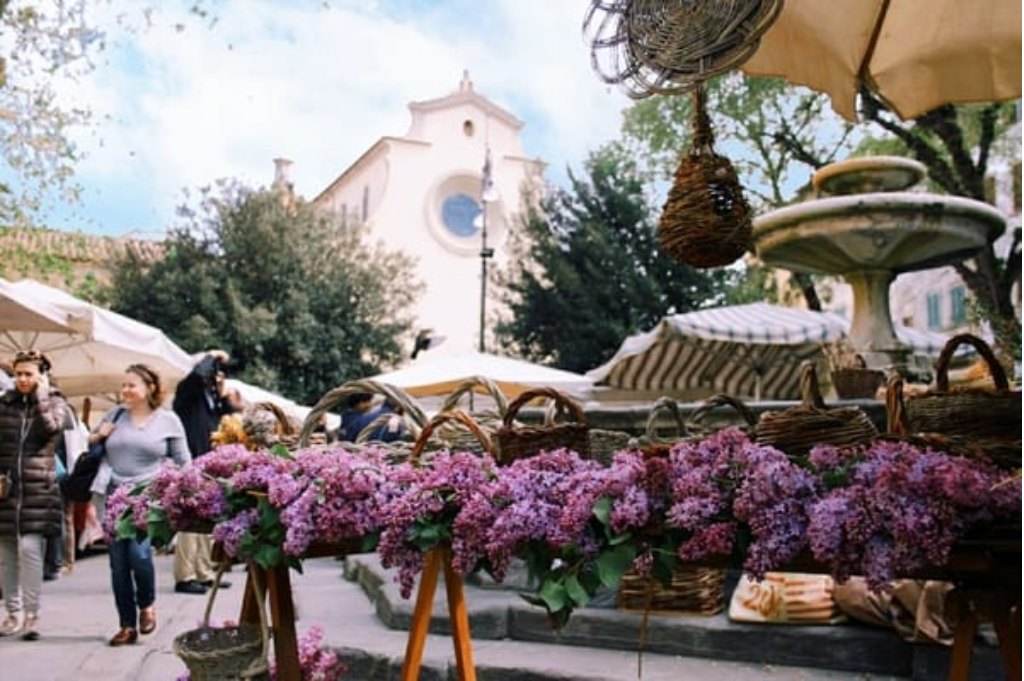
Piazza Tasso, Contadini in Piazza
A small market, tied closely to the life of the neighborhood. Every Friday afternoon Piazza Tasso hosts Contadini in Piazza. It brings growers from the surrounding countryside into the Oltrarno and lets you buy local, seasonal produce directly — the same unmediated exchange between grower and buyer that all these markets are built on.
Where Piazza Tasso
When Friday afternoon, from 4 p.m.
La Spesa in Campagna at the Parterre
Friday mornings the appointment moves to the Parterre, in Piazza della Libertà. La Spesa in Campagna, the market run by CIA, gathers growers from the area and sells direct. It is especially convenient if you live around Libertà, Le Cure, Campo di Marte or the center and want to fold the farmers’ market into your week without leaving the city.
Where Parterre, Piazza della Libertà
When Friday, 8 a.m.–2 p.m.
Campagna Amica at the Cascine
Saturday morning belongs to Campagna Amica at the Cascine. Growers pull into the piazzale with fresh produce and what they have preserved and processed. It also lets you fold the shopping into a walk in the park.
Where Piazzale delle Cascine
When Saturday, 8 a.m.–1 p.m.
Piazza Alberti, the Saturday farmers’ market
In Piazza Alberti the farmers’ market brings together growers from the area, selling local and seasonal produce direct. It is a neighborhood market that works well if you live around Campo di Marte, Bellariva, Gavinana or the eastern edge of the city.
Where Piazza Alberti, Florence
When Saturday, 8 a.m.–2 p.m.
Sant’Ambrogio, shopping in the historic market
A historic Florentine food market, Sant’Ambrogio is still deeply tied to the life of its quarter. The market in Piazza Ghiberti remains one of the reference points for anyone after fresh produce and a more direct relationship with the person behind the counter. Inside there are greengrocers, butchers, cheese and deli counters, fish, bread and general groceries, while the market also continues outside through the morning.
Where Piazza Lorenzo Ghiberti
When Monday to Saturday, 7 a.m.–2 p.m.
Straight from the grower
The next step is to skip the market and go where the fruit and vegetables are actually grown. And you do not necessarily have to leave Florence to do it.
La Talea, a market garden inside Florence
In Coverciano, a few minutes on foot from via del Gignoro, La Talea is a reminder of how close the countryside sits to Florence. Leave the busier streets of the neighborhood behind and you are among vegetable plots and worked fields, without ever leaving the city.
The farm is organic and grows vegetables, pulses, eggs, fruit and grain, which also become bread, pasta and flour. You buy on the farm itself, and you buy whatever the land is giving at that moment. La Talea also rewards anyone who gets there without a car, with 10% off for customers who arrive on foot or by bike.
Where via della Torre 18, Coverciano
When Tuesday 4:30–6:30 p.m.; Wednesday 9 a.m.–noon; Thursday and Friday 4:30–6:30 p.m.; Saturday 9 a.m.–1 p.m.
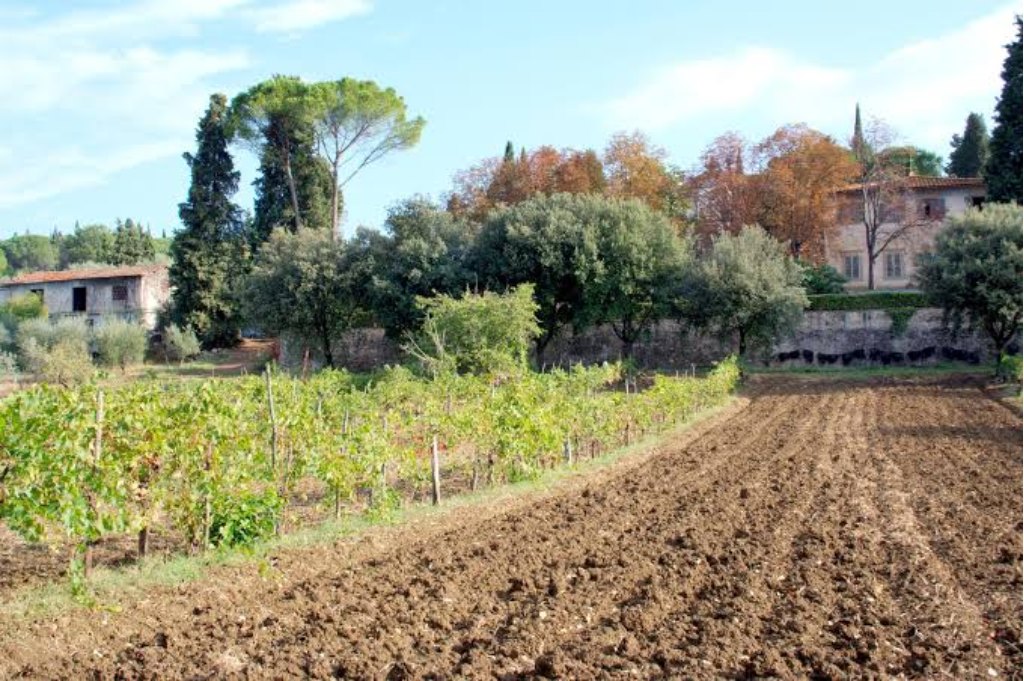
Agricola Bencini, the farm shop in Soffiano
On the other side of town, out in Soffiano, Agricola Bencini has gone for something just as simple: a small shop selling what their own land produces.
The backbone is what the farm grows itself, rounded out with fruit from growers they have worked with for years in the Chianti hills and the Valdichiana, citrus from the Coldiretti Campagna Amica network, oil and honey from farms nearby, and their own fresh eggs. They also ask customers to bring reusable bags to cut down on plastic packaging, and they deliver within the municipalities of Florence and Scandicci.
Where via Guardavia, Florence
When Saturday, 8 a.m.–1 p.m.
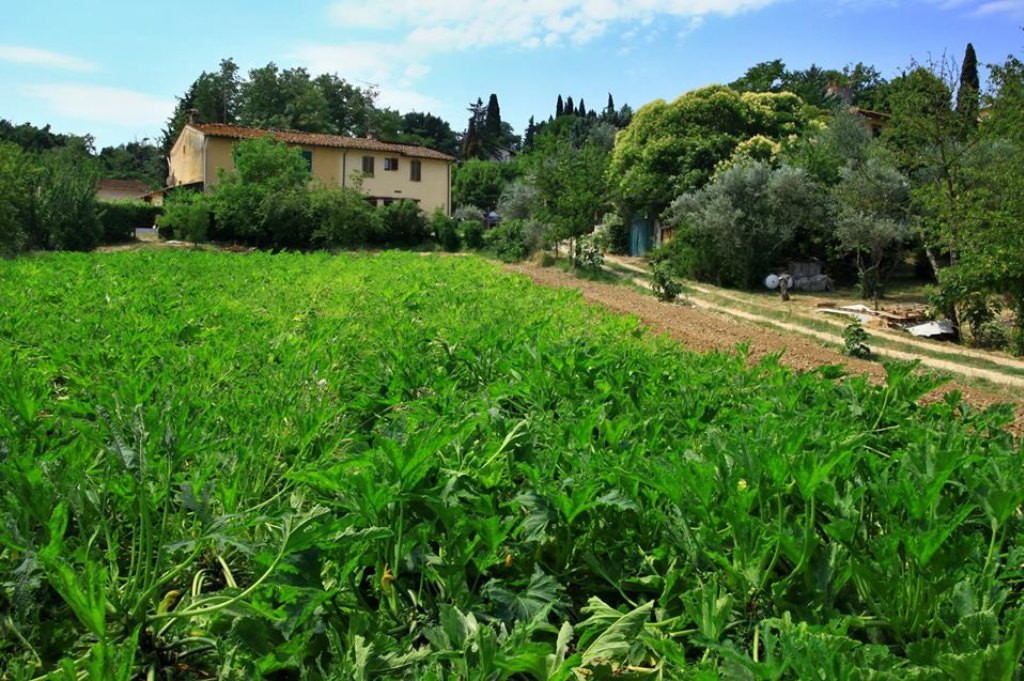
Il Mulino Agricola, just outside the city
Cross the city limits by a little and you find another one worth knowing. Il Mulino Agricola, on via del Padule in Bagno a Ripoli, is a family farm that has been growing and selling its own vegetables, fruit and herbs since 1973.
Depending on the season the shop carries chard, spinach, salad greens, cavolo nero, beans, tomatoes, cucumbers, zucchini, squash, fennel, peppers, eggplant, strawberries and plenty more, plus the herbs. Alongside what the farm grows there are selected food products: oil, wine, pulses, flours and cured meats.
What sets it apart from most farm-gate sales is how wide the opening hours are: the shop is open six days a week, which makes it a real option for the everyday shop rather than an occasional trip.
Where via del Padule 56, Bagno a Ripoli
When every morning 8:30 a.m.–1:30 p.m.; Tuesday and Friday 8:30 a.m.–7 p.m.
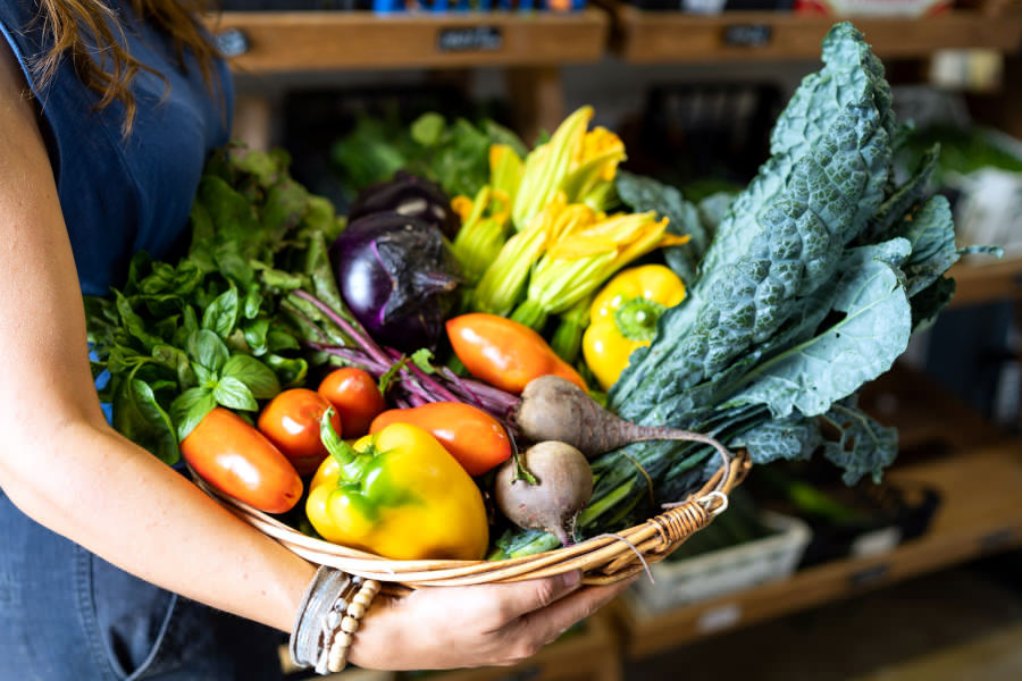
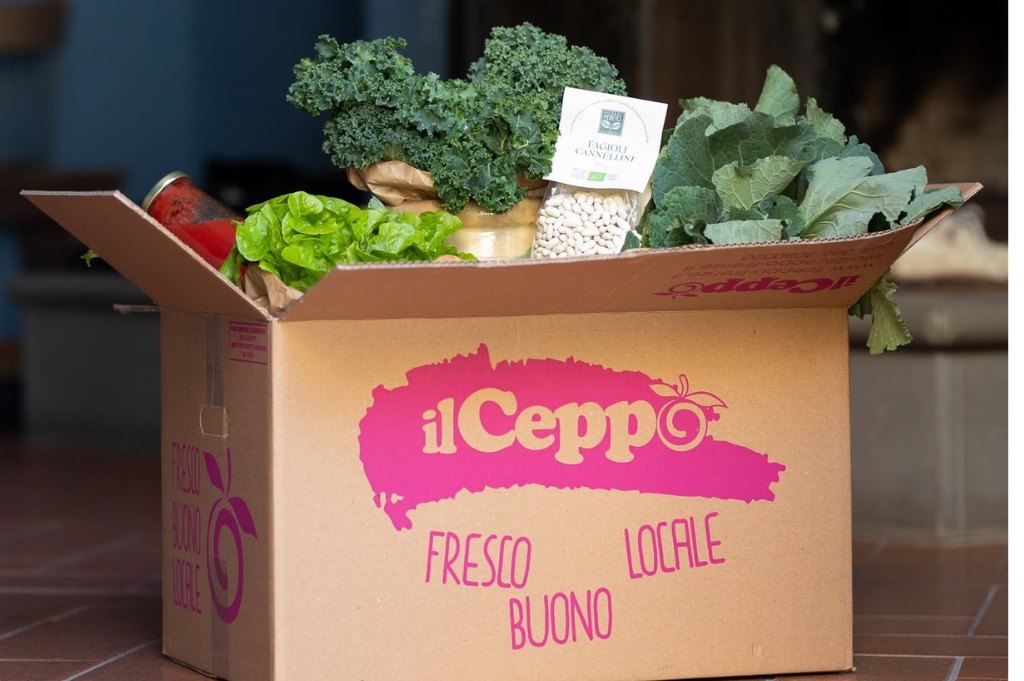
When the countryside comes to you: Il Ceppo
There is one more option: go neither to the market nor to the farm, and let the short supply chain come to your door instead.
Il Ceppo started in 2013, from an idea of Denis Mugnai and Francesco Sabatini, and has been delivering across the Florentine plain since 2014. It began with a small circle of people; today it reaches several hundred households a week.
It works simply enough. You pick the size of your Ceppo and how often you want it — weekly or every two weeks, say — and before it arrives you can tailor the order through a service called Spesa Libera, adding other products to the standard selection.
Worth considering above all if you want to buy through a network of local growers but cannot keep up with market days and hours.
And then there are the GAS
Less visible from the outside, but still going, are the Gruppi di Acquisto Solidale, solidarity purchasing groups. The principle is different: people organize to buy collectively from growers chosen not only on price, but on environmental sustainability, working conditions and their relationship with the territory.
The Florentine GAS scene is still active: worth knowing are GAS Ponte a Mensola, Todomundo and Gassedotti. In April 2026 the City of Florence also hosted a meeting at the Mercafir devoted to updating the map of the GAS and the other forms of self-organized buying around the city.
The countryside in the city
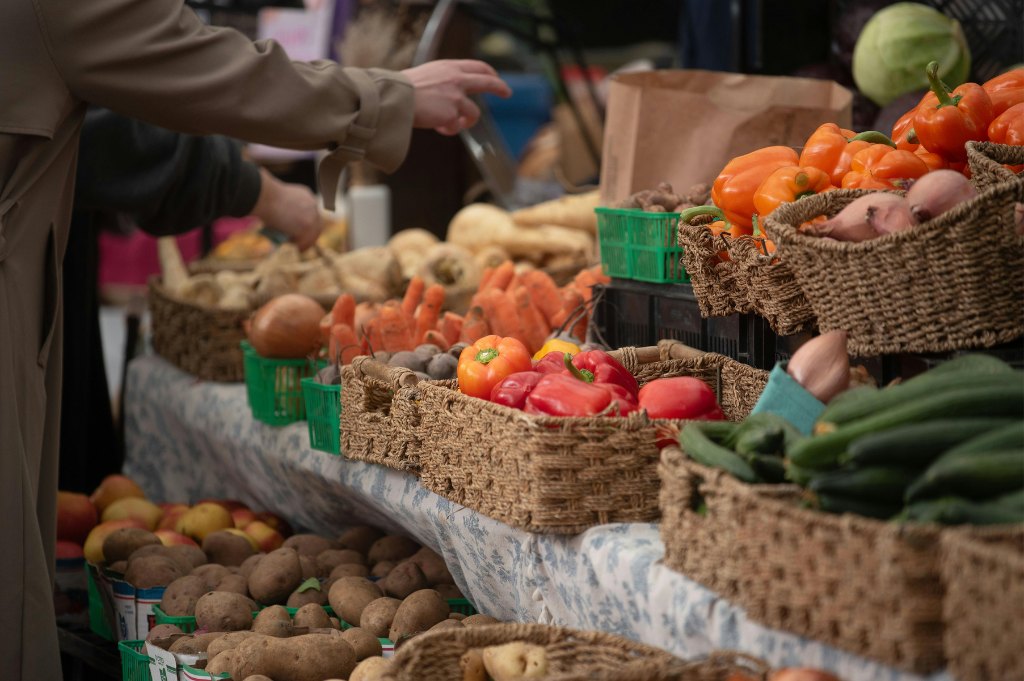
In Florence the countryside really is just around the corner. Go a short way out from the center and you run into vegetable plots, olive groves, vineyards and farms. But you do not always have to go looking: through the farmers’ markets, the farm shops and the networks of small growers, a piece of that countryside arrives inside the city every week. This is where the produce of the Florentine contado meets what comes in from the rest of Tuscany, following the seasons, the harvests and what is actually being grown. A concrete way to know more about what you put on the table, to rediscover local produce and varieties, and above all to shop while shortening the distance between the person who grows and the person who buys.