Theater Along the Arno to Rediscover Florence’s Bond With Its River
Florence is a city built around the Arno, but it isn’t always a city that lives with its river. We cross it, we photograph it, we keep an eye on its level when it rains too much, and we inevitably come back to it as November 4 approaches. This year even more so: 2026 marks sixty years since the 1966 flood, a wound that still shapes Florence’s collective memory and its relationship with the river. Far more rarely do we walk down to its banks simply to look at it up close and try to understand what relationship we have today with the water that runs through the city.
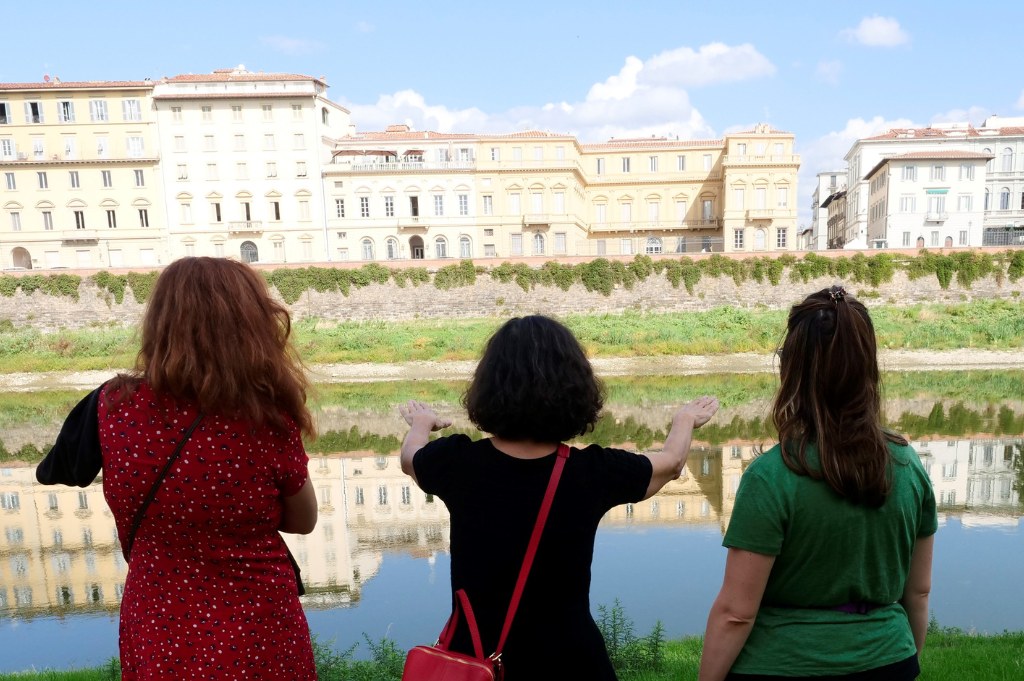
On Sunday, September 27, for World Rivers Day, theater sets out to shift that point of view for a few hours. At 3 p.m. and 5:30 p.m., starting from Ponte della Vittoria, Arcadia Ars In presents Rumori di passi sul con-fine d’acqua (roughly, “Footsteps on the Water’s Edge”), a walking performance created and performed by Patrizia Menichelli, directed by Giovanna Pezzullo, with a script written by the two artists together.
Down to the Riverbank
The idea for the show dates back to 2021, when the pandemic forced the art world to rethink its spaces and the ways it could meet its audience again. Out of that moment came a reflection on boundaries: physical ones, personal ones and, indeed, the one drawn by water.
This isn’t street theater in the traditional sense. It’s rather an intimate, site-specific theater that changes with the place where it’s staged. A “poetic guide” leads the audience along the riverbank, turning the walk itself into part of the performance.
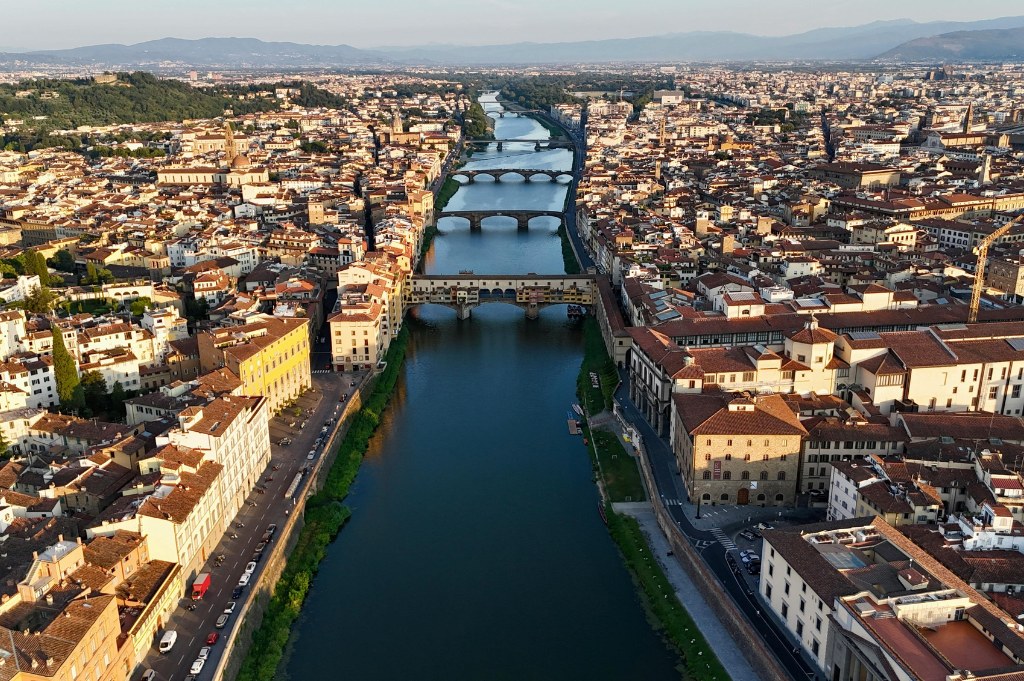
In Florence, the choice fell on a stretch of the Arno close to the center but far from its most monumental image. Not the river framed by Ponte Vecchio and the Uffizi, but a more marginal corner of the urban landscape, which for that very reason can reveal less obvious contrasts and connections.
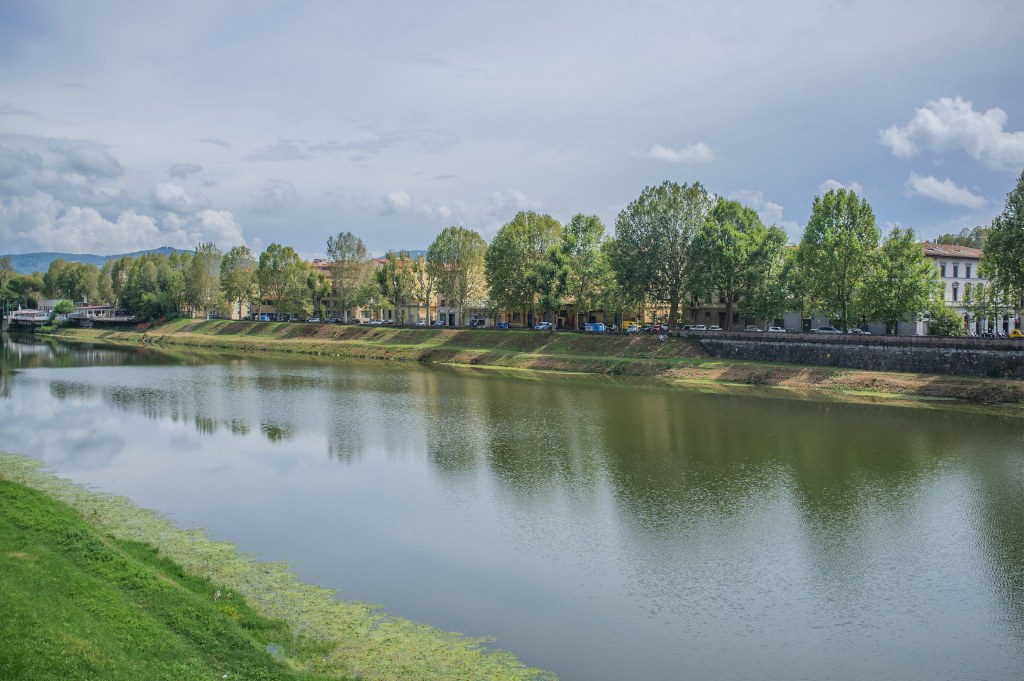
“The riverbank is a boundary between land and water, the surface of the water is itself a boundary that separates water from air, and our skin is a boundary that separates inside from outside. The bridge is a boundary that carries us toward elsewhere,” explains Patrizia Menichelli.
An Atlas Drawn by Following the Water
Rumori di passi sul con-fine d’acqua is one of the events of Atlante delle Rive (“Atlas of the Riverbanks”), a three-year project conceived by Marco Paolini for La Fabbrica del Mondo and produced by Jolefilm.
The goal isn’t to offer a single solution to water-related problems. On the contrary, the project starts from their complexity. Managing Italy’s rivers involves territories, public bodies, water consortiums, utilities, engineers, local governments, researchers and local communities. Atlante delle Rive tries to connect these worlds through a tool that seems far removed from technical language: theater.
So the aim isn’t to build an encyclopedia of Italy’s waterways. The atlas takes shape through different experiences, stories and kinds of knowledge. Each place adds a piece to the map. Fittingly, the groups that join the network are called “Affluenti” (tributaries): theater companies, citizens, schools, libraries and associations that flow into the project, each bringing its own point of view.
More Than Fifty Events Along Italy’s Rivers
For World Rivers Day, which falls on Sunday, September 27, more than fifty events are planned across Italy, including performances, walks, readings and storytelling. They will take place on the same day, along different rivers, but they will all be part of the same story. The idea is to turn the occasion into a moment of civic theater: a chance to bring together stories of floods and droughts, biodiversity, work, resource management and care for the land.
Marco Paolini also starts from the etymology of a word that captures the shared nature of water: “rival” comes from the Latin rivalis, in turn from rivus, a stream, and referred to those who shared the water of the same brook with others. It’s an origin Paolini uses to reflect on a balance that still holds today: when a shared resource becomes scarce, it can turn into a source of conflict.
At a time when climate change makes the swing between water shortages and extreme weather ever more evident, coming back to see rivers as a shared good also means coming back to understand who uses them, who manages them and who takes care of them.
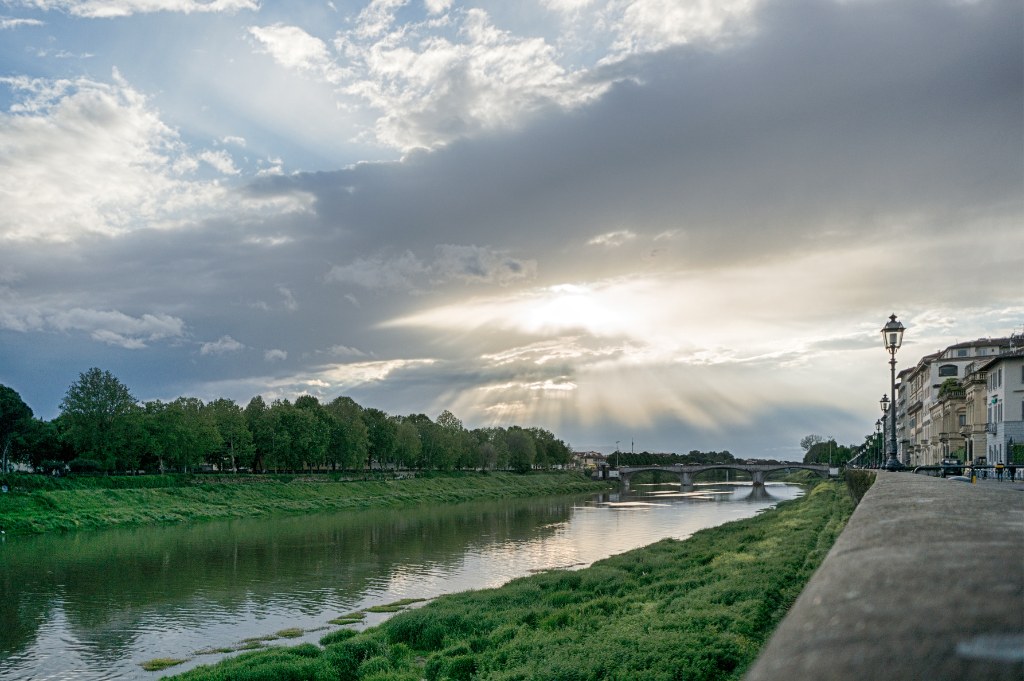
For Florence, the river isn’t just one of the elements that make up its most famous image. It’s part of the city’s history and shape: it has accompanied its growth, its work and its daily life, and it has also left deep wounds in its collective memory. But above all, it is a living ecosystem that keeps flowing through today’s Florence and connecting the community to its land. Reconnecting with its banks means looking past its postcard image and seeing the Arno for what it has always been: not Florence’s backdrop, but a part of its life.