Tuscan Lesso: Boiled Beef, Its Broth, and What to Do with the Leftovers
The Ten Commandments of Lesso
- Let’s get one thing straight: lesso (Tuscan boiled meat) is Tuscan; bollito belongs to Emilia, Piedmont, and Lombardy.
- Lesso gives you a broth like no other — forget the bouillon cube you buy at the supermarket, get out of here.
- To do it right you need the cimalino (top rib), the beefsteak trimming (spuntatura di bistecca), the brisket point (punta di petto), the shank (muscolo), a hen for the broth, and the aromatics.
- Lesso is good reheated, too, so if you have leftovers the next day you can add onions, or boiled potatoes, or else cardoons (gobbi) — pure bliss.
- It’s served with the little sauces: the green one, Chianti mustard (mostarda del Chianti), agresto (a tart verjuice sauce), pickled onions… as if we’d ever need those imported gimmicks.
- If you want a richer, tastier lesso, you need the sorcerer’s cuts: veal head (testina di vitello), trotter (zampuccio), and tongue (lingua) — now that’s the good life.
- A note apart for the Tongue: it’s good on its own, too, brined (salmistrata) or in dolce forte (a sweet-and-tangy sauce), without the tomato, mind you.
- Don’t you go throwing out the broth, you scoundrels, because you won’t find one this good anywhere.
- You eat it when it’s cold out and it brings the family together; it warms the soul and the heart.
- These are humble but noble dishes, and they’re disappearing. Sure, it doesn’t take five minutes to make, but do you really want to raise your children without these good things?
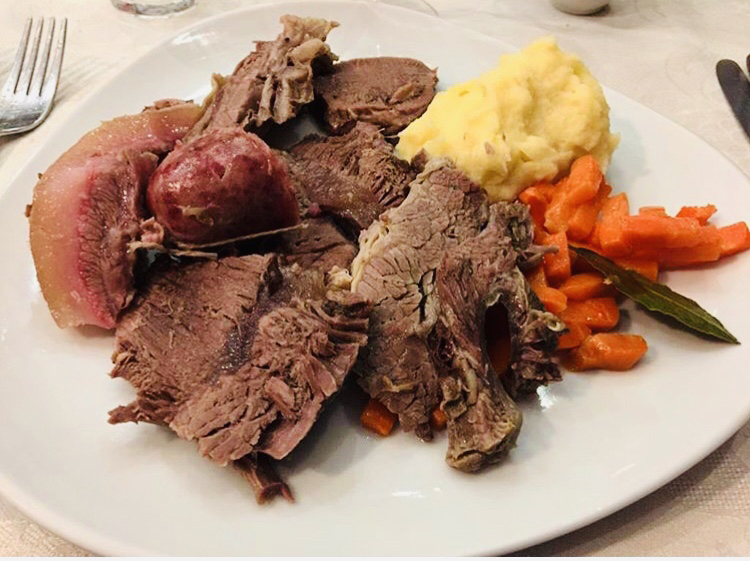
Tuscan Lesso
The cuts you need: brisket point, cimalino, pigeon bone, veal bone, veal foot, beef head, tongue, chicken feet, chicken oysters (cipolline di pollo), stuffed chicken neck (see the “Stuffed Chicken Neck” recipe).
- 2 onions
- 2 carrots
- 1 celery rib
- 1 bunch of parsley
- salt and pepper
- extra virgin olive oil
One caveat: it’s good to have the cuts listed above, but not all of them are essential. Let’s say the brisket point, the cimalino, and the tongue are indispensable if you want to eat something substantial at the end. The rest, besides being very tasty, is what gives “that little something extra.”
That said, prepare the broth by cutting the aromatics into large pieces and putting them in a big pot with plenty of water. Salt and pepper it and bring to a boil. Add the beef pieces and let them cook slowly for 2 to 3 hours. Now add the chicken parts and finish cooking for about another hour. Let it cool in its own broth.
It’s served with green sauce, Tuscan mustard, agresto, and oil- and vinegar-preserved vegetables.
It may look like a laborious recipe, but if you think about it, once the broth is made you don’t have to stand there watching it — it takes care of itself.
The recipes below either round out the Lesso or, once it’s made, turn it into other traditional dishes.
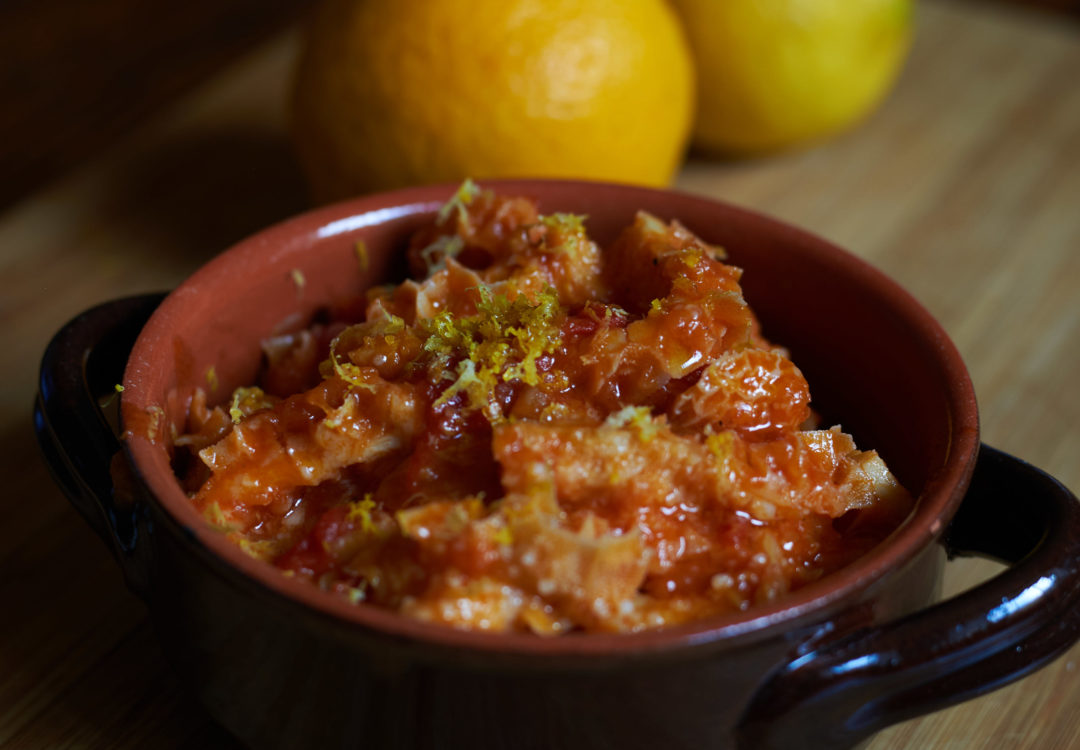
Lesso Rifatto (Reheated Lesso)
- 500 g leftover lesso
- 3 onions
- 100 g rigatino (Tuscan cured pork belly) or prosciutto crudo
- red wine
- 2 tablespoons tomato paste
- extra virgin olive oil
- salt and pepper
When you make lesso you always cook a lot of it, given the long preparation. And when there are leftovers? There’s nothing better than “redoing” it with onions. It’s also called Cipollata.
Brown the thinly sliced onions with the oil and the rigatino. Add the shredded lesso, let it take on flavor for about ten minutes, and deglaze with the wine. Once it has evaporated, add 2 tablespoons of tomato paste dissolved in a cup of broth and finish cooking until the sauce reduces.
Tips, Trivia and Variations
You can add dried mushrooms soaked in water, or fresh ones if they’re in season. Instead of the tomato paste, you can use ripe fresh tomatoes.
Lingua Salmistrata (Brined Tongue)
- 1 cooked tongue
- parsley
- garlic
- capers
- pickled gherkins
- vinegar or agresto
- extra virgin olive oil
- salt and pepper
Peel the tongue and slice it thin (you can use a slicer, too — just mind you keep a decent thickness, not see-through). Make the sauce by chopping the parsley, capers, pickled gherkins, and garlic, then emulsify with a teaspoon of agresto or vinegar, oil, salt, and pepper. Arrange the tongue in layers in a baking dish and cover it with the green sauce.
Tips, Trivia and Variations
A touch of mustard, or something spicy on the side, works very well too.
Who are the Mollica’s? They’re a couple madly in love with Tuscan cooking. They carried it all the way to Australia, then came back, bought a truck, and with it have made an awful lot of people happy.
If they’ve won you over, you’ll find more about them on their Facebook page.