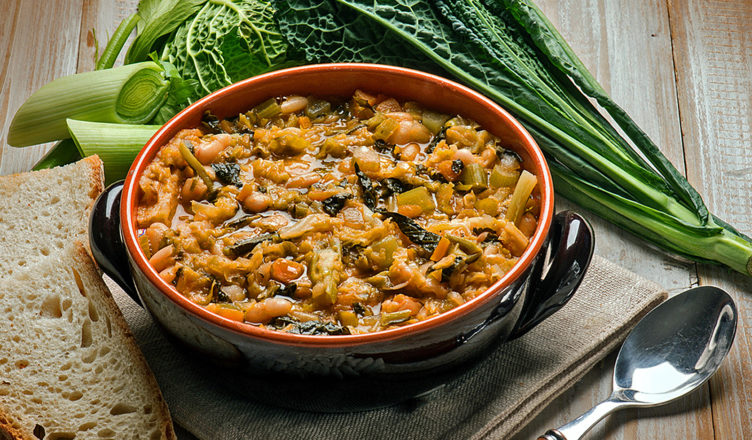
Florentine Recipes: Ribollita
The Ten Commandments of Ribollita
1. Want me to clear something up? Fresh-made, it’s minestra di pane (bread soup); when you reheat it the next day, that’s when it becomes ribollita.
2. It’s a celebration of vegetables, so it’s also vegetarian, vegan, Martian, Kryptonian…
3. You need a mantra to make it: soak the beans the day before, cut the vegetables, chop the battuto for the soffritto… but oh boy, what a treat!
4. It’s been a certified recipe since 2001, so it’s DOC for real.
5. It was born of peasant tradition, of the Tuscan countryside — that’s why there are a ton of variations.
6. You need pepolino (wild thyme), the herb that, the moment you add it, has people knowing from the street that you’re making ribollita.
7. Folks, it isn’t eaten with cheese; a drizzle of good oil and a grind of pepper is plenty.
8. Everyone’s got their own cabbage business… ours is the black one, cavolo nero, the boss of ribollita.
9. No need to say it, but I’ll repeat it anyway: the bread has to be Tuscan, unsalted, nicely stale — got it?
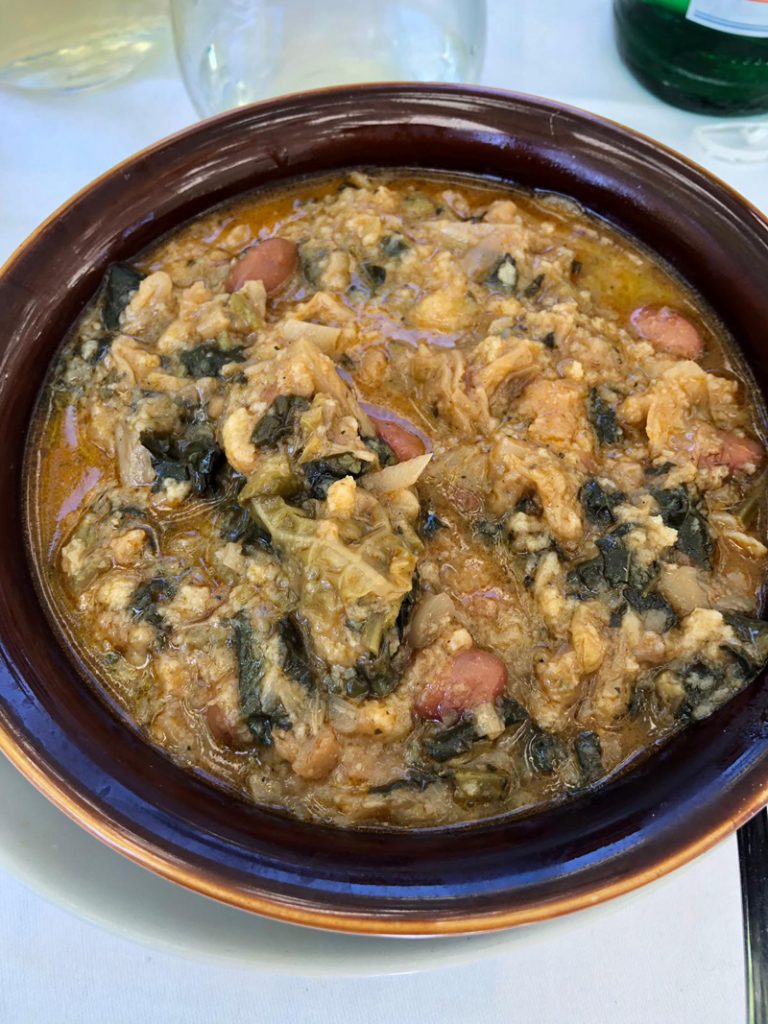
10. Ribollita isn’t something you drink “through a straw”; it shouldn’t be a purée — the vegetables have to stay in pieces, you’ve got to chew it.
Ingredients
350 g dried cannellini beans
400 g cavolo nero (Tuscan kale)
700 g Savoy cabbage
350 g Swiss chard
2 potatoes
300 g tomato passata or peeled tomatoes (or 2 tablespoons of concentrate)
1 red onion
3 garlic cloves
2 celery stalks
2 carrots
400 g day-old Tuscan bread
thyme or pepolino
sage
vegetable broth
Tuscan extra-virgin olive oil
salt and pepper
Method
The first thing to do is soak the beans in water the night before. The second is to cook them, preferably in a terracotta pot, together with a few garlic cloves and sage leaves, salt and pepper, and two tablespoons of extra-virgin olive oil. When they’re well cooked, pass half through a food mill and leave the other half whole.
While the beans cook, you can see to cleaning and cutting the vegetables, which should be coarse.
Prepare the mince of onion, carrot, celery, the whole garlic and, at the end, the pepolino, and sauté them in a large pot with about ten tablespoons of oil.
Then add the potatoes, which take longer to cook, followed by the cavolo nero, the chard and the Savoy cabbage.
Let the vegetables warm through a little, then pour in the tomato passata, seasoning with salt and pepper.
Let it stew for a few minutes.
Pour in the puréed beans and let it cook for 40 minutes, helping it along with vegetable broth if needed. Finally, add the whole beans as well.
Cut the day-old Tuscan bread into small pieces and drop it into the pot. Stir well and cook a few minutes more. This step comes down to your taste: if you like it firmer or looser, add more or less broth. Tradition, though, calls for a fairly compact soup.
The key is to let it rest overnight and then “reboil” it (ribollirla) the next day. Otherwise you’ll just be eating minestra di pane.
Serve with a grind of pepper and a drizzle of good Tuscan oil. If you like, add some nice slices of fresh spring onion or red onion too. Heaven forbid you add Parmesan or pecorino.
Tips, Trivia and Variations
Some add a prosciutto bone for extra flavor, or beans cooked with pork rind. Some use leek or fresh spring onion in the soffritto.
It was born in antiquity as minestra di magro (lean soup), usually made on Fridays — a very humble soup.