The History of Florentine Fashion: From Its Origins to Pitti Uomo
Fashion is born in cities, and it becomes as much a signature of a place as its monuments and neighborhoods, its restaurants, shops and transit lines. Urban culture differs from one city to the next, and so does the way people dress. Every place has a recognizable style that lets you guess, almost precisely, where a person comes from. Florentines — those born here and those who have lived here a long time — have a taste all their own.
Fashion as a cultural phenomenon can’t be understood without a sense of context. Florence has earned and justified its status as a capital of the arts. They call it an open-air museum: it is dense with architectural masterpieces from different eras, so you should look around carefully as you walk. It is rich in memory and tradition, too.

Florence was Italy’s first fashion capital. After the runway show held in 1951 at Villa Torrigiani, people began to speak of Italian fashion — even if attention soon shifted to Milan. But Florentines didn’t give up, and in 1972 the story of Pitti Uomo began: the most famous menswear event in Italy. Today it runs twice a year and draws designers and buyers from all over the world.
Florence’s fashion industry counts some 9,000 companies. The Tuscan capital became the cradle of several major fashion houses, among them Emilio Pucci, Salvatore Ferragamo, Gucci, Roberto Cavalli and Ermanno Scervino. Thanks to schools specialized in fashion and the arts, talented new designers keep emerging here.
Contemporary Florentine fashion, then, is a singular blend of historic heritage, craftsmanship and innovation. It is a field in constant evolution, one that adapts to shifting tastes and technologies while staying true to its roots.

The sporty, minimalist, streetwear turn of recent years has nearly stripped us of the ability to wear beautiful things in the traditional sense — but in Florence the elegance of times past still lingers. The first thing you notice strolling its streets is that vintage holds a special place in the life of the city.
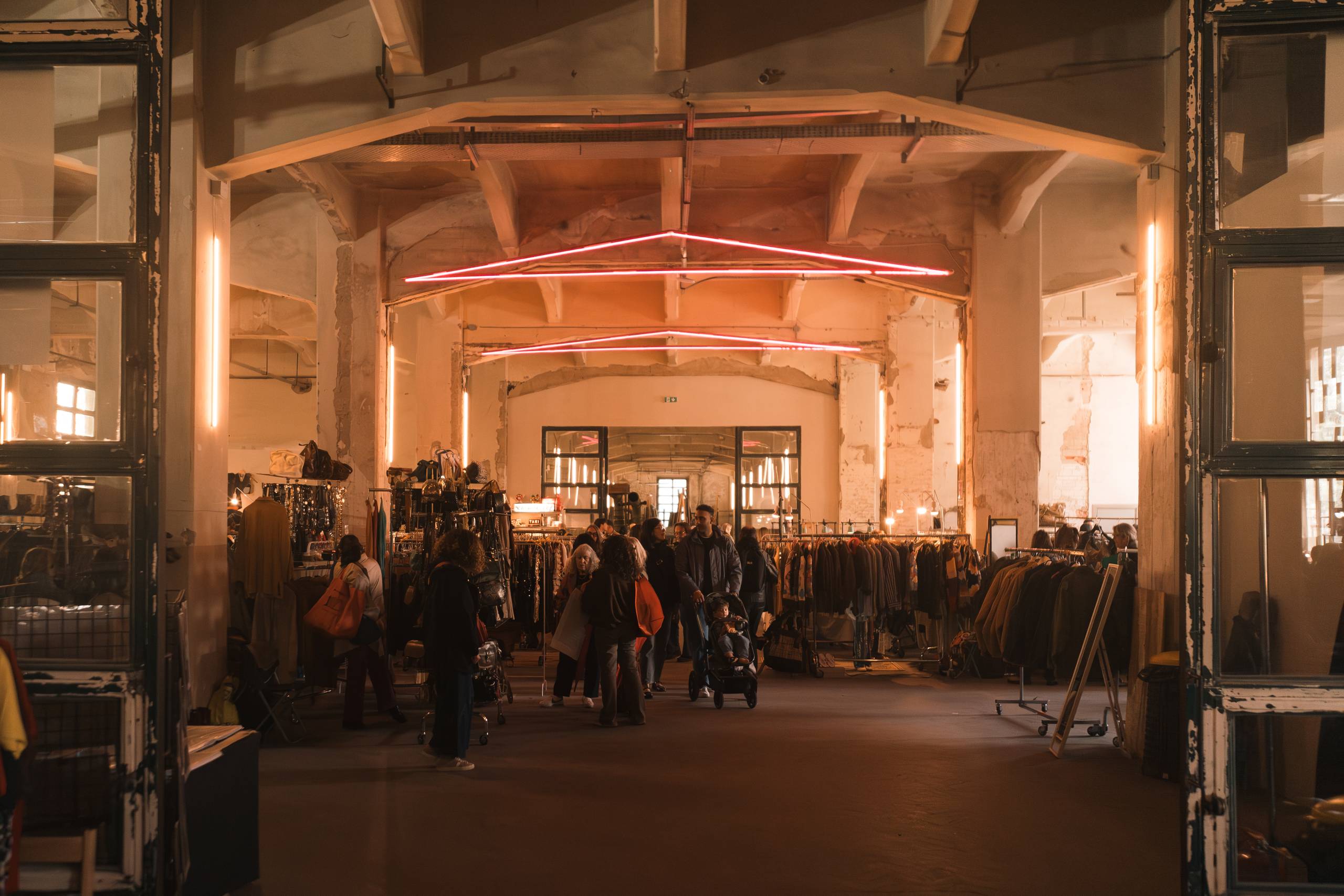
Florentines love outfits pulled from the family wardrobe, or from local shops and markets where you can turn up real treasures with a story of their own to tell. They might be unknown pieces, or garments from old Italian luxury labels whose names are familiar only to fashion historians.
Twice a year the city hosts a vintage fair at the Fortezza da Basso that pulls in every lover of vintage fashion. Unlike the big metropolises, Florence has no appetite for excessive luxury. Where in Milan everything is pretentious and buffed to perfection, the clothes of Florentines are less showy, less eager to be seen. They can even look a touch careless — though of course that’s only appearance. A balance poised between composure and nonchalance is the singular quality of Florentines, and it sets their way of dressing apart.

Florentine elegance is simple, natural, even democratic — with one subtlety that makes that democracy very conditional. The point is that every material must be of the highest quality and the craftsmanship impeccable. Traditional methods are prized: hand-sewn garments are simply more comfortable.
Florentines favor pieces made to measure in local tailors’ shops, and the peculiar finds unearthed in tiny stores scattered through the city’s alleys. There is no end of artisan workshops and showrooms. Great attention goes to detail, to the small things that lift the whole. Young, middle-aged or old, Florentines know how to dress well — but they don’t make a cult of clothing or of their own appearance. They follow fashion’s trends, and often create them, without making them the center of their lives.

There is still plenty of color in modern Florentine fashion, even if black, for womenswear, will always be a timeless classic. Among all the city’s inhabitants, a special seat on the Olympus of fashion belongs to the older ladies and their truly unique style. Everything the fashion critics would file under forbidden, these women wear in a way that leaves you breathless.
Combinations that would turn other people into parrots, these women pull off through sheer richness and delicacy of taste, nobility and vast culture. A love of jewelry is another hallmark of the Florentine lady’s style, while the obligatory attributes of the Florentine gentleman are scarves and hats, forever in season whatever the weather. Instead of high heels, Florentine women often prefer comfortable low pumps or sneakers that take nothing away from their elegance.

Fashion is shaped by its surroundings, and at the same time it shapes them. What we wear says a great deal about our background, our values, our taste and our way of life. Florence lives at a calm pace, and that is why slow fashion reigns here. Florentine fashion lovers focus on quality clothing and prefer the immortal classic to the passing trend. It is, without a doubt, a city for anyone in love with fashion in its most orthodox sense.
Style has a vital need of inspiration, and this city is a nearly endless source of it. Here, fashion is at home. It is a complex phenomenon that marries the symbolic system of creativity with the material one of production. Although Milan is the universally acknowledged fashion capital, it is Tuscany that concentrates the textile, jewelry and leather industries. So good taste and a passion for beauty are backed by a solid technical foundation — part of the Italian knack for making things well.
Photos by Andrey Nastasenko