Marsilio Ficino: A Renaissance Treasure Kept in Florence
The Kunsthistorisches Institut in Florenz – Max-Planck-Institut (KHI), on Via Giuseppe Giusti 44, holds a collection of extraordinary importance for both philosophy and the history of the book, one bound up with the figure of Marsilio Ficino.
A bibliographic treasure for Florence
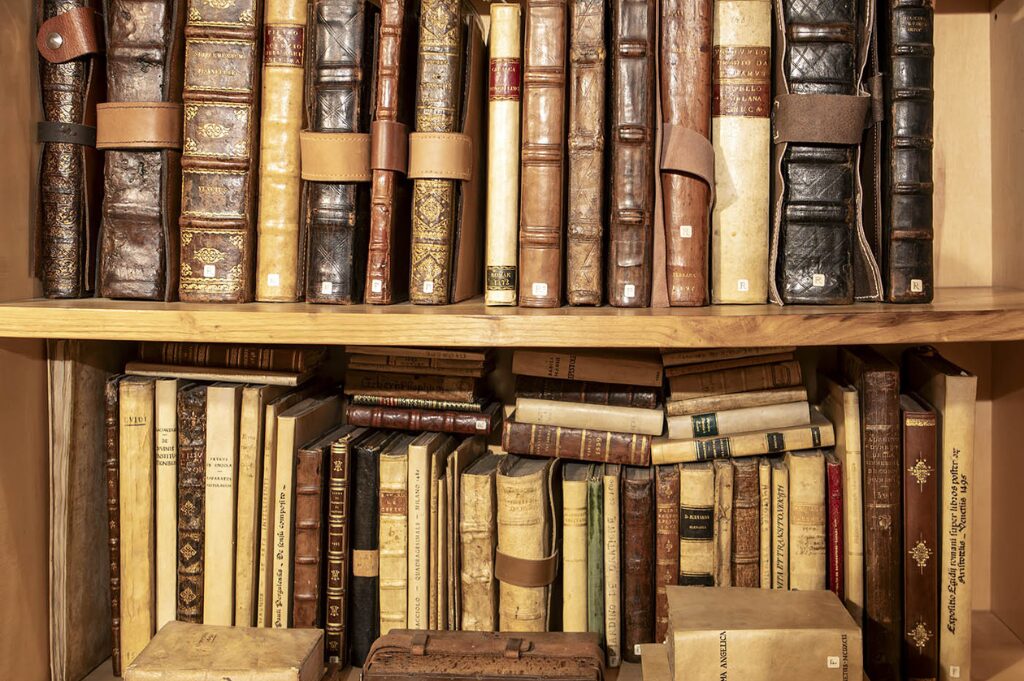
The story begins with the KHI’s acquisition of the Biblioteca Serlupiana, one of the most significant gifts the institute has received in its more than 125 years. Assembled in the 1920s by Filippo Serlupi Crescenzi and Gilberta von Ritter de Zahony, the collection runs to more than 13,000 volumes, including early printed editions of exceptional historical and artistic value.
Especially remarkable is a core of more than twenty incunabula containing the writings and translations of Marsilio Ficino, a central figure of the Italian Renaissance and of the rediscovery of Neoplatonism. His thought, ranging from the place of the soul in the cosmos to the nature of love and beauty, finds in this collection a vital material record.

Who was Marsilio Ficino
A philosopher and physician, Ficino (1433–1499) was the guiding mind of the Platonic Academy that gathered under Medici patronage in fifteenth-century Florence. He produced the first complete Latin translation of Plato’s dialogues, along with translations of Plotinus and the Hermetic writings, and set out to reconcile Platonic philosophy with Christian faith. His work reshaped European thought on the soul, love, and beauty for generations, and the incunabula preserved in the Biblioteca Serlupiana are a tangible link back to that intellectual revolution.

The KHI
Founded in 1897, the Kunsthistorisches Institut in Florenz – Max-Planck-Institut (KHI) is a research institute devoted to the histories of art and architecture from a transcultural perspective, across a broad chronological and geographical range. One of its core missions is to pair historical research with a critical engagement in present-day debates, from urbanism, ecology, and aesthetics to heritage, migration and diversity, the future of museums and tourism, media and material cultures, and the digital transformation. The institute is deeply committed to supporting young scholars, while its renowned library and photographic archive are open to the international scholarly community.