Tuscany’s Natural Hot Springs, Within Reach of Florence
Tuscany’s relationship with thermal water goes back a long way. The Etruscans and the Romans already knew many of the springs we still use today, and in some places you only need to step a short way off the road to find yourself soaking in hot water in the middle of a forest.
And while summer might seem the obvious season for getting in the water, winter is probably when hot springs are at their most magical. The contrast between cold air and naturally hot water makes the experience even more special. And it isn’t just a matter of atmosphere: balneotherapy in thermal water has been studied for its possible effects on well-being and quality of life, including during the cold season. If you want to dig deeper, you can read this scientific study on winter balneotherapy published on PubMed.
Starting from Florence, you can put together a small map of Tuscany’s natural hot springs: some are completely free, others have become thermal baths and resorts, and others still let you choose between the two experiences.
We’ve deliberately left out spas and wellness centers that use ordinary heated water: here we’re talking about water that rises naturally from underground, whether it ends up in a pool carved into the rock or in the swimming pool of a thermal bath.
1. Bagni di Petriolo: free hot springs along the Farma
About 1 hr 30 min from Florence | Free pools + thermal baths
Between Siena and Grosseto, in the Ombrone valley, the Bagni di Petriolo are one of the most unusual hot-spring experiences within reach of Florence.
The sulfur water gushes out at around 43°C (109°F) and feeds the pools along the Farma stream. Here the hot water rising from underground meets the cold water of the river, so you can move between spots at different temperatures.
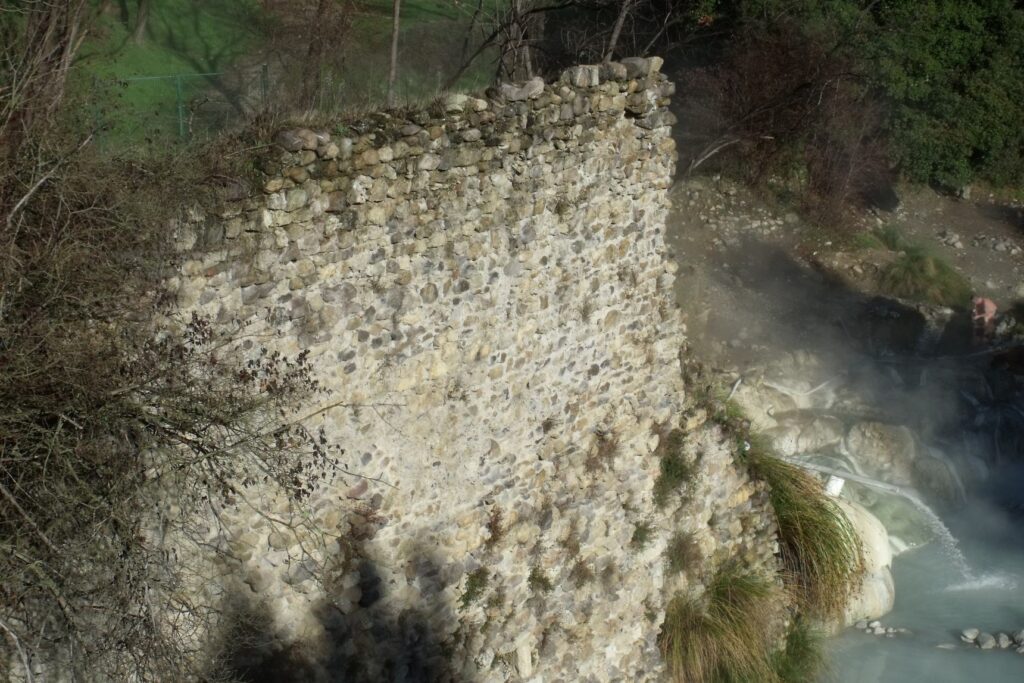
What makes Petriolo even more special are the remains of the old fortified medieval baths. Next to the free area there’s also a paid thermal facility.
Why go: to bathe in hot water practically inside the river, surrounded by woods.
2. Rapolano Terme: thermal water overlooking the Crete Senesi
About 1 hr 20 min from Florence | Paid entry
Rapolano is one of the closest and easiest thermal destinations to reach from Florence. You won’t find free natural pools here, but two thermal baths fed by the local springs: Antica Querciolaia and Terme San Giovanni.
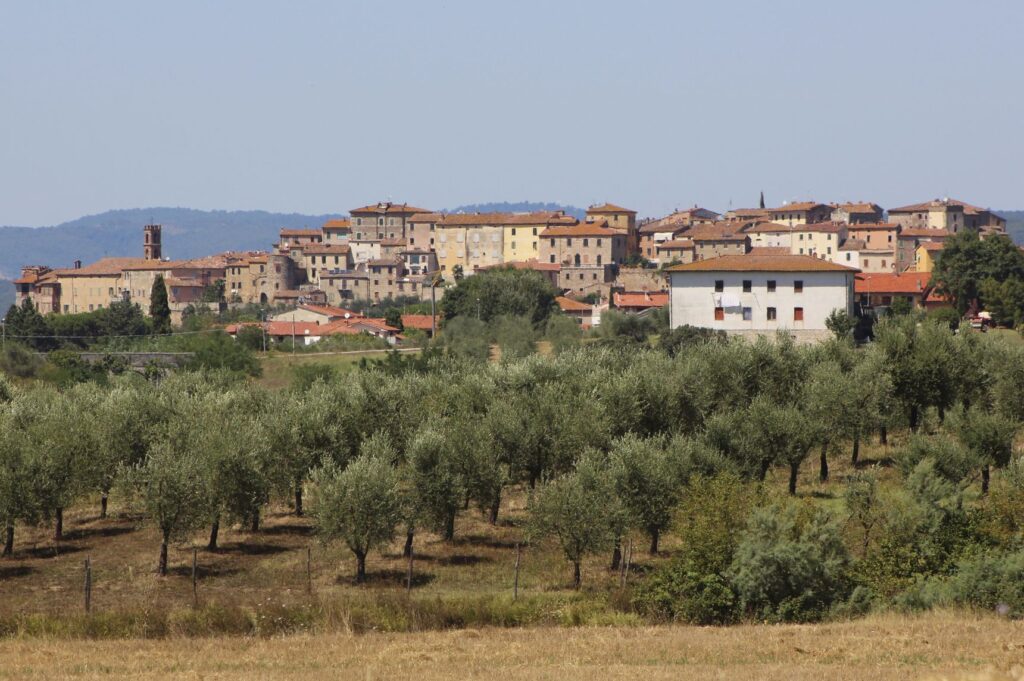
Rapolano’s thermal waters feed outdoor and indoor pools, so you can swim even in the coldest months. At Terme San Giovanni in particular, the pools open onto the landscape of the Crete Senesi, the bare clay hills south of Siena.
It’s a different choice from Petriolo or San Filippo: less wild, certainly, but right for anyone who wants natural thermal water without giving up changing rooms, pools and the services of a proper facility.
Why go: for a day at the hot springs without having to plan a whole weekend.
3. Bagni San Filippo: bathing in the woods
About 2 hrs from Florence | Free pools + thermal baths
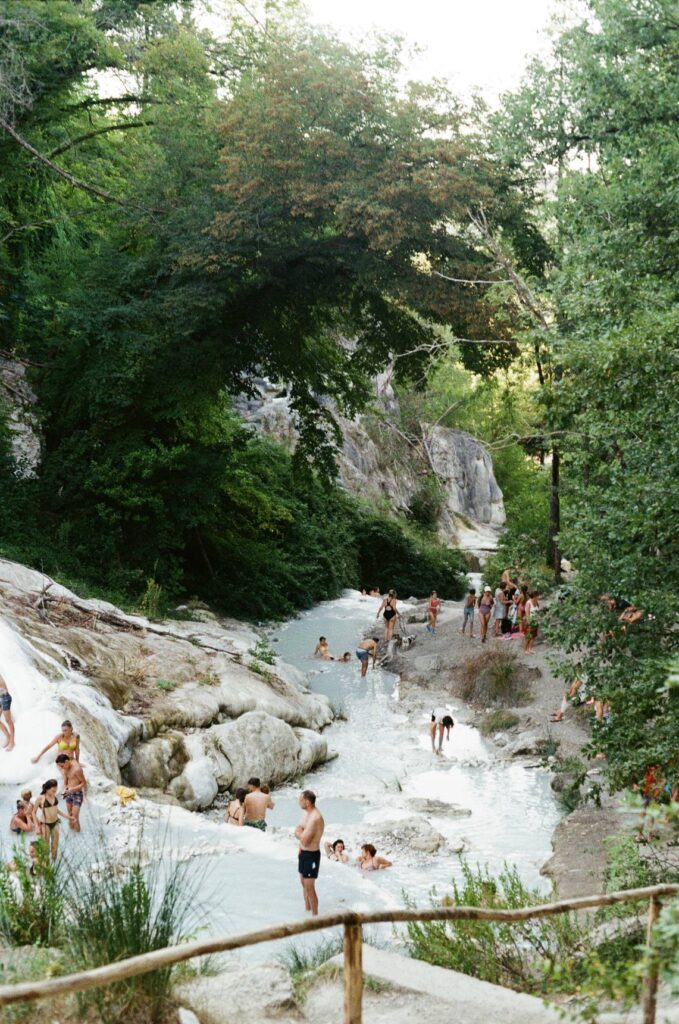
At Bagni San Filippo the thermal water literally runs through the woods. The result is one of the most recognizable landscapes in Tuscany: warm streams, small pools and large white limestone formations built up over time by the water’s deposits.
The most famous is the Balena Bianca (the “White Whale”), a huge limestone formation along the Fosso Bianco. Along the way, the thermal water forms several natural pools where you can soak for free.
Keep in mind, though, that this is a delicate natural environment: the limestone formations should be respected, so avoid climbing or walking on the most fragile parts.
In the village there’s also a thermal bath for anyone who prefers a more organized experience.
Why go: because it’s one of the places where the idea of “natural hot springs” comes through most clearly, with hot water flowing straight through the woods.
4. Bagno Vignoni: the village built around the water
About 2 hrs from Florence | Paid entry
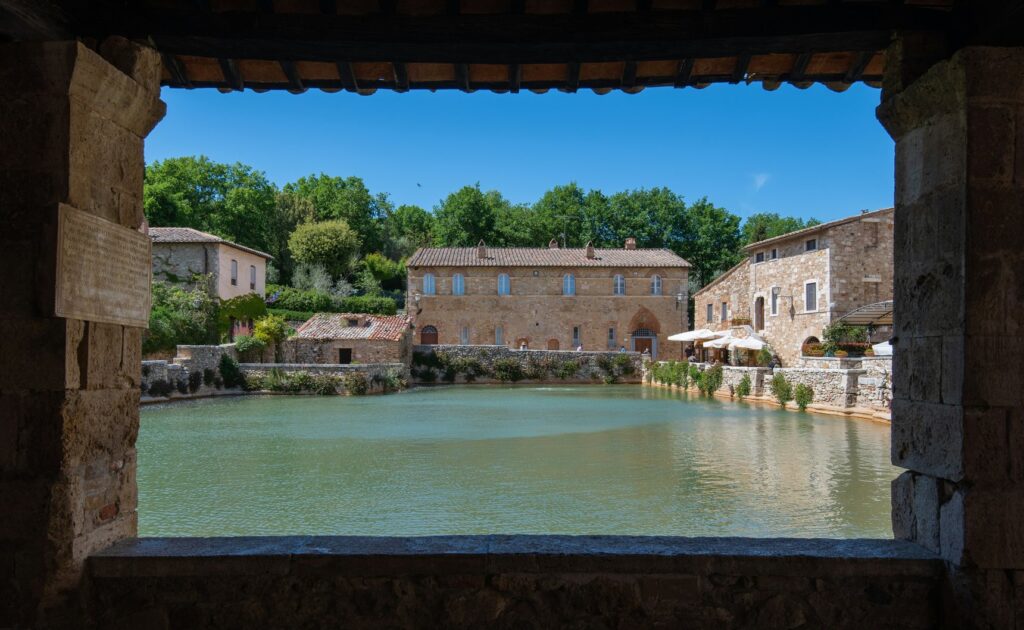
One thing needs saying right away. The large rectangular pool in the middle of Bagno Vignoni, the one that makes the village instantly recognizable, is not open for bathing.
The thermal water does rise naturally, though, and over the centuries its presence has shaped the history and even the layout of the village. To get in the water, you’ll need to pick one of the thermal baths and spa hotels in the area.
It’s still worth adding to your itinerary, because in Bagno Vignoni water isn’t just a service offered by a wellness center: it’s what the whole village grew up around.
Why go: to combine hot springs, the Val d’Orcia and one of the most unusual villages in Tuscany.
5. San Casciano dei Bagni: a thermal history thousands of years long
About 2 hrs 15 min from Florence | Thermal area + paid facilities
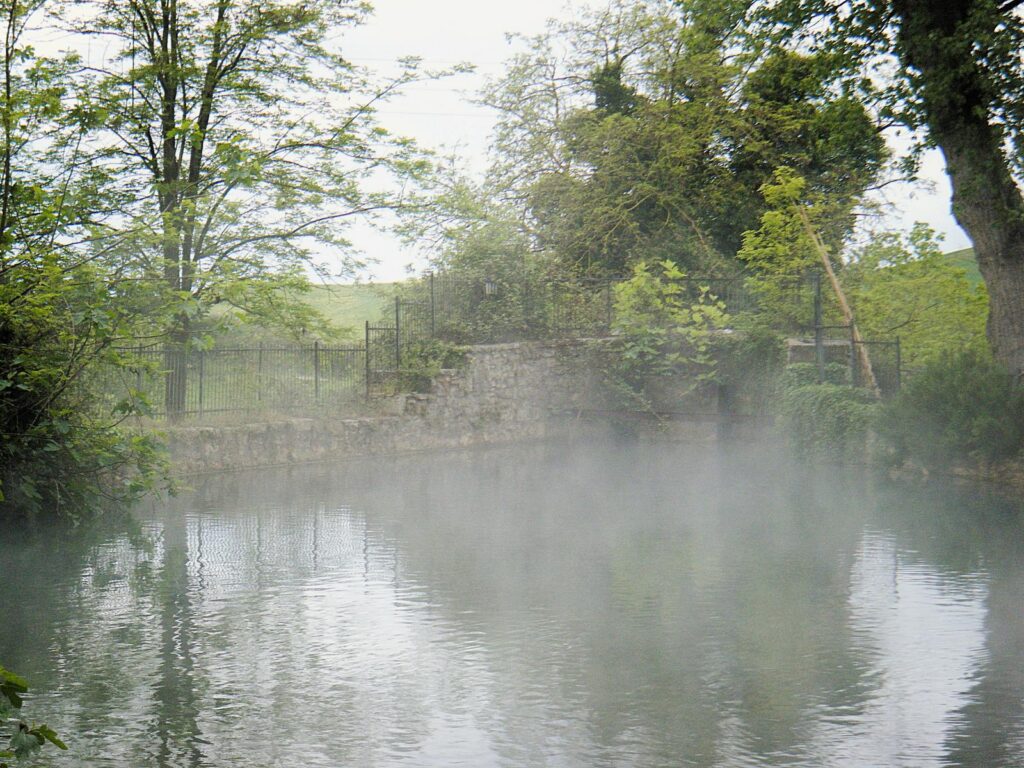
San Casciano dei Bagni became known worldwide thanks to the extraordinary archaeological finds at its Etruscan-Roman thermal sanctuary. But the reason people came here thousands of years ago is still there: an abundance of hot springs.
The area is crossed by numerous springs, and hot water has run through the village’s entire history. Today you can enjoy the thermal experience at the facilities in the area and discover a landscape where archaeology, water and scenery are closely bound together.
It’s a particularly good choice for a weekend, perhaps paired with the Val d’Orcia or the other towns of the Valdichiana.
Why go: to understand how deeply the hot springs have shaped the history of this part of Tuscany.
6. Saturnia: the Cascate del Mulino
About 2 hrs 45 min from Florence | Free pools + thermal baths
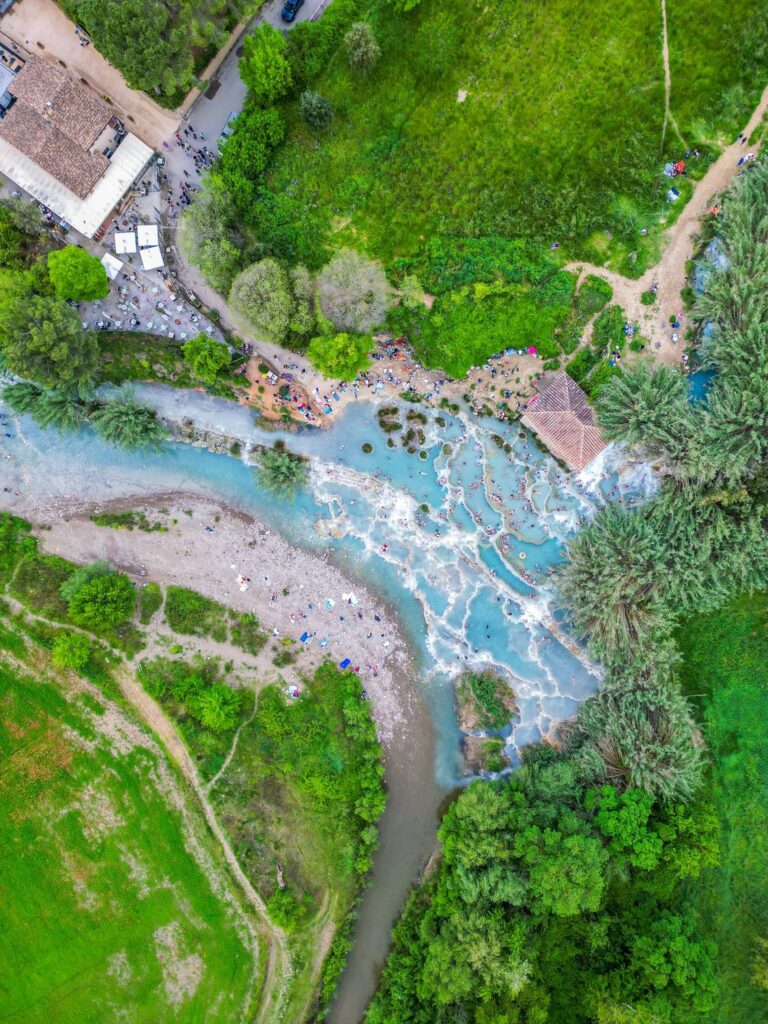
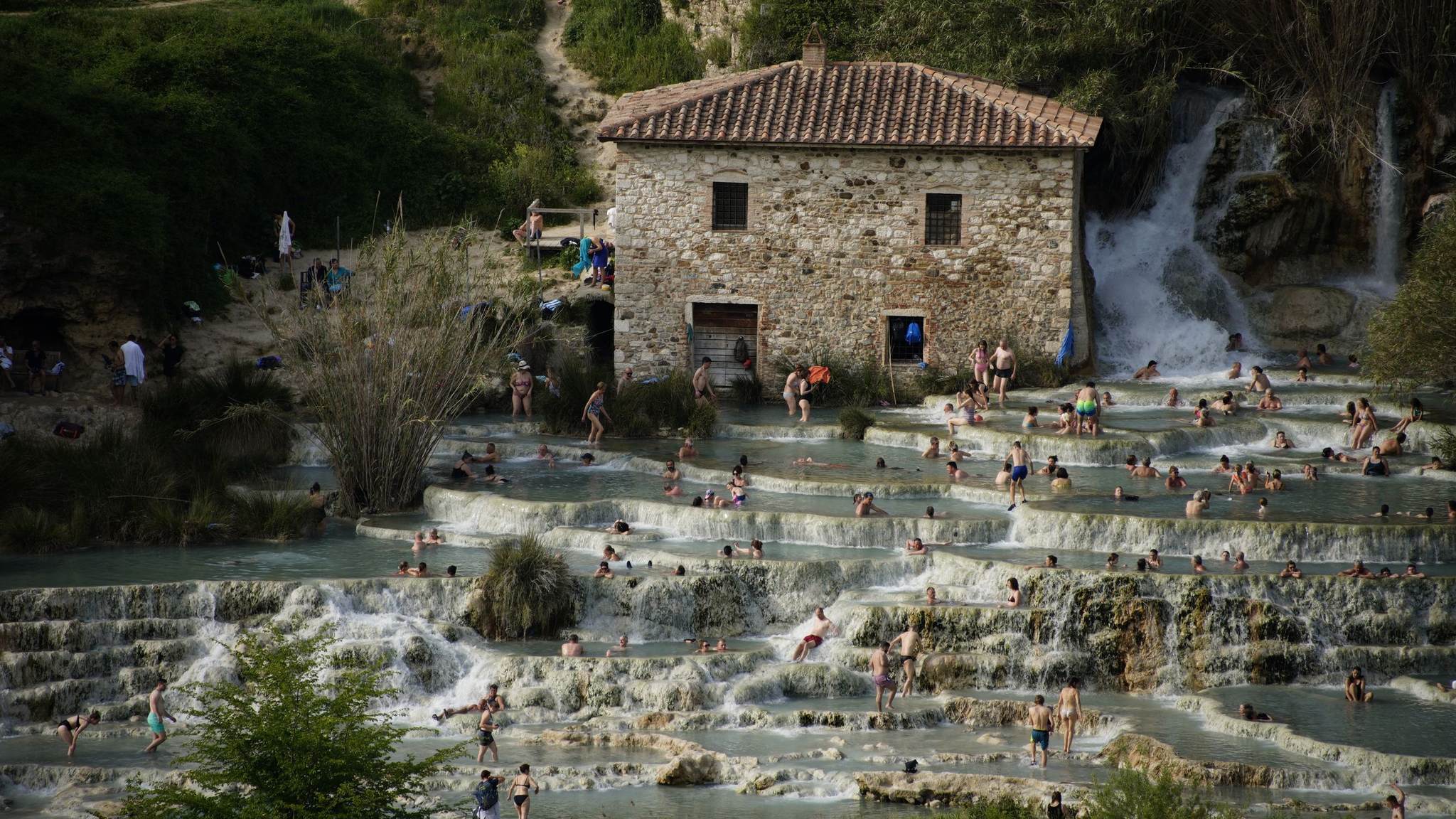
They’re probably the most famous natural hot springs in Tuscany. And you only need to reach the Cascate del Mulino (the Mill Falls) to see why.
Saturnia’s thermal water rises from underground at around 37.5°C (99.5°F) and flows down to the falls, where over time it has carved a series of natural pools into the travertine.
The Cascate del Mulino are free to access and let you soak directly in thermal water in the middle of the countryside of the Maremma, Tuscany’s wild south. A short distance away is the large Terme di Saturnia complex, which charges admission and is fed by the same thermal source.
It’s also one of the places where the experience changes most with the seasons: in winter, especially on the coldest days, the steam rising off the water makes the landscape look completely different from summer.
Why go: because at least once it’s worth trying a natural hot-water pool surrounded by open countryside.
7. Sorano: hot springs in the tufa country of the Maremma
About 2 hrs 40 min from Florence | Paid entry
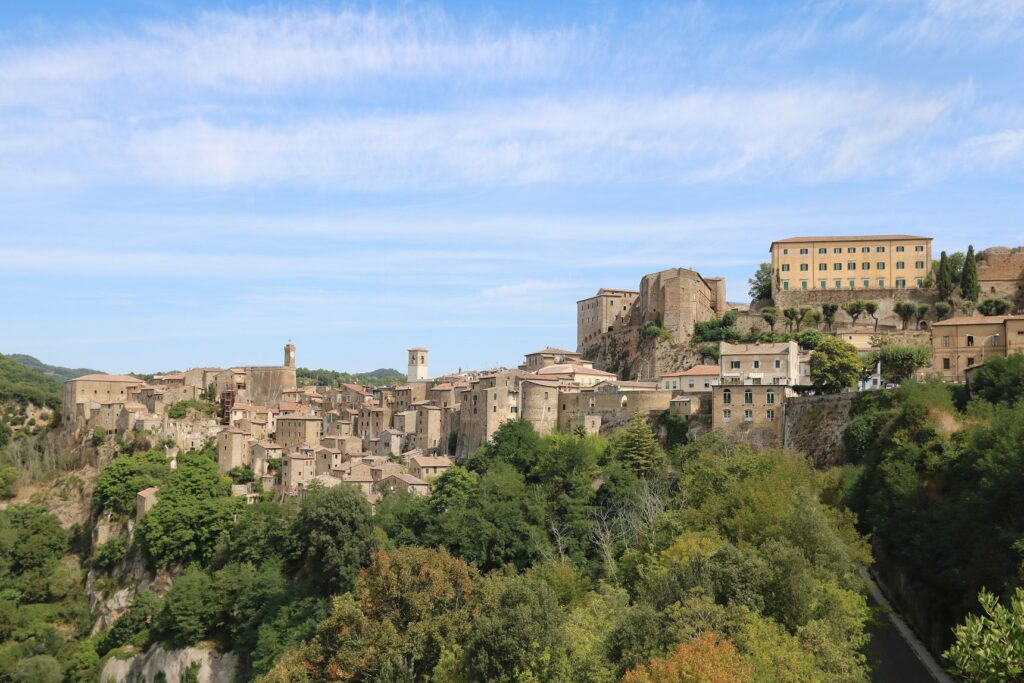
Sorano is less well known than Saturnia, and that’s exactly why it can be a good alternative for anyone who wants to turn the hot springs into a weekend in the inland Maremma.
The Terme di Sorano draw on the area’s thermal springs and have naturally fed pools. One of the most distinctive features is the so-called Piscina dei Frati (the Friars’ Pool), a historic pool set among the greenery.
There’s a geographic advantage too: Pitigliano, Sovana and Sorano are very close together, so you can build a two-day itinerary that’s completely different from the Tuscany of the great art cities.
Why go: to pair thermal water with the tufa villages of the Maremma.
Free hot springs or thermal baths?
The difference doesn’t necessarily lie in where the water comes from. At Saturnia, Rapolano or Bagni San Filippo you’re still talking about natural thermal springs; what changes above all is how you experience them.
At the free hot springs you have to reckon with trails, no changing rooms, slippery bottoms, few showers and limited or nonexistent facilities. But that’s exactly what makes them special: you soak in the water in practically the same natural setting it flows through.
Thermal baths, on the other hand, let you enjoy the same resource through pools, changing rooms and organized services, which makes them an easier option, especially in winter.
Starting from Florence, then, you can choose based on how much time you have. Petriolo and Rapolano work well even for a day trip; Bagni San Filippo, Bagno Vignoni and San Casciano dei Bagni can be the excuse for a weekend between the Val d’Orcia and the Valdichiana; Saturnia and Sorano are worth a few extra miles and at least one night away.
Either way, the starting point stays the same: water that comes up from underground and that, in some corners of Tuscany, has been flowing in the same places for centuries.