Songs That Tell Florence: From Odoardo Spadaro to Brunori Sas
A song dedicated to a city is not merely a homage, a gift a songwriter offers it. It is much more: it means telling the city from within, walking its streets, its alleys, its palaces and monuments, and the people who fill it. The stories that unfold there — even the smallest and seemingly most insignificant — make the city what it is, give it an identity, shape it and set it apart from all the others, with its own atmosphere and its own quirks.
Florence, of course, could hardly be missing from the roll call of cities that have most inspired songwriters of every era and genre, offering itself as the ideal backdrop for a story someone wanted to tell, or handing over its own affairs as the perfect subject for a few lines and a handful of chords.
The songs in which the name of the Tuscan capital appears are truly countless in the history of music, and all of them immensely beautiful — but a few struck us in particular, and Ful! tells you about them here.
Going a long way back in time, to the years just before the Second World War and precisely to 1937, a Florentine singer-songwriter and actor of Sicilian descent, Odoardo Spadaro, wrote lyrics that are a true poem — aching and moving, but above all a poem that tells a piece of history, doing so through an episode that happened to Spadaro himself.

During his tour in Montevideo, Uruguay, the songwriter found himself performing before an audience teeming with Italians who had emigrated in search of fortune and work — and among them a sixteen-year-old girl came up to him, kissed him on the cheek, and asked him to carry that kiss to Florence.
These were the years of mass migration, years when people left Italy, fleeing for a better future — but the price was steep, because even where the sacrifice was necessary for survival, the pain of separation from one’s own city was deep and intense. Spadaro was quick to sense that silent longing, and that very evening he wrote and set to music verses of extraordinary beauty (in Florentine dialect, the girl begs a departing traveller to carry a kiss home to Florence, the city she still holds in her heart, and for which she works only to see it again one day):
«Partivo una mattina co’i’ vapore
e una bella bambina gli arrivò.
Vedendomi la fa: Scusi signore!
Perdoni, l’è di’ Fiore, sì lo so.
Lei torna a casa lieto, ben lo vedo
ed un favore piccolo qui chiedo.
La porti un bacione a Firenze,
che l’è la mia città
che in cuore ho sempre qui.
La porti un bacione a Firenze,
lavoro sol per rivederla un dì […]»«[…] Bella bambina! Le ho risposto allora.
Il tuo bacione a’ccasa porterò.
E per tranquillità sin da quest’ora,
in viaggio chiuso a chiave lo terrò.
Ma appena giunto a’ccasa te lo giuro,
il bacio verso i’ccielo andrà sicuro […]»
The song was titled La porti un bacione a Firenze (“Carry a big kiss to Florence”) and became a true anthem to the city — and, even more, an anthem for all those who left their beloved Florence for distant lands.
Moving on some thirty years, to 1966, Florence was overwhelmed by a terrible event that shook the city and its people: the flood. It was a hard moment for the city, but also an occasion for solidarity and cooperation among its people, who for the love of Florence rescued it from the mud.

Riccardo Marasco, a Florentine vernacular songwriter and balladeer, wrote about it in a bawdy, irreverent piece in which the tragedy of the flood turns ironic and sarcastic, softening into a brazen, almost inappropriate lightness — one that, in truth, hides a deep sense of fear and grief (in coarse Florentine, a couple mistake the rising flood for a neighbour’s overflow, before the Arno tears through the city, past Michelangelo’s David and up to the statue of an indignant Dante):
«Marito: “O Rosa, ma che l’ha chiuso l’acquaio ieri sera?
E sento un gran pisciolio d’acqua!”
Moglie: “A Gesilao, vien via, e tu lo sai e’ la solita storia:
l’e’ la sora Algisa di’ ppian di sopra,
il su’ marito l’è anna’o ni’bbagno
e lei la fa pisciare il figliolo dalla finestra.
Su’ mi fiori, a Gesilaaao! […]»«Nuoti sommerso in un mare di cacca
non sai se d’uomo oppure di vacca
non sai capire i’cche t’è successo
ti pare troppa per esser d’un cesso
E mentre cerchi di restare a galla
l’Arno trabocca laggiù dalla falla
corre veloce per via Tornabuoni
al David lava fremente i coglioni […]
Dante di marmo, poeta divino,
mira sdegnato l’immane casino
“Oh fiorentini, mi avete esiliato,
prendete la merda che Dio v’ha mandato!”»
In this song — titled, fittingly, L’alluvione (“The Flood”) — the biting, irreverent humour typical of Florentines takes centre stage and perfectly mirrors the entirely Florentine way of facing and processing painful, unpleasant events. That is why we can only love Marasco’s song: it not only recounts a historical episode tied to the city, but reveals, with a strong sense of self-recognition, the deepest behavioural instincts of a people’s soul in the face of such tragedy.
Setting aside for a moment the historical events that fired the songwriters’ imagination, we turn now to a more intimate, personal horizon with what is an absolute masterpiece of Italian music: Firenze (canzone triste) (“Florence, a sad song”) by Ivan Graziani.

In the opening lines, Florence has changed nothing for the woman at the heart of the song; what she loved most was the air, and she filled folders with drawings and dreams — but the marble eyes of the Tuscan colossus, the David, gaze too far into the distance:
«Firenze, lo sai, non è servita a cambiarla
La cosa che ha amato di più è stata l’aria
Lei ha disegnato, ha riempito cartelle di sogni
Ma gli occhi di marmo del colosso toscano
Guardano troppo lontano […]»
And yes, perhaps the eyes of the David urge us always to look further, and clearly the folders of dreams were not enough for the woman Graziani sings of — a woman the narrator loves, and he is not alone, for his friend, nicknamed Barbarossa, a philosophy student, has feelings for her too. A woman to split in two, then, but who in the end will belong to neither of them:
«[…] Ricordo i suoi occhi, strano tipo di donna che era
Quando gettò i suoi disegni, con rabbia, giù da Ponte Vecchio
“Io sono nata da una conchiglia”, diceva
“La mia casa è il mare e con un fiume no
Non lo posso cambiare” […]
E non c’è più nessuno
Che mi parli ancora un po’ di lei
Ancora un po’ di lei […]»
Listening to the song with your eyes closed, the images the words conjure come vividly to life, and it is not hard to picture the scene: a young woman, on a romantic and perhaps deserted Ponte Vecchio, throwing her drawings into the Arno. Florence is not her city; she was born where there is the sea, not a river.
But it will not be only the woman he loves who leaves Florence; his aspiring-philosopher friend, degree in hand, will return to his native Ireland. Left alone and “wrecked by melancholy,” the narrator stays in Florence — the city where there is plenty of time.
A romantic melancholy, then, that finds in Florence its most fitting stage set, with its dreamy bridges over the silver light of the Arno and its air of blissful sadness — the only city that could truly frame this tormented, nostalgic story, which seems ancient yet is more modern than ever if we think how full Florence is of students who arrive, stay just long enough to secure a degree, and then head back to their hometowns, casting aside the bonds — of love and of friendship — that had meanwhile blossomed.
A very similar story, though in an entirely different key, is that of Lei, Lui, Firenze (“Her, Him, Florence”), a 2011 pop track by the Calabrian songwriter Brunori Sas, which tells of the end of a love affair against the backdrop of an aged Florence:

«Pensi davvero che sia una buona idea
Stare seduti in un bar fino alle nove di sera
Bere un altro bianco Sarti, guardando la gente
Discutere di ferie e lavoro, fare finta di niente
Parlar di Firenze, di come è invecchiata
Dall’ultima volta che l’ho salutata […]»
Florence, once again, is the backdrop to the bitterness left by a love apparently over, which goes on smouldering through the sweet summer evenings of the city, lit by its street lamps:
«[…] Pensi davvero che sia una splendida idea
Andarcene al cinema Flora a vedere Fellini
Mangiare pop-corn in platea come due ragazzini
Scambiarci commenti osceni, scandalizzare i vicini
Che bella Firenze, le sere d’estate
Le luci del centro, le nostre risate […]»
But there is yet another song in which our city is neither the setting of the story nor the scene of a historical event, because Florence herself is the absolute protagonist — or rather, present-day Florence: Il cielo di Firenze (“The Sky of Florence”), a 2015 track.
Written by Giuseppe Dati but composed and sung by Paolo Vallesi together with Marco Masini, the song is an outright protest against Florence’s transformation into a city as shop window — a shop window in which the city is literally sold off to the highest bidder.

«Firenze disegnata da bambini
Noi fatti d’aria in giro per le vie
Il cuore in mano i libri ed i giornalini
Tu non immagini i cambiamenti
Firenze appesa come un calendario
Sulla parete della vanità […]»
How can we not think of Florence’s present condition — commodified, reduced to an object in the clutches of those with the money and power to buy it, and at the same time crushed by an ever more oppressive, almost destructive mass tourism, damaging not only to how it looks but also for the resulting alienation of the city’s true soul.
«[…] Firenze vende e tutti in centro
E niente da sperare
Soli è triste starci dentro
E affondi prima o poi
Firenze insegue il desiderio
È stupita sul serio
E di notte vuol sbagliare
Per poi farsi perdonare
Come noi […]»
These lyrics are nothing less than a desperate plea to save the city from an unworthy fate and, at the same time, a true declaration of love to Florence, because Florence, as Giuseppe Dati writes, “does not want to die.”
And here we have reached the end of this short journey through the music that has paid tribute to and told the story of Florence — though the songs still to be mentioned would be many more. For that reason we invite our readers to do some fitting research of their own and, above all, to listen to these pieces, because Florence can be spoken of in many ways, but music surely does it best.
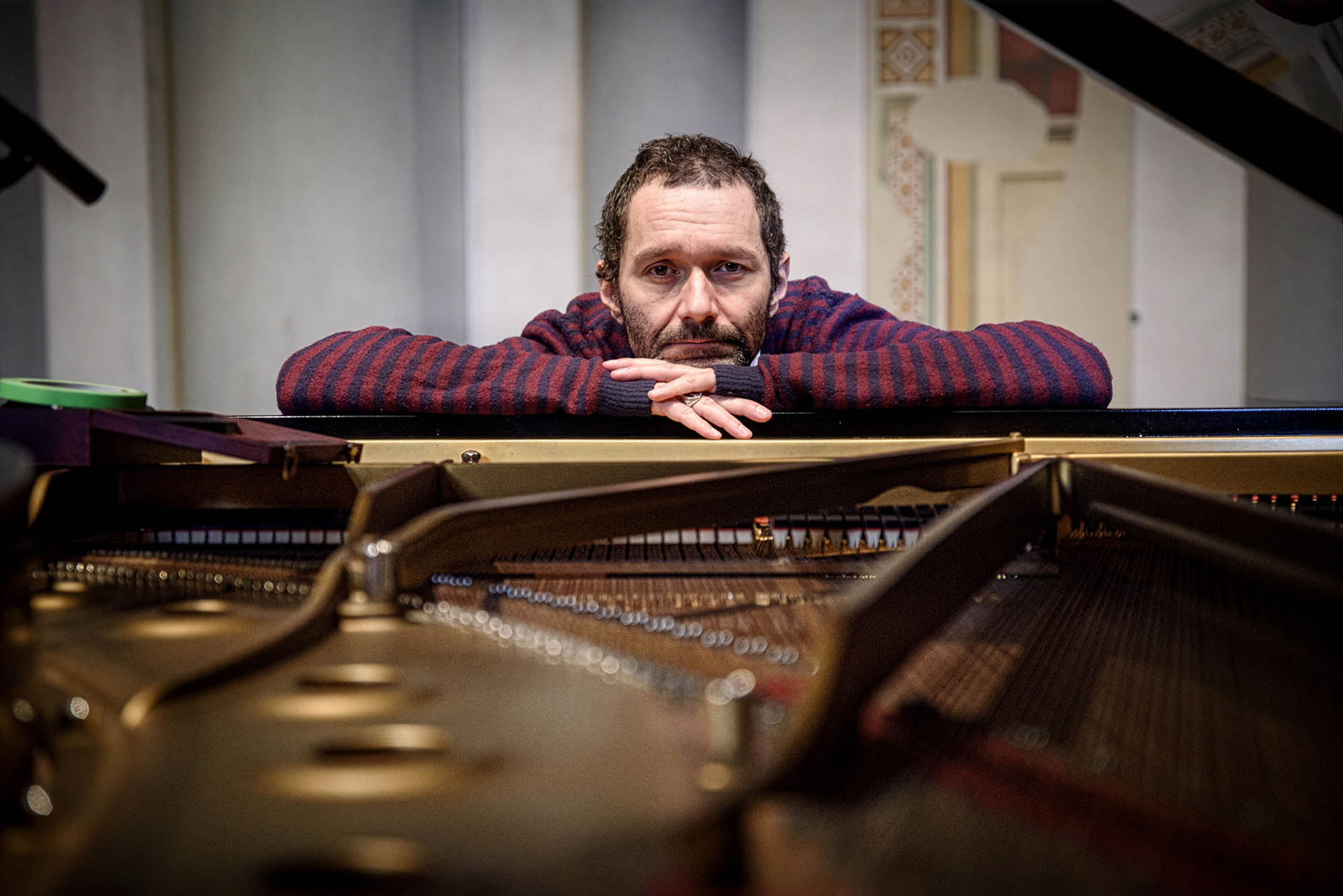
Cover: Brunori Sas, photo by © Chiara Mirelli