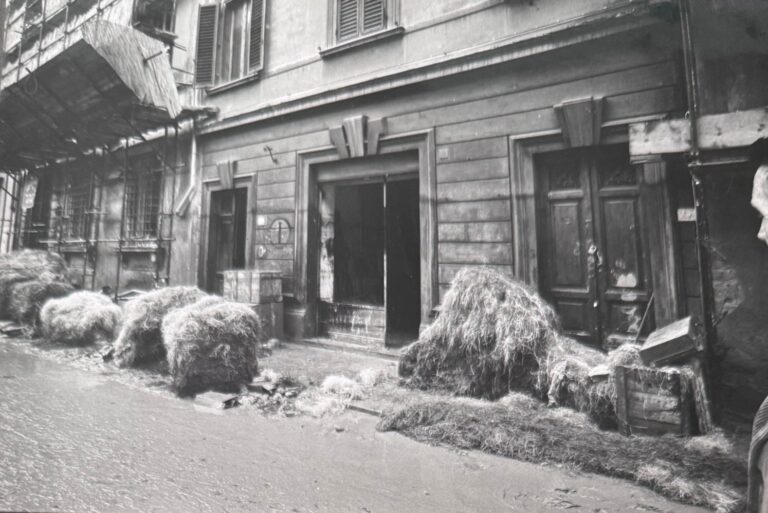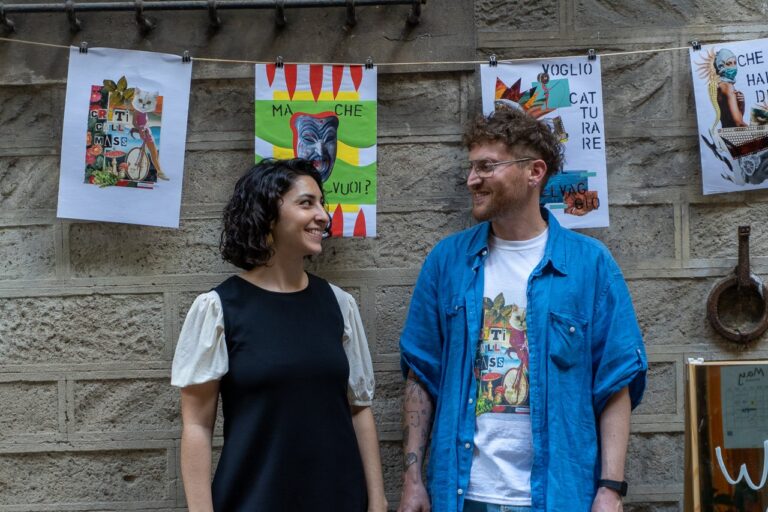
Sixty years after November 4, 1966, mud from the Arno is back in four places the flood once swamped. This time, though, it’s inside the artworks. From November 4, 2026 to January 4, 2027, Florence hosts ARNO – Storie di riconciliazione tra Firenze e il suo fiume (Stories of Reconciliation Between Florence and Its River), the citywide exhibition by Roberto Ghezzi that starts at MAD Murate Art District and continues at the Museo dell’Opera del Duomo, the Cenacolo del Fuligno and the Church of San Salvatore in Ognissanti.
It’s the final chapter of the ARNO project, which began this summer with canvases submerged in the river. Now those canvases are out of the water and on view right where the 1966 flood struck: a former convent turned prison, a museum, a cenacolo and a church. Valentina Gensini curates the MAD spaces, and Lucia Montuschi is the scientific coordinator of the citywide route.
The exhibition is part of MAD’s Progetto Riva, in collaboration with, among others, Florence’s UNESCO World Heritage office, the Direzione regionale Musei nazionali Toscana, the Opera di Santa Maria del Fiore, the University of Florence and Italy’s National Research Council (CNR). It’s also one of the events marking 60 years since the flood on the city’s calendar right now.
Canvases Left in the Arno
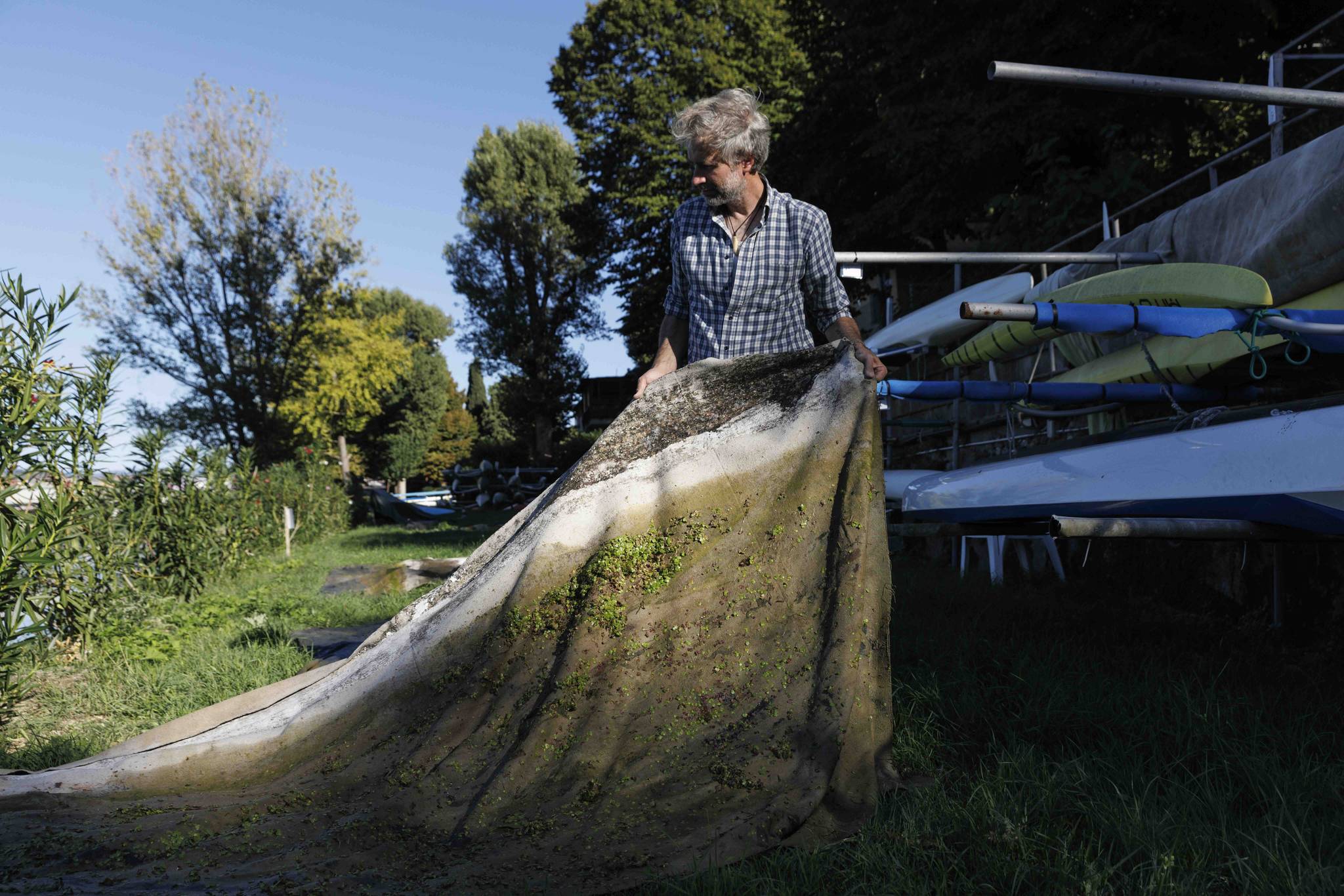
At the heart of the show is a new cycle of Naturografie (“naturographs”), the practice Ghezzi has pursued since the early 2000s: instead of painting, he prepares natural fabrics and hands them over to an environment, letting time, sediment, microorganisms and the weather decide the final image. He has done it in some of the most remote corners of the planet, from South Africa’s Blyde River Canyon to the Lofoten Islands, from Svalbard and Greenland to Patagonia. For ARNO, he came back to work in Tuscany.
From June 29 to September 28, 2026, the canvases stayed in the river at the Canottieri Comunali Firenze rowing club. Water, mud, plants and sediment worked on the surface, leaving layers of color, organic traces, tiny plants and lichens, but also microplastics, a sign of how much the river’s ecosystem is changing.
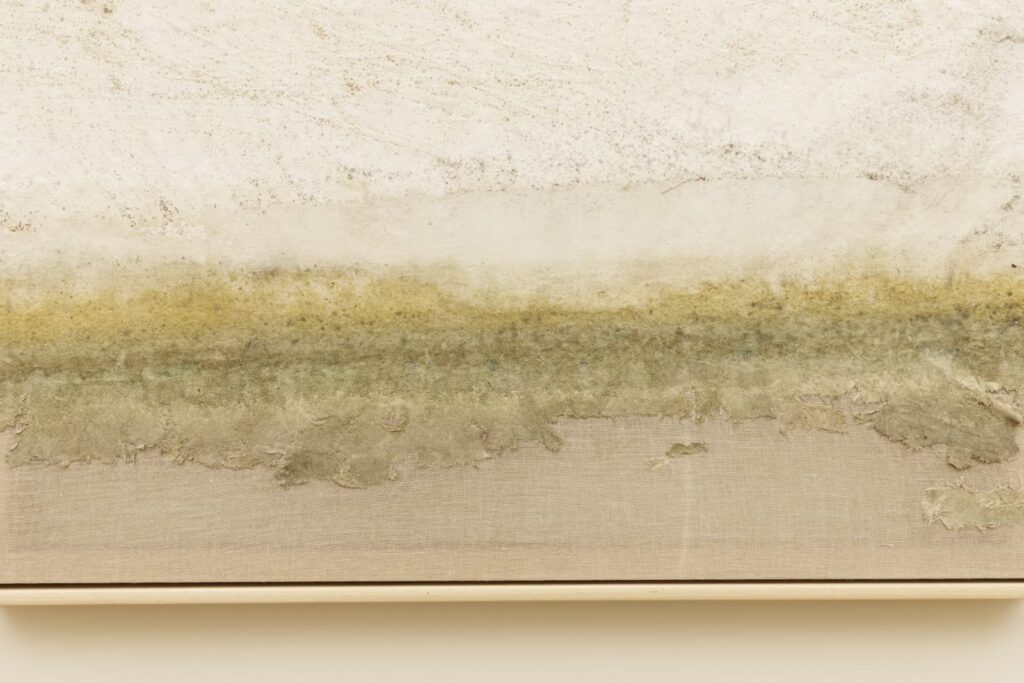
Curator Valentina Gensini calls them “self-portraits of the landscape,” works in which the artist gives up control and the river becomes “a living archive.” The mud that disfigured the city and its heritage in 1966 changes meaning here: from wound to the stuff of memory. Ghezzi, born in Cortona in 1978 and trained in his family’s sculpture studio and at Florence’s Accademia di Belle Arti, describes the moment the project found its symbol:
Over these months it was the Arno itself that told its story and left its memory on the canvases, until it gave us an image we could never have predicted: a small sprout that grew among the fibers of one of the works.
Roberto Ghezzi
The Four Venues
The venues weren’t picked at random: they are four places marked by the flood, and by the season of recovery and restoration that followed.
MAD Murate Art District and the Semiottagono delle Murate
This is the core of the exhibition. Before becoming a center for contemporary art, Le Murate was a cloistered convent (Vasari made his Last Supper for its refectory, a work that later became one of the symbols of the art maimed by the flood) and then a prison. During the 1966 emergency, inmates escaped across the rooftops and found shelter in nearby homes, taken in by local families.
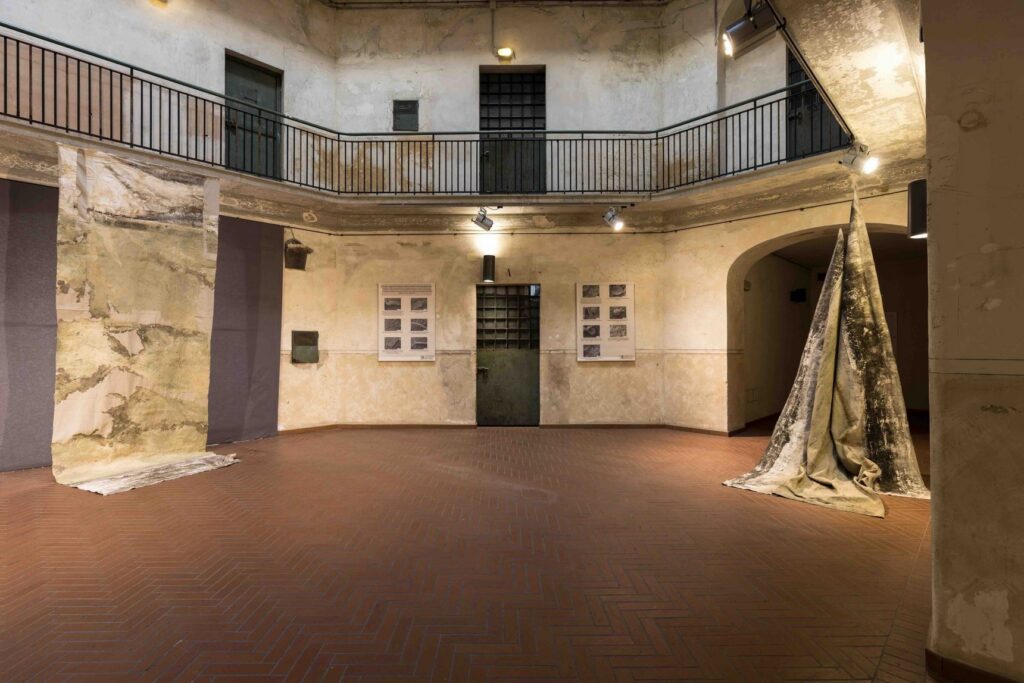
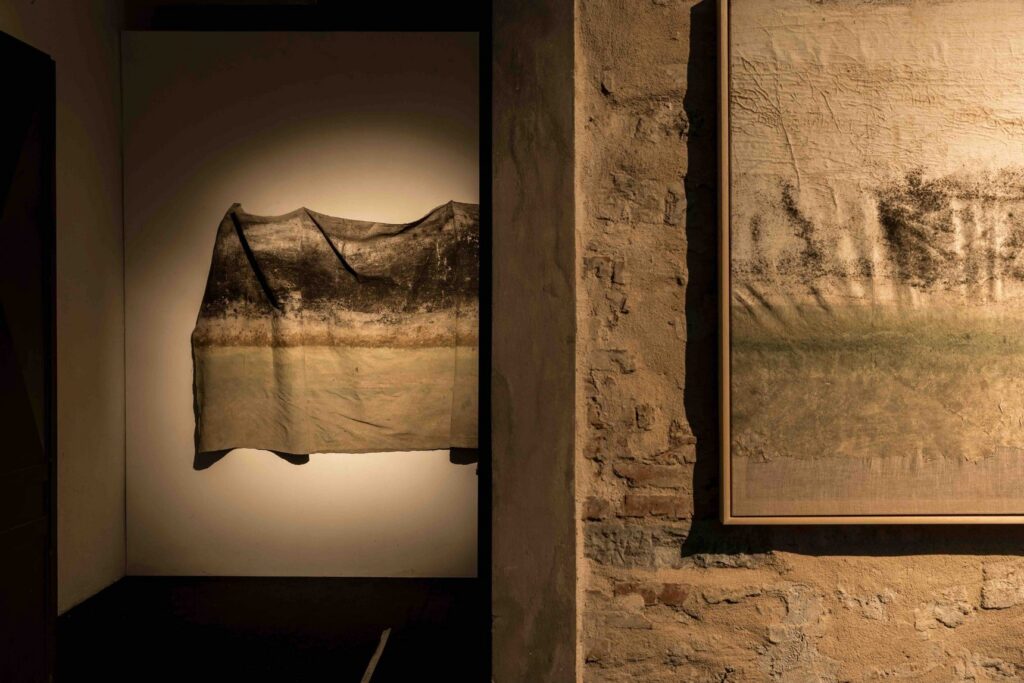
Where Piazza delle Murate
Hours Tuesday to Saturday, 2:30–7:30 p.m.
Museo dell’Opera del Duomo
In 1966 the water rose to about five feet (one and a half meters) and damaged the great illuminated codices of the Cathedral and the Baptistery, the wooden models of the Dome and of the Duomo’s facades, and the archive. Ghezzi’s large canvas is installed in the Ticciati courtyard, in the museum where the Mud Angels brought first aid to damaged artworks and documents.
Where Ticciati courtyard, Museo dell’Opera del Duomo
Hours daily, times on the Duomo website
Cenacolo del Fuligno
Flooded with about eight feet (two and a half meters) of water, the Cenacolo nearly lost the Last Supper by Pietro Perugino. After the flood it served for years as a storehouse for damaged works (Vasari’s Last Supper, brought over from Santa Croce, passed through here too) and only reopened in 1990.
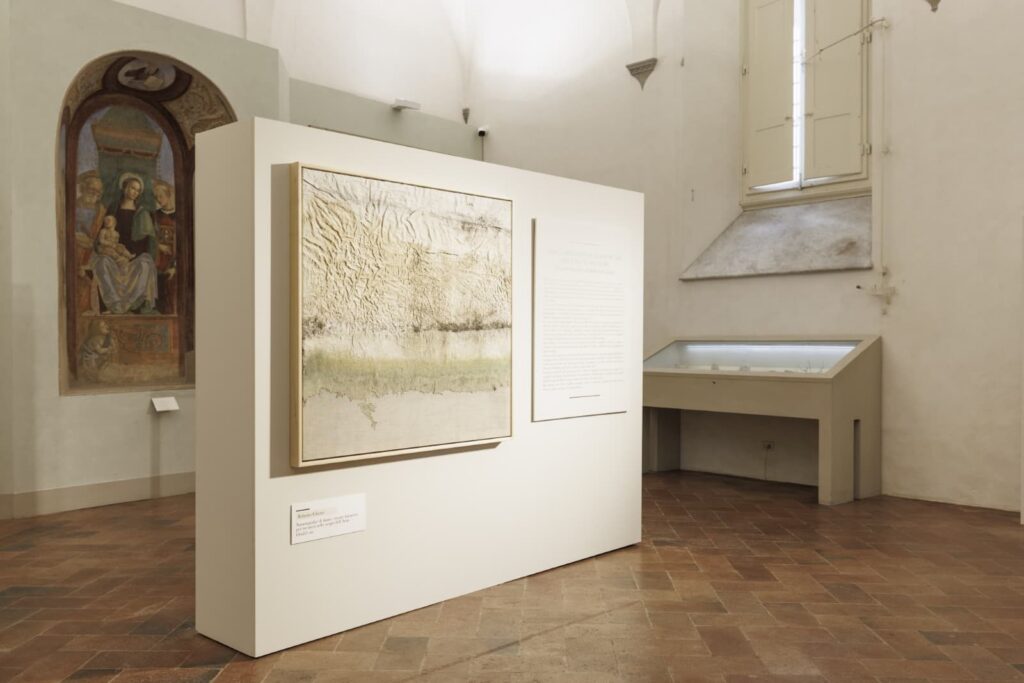
Where Via Faenza 40
Hours Thursday, Friday and Saturday, 9 a.m.–1 p.m. (last entry 12:30 p.m.)
Church of San Salvatore in Ognissanti
Here the water reached about ten feet (three meters), wrecking furnishings and rooms and lapping at the frescoes by Domenico Ghirlandaio and Botticelli. Cleaning the church, recovering the artworks and relaying the floor took about six months, and the post-flood work itself brought to light artworks that had been hidden until then.
Where Borgo Ognissanti 42
Hours 9 a.m.–1 p.m. and 3–7:30 p.m., closed Tuesdays
Guided Tours, Workshops and Talks
The route opened on November 4, venue by venue: at 9 a.m. at the Cenacolo del Fuligno, with a special opening, at 11 a.m. at Ognissanti, at 4 p.m. at the Museo dell’Opera del Duomo, and at 5:30 p.m. with the official opening at MAD and the Semiottagono delle Murate.
Through Dentro il contemporaneo, the Fondazione CR Firenze and MAD program that brings today’s art to different audiences, there are dedicated tours and events:
- Tuesday, November 10, 4 p.m. – for visitors over 65, an exhibition between art, memory and science
- Wednesday, November 25, 4 p.m. – an accessible tour for people with disabilities and their caregivers
- Friday, December 18, 1:30 p.m. – Pillole d’arte contemporanea: Roberto Ghezzi and the Arno
- Tuesday, December 22, 4 p.m. – I racconti dell’acqua (Tales of Water), a guided tour for visitors over 65
- Saturday, January 2, 3:30 p.m. – I colori dell’acqua del fiume (The Colors of River Water), a creative workshop for families with children
On Wednesday, November 18, at 5 p.m., Valentina Raimondi and Guia Morelli present their research on microplastics and microfibers in the Arno, and the same day MAD launches the exhibition catalog, published by Maschietto Editore. School activities and workshops with the University of Florence are also on the calendar.