Arturo Galansino: Palazzo Strozzi as a laboratory of the future
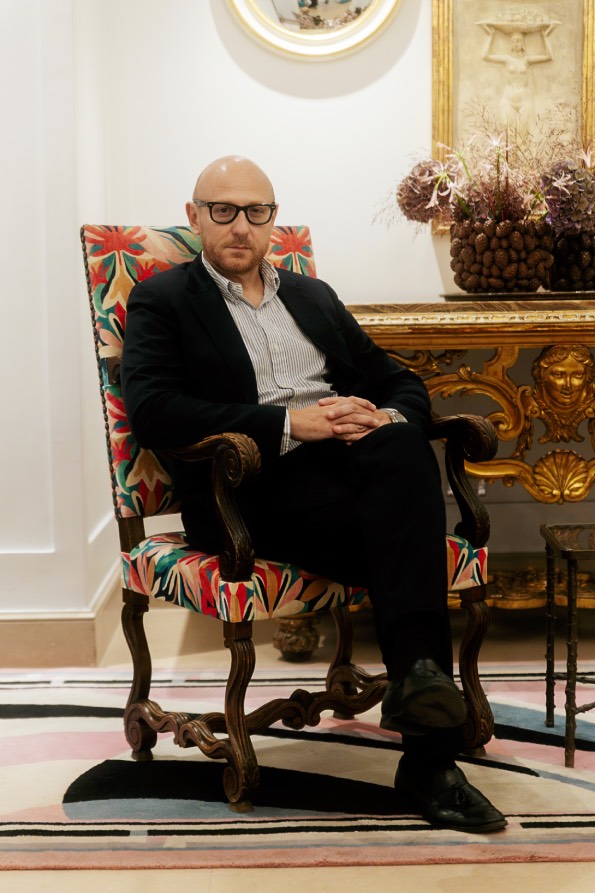
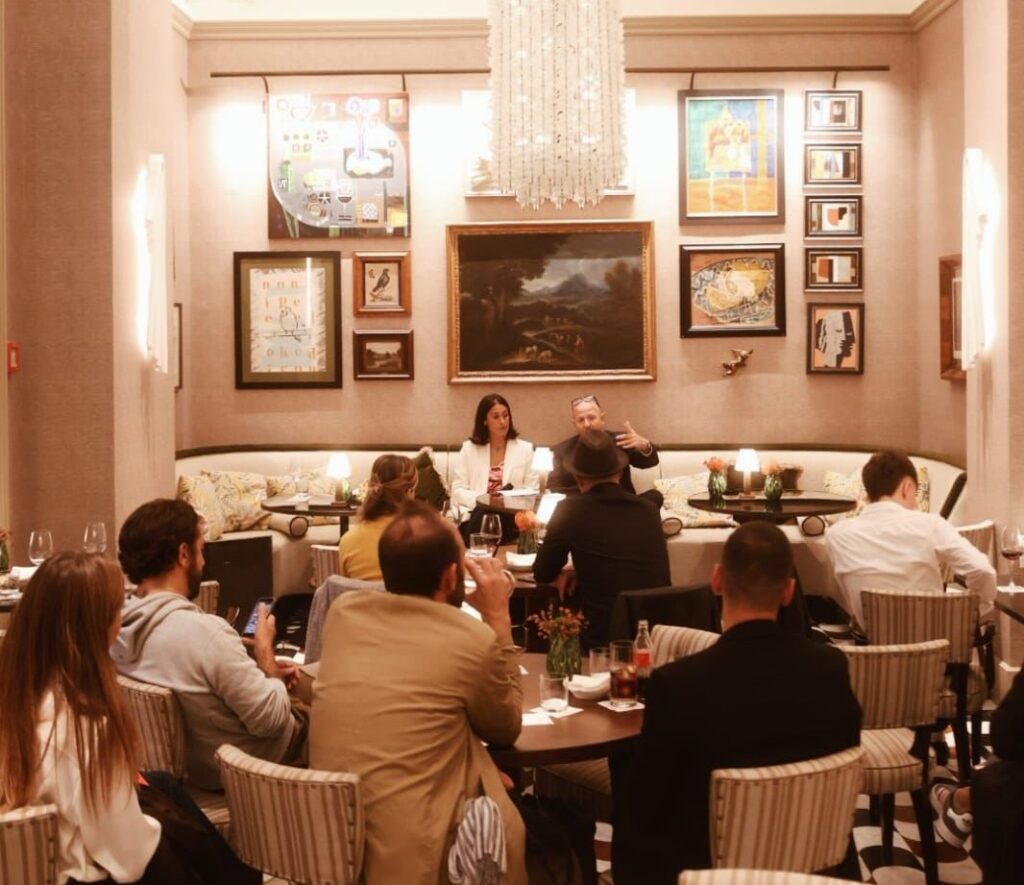
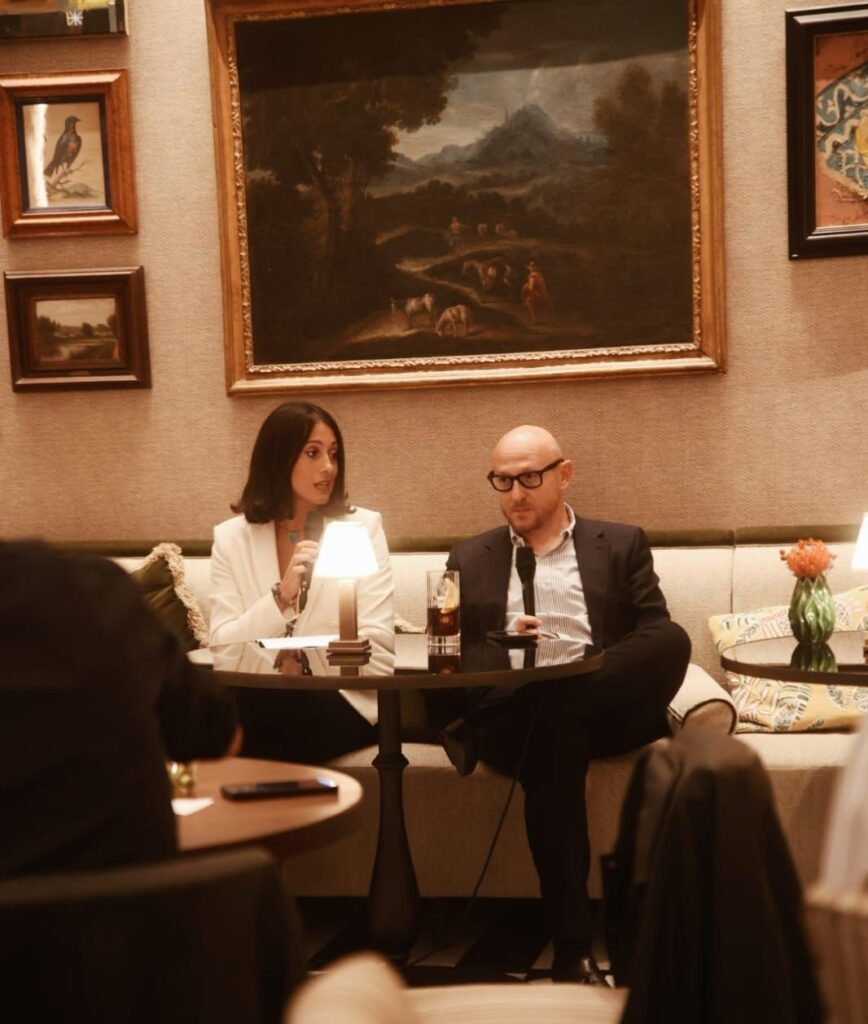
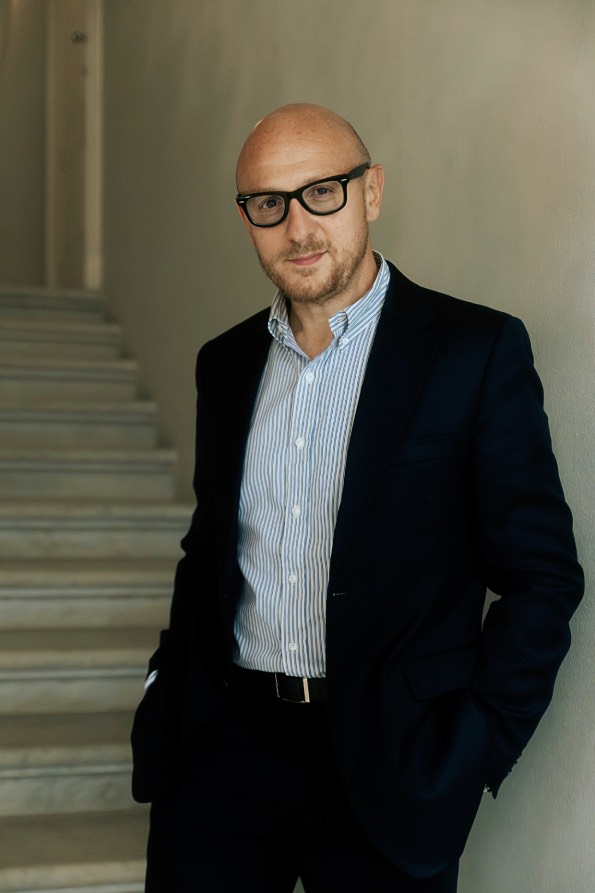
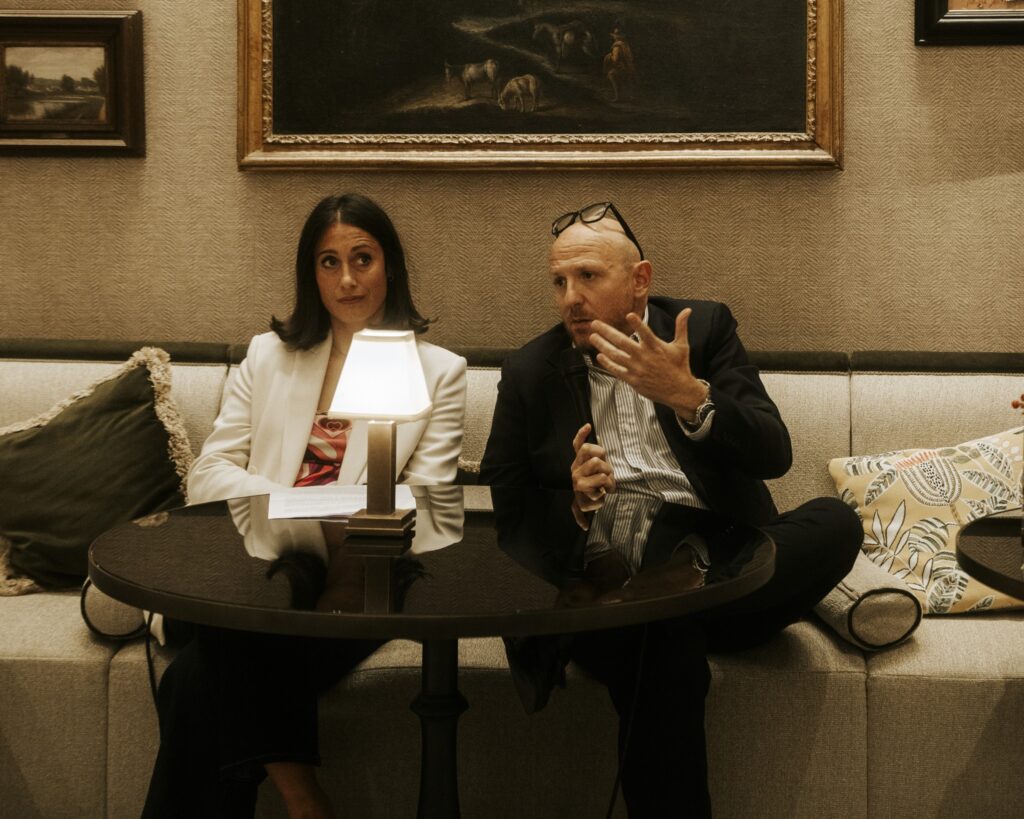
With the Savoy Talks, FUL Magazine opened a new chapter of conversation and debate about the Florence of today. In the lounge of the Hotel Savoy, figures from the worlds of culture and civic life told their stories, offering fresh perspectives and reflections on the future of the city. What follows is a transcript of our conversation with Arturo Galansino, director of the Fondazione Palazzo Strozzi. Born in Alessandria in 1976, Galansino earned a degree in the humanities in Milan with a thesis on Caravaggio, and has worked as a curator at the Louvre in Paris, at the National Gallery and at the Royal Academy of Arts in London.
For nearly ten years he has led Florence’s foremost exhibition institution, with an approach that has managed to bring together the great history of the Renaissance palazzo and the most significant voices in contemporary art. We asked him to take us behind the scenes of the cultural programming, to tell us about the relationship between museum and city, and to share his vision for the future of museums in a changing world.
You have brought contemporary art into a Renaissance setting. How do you strike the balance between a historic container and ever-new content? Is the Renaissance a gilded cage, or a lens that can still bring the contemporary into focus?
It was a deliberate strategy, one we have developed over the past ten years. Bringing major living artists to Palazzo Strozzi was a choice that at first seemed bold, almost risky, but today I think it is well established that these exhibitions work. Palazzo Strozzi has carved out a place for itself when it comes to contemporary exhibitions: they are often among the most visited in Italy and have won an important place on the international scene.
When I started, in 2015, things were different. Italy was short on, or even lacking, major contemporary exhibitions. Because of that, many enthusiasts were forced to travel to London, Paris or Berlin. At first it was a fairly bold gamble, because many of the people involved in the Foundation saw it as a challenge. Florence is deeply attached to its traditions, deeply attached to the past, but it seemed obvious to me that it had enormous potential in this respect: it is a well-connected city, and in just two hours you can reach Rome or Milan.
All that was missing was a place capable of offering this kind of programming. And Palazzo Strozzi, with its perfect Renaissance architecture, was both a challenge and a unique opportunity.
How do you see this “marriage” between the Renaissance, the high point of civilization and of a moral art, and a contemporary art that often challenges and overturns traditional values?
I believe that starting from the places where we work with artists has allowed us to develop their work, including by questioning it and by finding points of contact with the past. We have staged several exhibitions on the theme of art and science, for instance, one of the cornerstones of Renaissance humanist and artistic thought, and many artists have drawn on these ideas in their work.
This approach has worked very well. Palazzo Strozzi is, after all, an unusual museum: it has no permanent collection, it is an empty container. That may sound like a limitation, but in fact it offers extraordinary freedom. Every exhibition is conceived as a unique project, thought through down to the smallest detail, often with delicate and immensely precious works that are difficult to organize and to lend elsewhere.
Our work is not limited to putting on a display: each project comes to life thanks to ambition, curatorial care and a network of initiatives that revolve around the exhibition itself. In this way we can create major exhibitions starting from an empty container, exhibitions that are coherent, relevant and able to engage with history without being overwhelmed by it.
Is it personal taste or the good of the institution that guides you? If the most uncomfortable artist were also the most necessary, would you give him up for the good of the institution?
You would first have to define what “the good of the institution” means. Working in a museum means being clear about where you are, what you are doing, what the identity of the place is, its needs and its mission. These are all things we have always kept in mind, even when we completely revolutionized Palazzo Strozzi’s contemporary programming compared with the past.
Our aim is to bring international events to Florence that can contribute to the cultural, social and economic development of the city and the region. Palazzo Strozzi is a public–private foundation with public partners, but the majority is made up of private entrepreneurs interested in the cultural and economic development of Florence.
Our challenge is to attract a conscious public, one that is different from mass tourism, promoting a sustainable cultural offering. When people talked about this twenty years ago it was a cutting-edge idea; the danger of mass tourism was felt less than it is today, when it exists in various forms. The good of Palazzo Strozzi is to carry on this way.
The subjects of our exhibitions have changed over the years: at first we focused on modern and twentieth-century art, today on the contemporary, while continuing to celebrate the great masters of the Renaissance. The principles, though, remain the same: sustainability, quality and cultural relevance. In that sense, the choices are not driven by personal taste, but by consistency with the institution’s mission.
Palazzo Strozzi is by now a living laboratory of dialogue between Renaissance tradition and the contemporary, often with artists who are already “canonized” (Koons, Abramović, Kapoor…). How far can an institution like yours afford to take a real risk on lesser-known artists? If quality always coincides with names already certified by the global market, aren’t we simply acting as a megaphone for a system that has already decided who counts and who does not?
The quality of an exhibition does not depend solely on the artist’s name, but on how the exhibition is made. An emerging artist can bring an extraordinary project to life, just as an established one might make a less convincing exhibition if the curatorial work is not up to the mark. Every project follows international best practices, which are methodologies, so the quality of the exhibition is not, I repeat, given by the prestige of the artist alone.
For an institution like Palazzo Strozzi, bringing these names to Italy was not a given; many of them had never held major exhibitions here. What is more, presented in this context, often alongside historical references, artists find the stimulus to create something new and unique.
As for the younger generations, our challenge is to give the public a working literacy in art. Palazzo Strozzi’s audience is cultured and attentive: not huge, but a critical mass capable of appreciating quality. In this sense, betting on lesser-known artists also helps to consolidate the foundation’s cultural role, without sacrificing either the rigor or the quality of the exhibitions.
Palazzo Strozzi sits in a central location, in a city like Florence that is deeply marked by mass tourism. How does this affect the relationship between the institution and the public, in a context where museums are becoming globalized?
The central location of Palazzo Strozzi is certainly an advantage, but at the same time it places us in a complex urban context. We analyze our audience in great detail, and I can say that it does not run on mass tourism. About 10 million tourists come to Florence each year, but their average stay is short, little more than a night, so they rarely manage to visit our exhibitions.
A third of our public is made up of locals and Tuscan residents, who visit the exhibitions consistently. It is a special audience, including visitors from the rest of Italy, above all from the North, who come specifically thanks to the fast rail links. Only a small share (15–20%) are foreign tourists passing through, while mass tourists, who often come for iconic attractions like the Uffizi or the David, rarely choose Palazzo Strozzi.
This allows us to offer a more conscious, high-quality cultural experience: visitors appreciate the art and consume the region sustainably, supporting restaurants, shops and local craftsmanship. Even if the numbers seem small, around 300,000 visitors a year, the economic and cultural impact is significant: in 2022, for example, Palazzo Strozzi generated some 120 million euros for the local economy.
In this sense, the institution becomes a bulwark against the phenomena of mass tourism: it promotes an authentic, conscious experience and contributes to the city’s cultural and economic sustainability, without closing Florence off from the world, but seeking to rebalance the dynamics of visiting and consumption.
Are there strategies Palazzo Strozzi uses to turn an exhibition into a cultural and social experience, and not just a spectacle?
The word “spectacle” is a positive one: exhibitions have to draw an audience, but for us it is not only about entertaining. From the very beginning, we aim to create meaningful cultural experiences: the exhibitions are designed to be accessible to everyone, including those encountering contemporary art for the first time, and they often deal with important themes such as feminism, human rights, pollution, immigration and care for the most vulnerable. Strong themes, not always “crowd-pleasers,” but essential for prompting reflection. Many people in our audience began to understand contemporary art thanks to these exhibitions.
We organize hundreds of side activities for each exhibition: guided tours, workshops, talks, interactive experiences. The latest figures show that more than one visitor in four takes part in these activities, turning the visit into a personal and unique experience.
This strategy not only builds audience loyalty, it also helps people understand and appreciate contemporary art, even those who were initially more skeptical. Over the years, thanks to this approach, Palazzo Strozzi has earned an international reputation and credibility, without ever losing touch with the city: even the most resistant Florentines have learned to grow passionate about it, recognizing the value of our work and our method.
In an age of globalized museums, what is the distinctive trait of Palazzo Strozzi?
Being in Florence. It may seem like a limitation, a city of 300,000 inhabitants, not a metropolis, but it is also our strength. The millions of tourists who visit do not spread out evenly through our galleries. From an economic and organizational standpoint, working here means facing different challenges compared with cities like London, where the dynamics and the resources are completely different.
Italy’s polycentrism and the cultural richness of the territory mean that institutions have to focus on their local role, making the most of their context and the surrounding community. Palazzo Strozzi draws its strength precisely from this specificity: we do not rely solely on our “big brother, the Renaissance” as a springboard, but use the history and cultural heritage of Florence as a plus to take our work to a higher level, offering cultural experiences that are unique and rooted in the region.
Artists who pass through Strozzi often see their value and their prices rise. How much do you feel you are an active part of a system of economic validation, as well as cultural validation? And do you set yourselves ethical limits in that role?
Part of our program is devoted to exhibitions dedicated to younger generations, to the less established. Here too, the choice is one of quality: we select artists not on the basis of personal taste or a subjective hunch, but by considering professional and research-based criteria, working with institutions and programs that study contemporary art.
The market is a mirror of cultural values, but Palazzo Strozzi does not take part directly in commercial dynamics. It is inevitable that an artist may see their value rise after a major exhibition, but these are external consequences on which we do not act. Our role is to observe the market consciously without being caught up in it: we think of the art world as a delicate ecosystem, in which you have to balance universities, institutions, galleries and collectors, without mixing incompatible fish in the same tank.
In short, we concentrate on the quality and cultural relevance of the exhibitions, letting any effects on the market be natural and not driven by us. This leads me to a further thought: when we manage to be more sustainable, in terms of financial support, sponsors, audiences and so on, bringing in artists and supporting contemporary work, I hope we will be able to bring more and more meaningful projects to light.
Florence, though, is not an easy city for these dynamics, as I said before. That said, we keep steering in this direction.
On a personal level, what keeps you curious, and what would push you to change course?
The art world is extremely broad: it ranges from philology to contemporary artists, and there really is plenty of room to feed my interest. This is a field that keeps stimulating and surprising me, without making me feel the need to change profession, even though I have many other passions. Now that I have reached the midpoint of my life’s journey, I can say that this work keeps giving me great satisfaction.
Photo: ©Gianmarco Caroti