Banksy: Capitalist Realism, the Bristol Ghost Who Hijacks the World
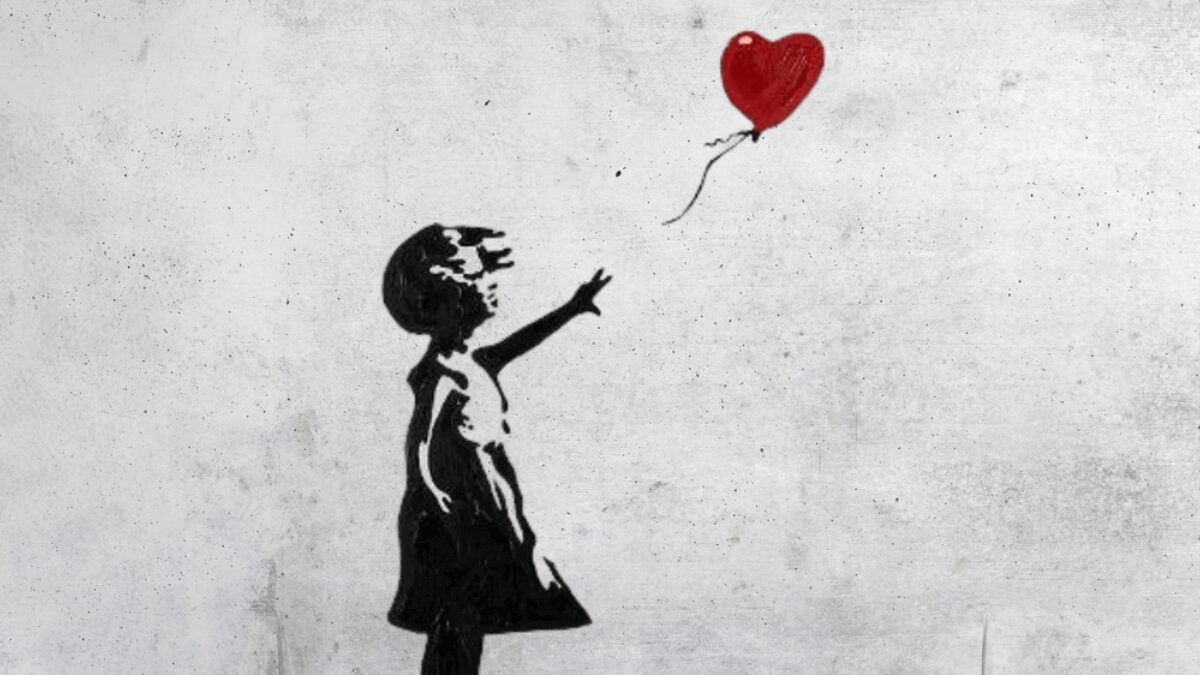
NO FUTURE is the title of the graffiti Banksy painted in 2010 on a wall in Southampton: a sullen child sits on the ground, clutching a balloon whose round shape becomes a perfect circular O, drawn in red — the O of NO FUTURE.
No future for Banksy either, who moves like a ghost through anonymity, hiding his identity as he always has. He is the most celebrated of the living street artists, one of those names everyone knows, alongside Picasso and Van Gogh. His is a contemporary output of oppositional painting: he works through images, turning them into icons, hijacking their meaning to hand back new ones, most of them unsettling. He confronts the present exactly as it is: in his work there is no past and no future, only a bleak, unflinching adherence to reality, served with irony and seasoned with bitterness.
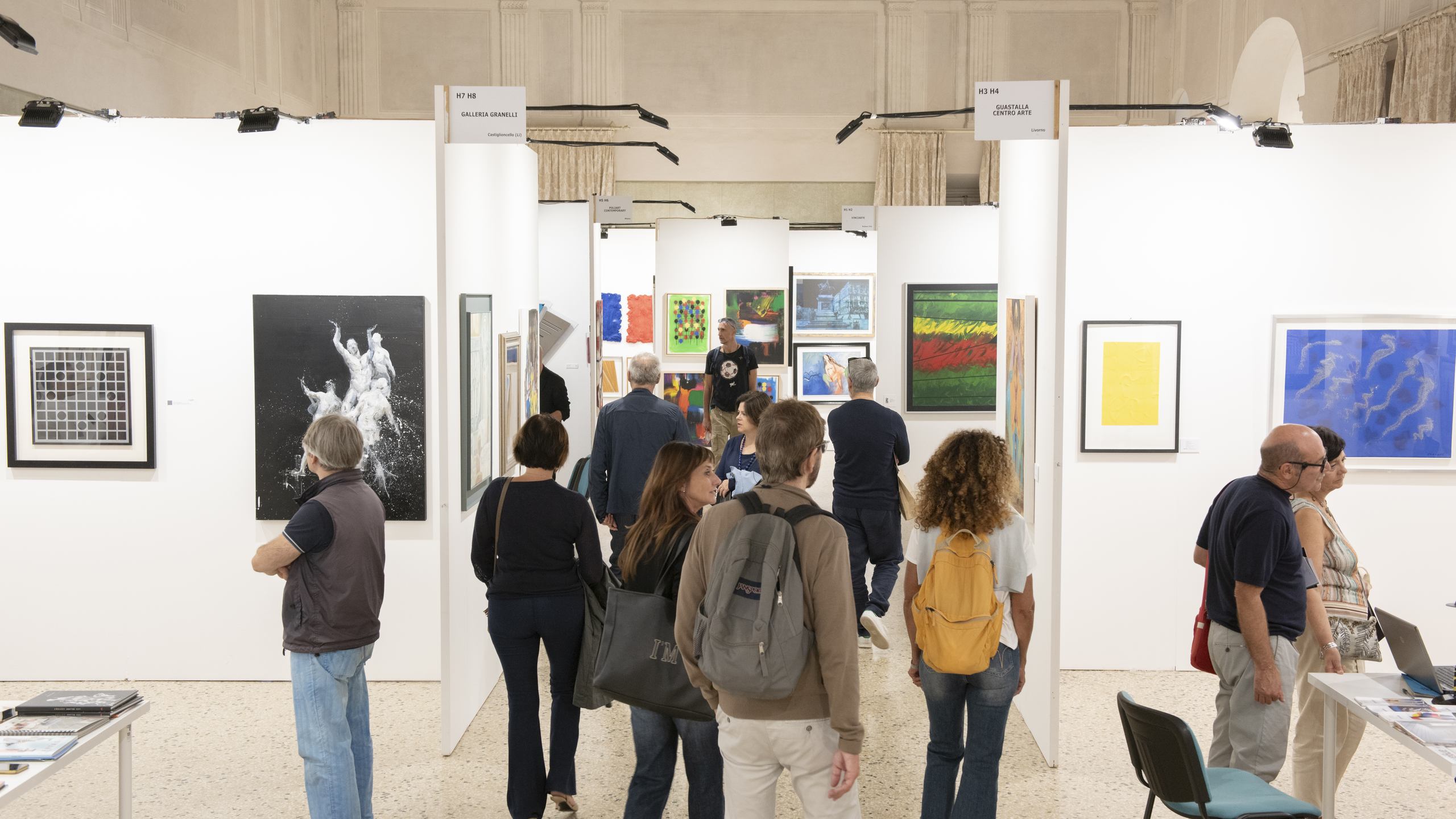
The exhibition “Banksy – Capitalist Realism” was staged at the Centro Studi Espositivo Santa Maria Maddalena in Volterra, promoted by the Fondazione Cassa di Risparmio di Volterra, with scientific curatorship by Stefano Antonelli and Gianluca Marziani. It is an atypical show, because Banksy is a street artist: walls and bus stops are his preferred terrain. As he once put it:
Writing graffiti is about the most honest way you can be an artist. It takes no money to do it, you don’t need an education to understand it, there’s no admission fee and bus stops are far more interesting and useful places to have pictures than in museums.
— Banksy, Banging Your Head Against a Brick Wall, 2001
His art lives outside museums and galleries, accessible to everyone, beyond the consumerist logic of the market and of collecting. And yet a show like this one is precisely the occasion to understand that Banksy’s production is not only made in the street: his studio work exists too, and it is substantial.
So the graffiti artist winks at the snobbish, ravenous world of international collecting, at the official and elitist art world, in order to strike it with its own weapons — as he did in 2018 at the multi-million-pound Sotheby’s auction in London, when the canvas version of the famous “Girl with Balloon,” moments after it was knocked down, slid through a shredder built into the frame and destroyed itself. The exhibition’s title is borrowed from a book by the British philosopher Mark Fisher:
Capitalist realism as I understand it cannot be confined to art or to the quasi-propagandistic way in which advertising functions. It is more like a pervasive atmosphere, conditioning not only the production of culture but also the regulation of work and education, and acting as a kind of invisible barrier constraining thought and action.
— Mark Fisher, Capitalist Realism: Is There No Alternative?, 2009
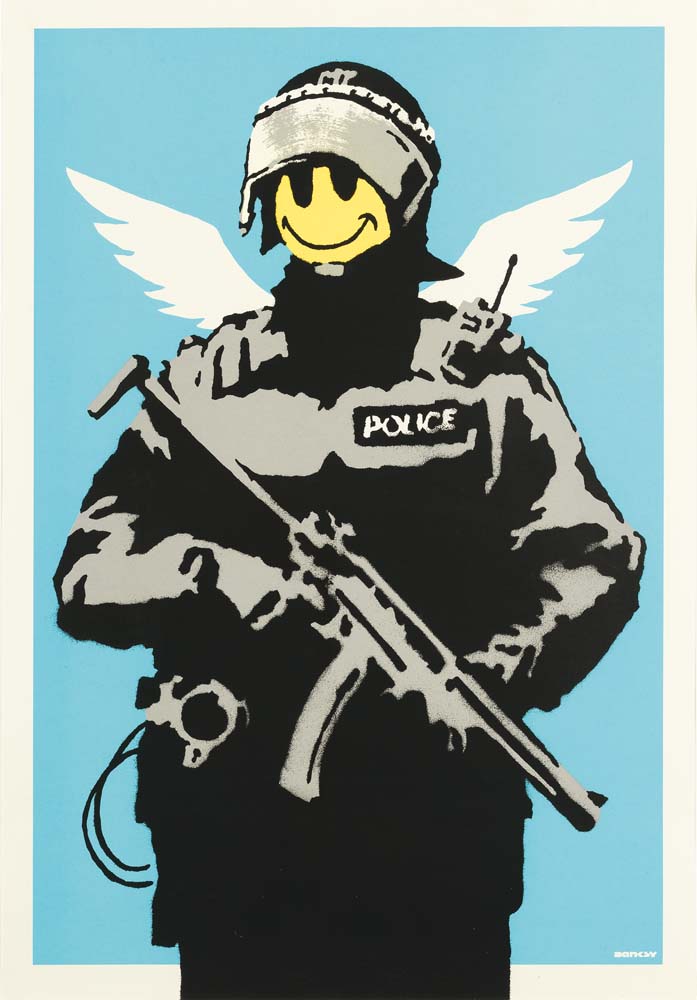
Between 1998 and 2009 the British artist showed in 36 documented exhibitions, with works that carried the same public statements he brought to the walls. On display in Volterra were numerous screenprints from major private collections, some of them British: the exhibition project — every work, document and piece of material in the catalogue — was supervised, verified for accuracy and authenticity, and approved on Banksy’s behalf by Pest Control Office Ltd, the only official channel, created by the artist himself in 2009, that guarantees the authenticity of his works.
“It is easier to imagine the end of the world than the end of capitalism” runs the provocation attributed to Fredric Jameson (or Slavoj Žižek), and it is with this line that the exhibition opens. The origins are here too: the graffiti of New York (with photographs by the legendary Martha Cooper) and Punk — Banksy’s best-known signature, that rough black-and-white line, is said to descend from the work of Jamie Reid, the graphic designer who became famous for the Sex Pistols sleeves, a lasting source of inspiration for the British artist.
Here is Banksy’s art: at the root of his work lies a constant reference to the twentieth-century philosophical and sociological movement of Situationism, and to the concept of détournement (a rerouting, a hijacking) — the political-artistic practice of pulling a work fixed in collective memory out of its context and inserting it into a new one, manipulating it, adding elements that throw its meaning into crisis. Toxic Mary (2003) takes a Madonna and Child in classic Renaissance style and reworks it, the mother holding out to her infant a baby bottle marked with the poison symbol. Napalm (also known as Can’t Beat That Feeling, 2004) places at its centre the young Phan Thị Kim Phúc fleeing the town of Trảng Bàng, burned by napalm after an American bombing: in the British artist’s version, the girl is flanked by two icons of American culture, Mickey Mouse and Ronald McDonald. Then there is the Flower Thrower of Love Is In The Air (2003), which calls everything into question, as does Queen Vic (2003), an unsettling image of the conservative Queen Victoria — the very monarch who declared it impossible for women to be gay, effectively endorsing laws against homosexuality.
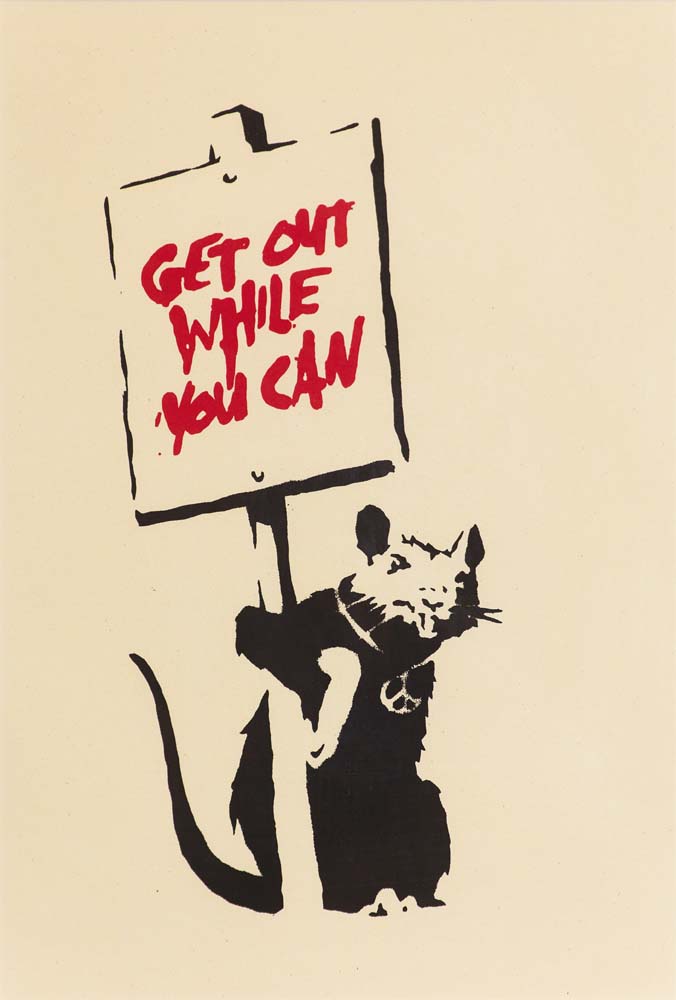
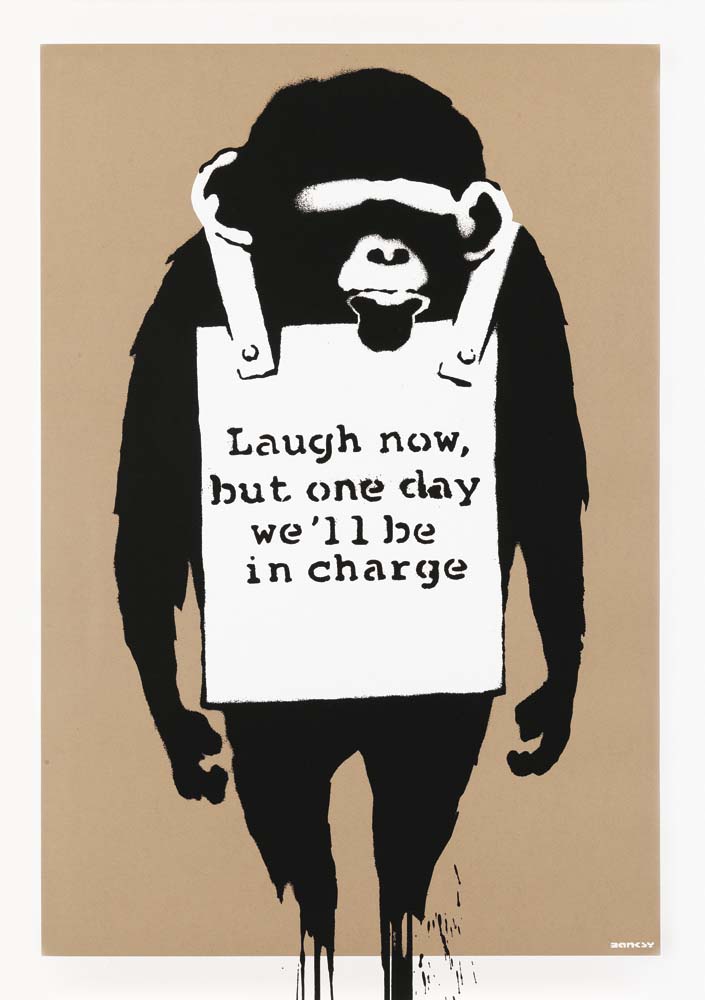
And then Bomb Hugger, also known as Bomb Love (2003): a little girl embraces a bomb as if it were a teddy bear, made during the British protests against the US-led intervention in Iraq. And rats, rats everywhere, infesting even the installation; monkeys reminding us that “Laugh now, but one day we’ll be in charge”; police, capitalism, destruction. The exhibition catalogue gathers critical texts of real interest — without doubt one of the finer things about the show. The video of Dismaland (2015) is exemplary and not to be missed: “a family theme park unsuitable for small children.” And a decade earlier Banksy had been at work on Santa’s Ghetto, the charity exhibition in support of Palestine — a land that touches the artist’s feelings deeply, and the stage of a tragedy still painfully with us.
Any exhibition devoted to Banksy carries an undeniable documentary value, letting us reflect on the endless themes and contradictions running through our society and therefore through his art; his works read like militant texts. The real Banksy, though, remains the free and uncatchable one of the city streets: “If you repeat a lie often enough it becomes truth politics” (Banksy, wall writing).
Cover: Girl with Balloon, 2005, 70 × 50 cm