Canyoning Near Florence: What It Is, Why Try It, and What Happens When the River Becomes an Experience
Some outdoor activities everyone knows. Others still live at the edges of the collective imagination, almost as if they belonged to a parallel story of the land. Canyoning is one of those.
It doesn’t have the visibility of hiking, the instant appeal of a day of surfing at the beach, or the familiarity of a via ferrata or a rafting run. And yet it holds something rare: direct contact with water, with rock, with the way the light shifts inside a gorge.
For anyone looking for unusual outdoor experiences, canyoning can be an unexpected discovery. It isn’t only sport, adrenaline, and fun. It’s a different way of inhabiting the landscape, of truly stepping into it. You walk through the river, you lower yourself down, you slide, and sometimes you dive, but above all you move through a natural setting from an unfamiliar vantage point: from below, at the very heart of its flow.
What is canyoning?
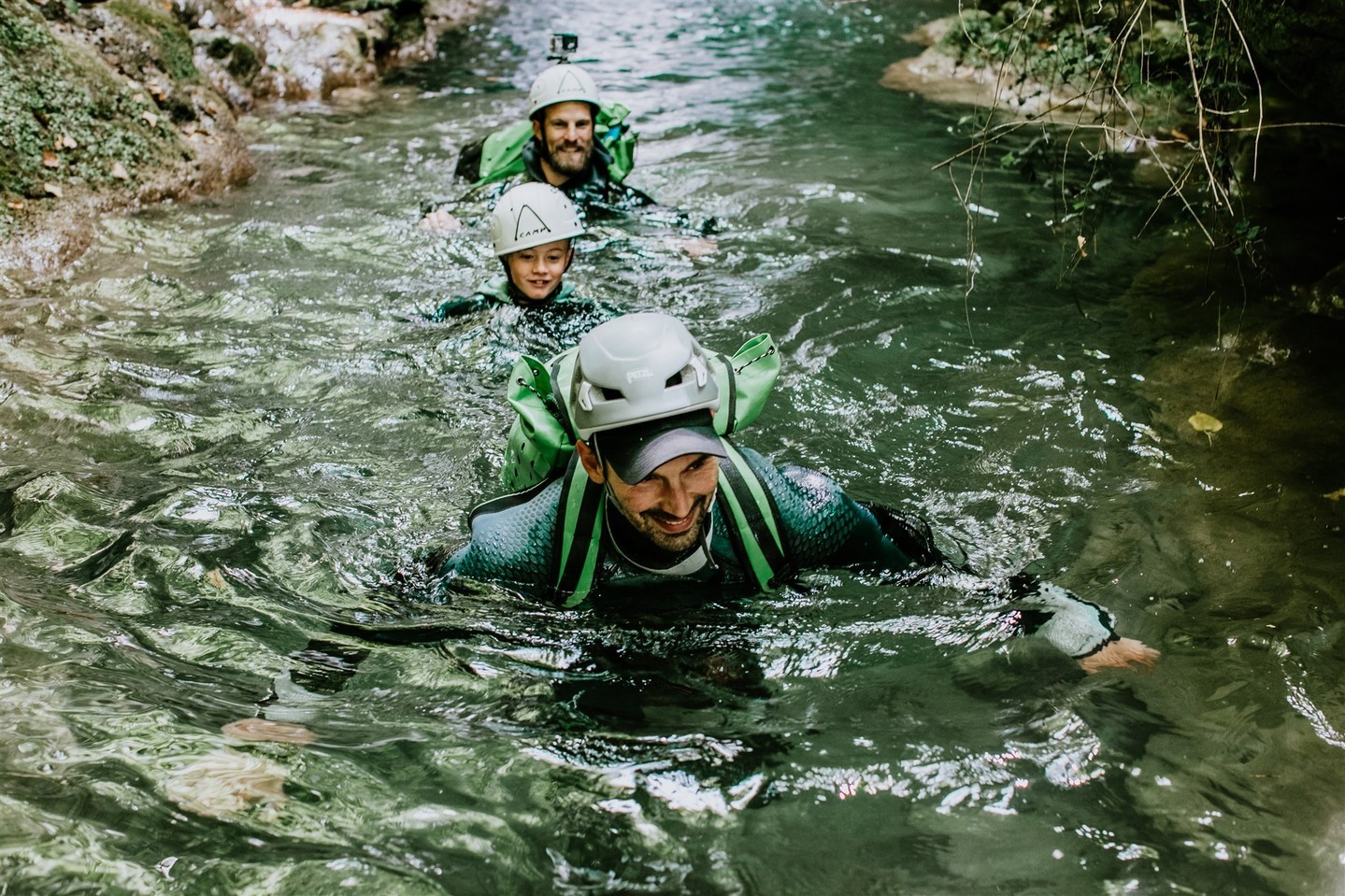
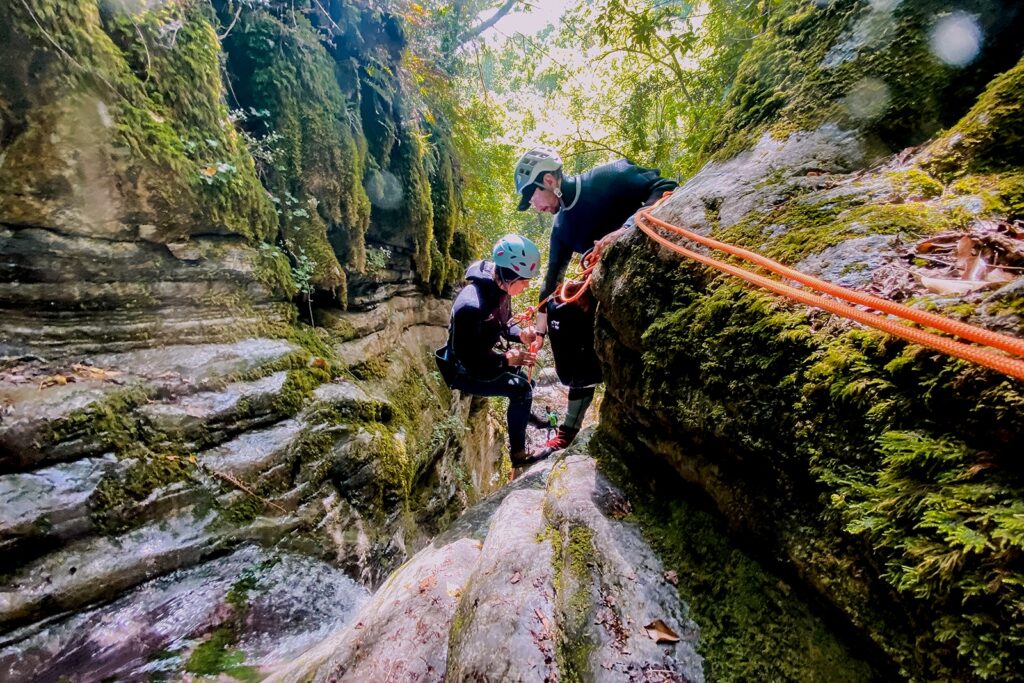
Don’t just call it an “extreme sport.” Canyoning (in Italian, torrentismo) is a full immersion in the wildest side of nature: you make your way on foot down the beds of streams that run through deep gorges, clearing obstacles with jumps, natural slides, or rope descents.
With a professional alongside you, even someone who has never put on a wetsuit can discover the “magic” of light filtering through the rocks. Canyoning doesn’t demand the gifts of an Olympic athlete, just curiosity and a willingness to give it a try.
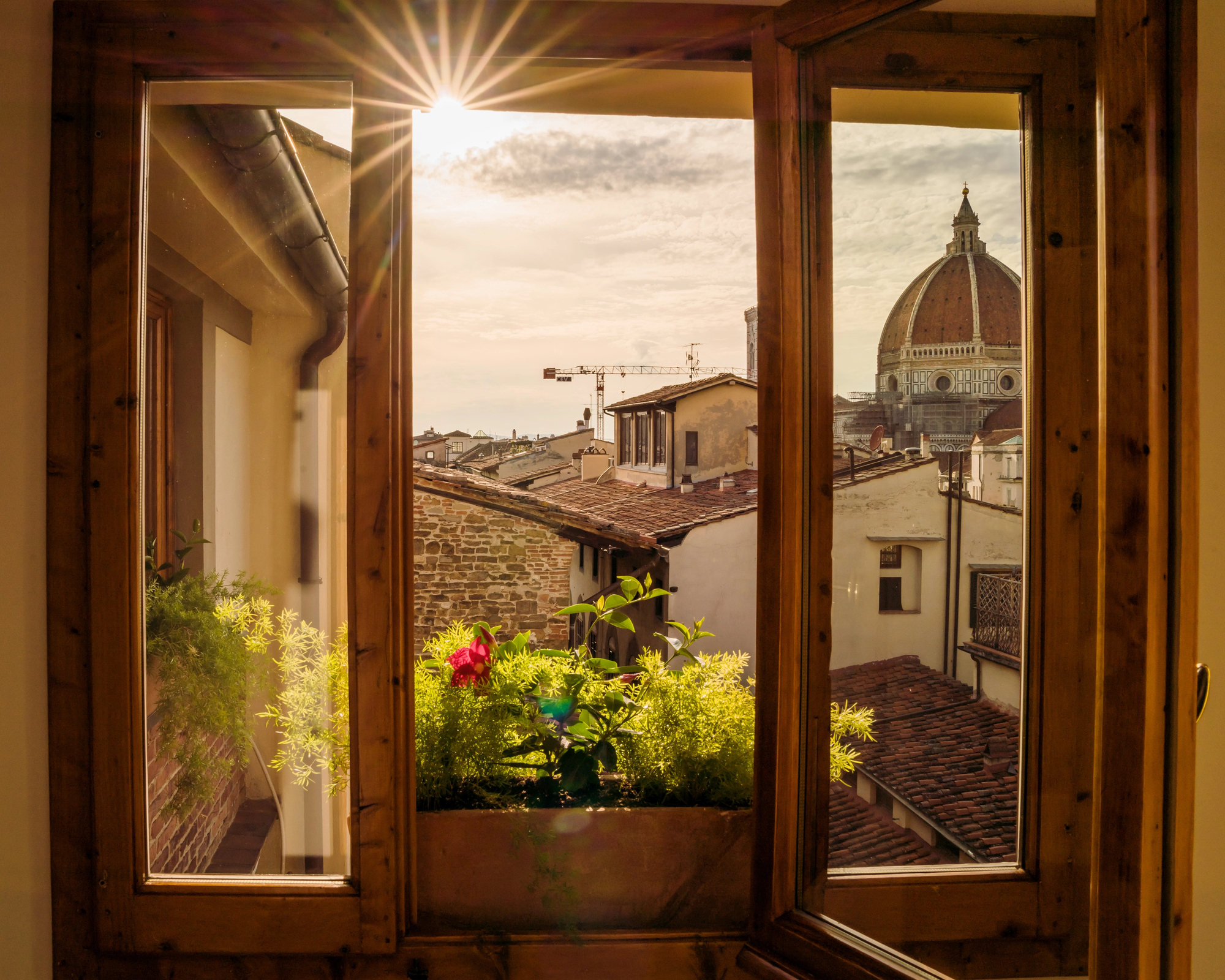
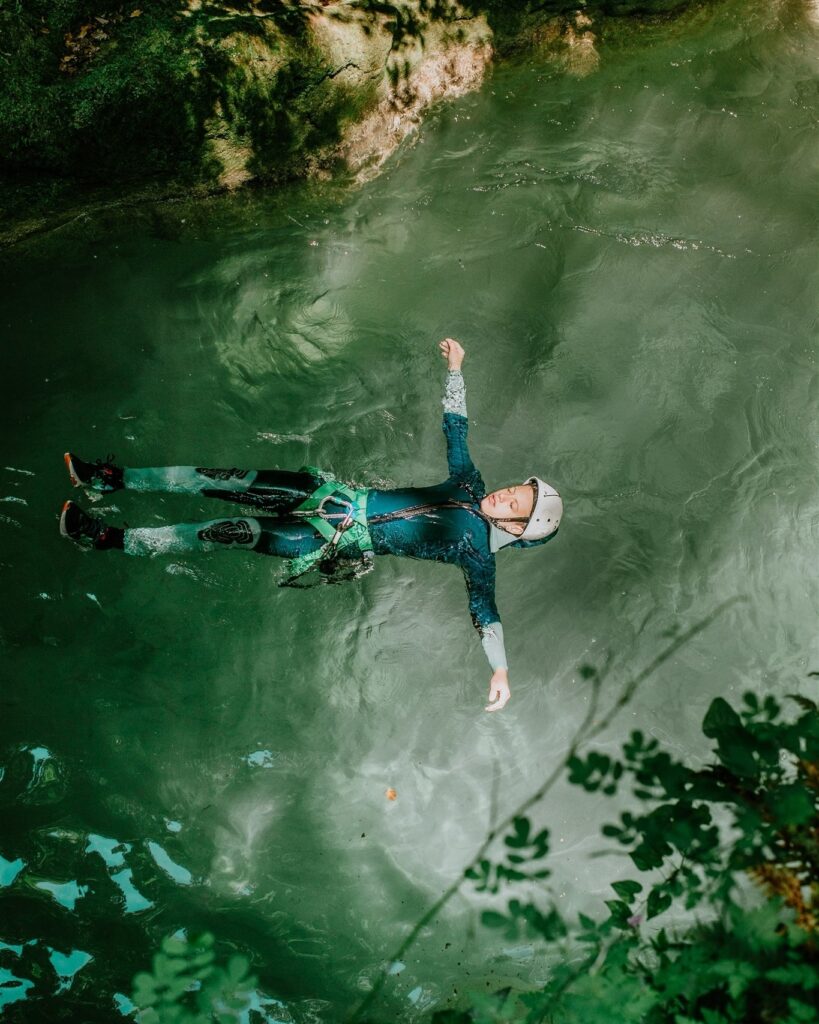
When we think of Florence, the mind runs straight to the Arno embankments at sunset or the silhouette of the Duomo’s dome. And yet, just a few kilometers from the city’s bustle, there’s a world of water-carved rock, sprays of icy water, and a silence broken only by the flow of the streams. This is canyoning, the most unusual and restorative outdoor activity you could try this season.
Florence goes wild: discovering canyoning, the secret soul of water
Rio Buti: the canyon right around the corner
For a Florentine looking for adventure without hours of travel, the go-to spot is the Rio Buti. Located near Prato, it’s the perfect gateway to this world. Here, the classic landscape of the Apennines turns into a natural playground. But how do you take on such a dynamic environment? The watchword is safety.
The Rio Buti is a great introduction to canyoning because it brings several things together: relatively easy access, full immersion in nature, a sporty rhythm, and a sense of discovery. There’s no need to picture extreme scenarios or superhero feats. Canyoning, at least in its smartest, guided form, is first and foremost a progression through a natural environment that asks for attention, presence, and trust.
And this is where canyoning reveals one of its greatest strengths. It doesn’t just demand physical effort; it builds a different state of awareness. Inside a canyon you listen more closely, you look more carefully, you sense your body in space with an intensity that everyday life rarely offers.
“The sound of the water going by, flowing, the way it flows, has an almost meditative effect.”
That doesn’t mean the playful side is missing. Far from it. Part of canyoning’s appeal is exactly its sense of fun: the natural slides, the small jumps, the energy that builds within the group, the feeling of returning, for a few hours, to an elemental relationship with the landscape. But its real power is perhaps something else. It’s the fact that these places, which we often see only as views or backdrops, become spaces you can move through, live in, remember.
The philosophy of Itaca
Today Marco leads small groups across Tuscany and Liguria, prioritizing the quality of the human connection and respect for a fragile ecosystem.
“The best moment? The moment in the parking lot, when the activity is over. People still linger there a while, almost surprised that it’s already finished. In those few hours, something very strong has formed among people who were strangers before. That kind of gratitude, which goes beyond the work itself, is a very powerful thing.”
If you’re looking for a way to reset your mind and rediscover the wild beauty surrounding Florence, Itaca and its canyons are waiting for you. It’s not just a plunge into the water; it’s a plunge into a part of ourselves we too often forget.
“What I try to convey is that these places aren’t far away from us, or postcards in the background, but environments you can move through. Especially for teenagers and young people it can be endless fun, it can be the alternative to so many other things.”
“Alongside safety, the other great responsibility is trying to give a special day to everyone who comes.”
Our idea of the outdoors is often still dominated by a performance-driven mindset. Canyoning, on the other hand, when it’s well guided, manages to hold performance and experience together. You can live it as a sporting discovery, a shared adventure, an immersion in nature, even as an almost therapeutic interlude. So it’s no surprise that once people step out of the river, they often wear the same expression: tired but lightened, emptied and at the same time full.
“People’s eyes at the end of an activity are perhaps one of the most beautiful things, because you can read the fun in them, and sometimes a happy tiredness.”
Why try canyoning with Marco
In recent years canyoning has become a little more visible in Italy too. Social media, videos, and the spread of spectacular images have helped make it less obscure. But it remains a relatively niche activity, and perhaps that’s a good thing. Because the people who seek it out often do so with intention. They don’t stumble into it by chance. They’re looking for something that feels like a real adventure, not just a pastime.
In Tuscany and Liguria, according to Marco, that dimension is still intact. There aren’t the crowds of more heavily traveled areas, and that makes it possible to experience the routes in small groups, with a greater sense of authenticity.
Marco was born in Florence. For many years he lived and worked in France, training in the Nice area and then in the Verdon, one of Europe’s most important canyoning territories. There he learned not only the technique but also a certain work ethic. After nearly twelve years in France, together with Flavia, his partner, he felt the need to head back home, toward Tuscany, and to build something of his own.
The name Itaca (Ithaca) grows out of exactly this longing to return. On one hand it evokes the idea of home; on the other it carries a lovely intuition: that a day spent in a canyon can become, for those who live it, a mental place to return to.
“I liked the idea that for other people too, that day could be a kind of happy place to go back to in their minds.”
There’s one line in the interview that perhaps captures the heart of his work more than any other. It isn’t about the highest jumps, or the most technical route, or the best performance. It’s about the parking lot, that final moment, when everything is already over and people still linger there for a few minutes.
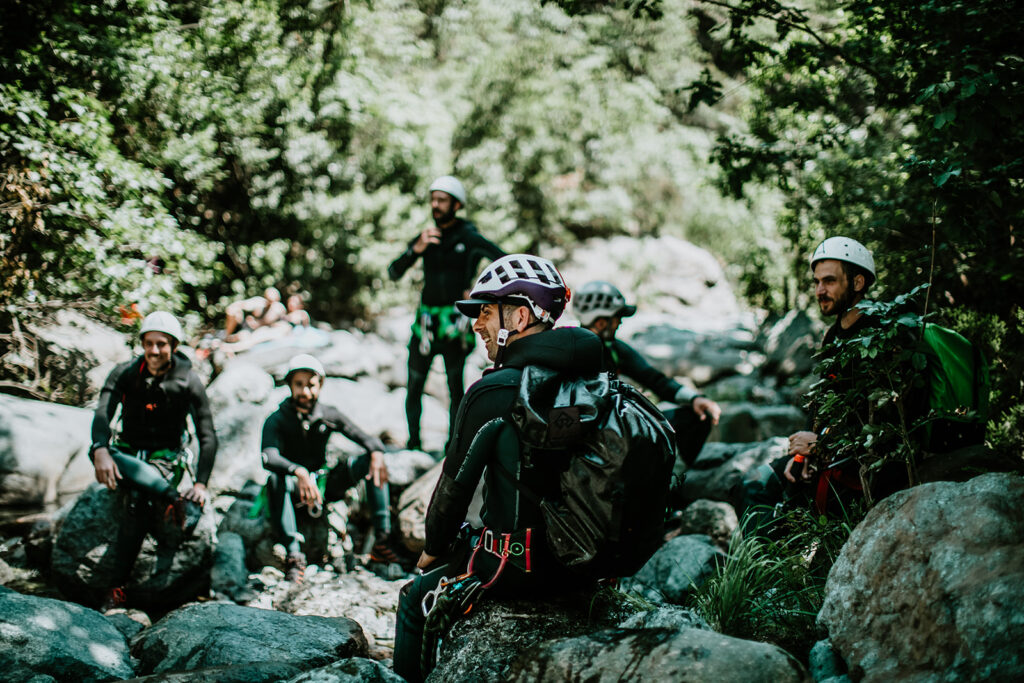
For Marco, it’s in that suspended time that you truly see what happens in canyoning. Strangers who, over a morning or an afternoon, build a bond of deep trust, cross an out-of-the-ordinary environment together, and then say goodbye. Almost all at once. But carrying something more with them.
“A bond of trust forms with a stranger, which is what I am to them. That opens up channels straight away, which then close all at once. That moment in the parking lot, when this realization sets in, is to me the beautiful thing about my work.”
Perhaps that’s also why canyoning, rather than a sport to be told in terms of pure adrenaline, should be described as an experience of contact. With nature, with the body, with fear, with trust, with a different kind of attention.
And perhaps, for anyone living in Florence who’s after something unusual, intense, and close by, the Rio Buti can be a good place to start, but there are also the rivers of the Garfagnana and Liguria. Not just to try a new activity, but to see the Tuscan landscape from a completely different perspective.
Itaca Canyoning — Facebook · Instagram