E-Bikes and Cargo Bikes: Florence’s Way Out of the Traffic
It has to be said: Florence, mid-sized and beautiful as it is, has one big problem that can make it terribly maddening — traffic. Unlivable for years when it comes to getting around, the Tuscan capital is increasingly squeezed in the grip of too many vehicles.
In short, Florentines still haven’t learned to leave the car at home, preferring the comfort of their own driver’s seat to the stress of congestion, the time lost hunting for parking, and the odds of picking up a ticket.
Personally — a former scooter rider, converted to the bus, then back to the car (complete with the sticker that was supposed to guarantee parking “on all the city’s blue lines”), unable to use a regular bike (given the nearly 10% climb home, which even soured a few bike-sharing attempts) — the moment I heard about the City of Florence’s incentive program for buying pedal-assist e-bikes and cargo bikes, I had no doubt this was the definitive solution to the problem.
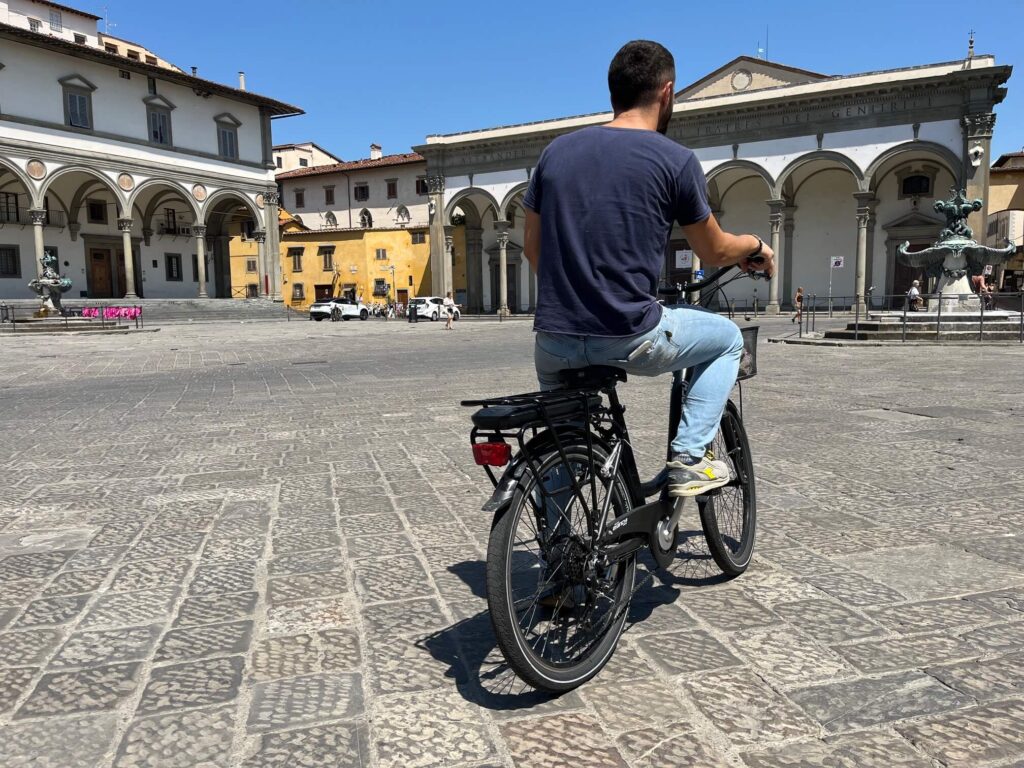
Since last December I’ve been riding around the city without a worry: travel times have halved, I feel the benefits to my physical and mental well-being every day, and both installments of the rebate arrived right on schedule, as promised. Honestly, I couldn’t be happier with the choice: signing up for the program was simple, and seeing it through was actually fun.
Once you buy the bike from one of the many specialized dealers, you just apply to the call for the incentive and request the contribution. After that, by downloading the IF app, you’re drawn into an addictive bit of gaming that pushes you to complete the “mission” by covering the required 400 kilometers in six months: only then do you qualify for the more-than-partial rebate on what you spent.

Out of professional habit — but also to satisfy a few of my own curiosities about the project — I got in touch with Andrea Giorgio, the City of Florence’s councilor for Mobility, Roads, and the Tramway, and asked him some questions.
The first was about how the program came about. The councilor answered that “the aim was to promote the development of new strategies to encourage sustainable transport, spreading electric propulsion for urban mobility in Florence and the municipalities of the metropolitan area; the electric assistance used by pedal-assist e-bikes and cargo bikes is a strong driver for the spread of cycling, making pedaling less tiring and allowing riders to cover distances long enough to reach much of the built-up city, to the benefit of air quality.”
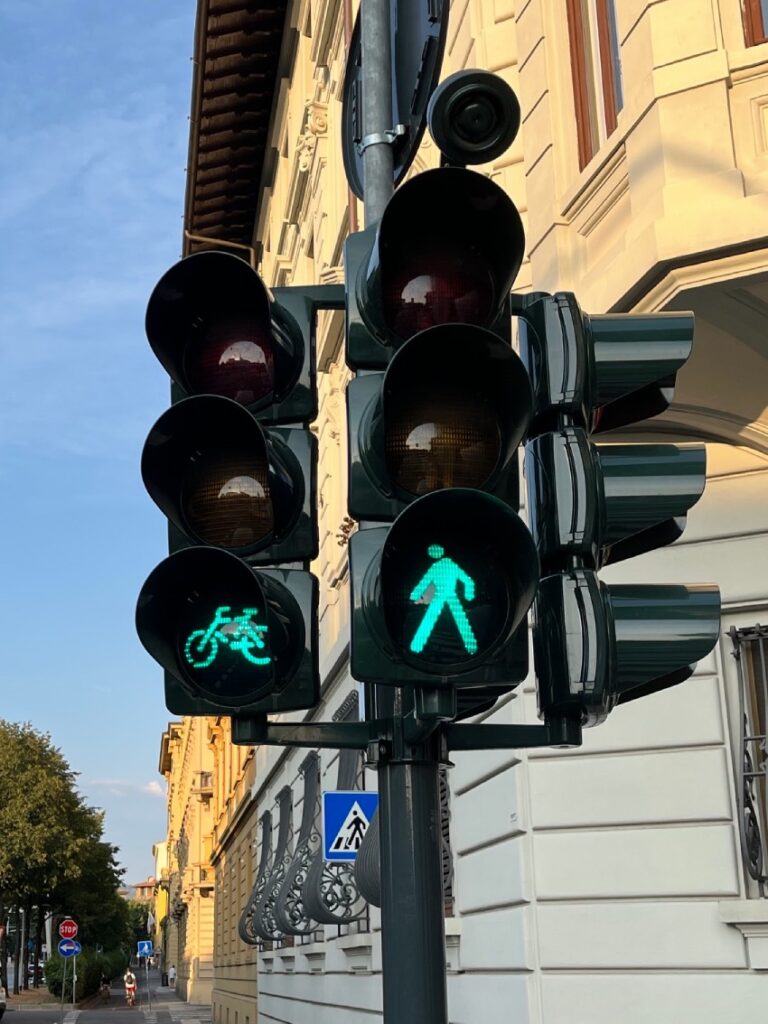
It was also interesting to learn some of the numbers behind the operation. For instance, that “to manage this initiative (funded under the Program Agreement for measures to improve air quality in the Tuscany Region) around €728,000 has been allocated, and to date 688 applications have been approved — 587 for e-bike contributions and 101 for cargo bikes; moreover, 638 people are active on IF, of whom 207 have reached the 400 kilometers in six months and received the second part of the contribution as well.”
Still on the subject of numbers, Giorgio told me that “our network of bike lanes is quite extensive, counting the full 129.2 km that include urban cycle routes, those in green and riverside areas, and cycle lanes, on top of pedestrian areas and 30 km/h zones.”
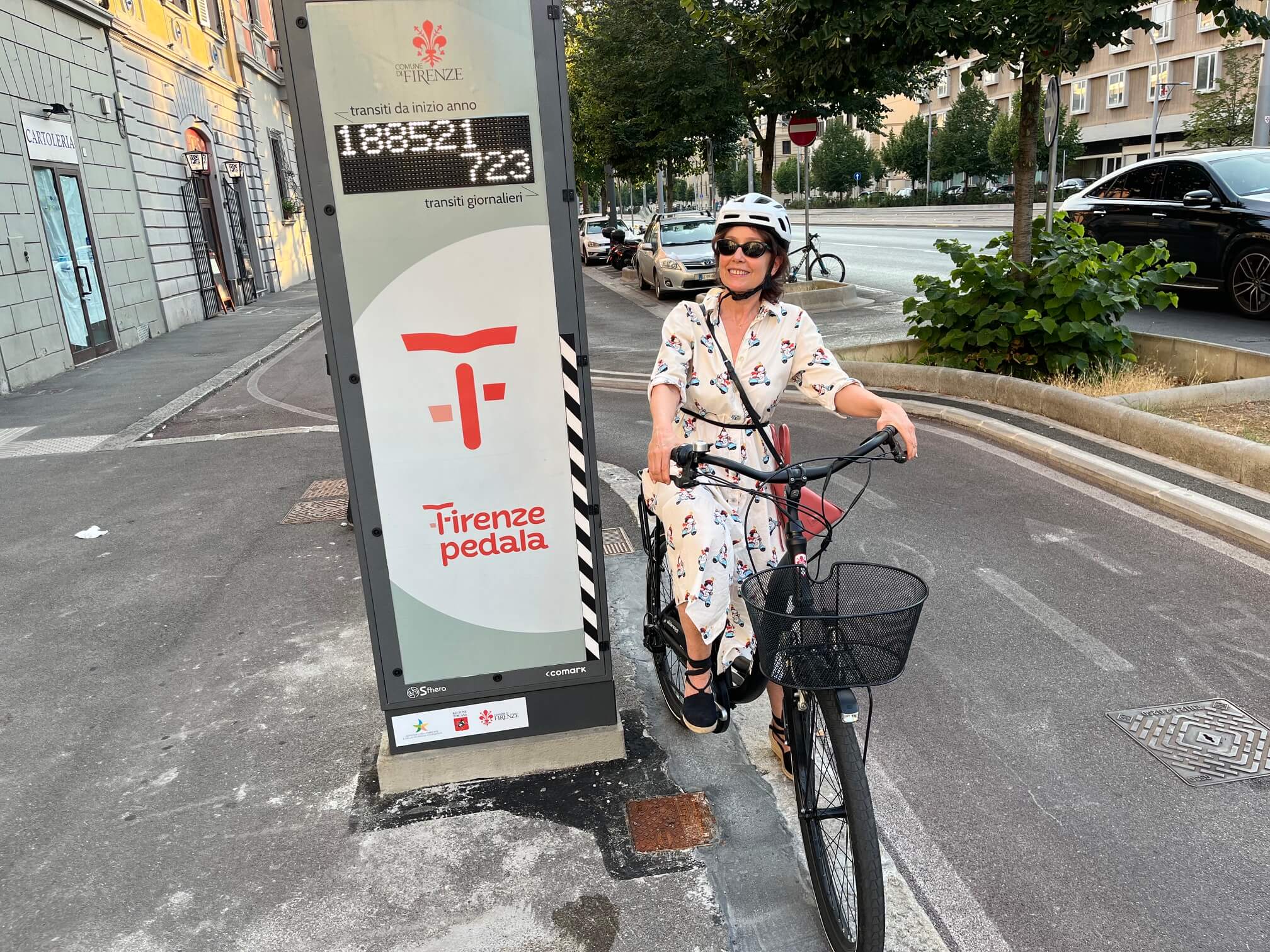
About the counters that record bikes passing by around the city, I asked the councilor how many people use them on average, and learned that “the total passages recorded by each sensor — taking June as an example — came to 880,606, for a daily average of 29,354 passages; there are 28 sensors in all (three fitted with totems on viale Lavagnini, viale Fratelli Rosselli, and lungarno Vespucci), placed along the main bike lanes.”
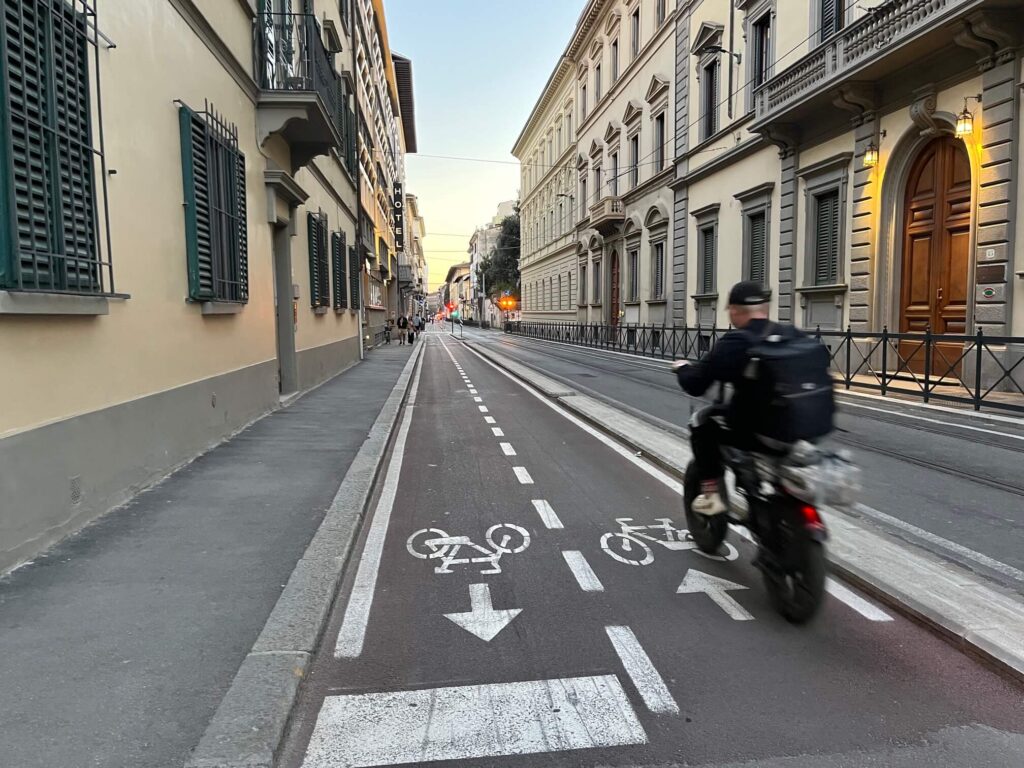
Speaking of bike lanes, I pointed out to Andrea Giorgio that not all of them are in good shape, so I wanted to know how often checks and maintenance are scheduled. The answer: “they are planned and carried out annually using the allocated resources, with the goal of guaranteeing the quality and usability of the network over time; the work is also planned according to the condition of the infrastructure and the needs identified, so as to direct resources effectively and ensure targeted interventions where they’re most needed.”
To close, two pieces of good news: for anyone who’d like to take advantage of this opportunity, the call has been extended to September 30; and to fend off the odious problem of theft and let people park their bike safely, a new project has just launched to build a network of bike boxes and cycle stations, offering secure, accessible parking for all bikes — a piece the administration considers decisive in encouraging everyday cycling on home–work and home–school trips and in connections with public transport.
Photos by Paola Bolletti.