Florentine Recipes: Panzanella
The Ten Commandments of Panzanella
1. You need day-old Tuscan bread (DOP), soaked and well wrung out.
2. Cucumbers — or trecioli, as we call them — go in it here in Florence; after that, suit yourself.
3. Sliced tomatoes and fresh spring onion. Don’t go dumping in tuna, corn, and diced ham — that’s American stuff; go make that in New York.
4. Basil is the touch of class.
5. Eat it in summer, when the vegetables are in season; in winter you’d better make ribollita.
6. Dress it with good oil, vinegar, salt, and a grind of pepper — otherwise, what’s the point?
7. Sure, keep buying bagged salad. You’ll see, it’s so much better.
8. There should be no puddle at the bottom of the bowl; if there is, you didn’t wring the bread out well enough.
9. Sauces and dressings? Add them if you fancy ruining the whole thing.
10. Making it is a dance — no excuses will do. Soybean sprouts? Get outta here.
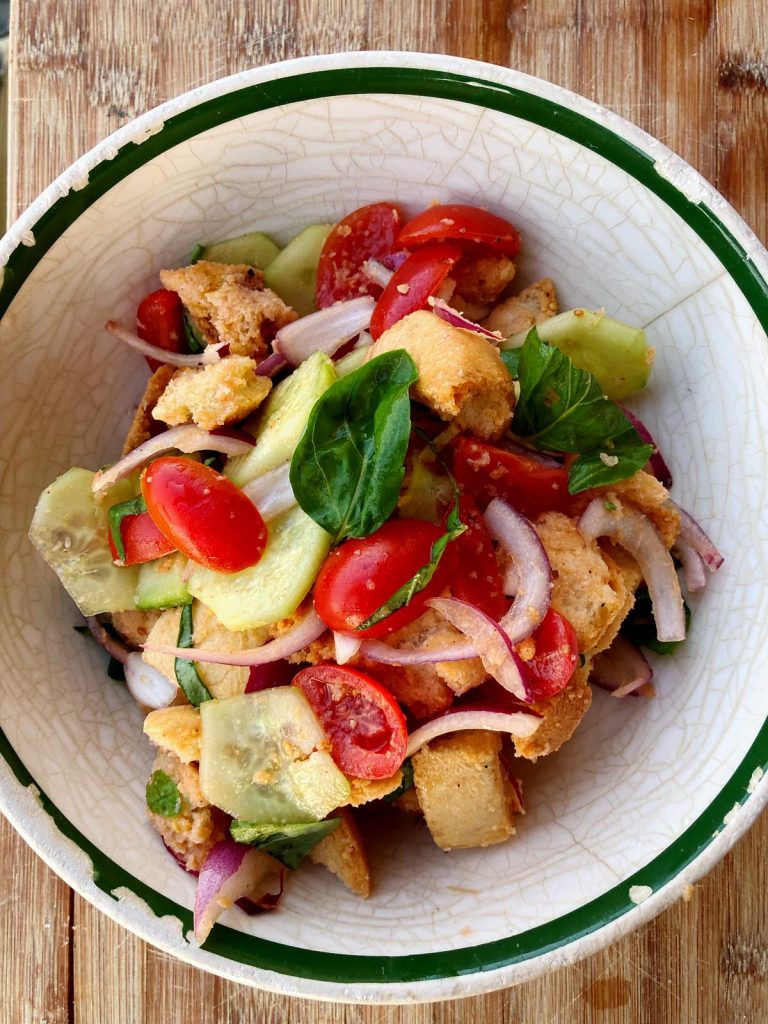
(Curious why it’s called panzanella? We explain it here.)
Method
500 g day-old Tuscan bread
5 ripe tomatoes
4 fresh spring onions or 2 red onions
3 cucumbers (optional)
basil
white wine vinegar
salt and pepper
Tuscan extra-virgin olive oil
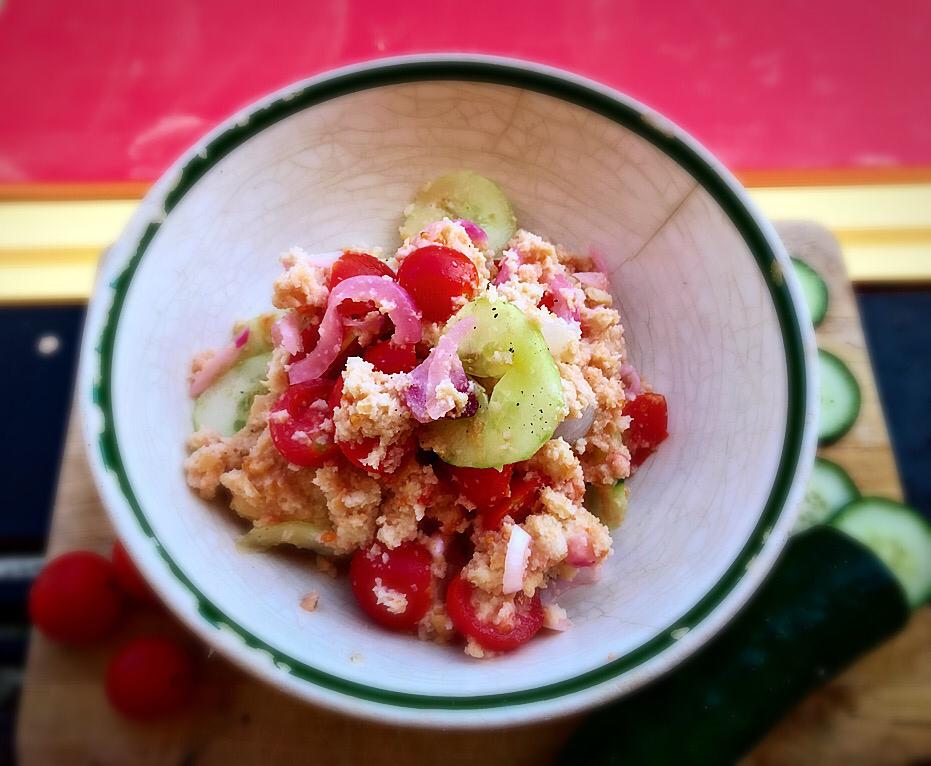
Take the stale bread (some pass it through the oven to crisp it up), cut it into small pieces and run it under water. When you feel it has softened — but not too much, or it turns to mush — crumble it by rubbing it between your hands, so you get fairly dry crumbs. The alternative is to mix water and white wine vinegar to dampen the bread. Take a bowl and add the ripe tomatoes, the fresh spring onions (or red onions) and the cucumbers — sliced and cut into rounds, of course; whole, they don’t do much. Salt and pepper, oil, and finally the basil leaves. Just before serving, add the vinegar too. To toss it all, I’d tell you — without letting anyone catch you, alla zitta (on the sly) — to use your hands, though a wooden spoon works fine too.
Tips, Trivia and Variations
Why it’s called panzanella we told you last year in this article (click here to read the story). We’ll also tell you that on the Isola d’Elba they add tonnina, salt-cured lean tuna, an indispensable ingredient. In Prato they add celery, a vegetable of excellence and tradition on the Bisenzio plain. Some let the bread soak up the juices of the vegetables. Don’t confuse it with Prato’s pan molle, a richer and more recent dish. In fact, the earliest panzanella didn’t even have tomatoes.
A gem from Bronzino, the 16th-century Florentine painter and poet:
Whoever would rise above the stars,
let him dip his bread and eat his fill
of a salad of minced onion
with purslane and cucumbers —
it outdoes every other pleasure of this life;
and just consider, were one to add
basil and arugula.