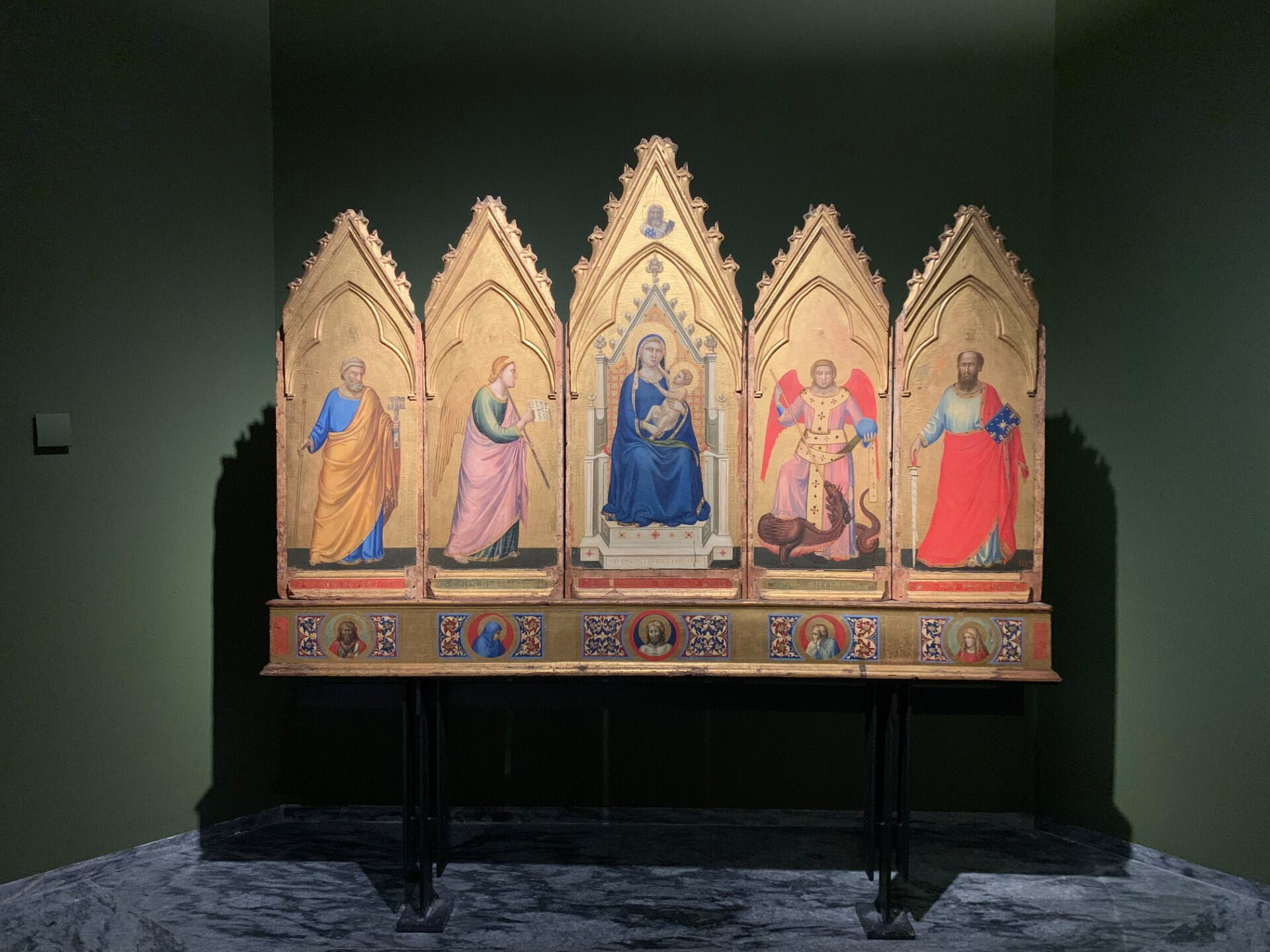
The Bologna Polyptych is back home. Giotto’s only work in the city has returned to the Pinacoteca nazionale di Bologna (the city’s national picture gallery) after a loan to Romania, and found a completely renovated room waiting for it, along with the adjoining galleries devoted to medieval painting. On the lower step of the Virgin’s throne the signature is still there, in golden Gothic letters, and to a Florentine it sounds familiar: “OPUS MAGISTRI IOCTI DE FLORENTIA,” that is, “work of Master Giotto of Florence.”
And there is already a chance to see it up close: on Tuesday, November 24, the polyptych will be the star of the director’s second guided tour, led by Luigi Gallo.
From the trip to Iasi to the renovated room
In early October, as work began on the new installation of the Middle Ages section, the polyptych was lent to the exhibition that opened the first edition of the “Festival of Sacred Art” in Iasi, Romania. In the meantime, its room and the neighboring ones were reorganized and reinstalled, with new display solutions designed to showcase their style and colors.
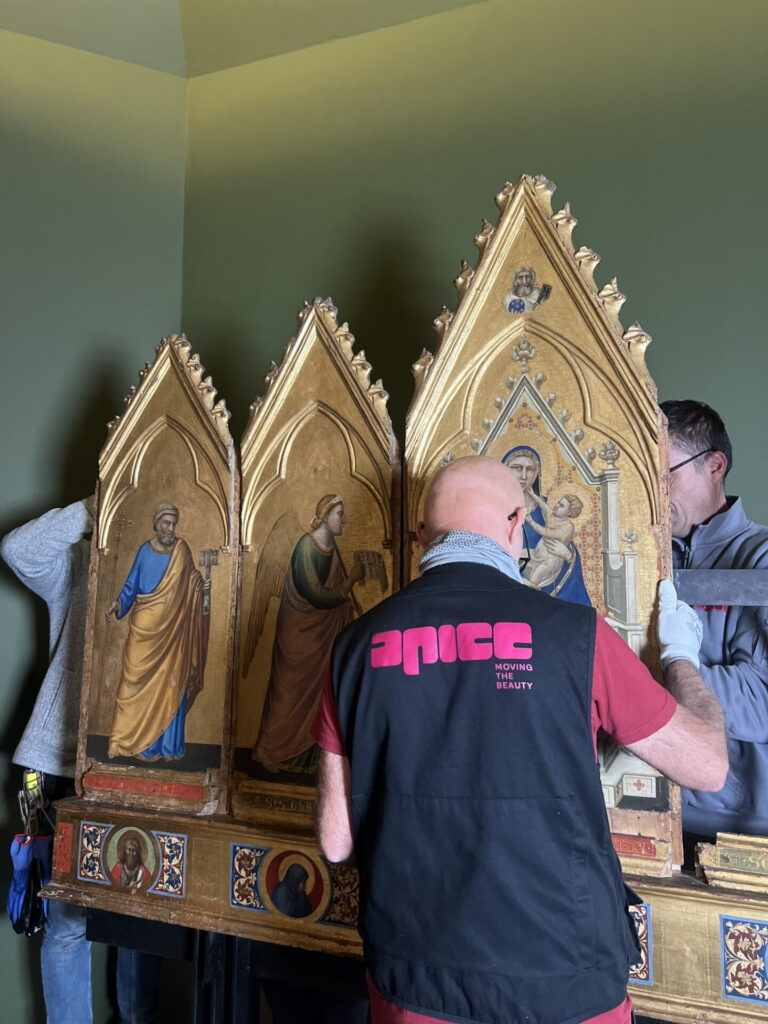
Here, more than anywhere else in the museum on via Belle Arti, you can feel the mark of Leone Pancaldi, the architect who redesigned the spaces in the 1950s and 1960s: in the vertical display stands, the label holders, the layout of the rooms. His design has been fully respected. The communication materials, the lighting and the filtering of natural light have been rethought, and the repainted walls make the room feel larger and brighter.
“The return of Giotto’s Polyptych is an opportunity to give back to the public one of the Pinacoteca’s most important treasures in a space that at last brings out all its qualities.”
Luigi Gallo, director
The only work by Giotto left in Bologna
The polyptych is one of only three certain works by Giotto known in the world. It was commissioned by the cardinal legate Bertrando del Poggetto for the Castello di Porta Galliera, which was meant to become the new papal seat. In 1334 the Rocca di Galliera was destroyed by an angry mob: the polyptych survived, while Giotto’s other undertakings in the city were lost. That is why today it is the only testimony of his activity in Bologna.
At the center is the Virgin, imposing and majestic, with the Child touching her face; in the side panels she is flanked by Saints Gabriel, Michael, Peter and Paul. Below, from the perfectly circular oculi of the predella, look out Saint John the Baptist, the Madonna, Saint John the Evangelist and Mary Magdalene, on either side of the Man of Sorrows.
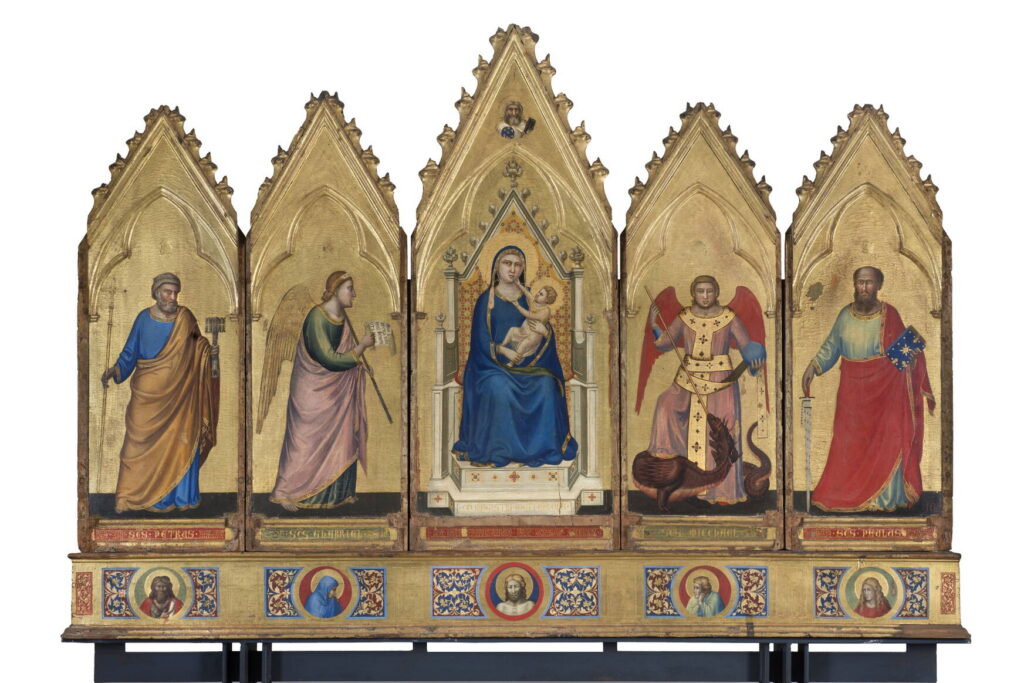
During his years in Bologna, the work marked a turning point: with solid figures, an extraordinary three-dimensionality and a new naturalness in gesture, Giotto taught artists how to give weight and humanity to bodies in space.
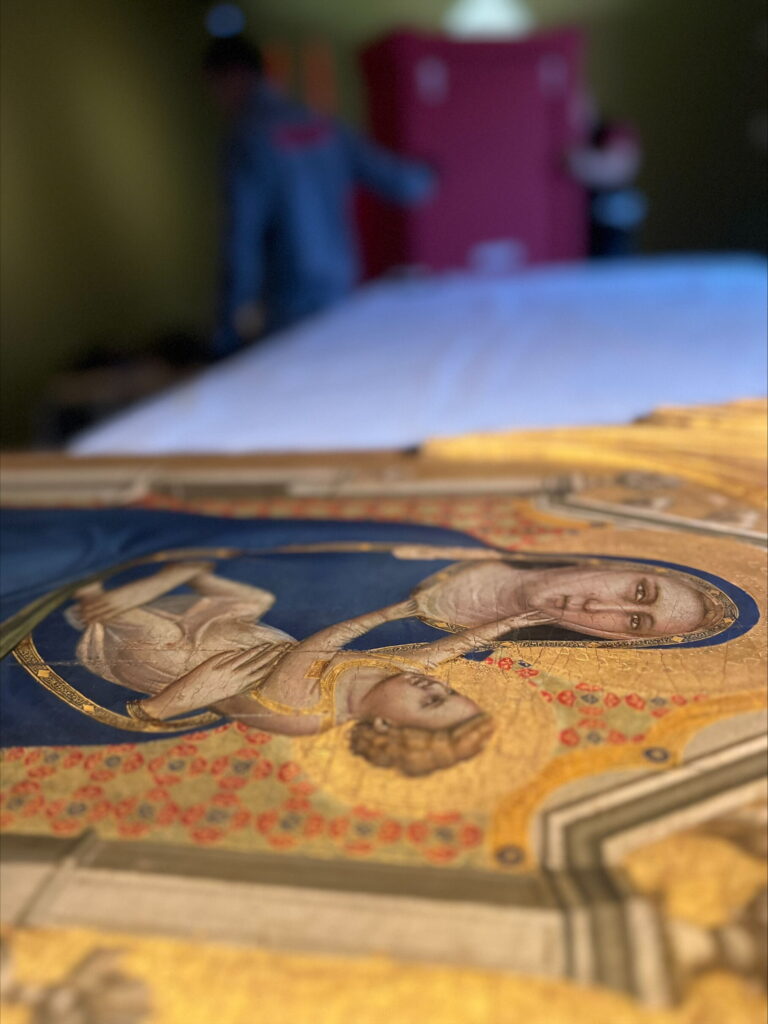
In the new installation, the works placed near the polyptych show how deeply that lesson left its mark across the Italian peninsula: the artists include Lorenzo Veneziano, Andrea di Bartolo, Giusto de’ Menabuoi and Lorenzo Monaco.
The corridor of the primitives and the Bolognese polyptychs
The corridor of the primitives, which opens the Middle Ages galleries in chronological order, tells the story of Bologna’s originality with works by Vitale da Bologna (his is the San Giorgio e il drago, Saint George and the Dragon), by Pseudo-Jacopino, also known as the Master of the Bolognese Polyptychs, and by Simone dei Crocifissi, who ran one of the city’s most flourishing workshops.
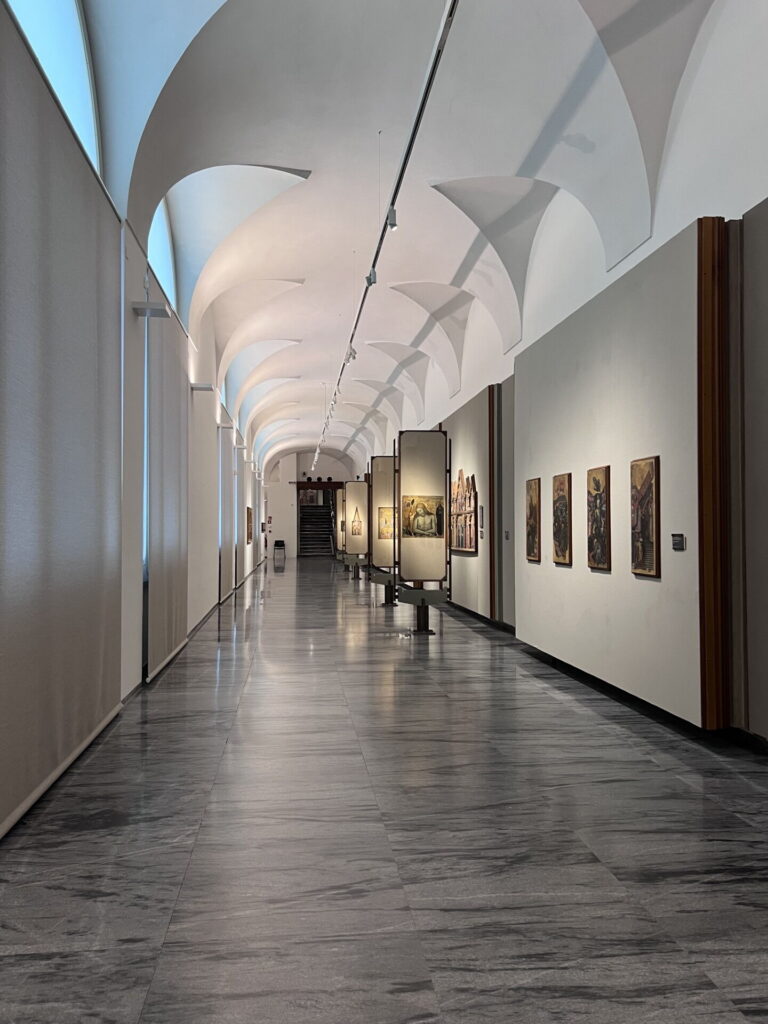
Next comes the renovated section of the Bolognese-school polyptychs, where the one by Simone dei Crocifissi stands out: in the second half of the fourteenth century he turns the altarpiece into a story rich in everyday details, with expressive faces that speak directly to the faithful.
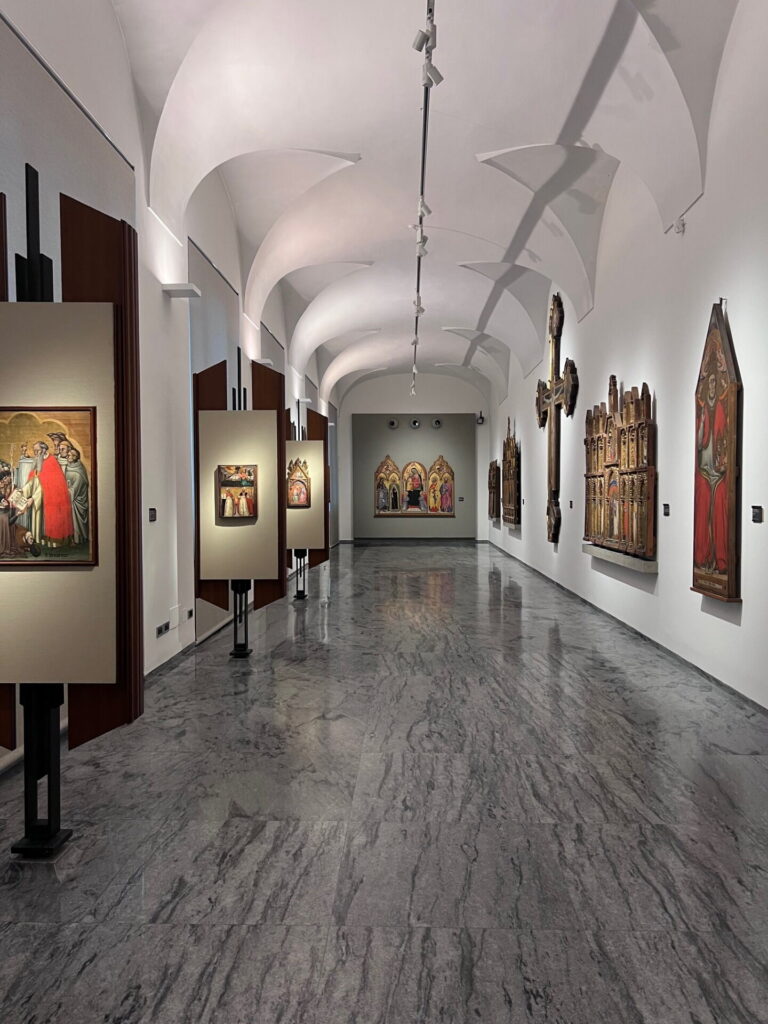
Around the turn of the fifteenth century, Lippo di Dalmasio instead chooses a more intimate and elegant sensibility: harmonious figures with sinuous lines set against gold grounds enriched with punch-tool engraving. Closing the sequence is the polyptych by Jacopo di Paolo, now displayed reassembled, with the Crucifixion at the center and the Apostles in pairs in the predella: a work deeply tied to Giotto’s lesson, the last chapter before the Renaissance.
The guided tour on November 24
The polyptych is the star of the director Luigi Gallo’s second guided tour, which takes the public through the rooms of the Pinacoteca.