Guido Argentini: Chasing Beauty
Change is the thing that frightens us most, but it is also the only thing that truly lets us grow. More than once I have made decisions that abruptly changed the course of my life. The most drastic was probably the one I made at twenty-three, when I decided to leave my medical studies to devote myself to my real passion, photography.
I set off for Los Angeles. My English back then was truly rudimentary, I knew no one in the city, and I didn’t have much money. And yet I refused to be intimidated — on the contrary, I was powerfully drawn to this new world and this new adventure. I began by shooting models for their portfolios and then working for magazines. Working for the press and for clients in general was never my priority.
My real goal was always to publish books. A book is something that lasts forever; and books were, in fact, my school of photography. I have published six of them to date: Silvereye (2002), Private Rooms (2005), Reflections (2007), Shades of a Woman (2010), Argentum (2013), and Eros (2018).

Silvereye is a testament to my great love of sculpture, of dance, and of the forms of the female body. The nudes gathered in this book are shot against landscapes: the volcanic beaches of Big Island in Hawaii, the granite rocks of Sardinia, and the sand dunes of Death Valley. This book also holds my first “silver” photographs: women entirely covered in a metallic body painting, in dynamic poses inspired by the drawings of Auguste Rodin and the sculptures of Constantin Brâncuși.
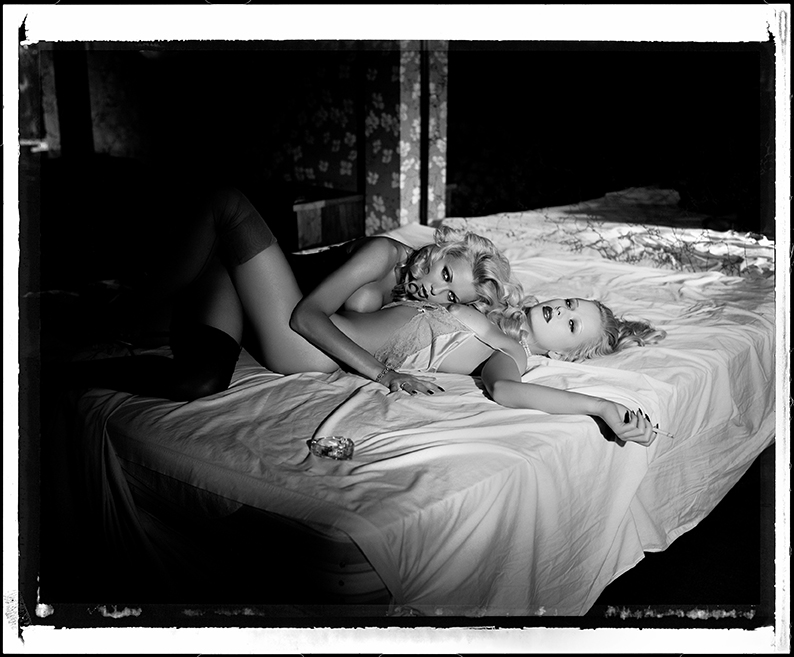
Argentum would later, in 2013, gather the entire Silver collection. The two projects that followed, Private Rooms and Reflections, reveal a completely different side of women and of my photography. The images in these two books no longer show only “bodies and forms,” as in my first project, but true “women.”
The face becomes the protagonist, and accessories like stiletto heels, corsets, stockings, and gloves help create a more intimate, more sensual imaginary. With Shades of a Woman I wanted to start telling stories: a story contained in a single image, a photograph that could suggest to the viewer a “before and after.”
A different story for every viewer, left entirely to their imagination. These storytelling images find their fullest development in my latest project: Eros. Every image in the book is a diptych: two photographs joined together, a woman and a landscape or a still life. It took me months to bring the photographs together, often shot on different continents and in eras of my life far apart from one another.

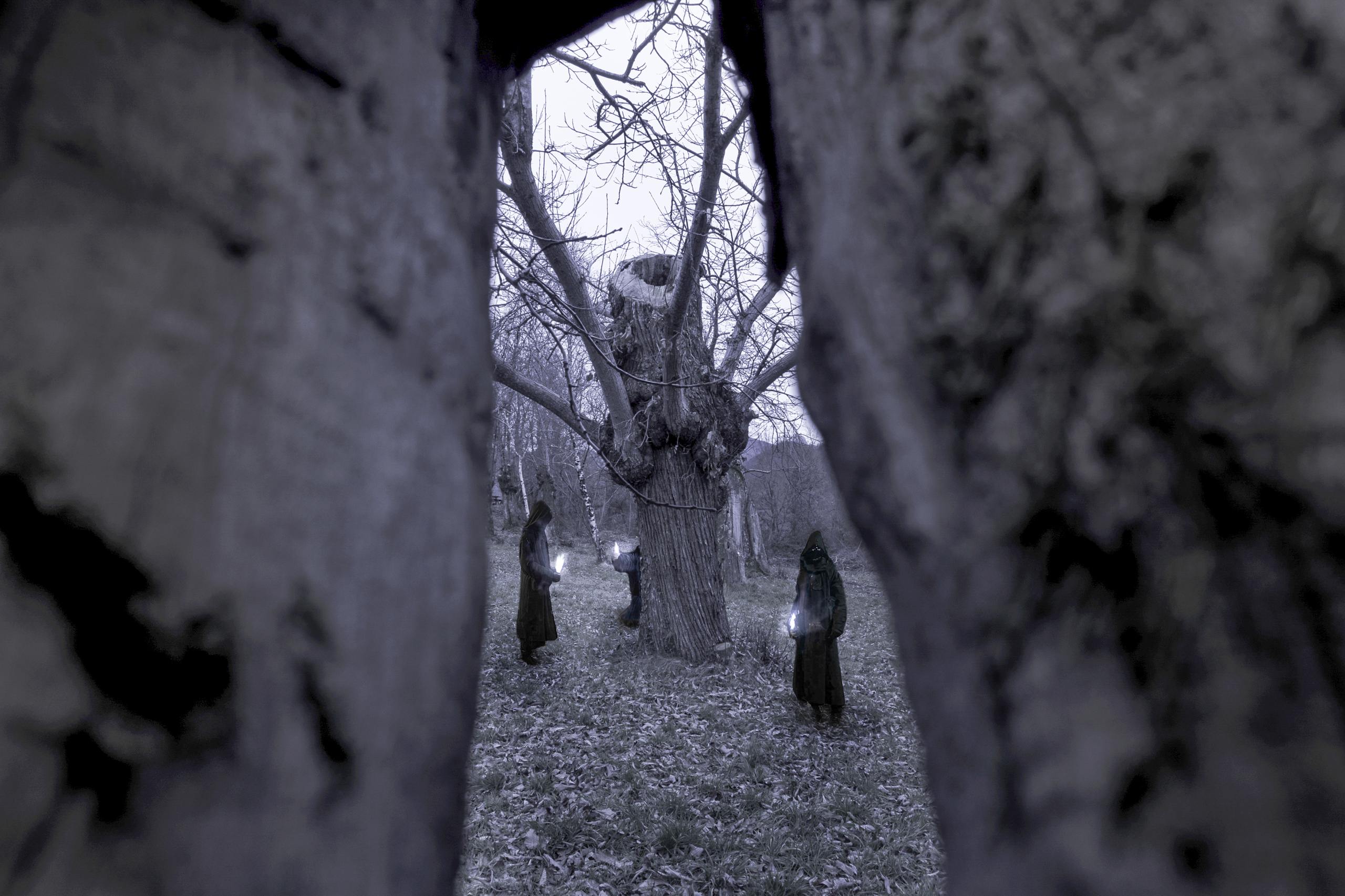
My new photographic project — which has not yet been published — is still in the editing stage and is completely different from everything I have done before. It is an attempt to move closer to painting. My latest photographs are, in fact, far more abstract: blurred, out of focus, shot through fabric or wet glass. An attempt to move away from the excessive precision of the camera.
For three years I have been working on a film project, a documentary about my work.
It was a demanding undertaking, because it was created without a script, like assembling a puzzle out of still and moving images: photographs, backstage footage, and interviews with models and gallery owners. A kind of flight, made with a drone, over everything I have created in the last thirty-five years.
Writing and composing this documentary helped me understand how every choice I have made over the years has shaped my life. Because it is always and only our choices that determine our existence. Directing films was always my greatest wish, alongside creating photography books; it is no coincidence that I chose Los Angeles as my destination in the USA and not New York.
What slowed the natural passage from the still image to the moving one was having to collaborate with so many people, and the need for money, which is indispensable to making a film. My work has always been a “one man’s business”: apart from rare exceptions, I have always made my work alone — me with my camera and a woman.

Having to collaborate with an endless number of people always “blocked” this natural progression of mine from the still image to the moving one. This film gave me the chance to retrace my life, to think about the reasons behind the choices I made, and to recount — first to myself, and then to others — the thought that has always been at the root of my work. What is essential to my photographs is naturally essential to this latest work as well: to have an audience.
It is the eyes of the viewer — those of a person leafing through one of my books, or seeing my work on the screen of a TV, a computer, or a smartphone — that make up the final element, the last creative act of everything I have done in the past and will do in the future. Without someone’s gaze, every artistic creation loses all value. The film made me realize how my life has always been a chase after beauty.
Beauty, as I say in my film, is not something that exists in itself; it is not the quality of an object, a person, or a flower, but the effect these extraordinary things have on us.

Beauty is everywhere, if you have the sensitivity to see it and to “feel” it. That sensitivity is precious, but for me it is also a curse; because, taken to the extreme, it brings with it the will to “stop, to freeze” every beautiful thing my eyes encounter.
Not being able to “stop” all the beauty around me — so that I might then give it to others through a photograph or a film — creates in me a constant suffering. Sensitivity and culture toward beauty and toward women change according to the country, the culture, and the historical moment. Think of how female beauty has been perceived over the years and the centuries, and of how women are seen in different countries today: in Europe, in Japan, in Cuba, or in Brazil.
I have traveled a great deal over these years, and I can confirm that the differences are truly enormous. Traveling and living in different countries helped me gain a broader, less provincial view of everything. I have one great regret: not having taken part in the finest years of photography, and of fashion photography in particular.

Fashion photography from the 1950s to the 1990s was extraordinary. Today newspapers and magazines no longer hold the value they once did; I think of the Vogue Italia of Franca Sozzani, and of Vogue France, where Helmut Newton and Guy Bourdin published their photographs every month.
Today, sadly, print is obsolete, and even books — which I have always regarded as the final goal of my work — no longer sell as they once did. I learned photography by looking at the books of the great photographers who came before me — Richard Avedon, Irving Penn, Helmut Newton, Guy Bourdin — and I wanted to make books in order to give others the emotions that the photographers before me had given to me.
Making a book takes great courage; once the book is printed, there is no going back. The project is complete and will remain that way forever, with no chance to make changes or corrections.

On the printed and bound pages of my books lies my vision of women and of photography at that moment of my life: the choice of composition, of light, and of color has changed enormously over the years, and each book remains a testament to a certain period. The internet and digital technology have radically changed the way photographs are made and the way the public perceives them. With artificial intelligence (AI), the revolution is radical.
AI is already invading every area of our lives. Personally, I am not opposed to technology; both computers and AI can “support” our creativity in many ways. What matters is knowing how to use these tools and not becoming their slaves.
Ideas — the brilliant ones — can only come from human beings.
Text & photos courtesy of ©Guido Argentini
*Guido Argentini is a Florentine photographer based in Rio de Janeiro after thirty years in Los Angeles, where his most important projects took shape. Fashion and beauty are the central themes of his work, with female beauty at the heart of his lens. His photographs have been exhibited in galleries around the world and have appeared in some of the most celebrated magazines, including Vogue, Playboy, and Marie Claire.