Staying in the Void: Dalia Mauri’s suspended photography
Photography is everywhere now. It scrolls through feeds, gets consumed in a few seconds, adjusted with a filter and forgotten just as fast. It is an everyday language, a gesture that has become automatic and available to anyone. And yet, for some people, it is still a job and, even before that, a form of research, an exercise in looking. A kind of photography that isn’t made to be scrolled past, but that asks for time, waiting and silence.
That is where the work of Dalia Mauri sits. She is very young, yet she has already been through some defining experiences. Dalia came to photography by way of the Liceo Artistico di Porta Romana in Florence, in the audiovisual and multimedia track. First came drawing, sculpture, hands-on experimenting. Then, almost by chance, the camera, the study of the moving image, film history and the building of a shot. Those were the years when her eye found a direction.

After three years inside a production studio in Sesto Fiorentino, between music videos, sets and commissions, she has now chosen to stop and go back to studying. Not to step away from the image, she explains, but to get back inside it with more clarity. A deliberate, necessary pause to study, read, travel and dig into what interests her. To take back her own way of seeing and fill it up again before she starts producing. At a time when speed seems to be the only available measure, her choice strikes us as radical and against the current.

Places without coordinates
Travel becomes the ideal space for that reclaiming. No deadline, no outside expectations, no imposed schedule. Dalia can wait for something to happen, or for nothing to happen at all.
New York, for instance, is not the usual iconic city. It is a shirtless man on a fire escape. It is neon light caught at an angle. It is Coney Island out of season, under a gray sky, with the shutters down and trash scattered on the asphalt.
The event, the landmark, is never at the center of the frame: there are the empty spaces, whatever is left after people have passed through, which turns out to be more interesting than what draws the crowds.

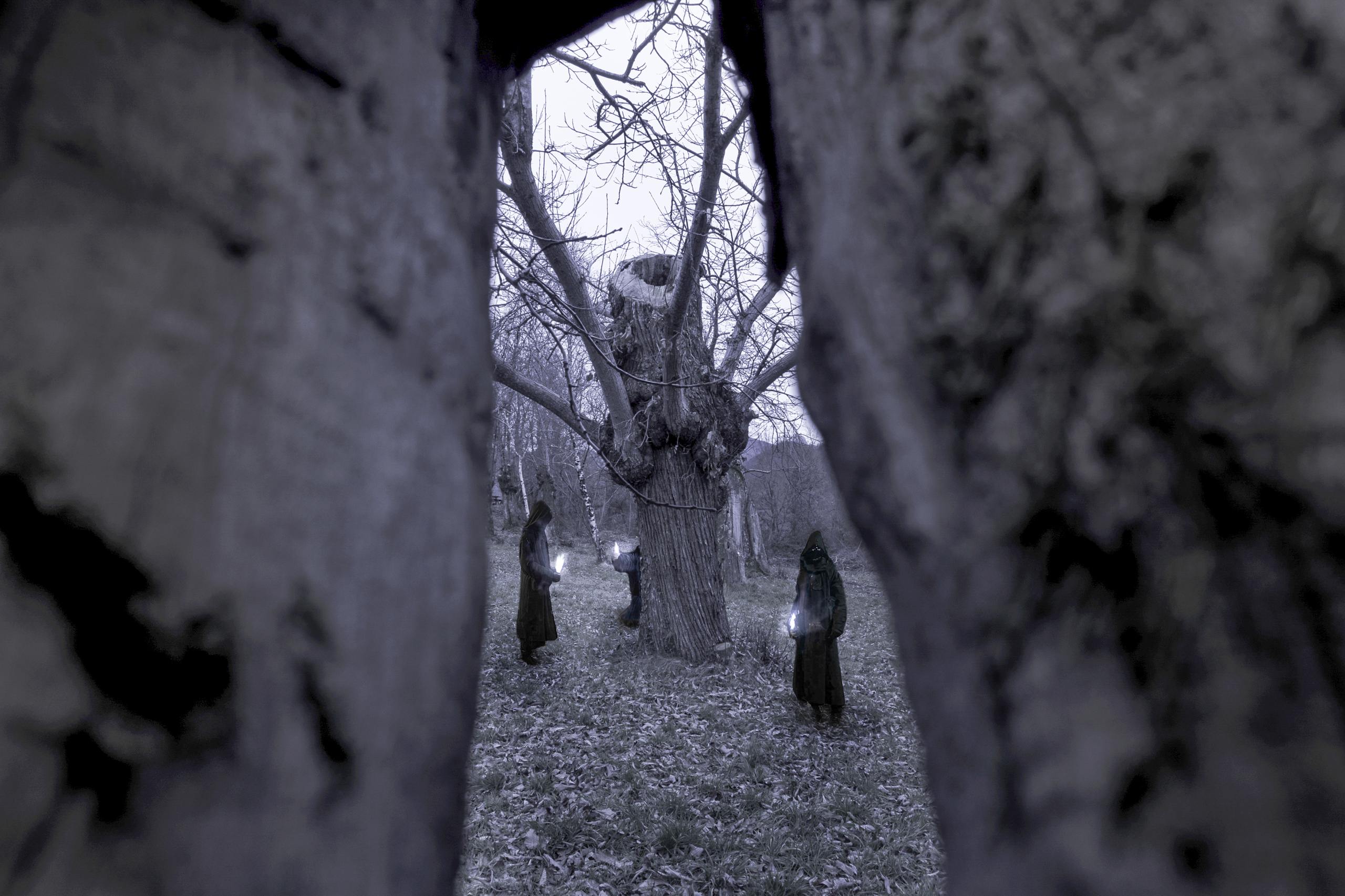
On Fuerteventura, space stretches out even further. Two tiny figures at the water’s edge, almost swallowed by the ocean. A single car under a streetlight, in the silence of a landscape that feels suspended and inevitably calls to mind the scenes of Paris, Texas by Wim Wenders, a director who, as Dalia tells us, is one of her favorites as well as a source of inspiration.
But inside that restrained melancholy something Lynchian surfaces too: a thin tension, a sense of unease that never erupts and stays latent, the feeling that something could crack at any moment.

On Elba, by contrast, life shows up in traces: laundry hung out on eroded rocks, small signs of daily life inside an overwhelming natural setting. The human figure is there, but it doesn’t impose itself and is never the protagonist. It is small, marginal, dwarfed by space, by architecture or by light, depending on the scene around it. The landscape does the talking, while people, rather than dominating it, simply pass through.
In all of these images it isn’t always clear where we are. The places lose their address. They don’t want to be postcards or reportage, but to suggest suspended atmospheres.
In that suspension you can glimpse something that belongs more to literature than to photography. The time running through Dalia’s images is not chronological, not narrative. It is an inner, stretched-out time, close to the one described by Antonio Tabucchi: a time made of waiting, of detours, of possibilities left hanging.

In the writer’s pages the present is never fully stable; it always seems crossed by a crack, a memory or a shadow that shifts it somewhere else. In the same way, in Dalia’s photographs what counts is not the event but the interval, not the action but what comes before or after it. The image stops on a threshold: between what has been and what might happen.
Dalia’s photographs work on exactly this instability, on what could happen and doesn’t. Reality looks held back, suspended a moment before it takes place or a moment after it has dissolved. These are images that ask to be looked at longer than we are used to. And today, maybe, the most radical gesture is precisely that: to stop and give something your time.