Jewish Florence: Places, History and Traditions
To tell the story of Florence’s Jewish community — moving beyond the preconceptions with which it is too often associated — people tend to reach only for the moment when the ghetto was established by Cosimo I in 1571. In truth, that story has far more ancient roots, going all the way back to Roman times. It was the Romans who founded the city of Florentia in 59 BC, an era in which Jews are recorded as present and active — though not yet permanently settled — in the life of first the Roman and then the medieval city. Even so, we have to wait until the 13th century for the first certain evidence of their presence, however temporary.
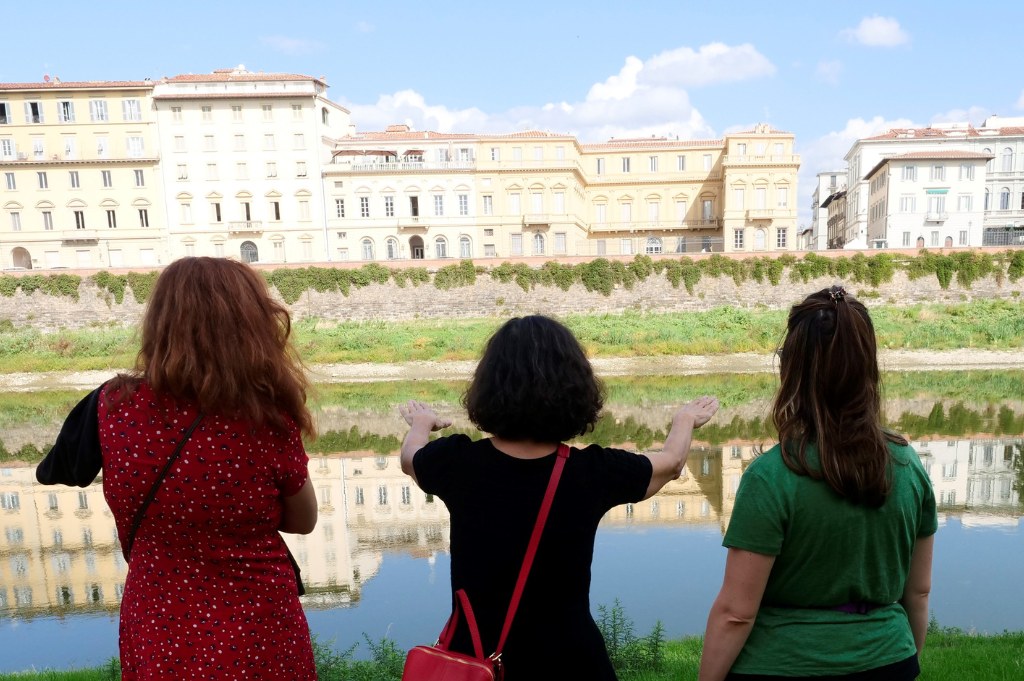
The community and its cemetery were probably located in the Oltrarno, near the Ponte Vecchio. Our walk, in fact, begins on Via dei Ramaglianti, once called Via dei Giudei — a side street off Borgo San Jacopo. Here, until the last world war, traces of the ancient synagogue could still be seen, and in one room it was even possible to make out the arches of the matroneo (the women’s gallery).
The first license for running a loan bank dates to October 17, 1437, and fits within the policy promoted by Cosimo the Elder de’ Medici. Indeed, under the protection of the early Medici the Jewish presence in Florence unfolded peacefully, enriched by cultural exchanges among Jewish scholars, philosophers and humanist writers.
Crossing the Ponte Vecchio, you enter the heart of medieval and Renaissance Florence, and in this area you can note the influence of Jewish culture — for example, in the iconographic program of the Gates of Paradise, made by Lorenzo Ghiberti between 1425 and 1452. Walking instead through the spaces once given over to the Ghetto, we come to understand why Cosimo I changed his policy, and the enduring ambivalence of the later Medici Grand Dukes toward the Jewish community. Continuing along Via delle Oche, we discover where the Jews gathered before the construction of the new Synagogue, whose design was approved in 1872.
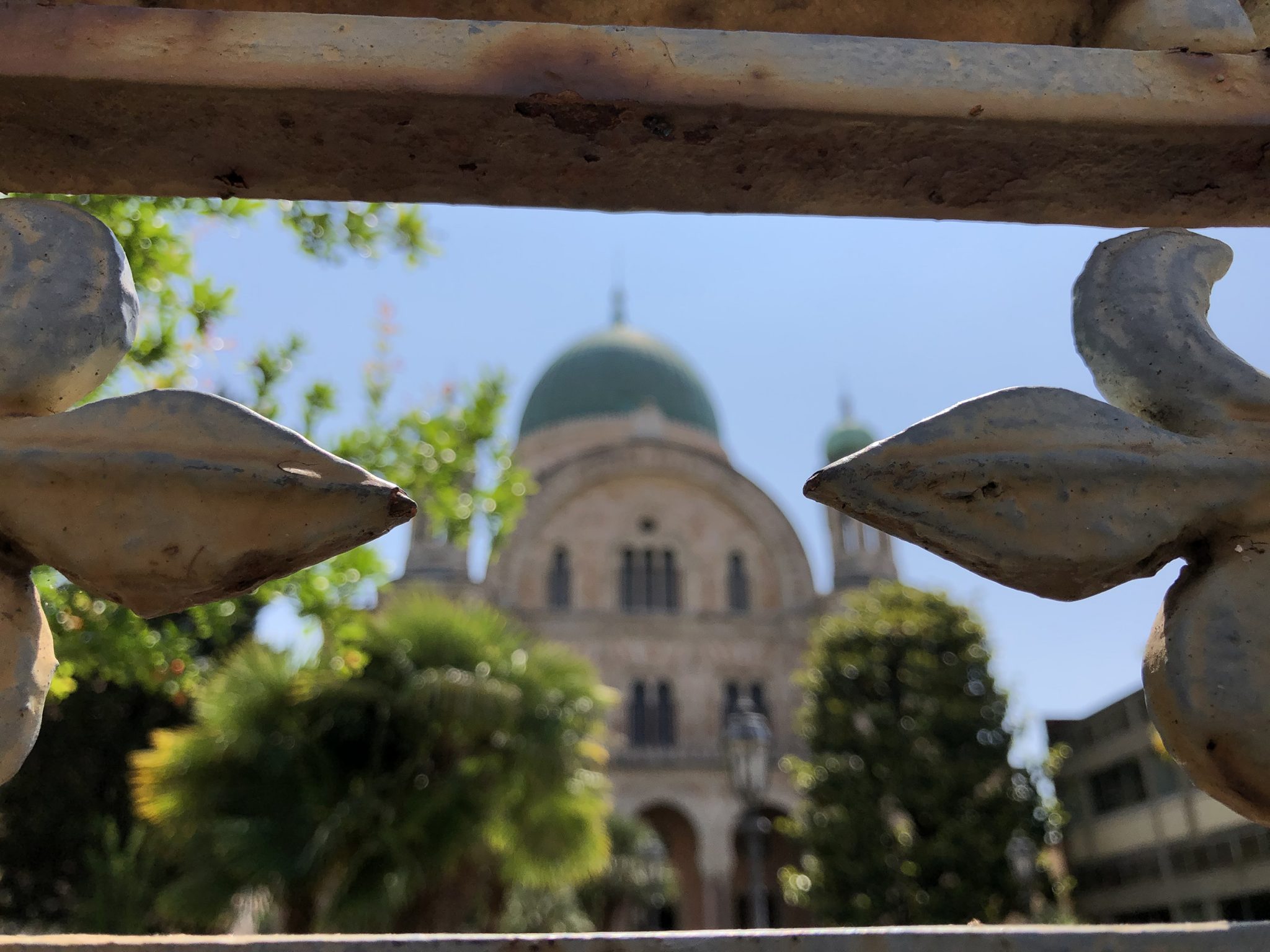
For the monumental temple, the choice fell instead on the new Mattonaia district, near the church of Sant’Ambrogio — the last of many proposals put forward in the long, difficult process that preceded the decision. Designed by Marco Treves, alongside whom the architects Mariano Falcini and Vincenzo Micheli worked, it was begun in 1874 and completed in 1882.
The new temple stands far from where the Jews had lived until then; and yet, despite this, the twentieth century would prove one of the most significant chapters in the life of Florence’s Jewish community.
A visit to the Synagogue not only offers the chance to witness Jewish prayer as it unfolds; the museum housed inside also lets you learn the customs and rituals of the faith and admire objects of rare beauty.