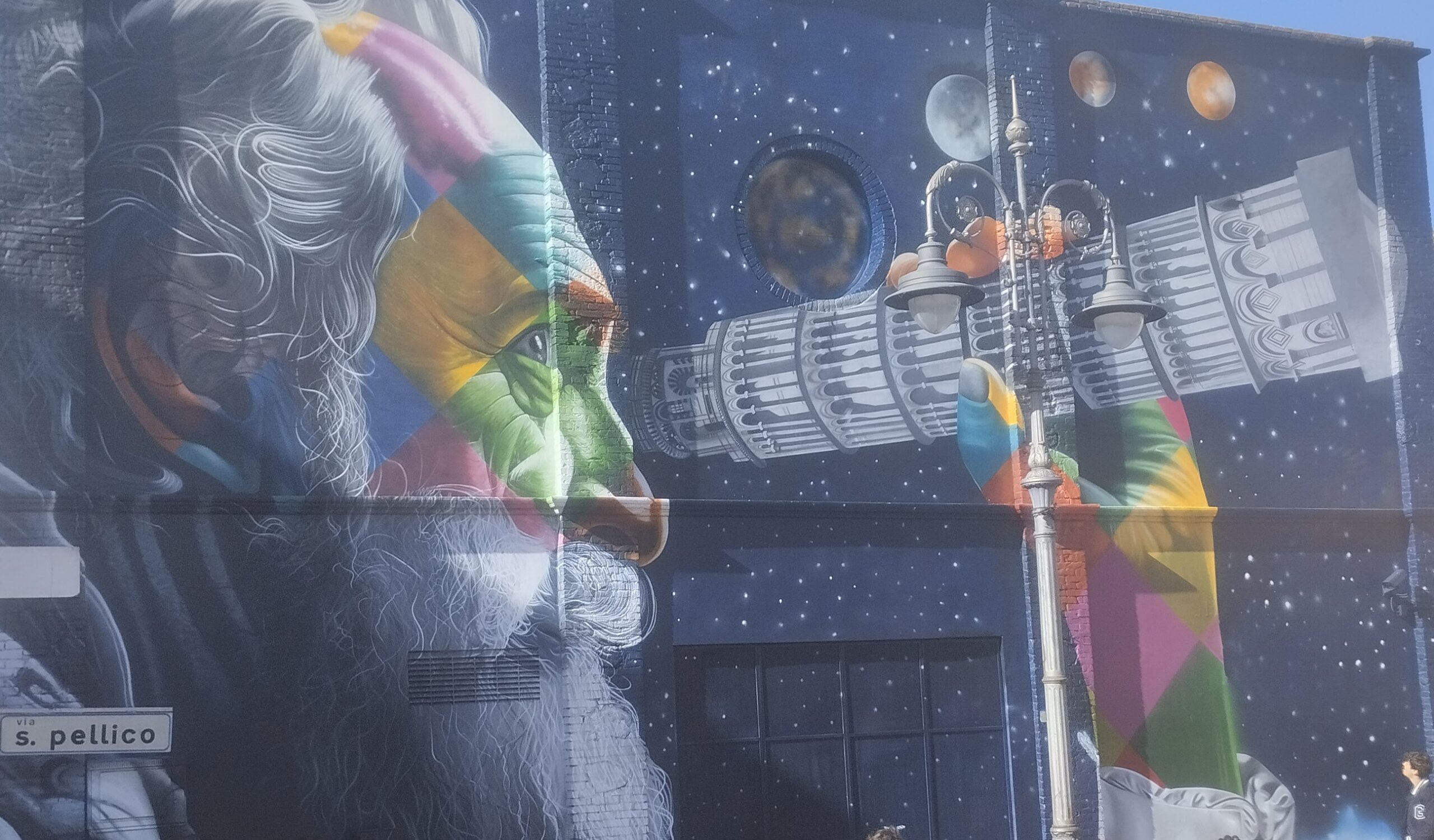
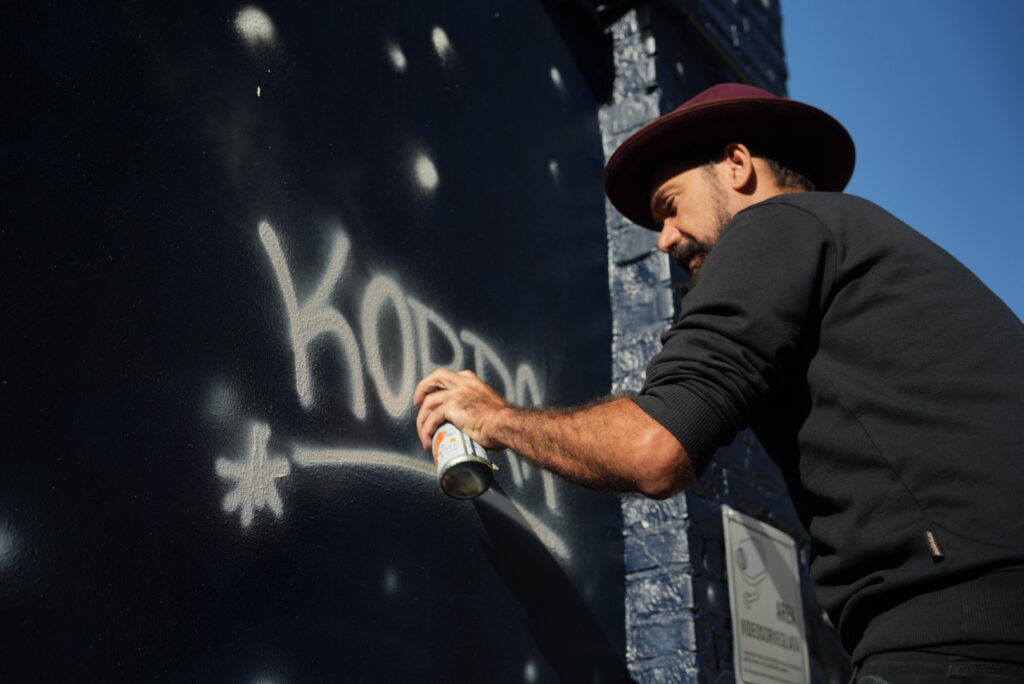
Kobra signs one of Italy’s largest murals in Pisa
The monumental work leaves its mark and enriches the open-air museum inaugurated in 1989 by Keith Haring in the City of the Tower. It is the first and most imposing piece of urban art set to reshape the face of Pisa within the Festival della Strada, an art program curated by Gian Guido Grassi with the Start Attitude association, promoted by Fondazione Pisa and hosted at Palazzo Blu, with the support of the Comune di Pisa and the Regional Council of Tuscany.
The festival sets out to be a catalyst for urban art, tracing an open-air museum route that, picking up from Haring’s celebrated Tuttomondo — created in 1989 — reaches the docks by way of the city’s ancient walls and the district of Porta a Mare, a historic site of labor and revolt.
Here too there is a bond between the association’s work and the territory: twenty-one murals were created as part of the project to revitalize the neighborhood — more than a thousand square meters of paintings brought to life through a strong connection with the local community: schools, associations, and private citizens. In this way a powerful tie between Pisa and urban art is gathered and nourished, from Keith Haring to the 1990s writers’ movement “Panico totale,” restoring legitimacy to a form of expression too often the target of uncomfortable labels.
Naked streets
Urban art is imperative, provocative, available. Naked art, inevitable, something impossible to look away from. It offers an escape from the confinement of museums and galleries, revealing itself all at once and unveiled to a “disinterested” public — different from the crowd of the vernissage in conventional venues, an “ordinary,” less specialized, far wider audience.
An art form born in the graffiti of the Bronx in the 1960s, it exploded with a spirit of protest in the least-frequented corners of America’s metropolises until it occupied, in an unstoppable rush, the spaces of cities across the globe, with ever-changing signs and inflections that made urban art (Street Art) a fundamental player in the world of art and mass communication. A constant provocation to the forms and definitions of modern figurative art — one that always ends by renewing the social role of the artist: a messenger, a hands-on maker, often far removed from academic technique.
The phenomenon fuels an endless debate over its boundaries, its reception, and the standing of this modern form of expression — an understandable wariness of the new. The power to change the way things look, to make us more sensitive, to make us reflect on the great themes of our time is the mission of artists like Eduardo Kobra (São Paulo, 1975), a record-breaking artist who, after creating his David in the city of marble, Carrara, in 2017, returns with one of his gigantic works to take over the urban spaces within the biggest project of the Festival della Strada in the City of the Tower.