Oasis Are Back, but the Working Class Is Gone
The success of the 2025 tour, the documentary presented at the Venice Film Festival this summer, the announcement of a new tour in 2027 with three dates in Italy as well: Oasis are back.
Last weekend, hundreds of thousands of fans tried to get tickets for the three shows on July 26, 29 and 30 next year at the Stadio Olimpico in Rome, through the controversial procedure for getting into the Ticketmaster portal. There was no shortage of complaints about the sales method (first codes handed out by lottery, then a scramble for seats like an Italian “click day,” the online rush for public grants, or a civil-service exam) and about the prices, from €86.25 for the cheapest tickets to €258.75 for the first section. A standing spot on the field costs a cool €227. Either way, all three dates sold out.
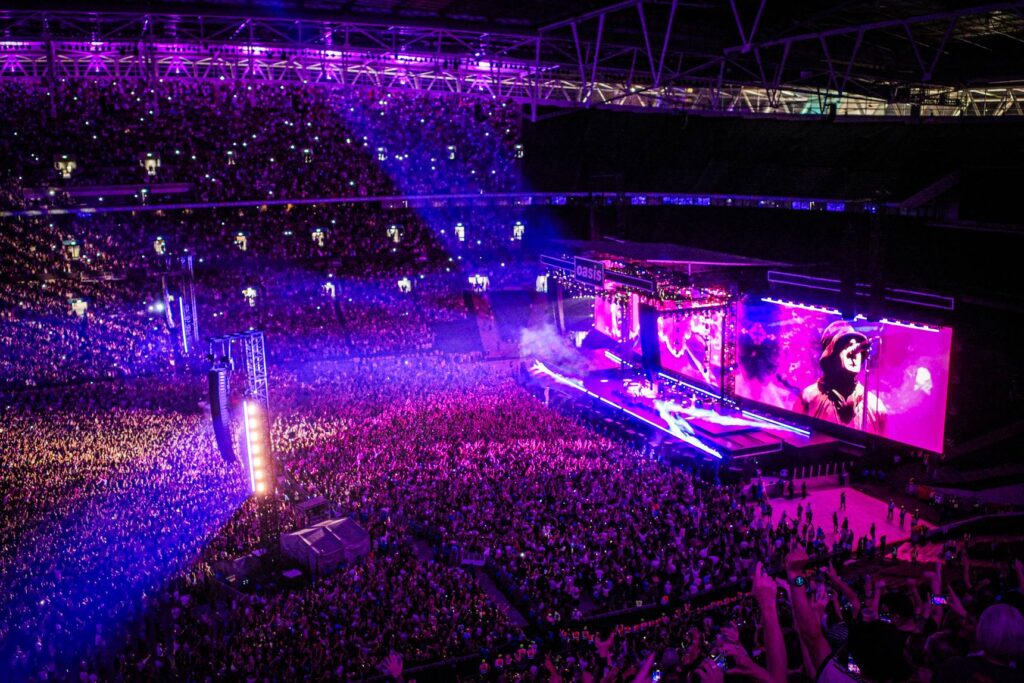
The Gallagher brothers said nothing about Ticketmaster’s allocation system. On the contrary, Liam bullied the fans on X who were complaining about the high ticket prices: “we’re Oasis, don’t buy them or stop whining!” A global wave of nostalgia for the nineties won them an enthusiastic welcome in the US too on last year’s tour, even though in that legendary decade they had never been particularly loved in America, so much so that Liam took it out on people who listened to grunge and the Seattle rock scene (of which only Pearl Jam survived).
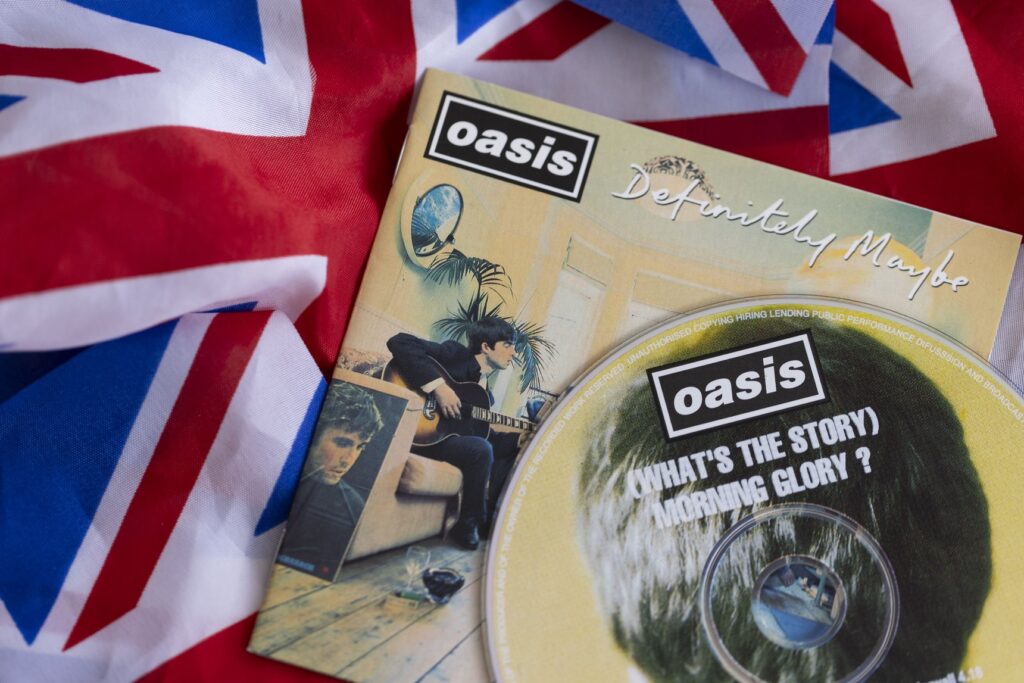
The Gallagher brothers grew up in the impoverished, working-class Manchester of the 1980s. Noel has recalled that as a boy he sometimes went with his father to collect his unemployment benefit. Those roots in a working class scarred by neoliberal policies produced a mix of anger, hunger for payback and artistic inspiration that translated brilliantly into music. Definitely Maybe is Oasis’s first studio album, released on August 29, 1994, and it went on to sell a whopping 10 million copies.
(What’s the Story) Morning Glory? is the incredible encore. Released on October 2, 1995, and driven by the singles Wonderwall and Don’t Look Back in Anger, it sold a whopping 22 million records worldwide (to this day one of the best-selling albums of all time) and became the symbol of the Britpop sound and movement. We ought to open a whole chapter here on that new British Invasion, with all the other English bands that found international success, from BLUR to Radiohead, from Suede to The Verve, but this is not the place for a deep dive. What should be remembered instead is that Oasis reached the peak of their fame in the summer of 1996, when over two nights (August 10 and 11) they played Knebworth Park in front of no fewer than 250,000 people. Curiously, in that very year, 1996, their beloved Manchester City were relegated to the second tier of English football, unthinkable today now that it is a top club thanks to the petrodollars of Abu Dhabi’s royal family.
Some argue that the new youthful mood sweeping England at the time helped bring about the Labour Party’s resounding victory in the 1997 election, with Tony Blair becoming, at 43, the youngest prime minister to move into No. 10 Downing Street. Labour was returning to power for the first time since 1979, after almost 20 years of Thatcherite policies. But neoliberalism was not abandoned by a left that aspired to usher in a “third way” to socialism. For the working class nothing changed: in Britain, for every three jobs lost in industry only one new one was created in services, and the welfare state remained as devastated by budget cuts as before.
The return of Oasis coincides with a moment of regressive populism in England, as in the US and in continental Europe. The duo, too, has always been a populist contradiction, rooted in the working class and in post-Margaret Thatcher Cool Britannia.
But Who Are Oasis Today?
As the magazine The Jacobin wrote in 2025, when the reunion was announced, “[…] the band that was once a symbol of working-class idealism has ended up embodying the most individualistic version of success.” Nostalgia for the nineties must not make us forget the chance for new social progress that was lost in that decade, and the crises we are living through now are its fruit (the Italian journalist and politician Luciana Castellina wrote that “we thought we would get out of neoliberalism from the left, and instead we will end up getting out of it from the far right”).
The brilliant English philosopher Mark Fisher had already understood this in 2016, twenty years after the Cool Britannia hangover and the experience of the “third way,” when he observed that it was Blair himself, who wanted to reform the left, who prevented the left from truly reforming itself by pursuing right-wing policies. But, if it is any comfort, Noel tried to dispel doubts about the band’s political leanings with a statement at the very end of the documentary about them: “I’m not sure what Oasis are, but they’re definitely not right-wing.”