The Rificolona: Florence’s Beloved Paper-Lantern Festival
The Festa della Rificolona is one of the oldest and most heartfelt Florentine traditions, celebrated every year on September 7. Let’s find out where it comes from — and why it has such a strange name.
Ona, ona, ona
Oh che bella rificolona!
La mia l’è co’ fiocchi
e la tua l’è co’ pidocchi.
(Roughly: “Oh, what a lovely rificolona! Mine is all bows and ribbons — and yours is full of lice.”) Let’s be honest: what Florentine child never sang this little rhyme, maybe hopping along with a blowpipe between their teeth, taking aim with putty pellets at some other kid’s lantern? Anyone born here knows exactly what we’re talking about. For everyone else, here is the short history of the Rificolona — one of the most cherished celebrations in Florence, an event rooted in old folk traditions that still draws in the whole city today.
The origins of the festival
The origins of the Festa della Rificolona reach back to the mid-1600s, when — so the legend goes — the peasants of the countryside around Florence would come down into the city on the eve of the Nativity of the Virgin Mary, carrying their goods and lighting their way with paper lamps of every shape. Their destination was Piazza SS. Annunziata — both to honor the birth of the Madonna in the basilica of the same name and to set up, under the loggia of the Spedale degli Innocenti, a proper fair where they would sell their produce the following day.
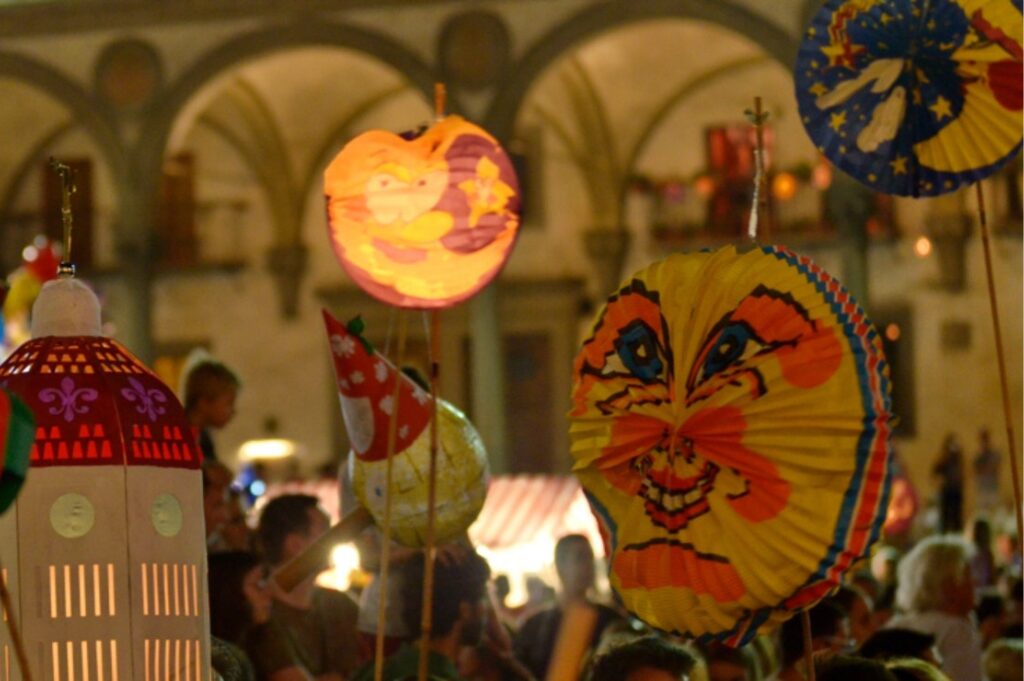
To light the long night march, the pilgrims used paper lanterns lit by candles and held up on a slender cane. Colorful and fanciful, over time these lanterns became the symbol of the festival, giving rise to the tradition of the “rificolone.”
What the word “Rificolona” means
The word “rificolona” has murky origins and seems to descend from the old term “fierucola,” meaning a small fair. One of the most credited theories holds that the name comes from a fusion of “fiera” (fair) and “colone” (peasant farmers), referring to the country folk who thronged the city for the feast.
Another theory — tied to that famously mocking Florentine wit — has it that “rificolona” was a word used to tease the peasant women who came into town dressed in their rustic, gaudy best. That teasing supposedly inspired the tradition of building ever more colorful and bizarre lanterns, modeled on the country women’s flamboyant clothes. For the young Florentines of the day, September 7 was an appointment not to be missed: the odd outfits worn by the ungainly countrywomen — broad-hipped and amply built — drew cheerful jeers, and from those jeers came the name fierucolone or fieruculone, as the townspeople called the poor peasant women, both because they took part in the fierucola and for their conspicuous “behinds.”
And what about the blowpipes? Used today by children to shoot putty pellets at other kids’ lanterns and try to snuff them out, they seem to descend from the old custom of hurling watermelon rinds at the lanterns in an attempt to set them ablaze.
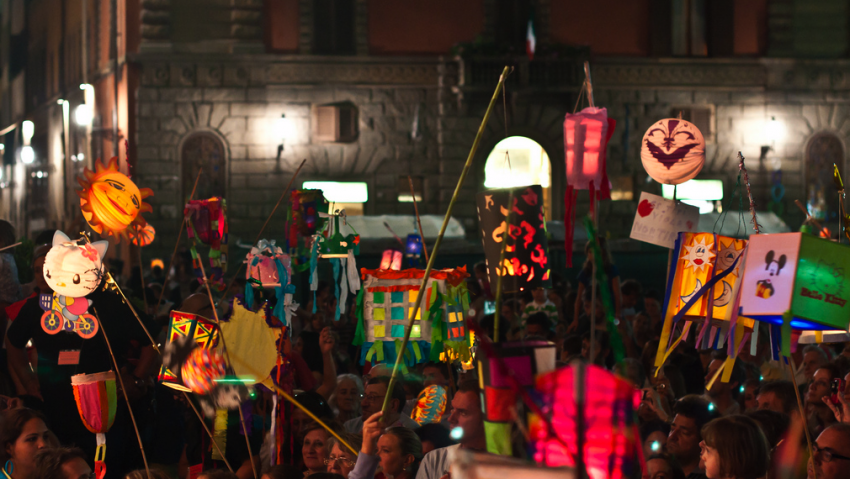
The festival today
Today the Festa della Rificolona is a hugely anticipated event, above all for children. The streets of Florence fill with color and song as the little ones parade proudly with their lanterns, chanting the famous rhyme “Ona, ona, ona ma che bella rificolona!” Beyond keeping the tradition alive, the festival brings a full program of events across the city’s neighborhoods.
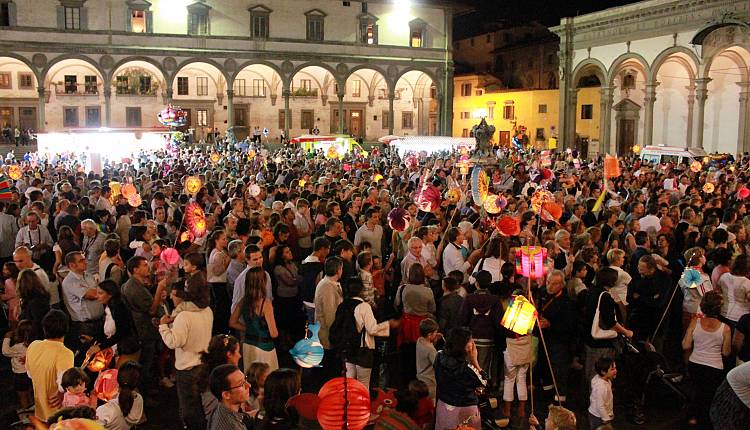
The heart of the celebration is held every year, on the evening of September 7, in Piazza Santissima Annunziata, with the lantern-lit procession that ends beneath the loggia of the Innocenti. Around it, one neighborhood after another puts on its own events — lantern-making workshops, parades and prizes for the finest rificolona, music and food — so it’s worth keeping an ear out when the season’s program is announced. All that’s left is to build your own rificolona and join the party.