The World of Roberto Casamonti, Collector and Founder of Tornabuoni Arte
Ottone Rosai’s studio, on Via San Leonardo, smelled of trichloroethylene. It was the solvent the painter used to mix his colors, and that scent remained etched in the memory of a young boy who accompanied his father to have his portrait painted. That boy was Roberto Casamonti, and it was his first encounter with a world that would become his life. “Rosai was a large, robust man – and a poet as well,” Casamonti recalls. “When the portrait was finished, my father said to him, ‘You haven’t even made me look that much like myself…’ and Rosai replied that he had captured his soul, not his physical likeness.”
We met Roberto Casamonti at the Hotel Savoy in Florence. Founder of Tornabuoni Arte – a modern and contemporary art gallery with locations in Florence, Rome, Milan, Forte dei Marmi, Crans-Montana and Paris – and of the Roberto Casamonti Collection, one of the most prestigious contemporary art collections in Florence, he oversees what is perhaps one of the most important private collections in the world. It includes works by Fattori, Balla, Boccioni, de Chirico, Sironi, Campigli, Fontana, Boetti, Dorazio, Penone, as well as Anish Kapoor, Bill Viola, Marina Abramović, Basquiat, Antoni Tàpies and Warhol – an essential catalogue. For him, every work carries a precise meaning.
“All the names you’ve mentioned, I’ve lived with them, I’ve acquired them throughout my life with affection and love,” he confesses. “I don’t claim that my collection holds the most beautiful Picasso in the world – that wouldn’t be true – but each of these paintings has marked my life. I’m someone who prefers to acquire and preserve when I find a work that truly moves me, rather than to sell. When I sell, it’s always a bit painful; when I buy, on the other hand, it’s always something beautiful – a conquest.”
Passion and Intuition
Art entered Casamonti’s bloodstream when he was around eighteen, when he purchased his first paintings from Borgianni – he recalls it with a smile. But the turning point came after forty years spent working in the family business, in the upholstery sector. “I asked myself why not change,” he says, describing his role as something of a pioneer in Florence, especially in the Florence of that time. “I was in the hospital when I read an advertisement in a newspaper announcing the sale of a gallery, and I bought the space at 5 Via Tornabuoni – it’s still there today!” It was 1981. The debut was not an easy one: a Picasso purchased for one hundred million lire and authenticated by the Académie de France in Piazza Ognissanti turned out to be a fake. “A rip-off,” he admits with a smile. But he did not give up.
“I’ve lived through many difficult moments – not least the flood of ’66, I was twenty-six – and then there was the postwar period… but I’m a doer, someone who wants to act. I try to get angry as little as possible; instead, I try to work as much as possible. Work is something I feel deeply, something that comes from within, and I’m happy about that.”
The Art of Collecting
Elio Grazioli, art critic and professor of Contemporary Art History, has written that the collector is an artist who expresses himself through images endowed with strong symbolic power, creating an organic whole that assumes the status of a work of art. Casamonti shares this view.
“Collecting is almost a kind of illness – searching, gathering in order to refine an ongoing quest… The collector is an artist in some way, yes, because he puts his own eye into it, and his collection always bears a personal signature. For me, a painting must stir emotion.”
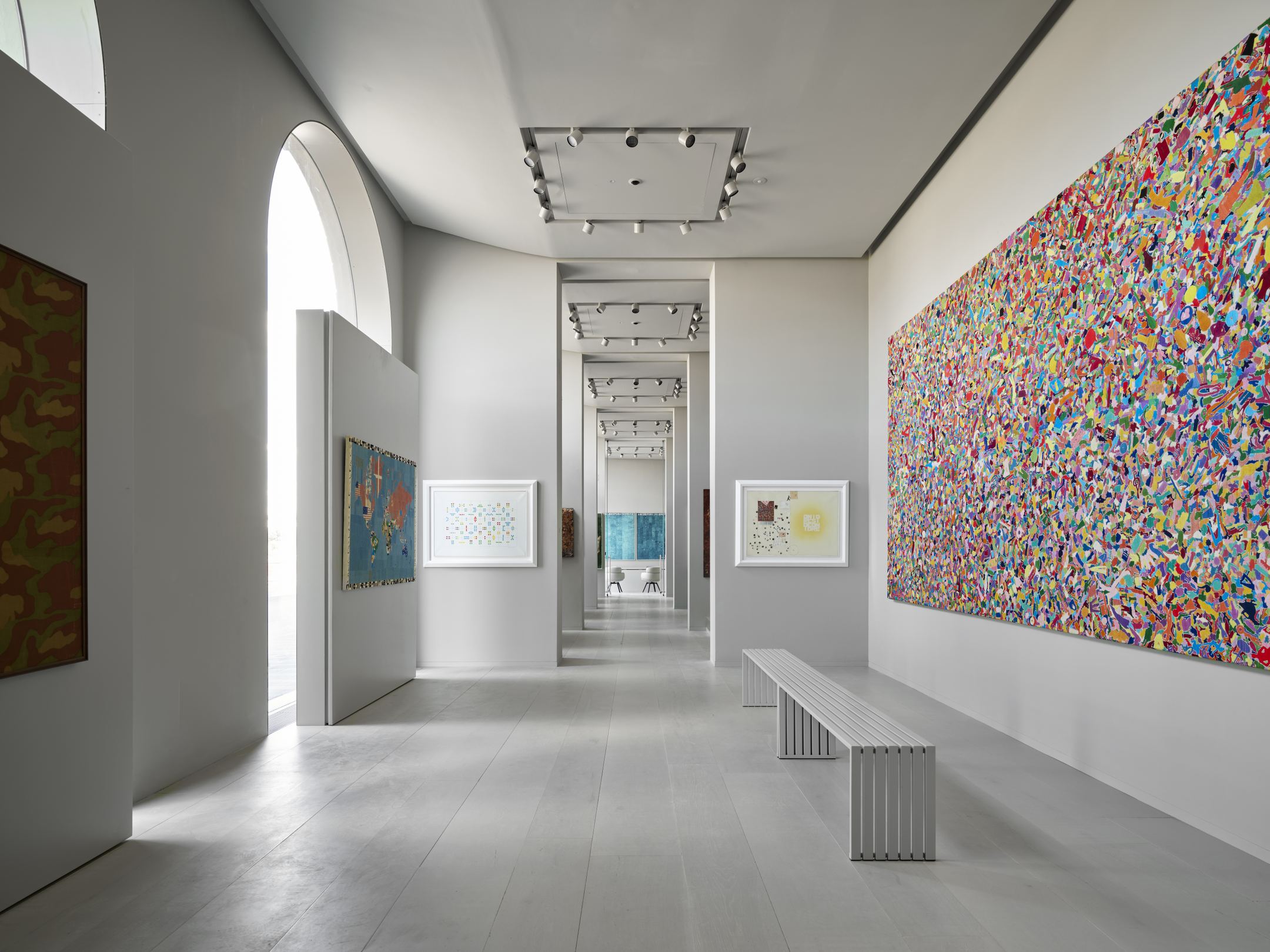
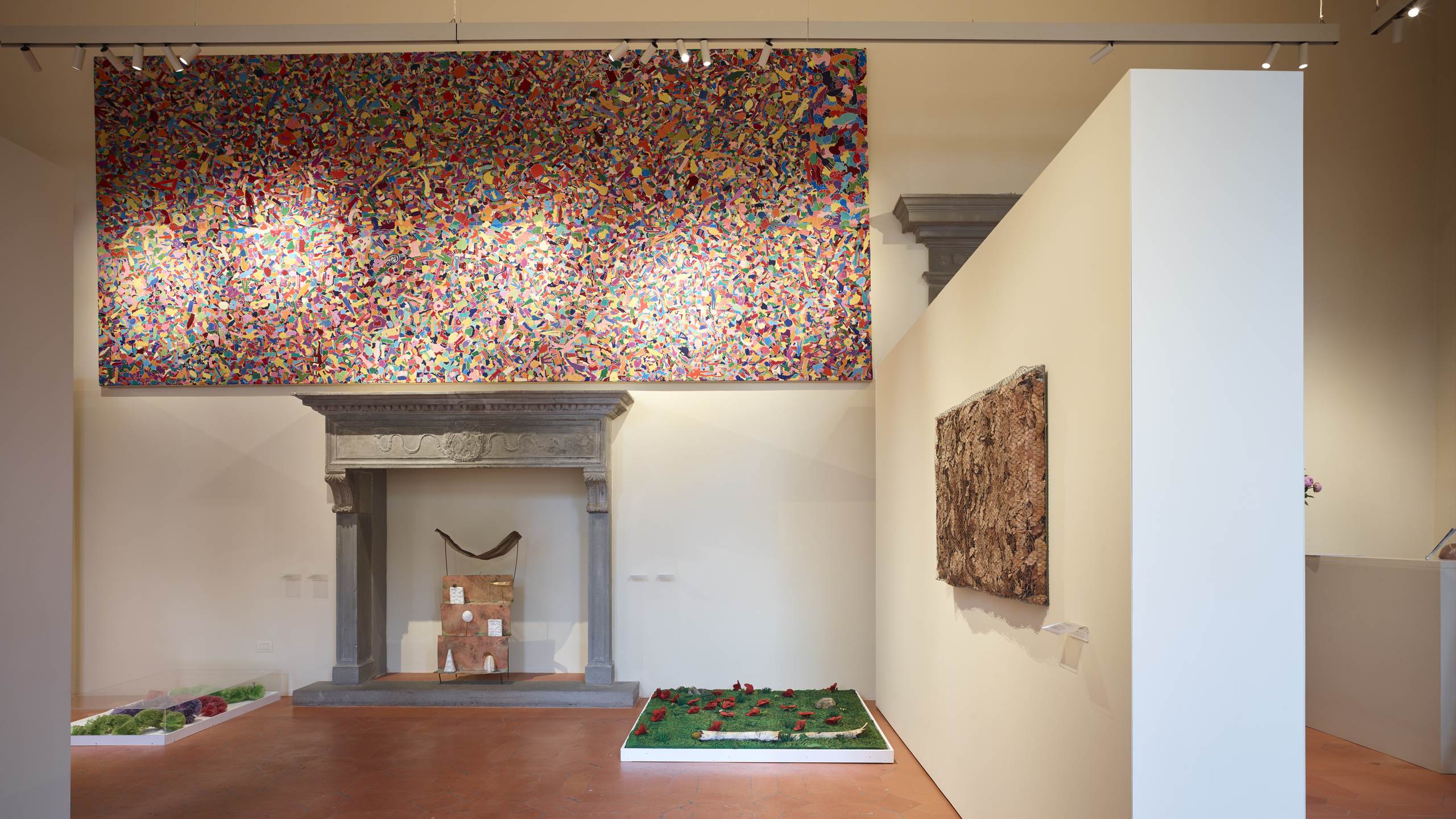
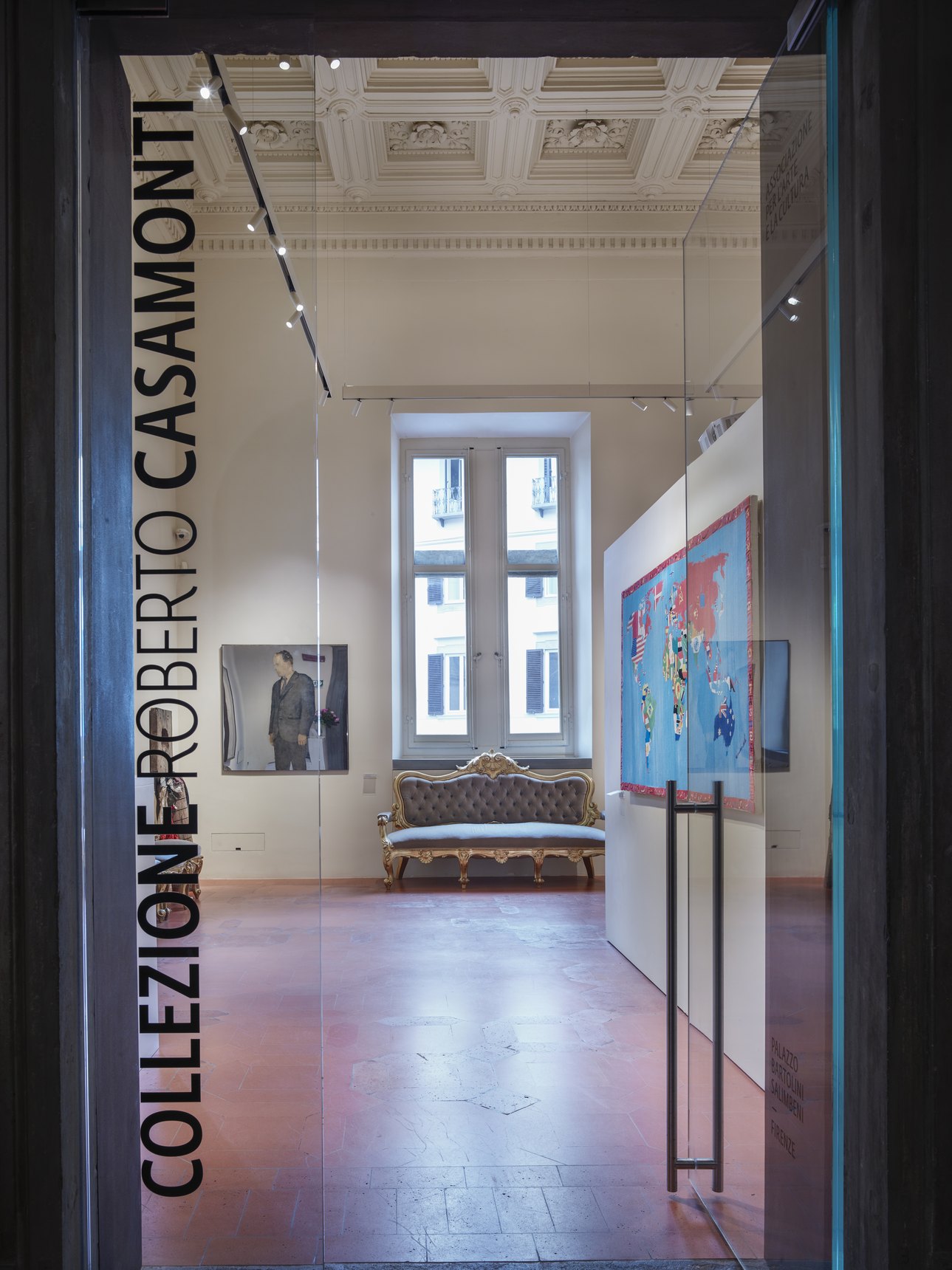
It was this awareness that led him to create the Roberto Casamonti Collection. “I wondered why in Florence, where people come to admire marvels, contemporary artists were absent. I took the initiative to open this exhibition path – it’s not a museum, it’s my collection of paintings, those pieces that struck me like lightning, that I believe in, that I feel are mine, and that I wanted to share with Florence.”
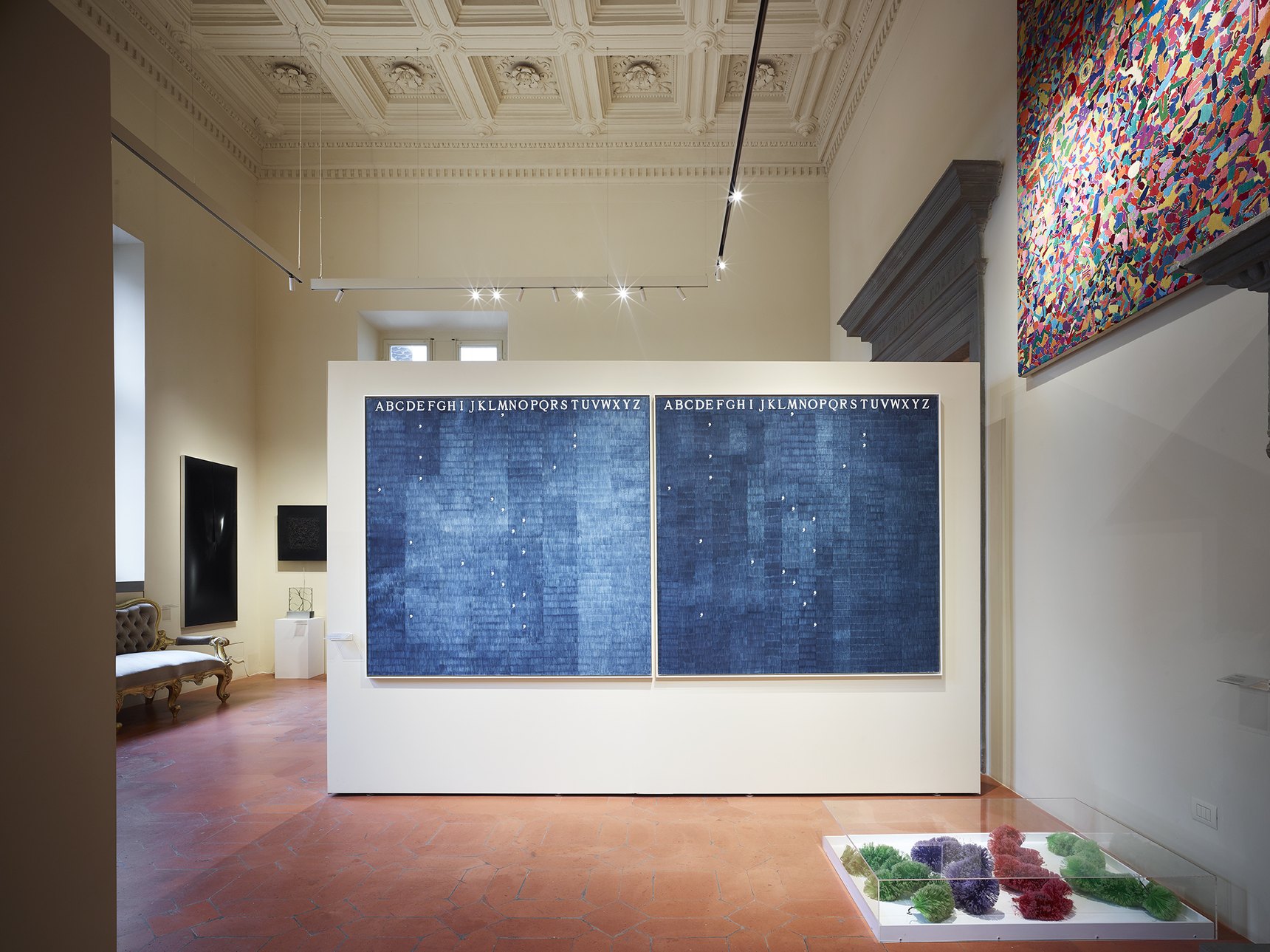
The Director of the Roberto Casamonti Collection is Jonathan Paonetti, a person of great expertise and impeccable courtesy, seated among the audience gathered in this refined Florentine setting. We are in Piazza della Repubblica, just steps away from iconic venues such as Le Giubbe Rosse, where early twentieth-century artists and writers once literally came to blows.
Bringing Italian Art to the World
Many private galleries are becoming key players on the cultural scene, taking Italian art beyond national borders. How did this international vision come about?
“I opened several galleries in Paris, but I didn’t go there to compete with Parisian galleries by exhibiting their artists – that would have been easier. I went to bring Italian art. All our exhibitions were appreciated. In doing so, I believe I contributed to bringing Italian art to the world.”
One of his great champions has been Lucio Fontana, whom he bought “when very few people wanted him, because they would say: what is a slash?” Today, Casamonti is one of the world’s major collectors of Fontana.
Encounters That Stay
Among his dearest memories is Emilio Vedova in the Venetian calli, wandering through the darkness of the night. “He had a marker in his hand. At one point we turned a corner and saw a poster for La Bohème at La Fenice. He suddenly began drawing on the wall. The memory of how this man, driven by passion for his work, could not help but express something remains vivid for me. He explained himself to me through his sketches: that is Vedova. And then Piero Dorazio, who told me about the Roman period with Accardi, Turcato, Forma 1 in the years ’52–’54. For me, it was a profound lesson.”
“In art you must be ahead. If you resemble someone from the past, you are standing still.”
The Future
What makes a work of art truly significant?
For Casamonti, the answer is clear. “Art must be placed within its time, but it is entirely subjective. If it speaks to the heart, it means it has given something. In absolute terms: in art you must be ahead. If you resemble someone from the past, you are standing still. One must know the past deeply – visit museums, fairs, galleries – and then find one’s own path without resembling anyone. Otherwise there would not have been Fontana with his slashes, Burri with his blowtorch, Pistoletto with his mirrors… one must be innovative, not derivative.”
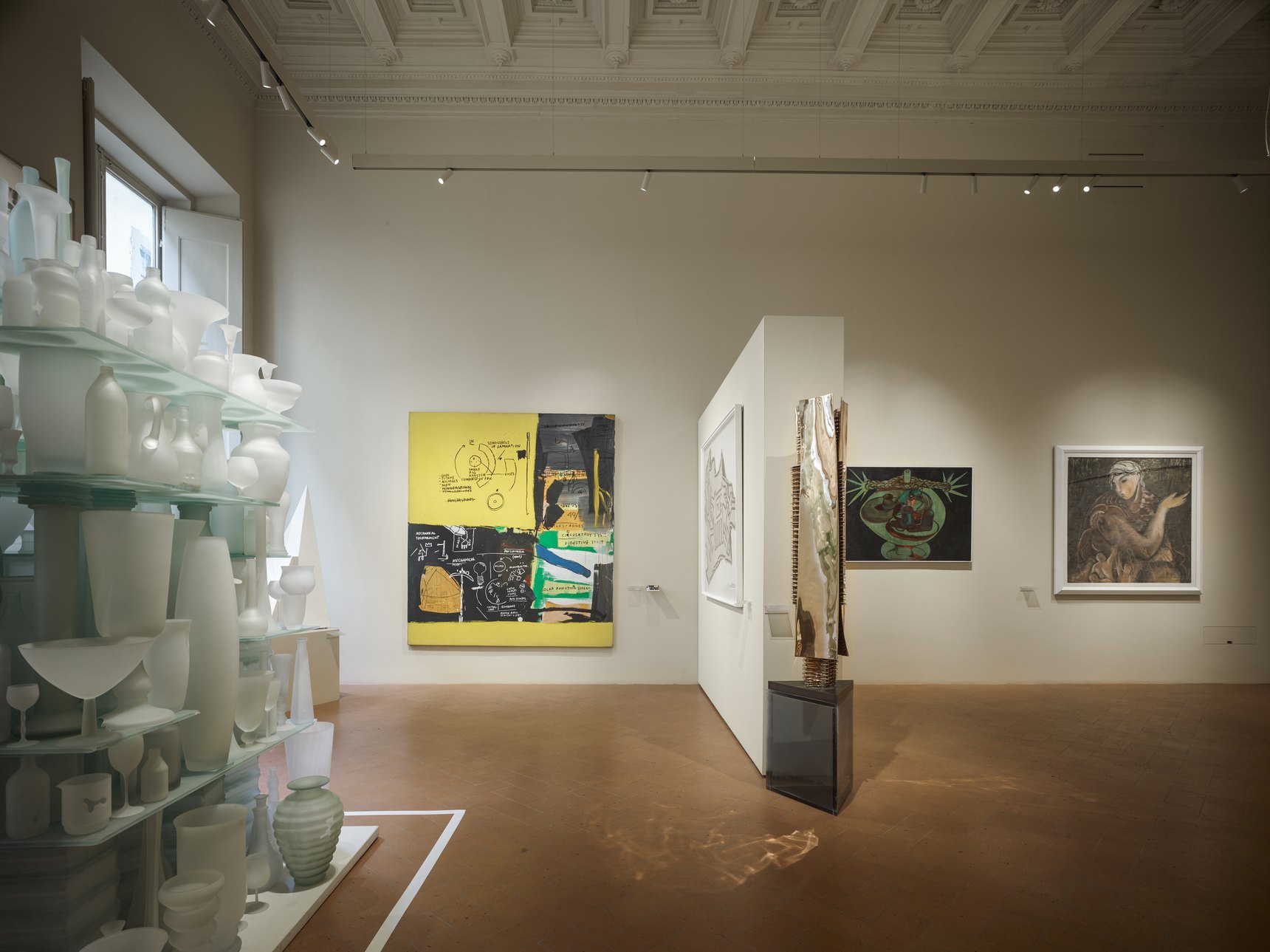
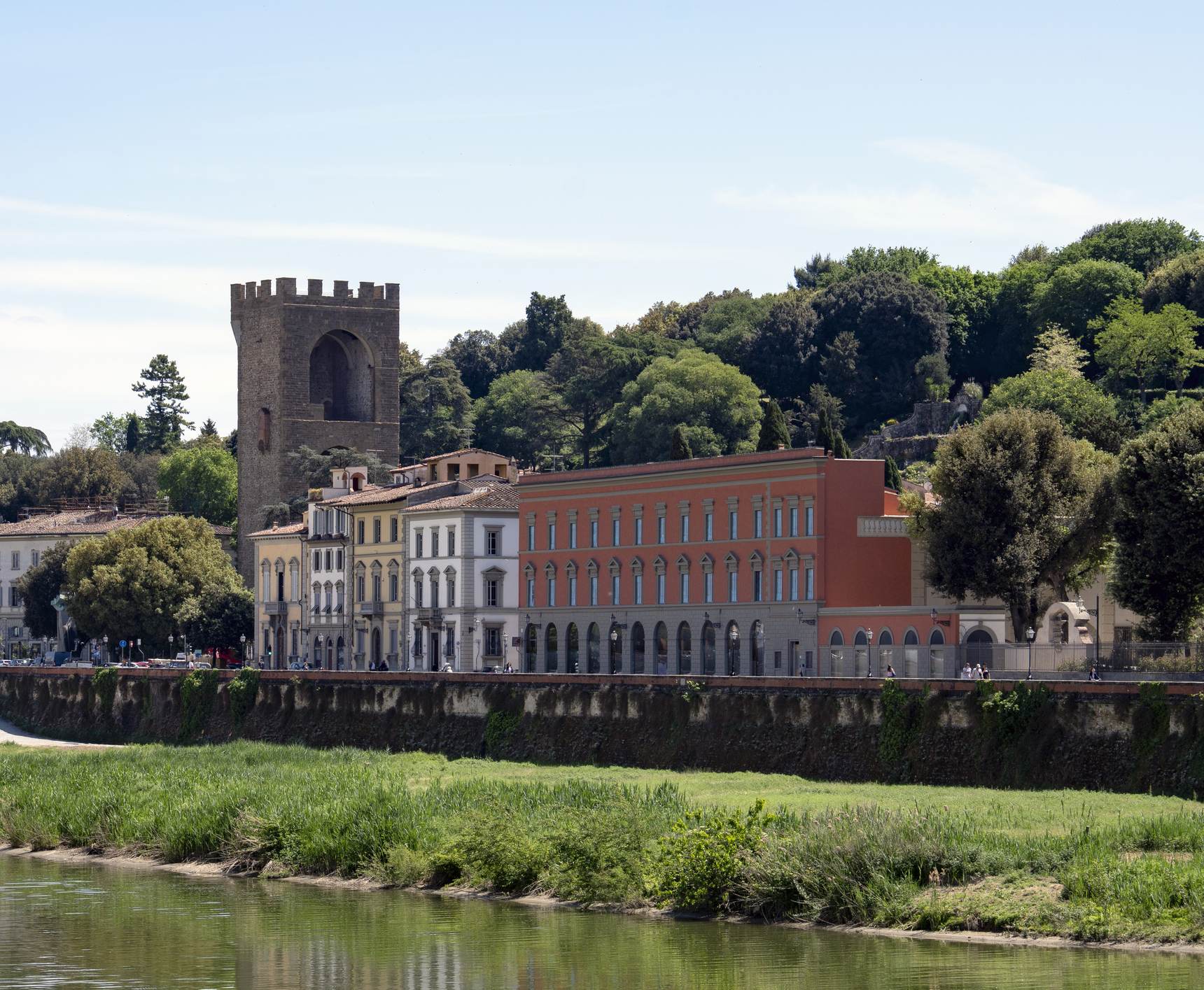
As for the pinnacle of his career, Casamonti smiles: “It’s still to come, I hope.” There is no shortage of projects. In the former Serristori stables, together with his son Marco, an architect, he will inaugurate in 2026 a new space that will house the entire collection reunited, from the late nineteenth century to the present day. A journey through more than a century of art, told through the gaze of someone who has lived it, loved it, and preserved it with the passion of someone who knows that collecting is, ultimately, another form of creating.