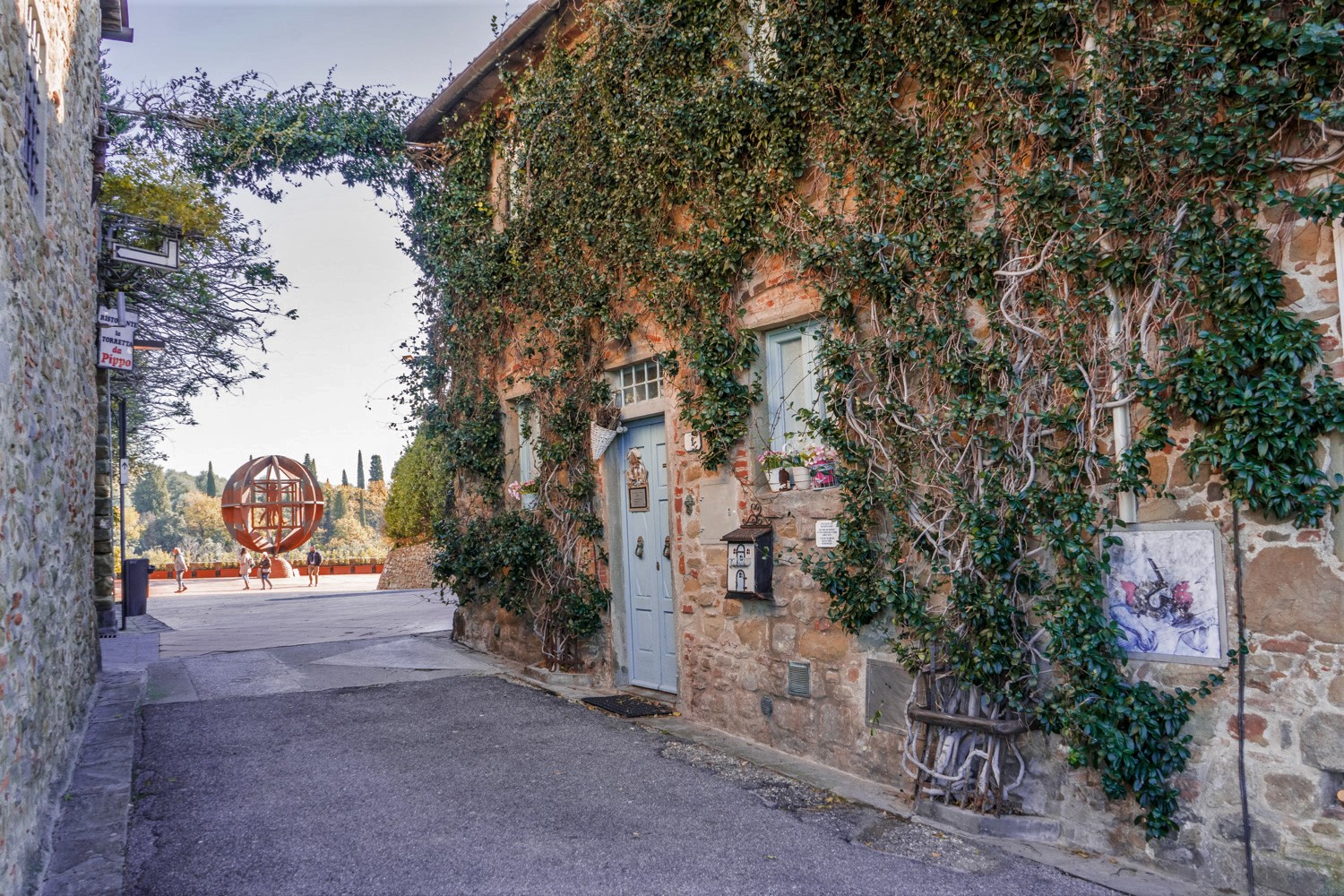
Via di San Leonardo: “One of the Most Beautiful Streets in the World”
When we think of Florence, the images that inevitably come to mind are the familiar ones: Brunelleschi’s Dome, Giotto’s Bell Tower, Ponte Vecchio and the Uffizi. And fair enough — all rightly so! Yet we often tuck away in some remote corner a great deal else: all those lesser-known places that give our city its character and make it wonderful.
These are the corners, glimpses, narrow lanes and hidden treasures of immeasurable beauty — far from the tourist trails — that many Florentines know, though perhaps without knowing all their secrets. Among them (and there really are so many!) is one street that, from the edge of the historic center, climbs up into the green hills that ring the city like a crown. We’re talking about Via di San Leonardo, which owes its name to the historic church that stands along its course — probably dating to the 11th century, dedicated to the hermit saint and known, fittingly, as the Chiesa di San Leonardo in Arcetri.
Arcetri is a small hilly area south of Florence that also takes in the Abbazia di San Miniato al Monte and the celebrated Piazzale Michelangelo, the grand, evocative terrace from which anyone can take in the whole of Florence from above. And it is precisely here, in Arcetri, that Via di San Leonardo takes shape, unspooling gently for about two kilometers along the crest of the hill. Worth underlining is the street’s historical importance: it once formed the first stretch of the road to Impruneta, which was the only quick link between Florence and the Chianti region.
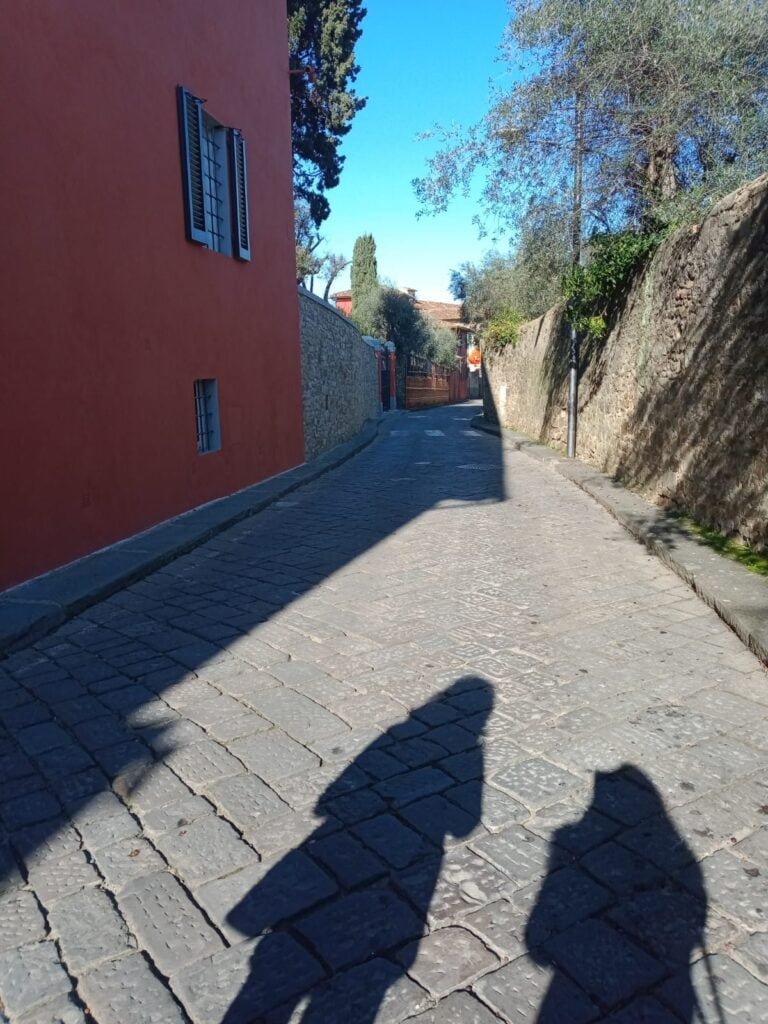
The best route for visiting it, if a touch tiring, starts from Costa San Giorgio, a street that rises from the banks of the Arno, just past Ponte Vecchio, climbing steeply between houses and rooftops and growing ever more panoramic as you go.
After passing the house where the astronomer and physicist Galileo Galilei lived and one of the entrances to Villa Bardini, you reach Porta San Giorgio, one of the old gates of the historic center. Just beyond it, on the right, it’s hard to miss another historic and imposing structure: the Forte di Belvedere, the work of the architect Buontalenti. And it is right here that Via di San Leonardo begins, where the tourist becomes a viandante (wayfarer) — literally, one who travels on foot along the roads beyond the city.
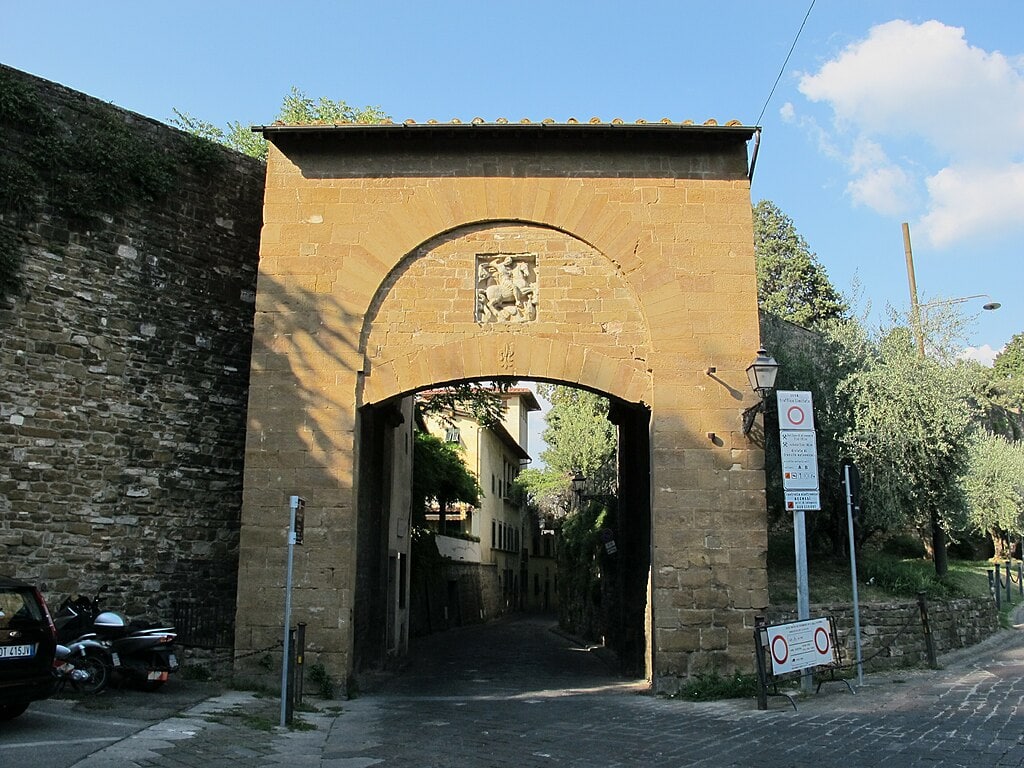
(photo by I, Sailko, CC BY-SA 3.0, https://commons.wikimedia.org/w/index.php?curid=16403355)
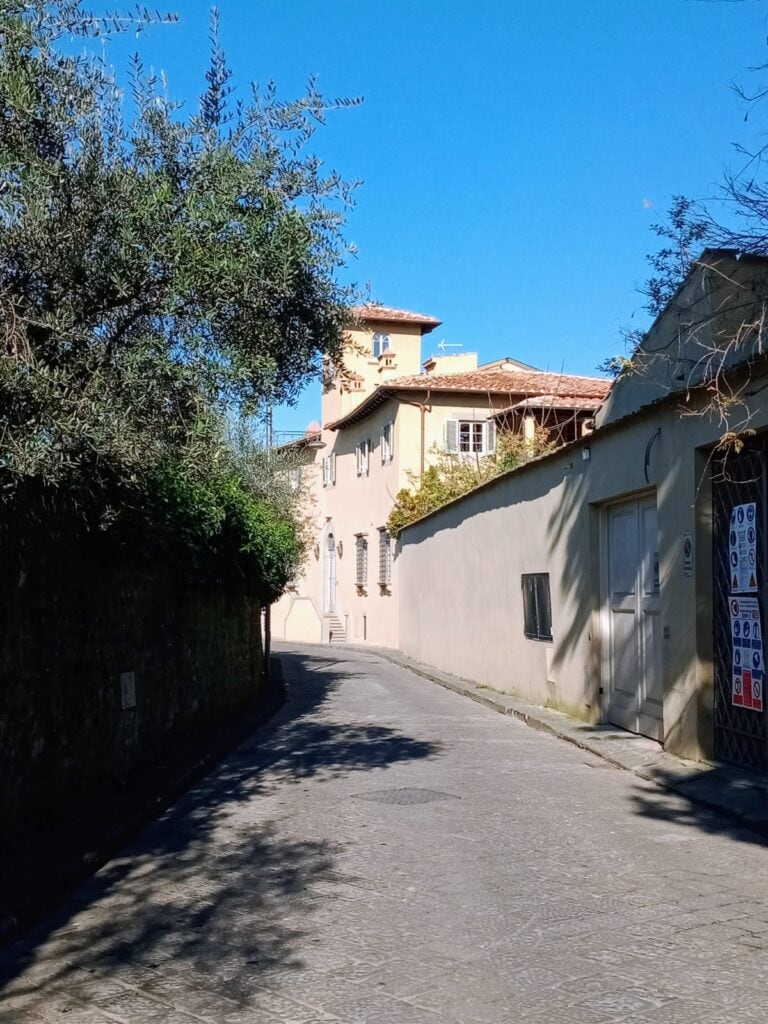
Shielded by high walls that block any view of the purely rural, pastoral surroundings, the street runs on a fairly straight course, so that the “wayfarer” can do little but look at the road itself, raising their eyes now and then to the sky above.
It’s no coincidence that the Florentine writer Vasco Pratolini called it “un tunnel di cielo” (a tunnel of sky), rich with hidden beauty. And indeed, between walls bearing their original sgraffito decoration in geometric patterns — overflowing in spring with mimosa and other wonderfully fragrant flowers — rise gates, and behind them tall cypresses and olive trees that mark the presence of sumptuous country villas and farmhouses.
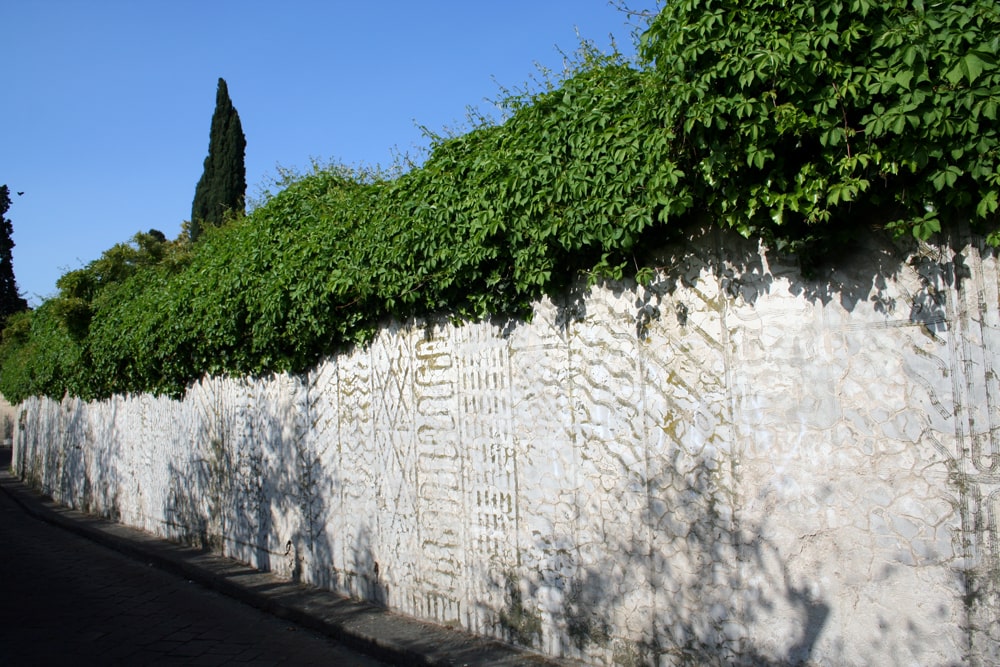
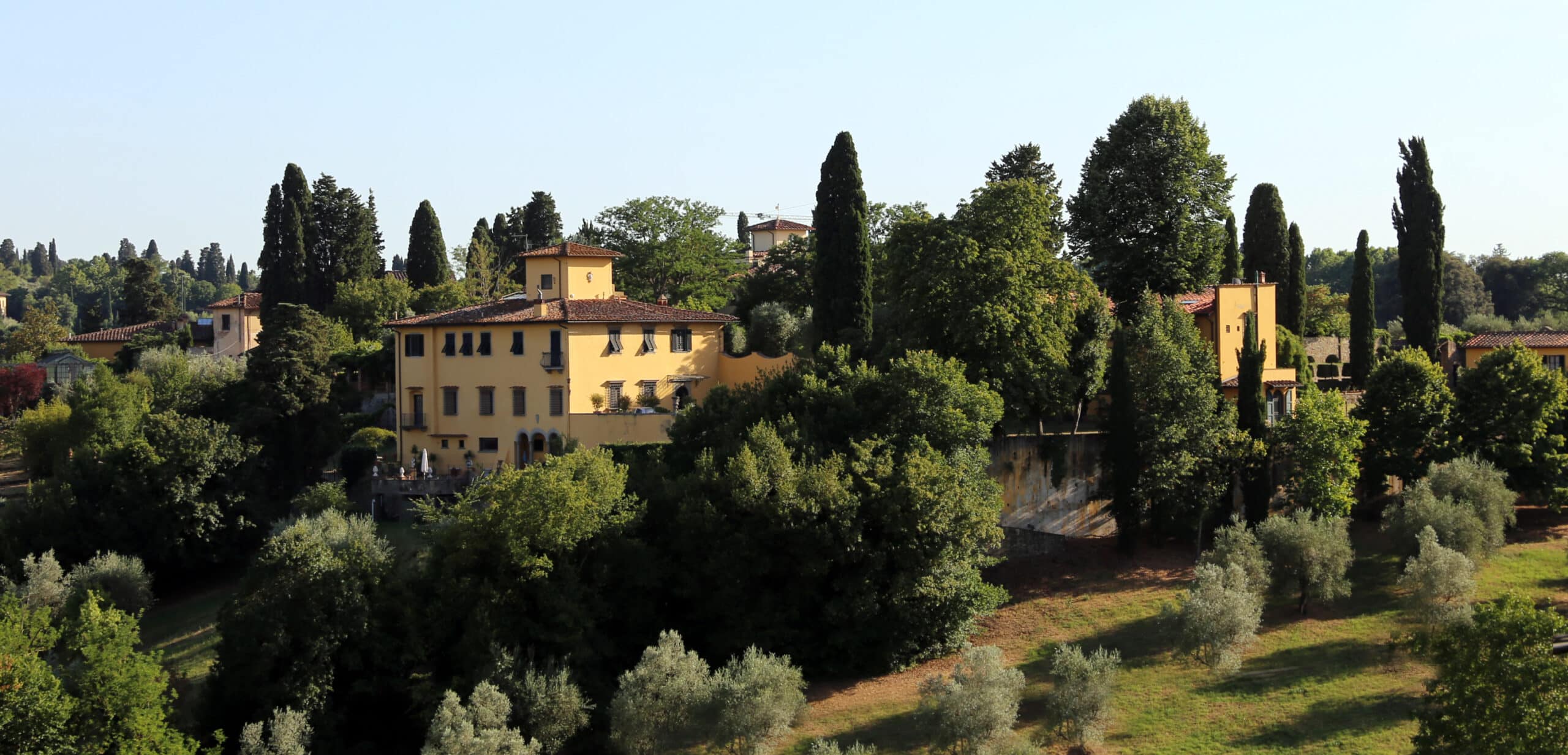
And this is exactly what makes Via di San Leonardo special: the almost unbroken succession of villas, most of them 16th-century, each with its own name. Among them are Villa il Gioiello, at number 40, which belonged to the noble Florentine family of the Vettori; Villa Razzolini; and Villa Bonciani, at number 64, where in 1878 the celebrated Russian composer Tchaikovsky stayed and worked, composing here one of his masterpieces, the opera The Queen of Spades (La dama di picche).
Above all, though, it’s number 49 that should catch our attention, for this was the home and studio of the famous Florentine painter Ottone Rosai, who lived here from September 1933 to May 1957 and produced a great many paintings depicting Via di San Leonardo itself — the street he called “one of the most beautiful streets in the world”. And it seems that, beyond its great beauty, it is also one of the most romantic streets in the city: Rosai, who had the chance to admire and study it for more than twenty years, wrote in one of his pieces of a street walked by wanderers, poets, artists and, above all, lovers.
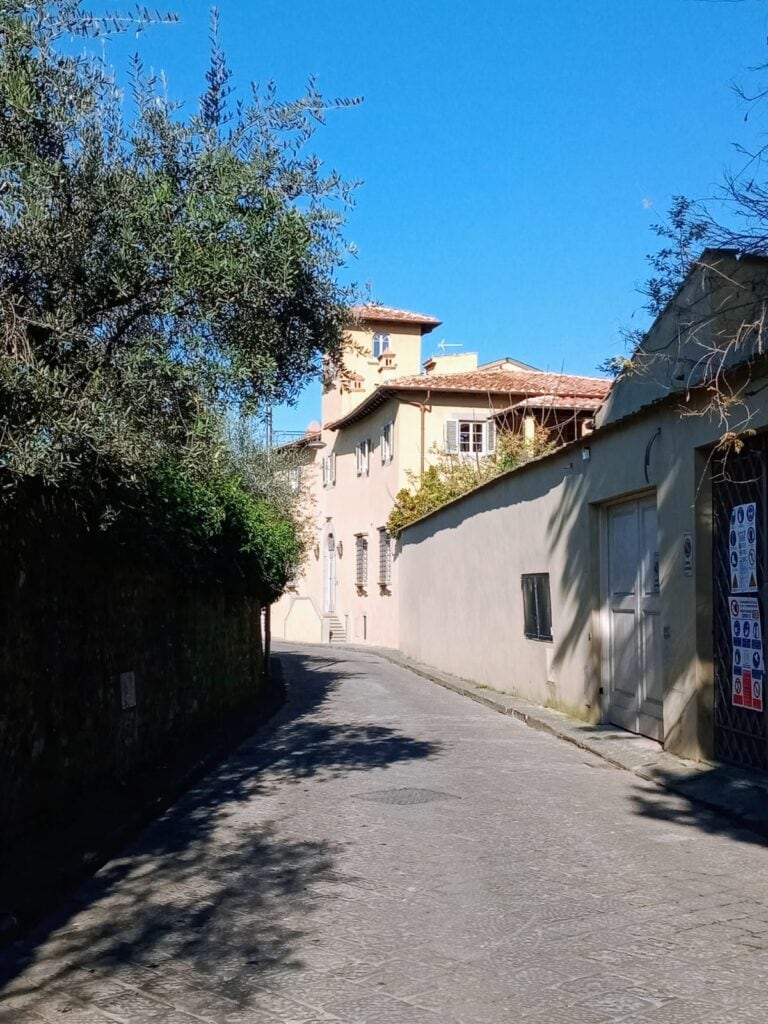
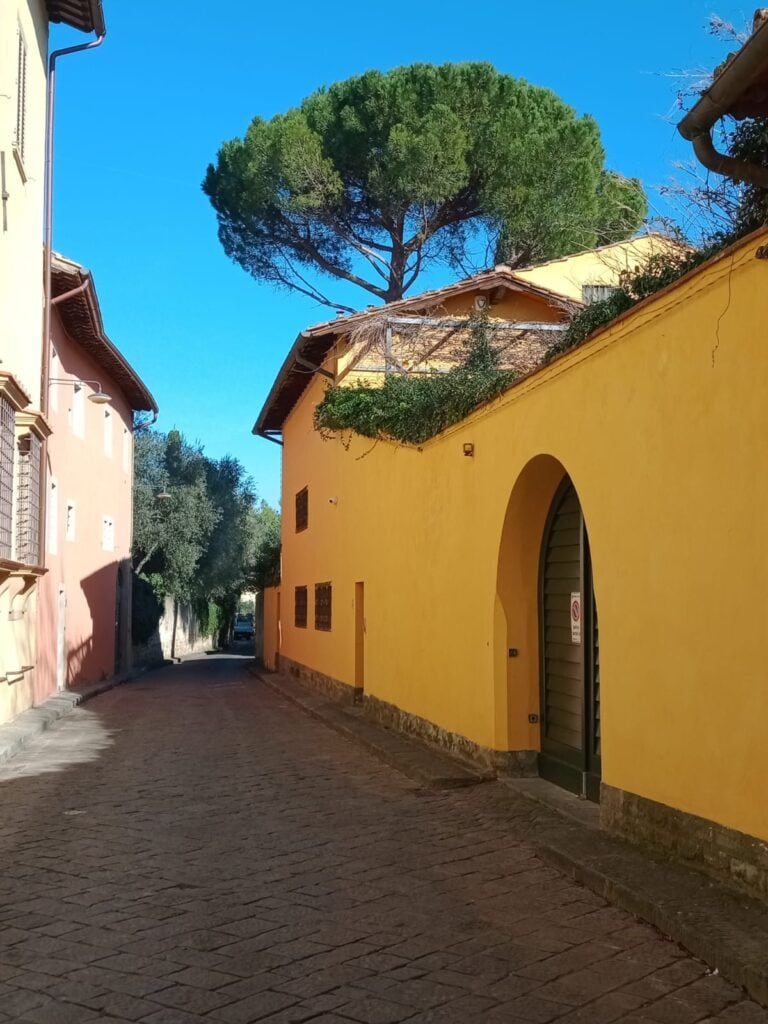
Celebrated by writers and painters across the 19th and 20th centuries, it’s no accident that the first part of Via di San Leonardo crosses Viale Machiavelli and Piazzale Galileo, home to the renowned literary café Chalet Fontana, founded by Tullio Fontana in 1986, which became a gathering place for artists and intellectuals — among them the aforementioned Pratolini and Rosai, but also the statesman Sandro Pertini and the writer Leonardo Sciascia. And it is right beside the Chalet — directly opposite where Via di San Leonardo meets Viale Galileo — that the second part of our magnificent street begins. After crossing Via Viviani, which leads up to Pian dei Giullari, another of Florence’s hilly districts, it continues on to the Villa Medicea del Poggio Imperiale, where it ends.
In short, the beauty of Florence certainly lies in its colossal, magnificent works of architecture — but it isn’t contained in those alone. It lives in so much else, including the surprising, unexpected shift from the bustle of the historic center to the peace and quiet of the countryside.
And so, almost without realizing it — walking through narrow lanes, crossing enchanting bridges and climbing steep little streets — you suddenly find yourself surrounded by nature, by its sounds and its scents, there among the hills that we see rising proudly from the city’s terraces, as if to protect Florence. Via di San Leonardo is one of those very streets that let us plunge into these green, sinuous heights that from afar seem unreachable, and where so many have found their own space for quiet and artistic creativity. And with all that in mind, the words carved on the plaque at Villa Bonciani, where Tchaikovsky stayed, fit perfectly: “… from the immense Russian plain to the gentle Tuscan hills.”