Traditional Tuscan Easter Sweets, Region by Region
In Tuscany, Easter is synonymous with the ritual of the Scoppio del Carro (the “Explosion of the Cart”) in the Piazza del Duomo in Florence, and with Passion reenactments like those of Chianciano Terme, Pienza, and Grassina. But above all, Easter in Tuscany means traditional Easter sweets that, even today, cannot be missing from Tuscan tables during Holy Week.
1 – The ceremito and the sportella
These sweets typical of the Island of Elba, and more precisely of Rio dell’Elba, are considered symbols of Easter on the island — and symbols of love, too. According to tradition, they were made by local young people who exchanged them to declare their feelings. On the morning of Palm Sunday, a boy would have a ceremito delivered to the girl he liked in a basket full of flowers, and if she returned his interest, on Easter Day she would offer the young man a beribboned sportella. The two Elban breads are known for shapes that allude to the male and female anatomy: the ceremito has a long, braided form, while the sportella is rounded like a ring.
Both sweets start from a dough of flour and eggs, but while the ceremito is enriched with olive oil, yeast, sugar or honey, walnuts, anise seeds, salt, pepper, and orange zest, the sportella adds milk, butter, sugar, anise seeds, yeast, and lemon zest to that same base.
2 – The quaresimali
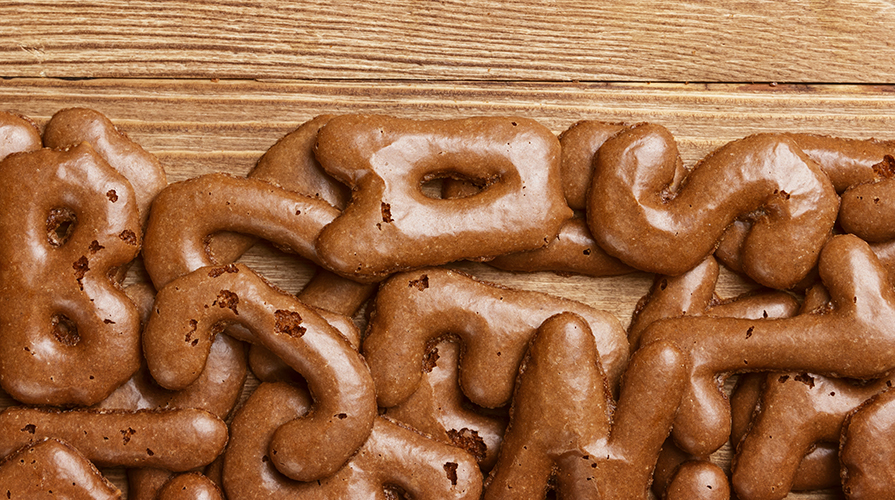
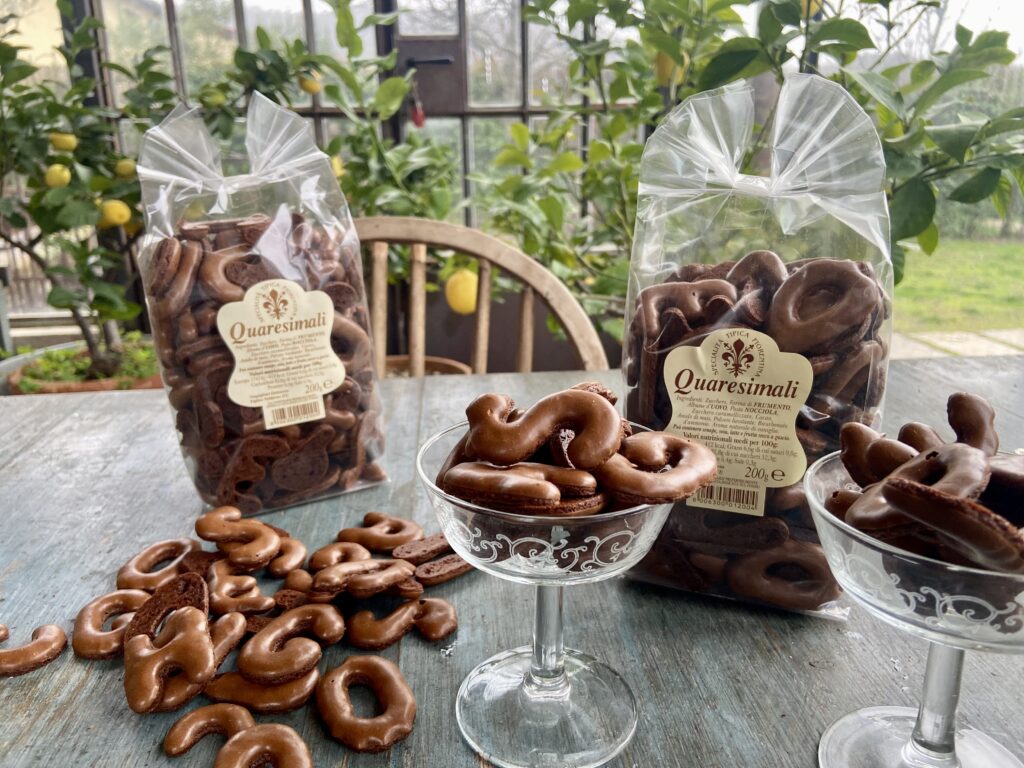
Quaresimali are biscuits shaped like letters of the alphabet, and they are found above all between Florence and Prato. Made during Lent, the most famous origin story traces them to the 19th century, to the nuns of a convent set between Florence and Prato. As the story goes, the choice of their shape was tied to honoring the words of the Gospel, and to respect the Lenten fast they contain no butter. Quaresimali are made with simple ingredients: flour, sugar, cocoa, egg whites, and candied orange peel.
3 – The schiacciata di Pasqua alla livornese
The Livorno-style schiacciata, also known as “stiacciata,” is a sweet typical of Tuscan farmhouse cooking, especially in the Siena area. Its name comes from the many eggs that were “crushed” (schiacciate) to make it. In some towns in the province of Siena, there is still the custom of scoring lines across the surface, running from the center outward to trace the Radiant Sun of San Bernardino. Prepared in the stretch from Lent to Pentecost, this sweet is wonderful with the chocolate from Easter eggs, with a glass of Vin Santo, or with salame and Chianti wine. The traditional recipe calls for flour, sugar, eggs, lard, orange juice and grated zest, lemon, anise seeds, and yeast.
4 – The corolli senesi
The corolli are baked Easter ring-cakes that children used to eat through a game called “il Gioco del Corollo” (the Corollo Game). The ring was tied around the neck with a thick woolen thread or a ribbon, and the children had to nibble it away little by little without breaking the hole; whoever managed to keep the corollo around the neck the longest — without breaking the hole and without letting it drop to the ground — won. The corollo was probably made from the leftover dough of the schiacciata di Pasqua, since the two doughs are very similar. In the corolli the main ingredient is star anise, and they too are excellent with a good glass of Vin Santo.
These are only a few of the most famous. Every area has its own — like the Pasimata in the Garfagnana, a humble cake with a long rise, or the torta di riso massese, oven-baked and calling for nearly a dozen eggs. In short, there is no shortage of variety; you just have to try them all and discover them for yourself.