Zerocalcare: Kobane Calling, an Interview
Big red hoodie with the regulation hood — the better to hide those hands that seem to have a life of their own, so quick and deft are they — jeans that are genuinely worn, not worn for fashion: Zerocalcare looks like any ordinary kid from any ordinary suburb, straight out of some squat or social club.
And yet he is nothing of the kind. On the contrary, he is one of the few who has pulled off a feat that is anything but ordinary: reaching Kobane and Rojava to understand the reasons behind a conflict that is much talked about, sometimes carelessly. He came back to tell us about his experiences in the graphic novel Kobane Calling (from which the show is adapted); others — like Lorenzo Orsetti — sadly did not.
We approached him in the foyer, a copy of the book in hand.
Hi — I was wondering if you could “sign” this copy for me…
Sure, hand it over. What should I draw you? The Armadillo, the Mammoth, what? Should I just pick? Alright then. Don’t worry about a pen, I’ve got my own right here. Are you a journalist? Oh, cool.
Well, what’s cool is what you do — congratulations on everything. I really love your work.
Hey, thanks. Don’t say that — I’m already embarrassed as it is… Now I’m even more embarrassed.
(Just an ordinary kid, like we said.)
Listen, I can see the line is getting longer — shall we catch up during the talk?
You bet. I’ll be right here.
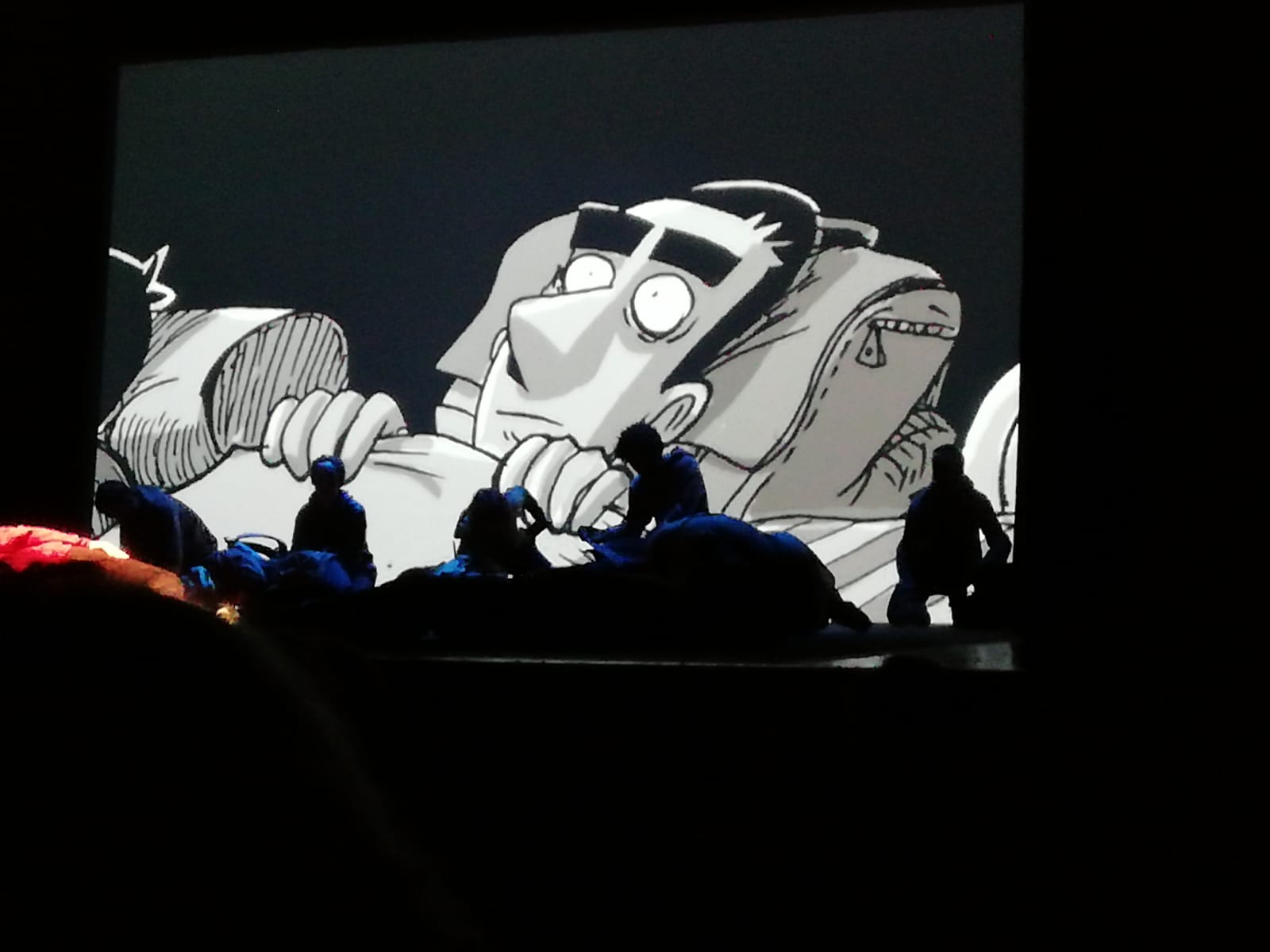
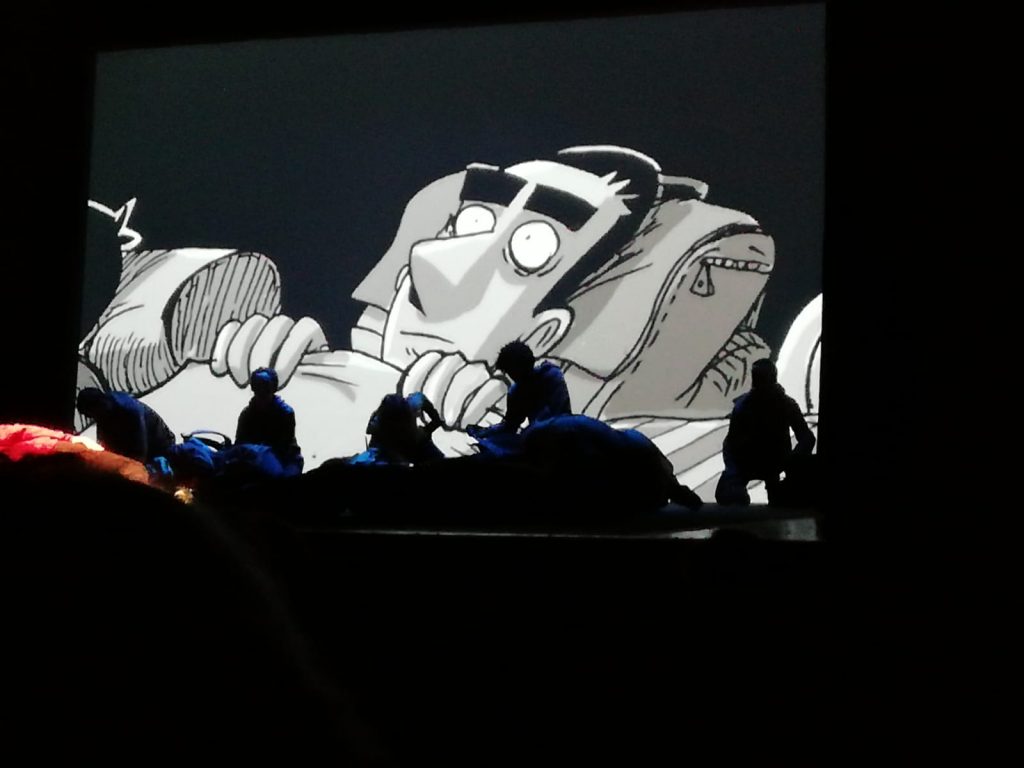
I take back my signed copy and we head in to see the show. It follows the original text one-to-one, with Zerocalcare’s drawings serving as the backdrop for a cast of unmistakably talented, believable actors. A simple staging that gives full weight to dialogue that is fast-paced, ironic, moving, never trite. Your heart in your throat from all the emotion.
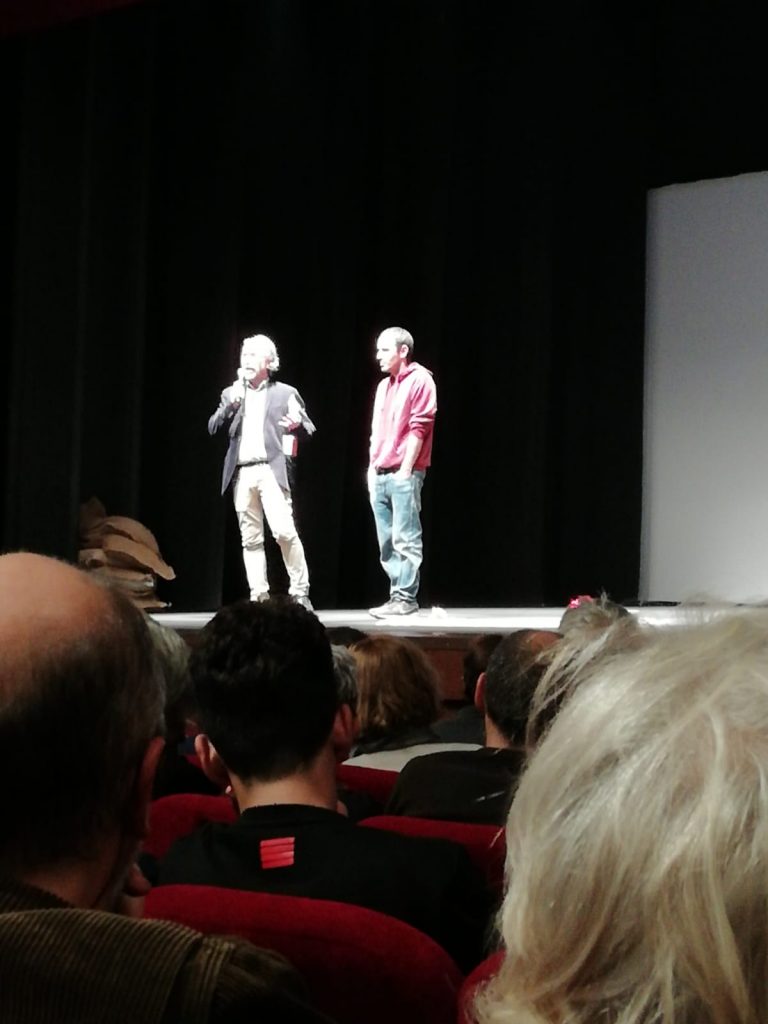
After minutes of thunderous applause, Michele comes up on stage together with the director, Nicola Zavagli, with Lorenzo Orsetti’s father, and with a representative of the Kurdish community. He takes the microphone and announces:
“This show is inspired by the book, which captures the situation as it was in 2015. Unfortunately, a lot has changed since then. For the worse. That’s why it matters to really inform yourself about what’s happening. This war belongs to all of us and concerns all of us. We can’t pretend it isn’t happening.”
Why did you want to go and see it with your own eyes?
“Because from there you understand war better than from any infographic. Along with the cemeteries of the martyrs, the explosions and the bombs, I also saw so much courage, ideals and determination. Me, someone who hardly ever leaves Rebibbia — I felt that in that moment the center of the world was there. And I wanted to be there to live it and to document it. A piece of my heart was there. Regardless of where I come from, or my politics or religion.”
“Maybe, though, there are things that transcend geography and speak to other chords,” Zerocalcare says in the graphic novel. And that is exactly it: his “non-reportage” (as he himself called it) and this show speak precisely to those chords. It is up to us whether we let them resonate or not.
Words by Rita Barbieri