Bakunin: An Anarchist in Florence
Florence, capital of Italy. Caffè Giacosa, number 9 via Tornabuoni. April 1865.
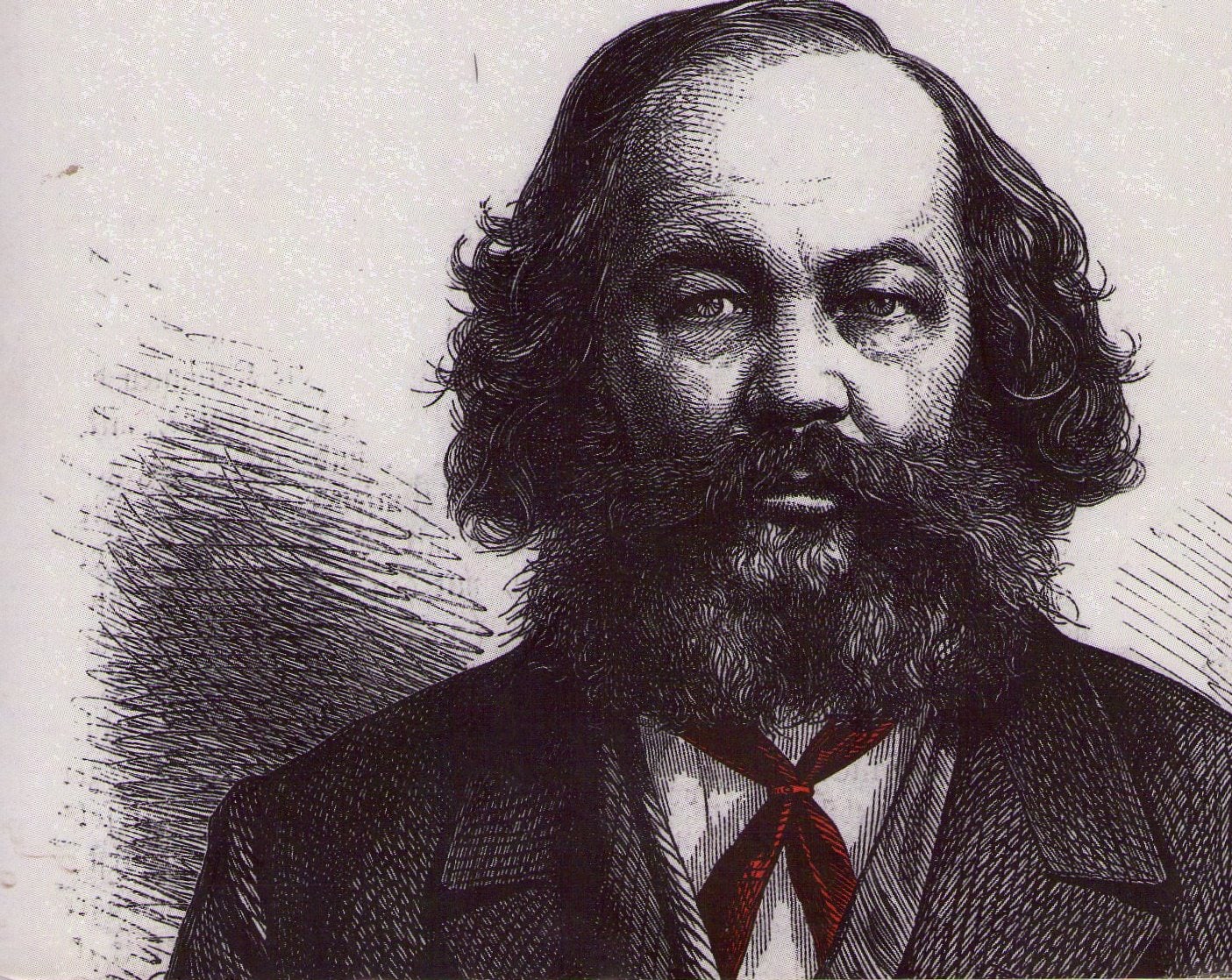
A big, bearded man — bewildered in look, resolute in bearing — rises to speak. His shirt is worn thin by travel and flight, his eyes blaze with the fire of a man who has never betrayed himself, his accent rough, shaped by the winds of a faraway country.
“I am a fanatical lover of liberty, considering it the only condition under which human intelligence, dignity, and happiness can develop and grow. Not liberty in the purely formal sense — conceded, measured out, and regulated by the State, an eternal lie that in reality amounts to nothing more than the privilege of a few founded on the slavery of the rest… No, I mean the only kind of liberty that deserves the name… the liberty that knows no restrictions save those determined by the laws of our own nature, which cannot truly be considered restrictions at all, since they are not laws imposed by some outside legislator standing beside or above us, but laws immanent and inherent in us, forming the very basis of our material, intellectual, and moral being: they do not limit us — they are the real and natural conditions of our freedom!”
A voice suddenly cuts in: “So, stranger — you’d be one of those the people call ‘communists’? One of the followers of that Karl Marx everyone keeps talking about…”
The bearded man’s blazing eyes turn to burning embers. He stands, sighs heavily, sits back down, and speaks again.
“Could you tell a beefsteak from a cut of sea bream?”
“Of course I could, stranger — I was born and raised in Florence! I own this joint; food and drink made my fortune.”
“Then you’ll know how to tell an ‘anarchist’ from a ‘communist.’”
A laugh breaks the tension.
“What’s your name, stranger? Where do you come from? Something tells me we’ll be seeing a lot of each other.”
“My name is Mikhail, Mikhail Bakunin, and I come from a frozen land where thinking is forbidden.”
In 1865 Florence was chosen as the capital of Italy, following the country’s unification. Ever since the year 476 AD, when the warlord Odoacer stripped away the insignia of the by-then dying, once-glorious Roman Empire, Italy had remained fragmented, divided, parceled out, ruled by others. After years of dreams and battles — amid poems and songs, uprisings, arrests, and revolts — the Kingdom of Sardinia was steering the creation of a national identity and a genuine machinery of state. Rome, regarded by many as the country’s nerve center for reasons of geography and historical prestige, was still under the Pope’s control, so the choice of capital fell on Florence, universally held to be the city richest in art and culture.
Precisely because of its irresistible allure as a treasure chest of Renaissance riches, and the intellectual ferment simmering in the cafés of the center, Florence drew travelers from all over the world: writers and painters, but also fugitives and thinkers. And so Mikhail Bakunin, one of the most important theorists of anarchism, found refuge in the city in those incendiary times. These were years of fervor across all of Europe, swept by winds of patriotic passion and nationalist romanticism. Factories were volcanoes ready to erupt with ideals that would upend world politics. From the pulpits of the old continent, figures like Giuseppe Mazzini and Karl Marx harangued the crowds with words of fire: unity, justice, civil rights, social equality, capitalism, revolution. Some pushed past every limit, championing an extreme notion that belonged to the realm of utopia: some spoke of “anarchy.”
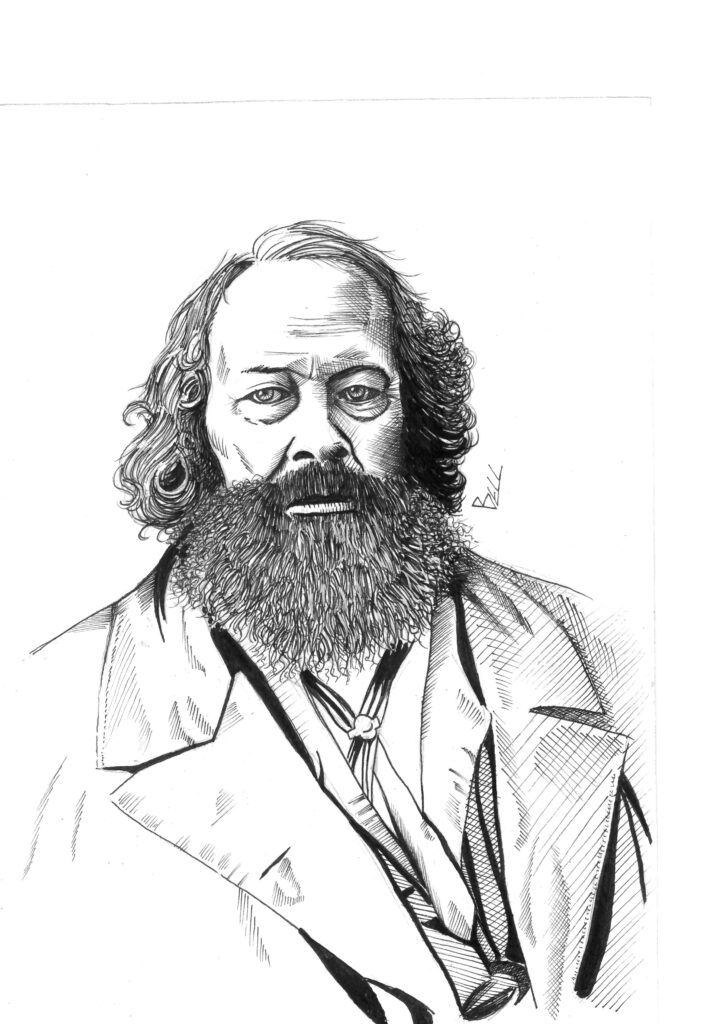
Among them stood out Mikhail Bakunin — to some a raving preacher from far away, to others the undisputed leader of the anarchist movement. He held that power should be decentralized and that individual liberty was the supreme value. He professed himself a champion of social revolution, convinced that only through armed struggle could the oppressive system be overthrown. Despite his brief stay in Florence, Bakunin left a lasting mark on the political culture of the city and of Tuscany as a whole. To this day, his figure and his ideas are studied and debated by anarchists and scholars around the world.
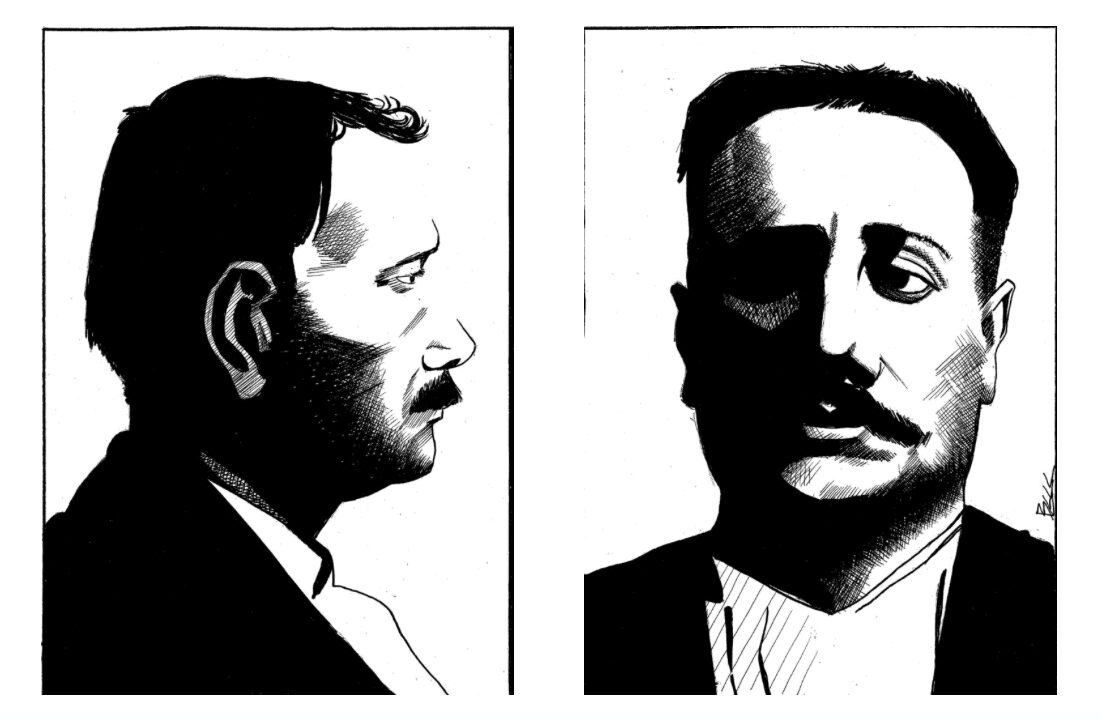
The bearded man left the café with a bow and a wave of the hand and made to settle his bill — but the owner had so enjoyed his lightning reply that he decided the house would treat. The moment Bakunin stepped out, the owner walked over to the table where that strange preacher had been sitting and turned to a fellow seated with him: “Tell me the story of that stranger.” He had put the question to a distinguished man, solemn in bearing, with a thick mustache and his Sunday jacket. The man looked around, as if to make sure everyone was listening. He raised the steaming cup to his lips and, after a long sip, spoke.
“Mikhail Bakunin is a philosopher, one of the most brilliant political thinkers of our time. He was born in a city I can’t pronounce, in far-off Russia. He was born on May 30, 1814 — the very day the powers of Europe carved up Napoleon’s France. They christened it ‘the day the Revolution died,’ never knowing that in those same hours the man who would resurrect it was being born!”
He let out a hearty laugh, ill-suited to his composed appearance, then went on.
“Bakunin fights for the freedom and independence of oppressed peoples; he calls for the abolition of the State and of private property as the means to a more just and equal society. In his view, the State and private property are the chief causes of injustice and social inequality, since they let a few control resources and exploit workers. Bakunin argues that the answer is a society without a State, in which communities organize themselves freely, without centralized hierarchies or coercive authority.”
“So that’s why he has it in for the communists!” burst out the café owner, seized now by curiosity, sitting down beside the man in the Sunday jacket.
“He and Karl were friends; they spent a good deal of time together in London. Would you believe Bakunin was sent to Italy by Marx himself, to keep an eye on Mazzini? Mikhail began his political career as a champion of socialism and atheism, but now he’s drifting away from Marxism and communism, developing his own ideas about anarchism. Unlike Marx and the communists, he believes the State is not the product of the Revolution but the source of evil and oppression.”
He took another long sip before resuming.
“In Russia you’re not allowed to have ideas — the Tsar won’t have it — so Bakunin has spent his life between exile and prison; he speaks with pride of his part in the Polish revolt against Russian rule in 1849. They caught him and he was sentenced to death! Ah! If a God existed, only He would know what they did to him in those rotting, freezing dungeons. Then his sentence was commuted to life, and he managed to escape.”
“And now? What’s he doing here?” asked the owner of the Caffè Giacosa, dumbfounded. “Now he’s in Florence to bring us freedom!”
Illustration by BECC