Bianca Bianchi, a Tuscan Mother of the Constitution
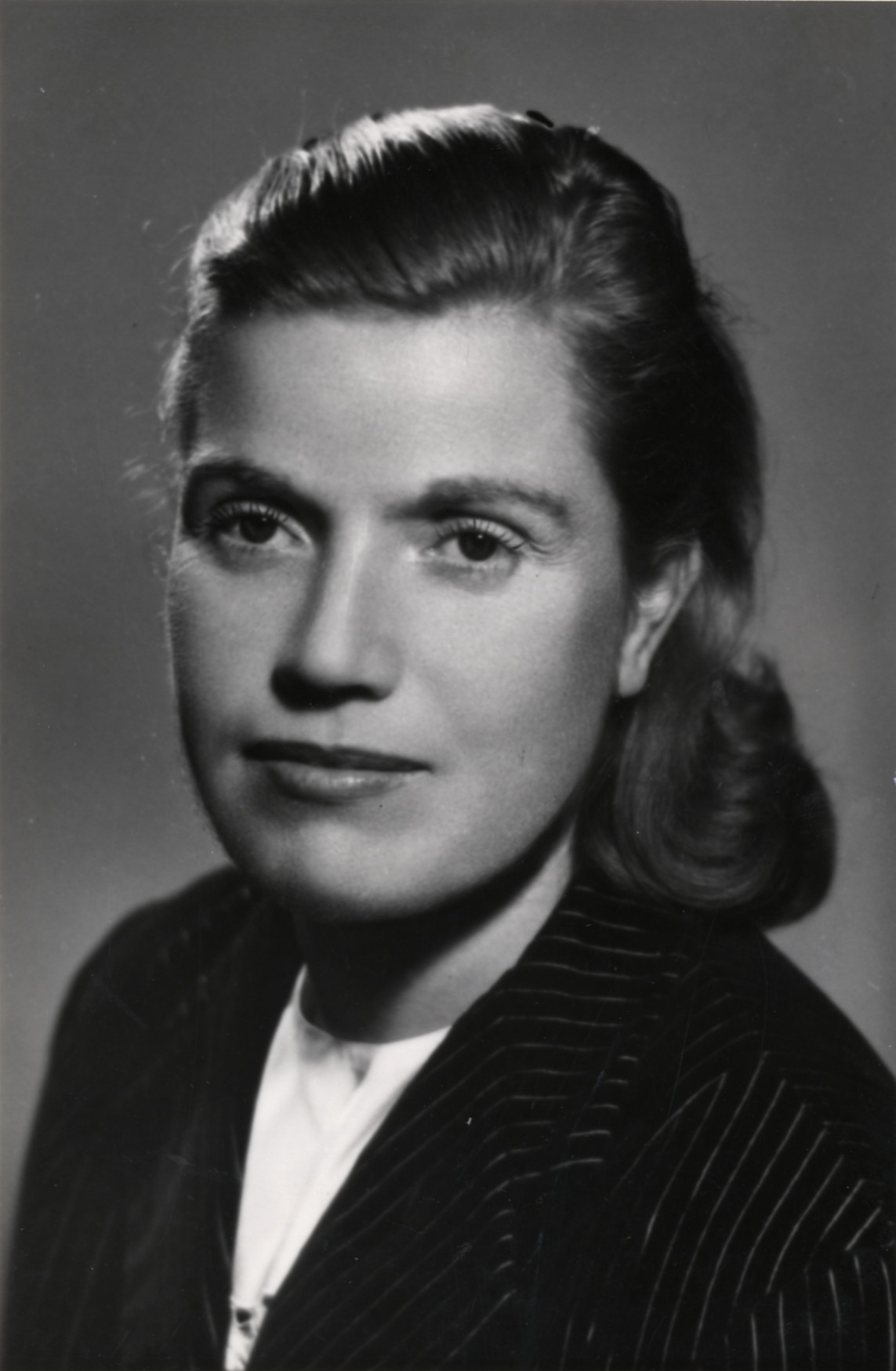
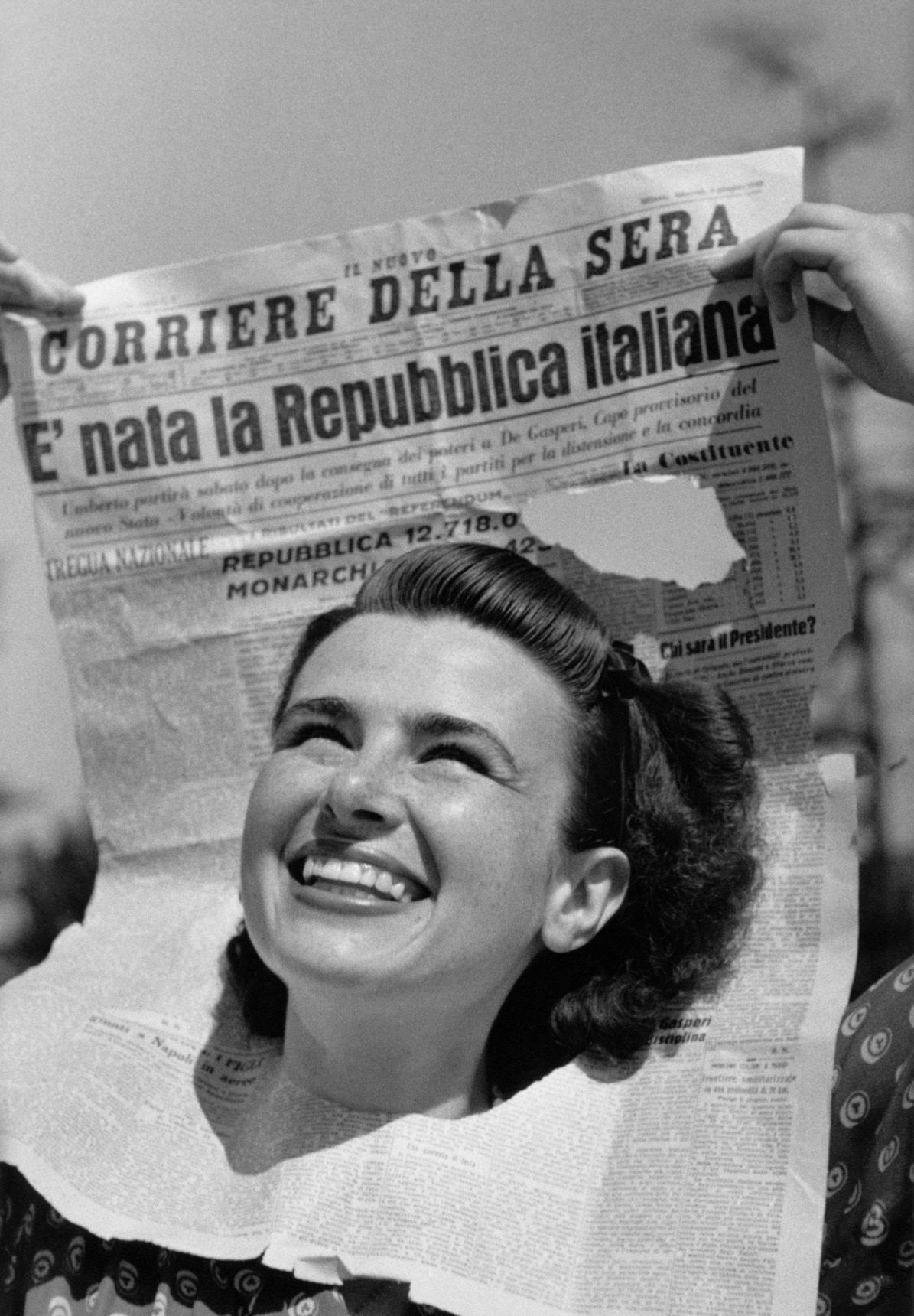
June 2, 2026, marked the eightieth anniversary of a pivotal moment in Italian history: the referendum that asked Italians to choose between Monarchy and Republic, alongside the election of the Constituent Assembly that would go on to draft the Italian Constitution, officially enacted on January 1, 1948. At the dawn of a new Italy, emerging from Fascism and a devastating war, many women played a crucial role. Among them was a Florentine figure who is too often overlooked today, yet deserves recognition as one of the leading personalities of that era: Bianca Bianchi (1914–2000). Born in the Mugello town of Vicchio, Bianca Bianchi was elected to the Constituent Assembly in 1946, receiving more than twice as many votes as the head of her party list, Sandro Pertini, who would later become President of the Republic.
Bianca Bianchi is remembered as a teacher, politician, and prolific writer. She was born in 1914 into a modest working-class family. Her father, Adolfo, was a blacksmith and secretary of the local Socialist Federation. Her mother, Rosa, worked as a seamstress and hoped her daughter would follow the same path. Bianca, however, displayed remarkable intelligence and a passion for learning from an early age. As a child, she accompanied her father to political rallies across the countryside, absorbing his conviction that socialism meant “loving the poorest and doing something for them.” The experience left a lifelong mark on her. Years later, she would write that “in a brief season, my father gave me centuries of love.”
Adolfo’s death in 1921 forced the family to move to Rufina, where they lived with Bianca’s maternal grandparents. Yet the tragedy unexpectedly shaped her future. Her grandfather Angiolo, a farmer and committed anti-fascist, recognized her potential and, against her mother’s wishes, took her to Florence so that she could continue her studies. Bianca excelled academically. After attending the Gino Capponi Teacher Training School, she graduated from the Faculty of Education in 1939. Her thesis, supervised by philosopher Ernesto Codignola and titled Il pensiero religioso di Giovanni Gentile, was later published.
The young woman from the countryside thus began the teaching career she would always regard as her true vocation. She taught philosophy in schools across Italy, from Genoa to Cremona, gaining attention for her unconventional methods. During the years of the Fascist regime, she insisted on teaching Jewish philosophy despite repeated warnings from school authorities. Eventually, she chose a form of self-imposed exile, spending a year at the Italian Cultural Institute in Sofia, Bulgaria.
Meanwhile, Italy had entered World War II. Following the armistice of September 8, 1943, the country descended into civil war. Bianca abandoned both teaching and exile to return home and join the Resistance. The partisan struggle marked her transition from a personal anti-fascism to a fully developed political consciousness.
Back in Florence, she reconnected with Codignola and joined the Action Party at his invitation. During the months leading up to the city’s liberation, she distinguished herself through underground propaganda work and an extraordinarily dangerous mission: disguising herself as a housewife while pushing a cart full of weapons through Piazza della Signoria, then crowded with SS officers and Fascist militia.
Her courage and commitment quickly earned the respect of fellow partisans. Yet, like many women of her generation, she constantly had to contend with prejudice. Women’s contributions to the Resistance were often minimized or celebrated only in retrospect. Nationally, just nineteen women received the Gold Medal of Military Valor for their role in the Resistance.
As Benedetta Tobagi explains so clearly in La resistenza delle donne (2022), the end of the war brought not only relief but also a sense of loss for many women, who felt that an extraordinary period of participation and freedom was coming to an end.
Unlike many of her contemporaries, Bianca did not retreat into private life after the war. Determined to contribute to Italy’s reconstruction, she entered politics with renewed conviction. A defining moment came in the spring of 1945, when she challenged Christian Democrat politician Gianfranco Zoli during a public rally. Rediscovering the confidence she had shown as a child speaking from a straw chair in Mugello villages, she emerged as a gifted public speaker.
The resistance she encountered often came from unexpected quarters. Reflecting on those years, she recalled how some women attending her rallies scrutinized her appearance, her gestures, and even her hairstyle, judging her for speaking publicly about matters traditionally reserved for men. Yet many eventually applauded, if only, as she put it, “for my courage.”
Political change was slowly opening new possibilities. In February 1945, Italian women gained the right to vote. One year later, they were granted the right to stand for election. By the spring of 1946, Bianca had joined the Italian Socialist Party of Proletarian Unity (PSIUP) and emerged as one of the leading political figures in Tuscany.
Even then, prejudice remained deeply rooted. During preparations for the Constituent Assembly elections, party officials attempted to pressure her into signing a declaration promising to resign her seat if elected. Refusing to sign a document she was not allowed to read, Bianca discovered it was effectively a request for her withdrawal in favor of male colleagues.
She refused outright. “It is a fraud,” she recalled saying. “You have arranged all of this among yourselves, with these old men who cannot bear being overtaken by a woman.”
The incident only strengthened her resolve. During the 1946 campaign, Bianca delivered 116 speeches in public squares, dance halls, fairs, and even outside churches. Her efforts were rewarded on June 2, when she received 15,384 preference votes in the Florence-Pistoia constituency—more than twice the number secured by Pertini. Out of the 556 members elected to the Constituent Assembly, only twenty-one were women. Bianca was one of them and, alongside Lina Merlin, one of the only socialist women in the Assembly.
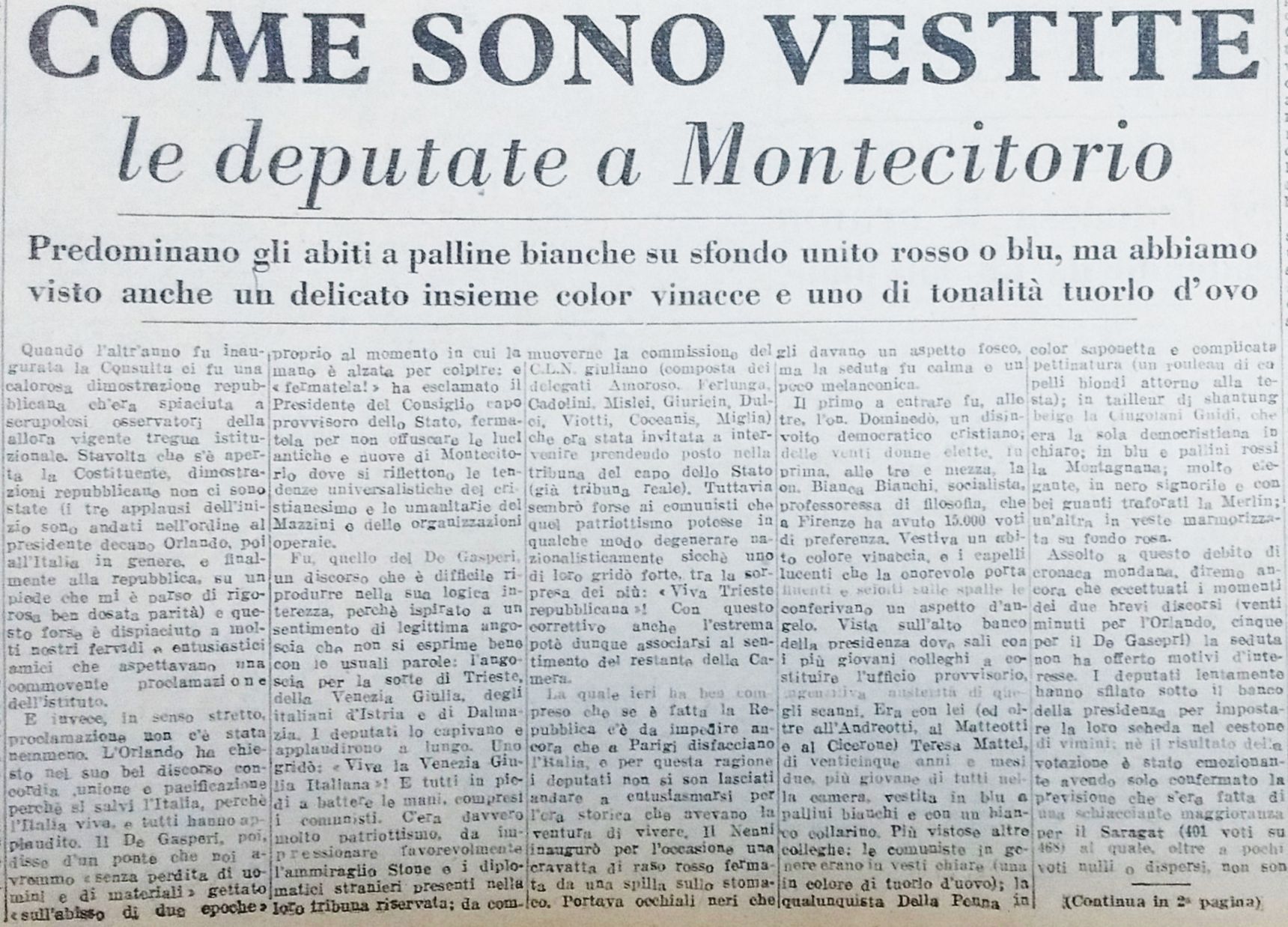
Her contributions focused on issues she cared deeply about: education, culture, and labor. The drafting of the Constitution was a monumental undertaking, involving 170 parliamentary sessions, more than 1,600 amendments, and over 1,000 speeches. Bianca played a significant role in shaping what became Article 33 of the Constitution, championing public education and opposing state funding for private schools.
“The law, when setting out the rights and obligations for the non-state schools which request parity, shall ensure that these schools enjoy full liberty and offer their pupils an education and qualifications of the same standards as those afforded to pupils in state schools.”
Article 33 of the Constitution of the Italian Republic
After the Constituent Assembly, Bianca continued her political career. She followed Giuseppe Saragat into the newly formed Italian Democratic Socialist Party (PSDI) and was elected to Parliament in 1948. Among the causes she championed was the recognition of children born outside marriage. Speaking at the International Alliance of Women Congress in Amsterdam that same year, she shocked many by revealing that Italian official documents still identified such children as “child of NN” (nomen nescio), effectively stigmatizing them from birth. Her efforts to reform those laws eventually succeeded, and her legislative proposal was approved in 1953. From that point onward, apart from serving as a Florence city councillor between 1970 and 1975, Bianca gradually withdrew from active politics and returned to what she considered her true calling: education.
The second half of her life was devoted to developing an innovative educational model. In 1958, she founded the Scuola d’Europa in Montesenario, an experimental school inspired by the pedagogical principles of Johann Heinrich Pestalozzi. Located on the slopes of the Apennines, nearly 700 meters above sea level, the school welcomed students from across northern and central Italy and promoted a modern education centered on critical thinking, independence, and personal growth. Bianca documented this experience in numerous books and articles, including Amicizia per i nostri figli and L’esperienza di un’educazione nuova alla Scuola d’Europa, both published in 1962.
Writing remained a constant throughout her life. She contributed to magazines and newspapers, including a regular column, Occhio ai ragazzi, in La Nazione, and published numerous books. Among them was the successful memoir La storia è memoria, ti racconto la mia vita (1998). Returning to her native Vicchio in her later years, Bianca Bianchi died peacefully on July 9, 2000, at the age of eighty-six. In her 1997 book Vivrò ancora, she wrote a sentence that perhaps captures her spirit better than any other:
“I run and run, yet I move backward. I am chasing a small happiness abandoned in childhood. […] I would like to be born again, to find myself once more on that lost road and walk it again, guided by a loving hand.”