Clara Vannucci and the Beauty in Photojournalism
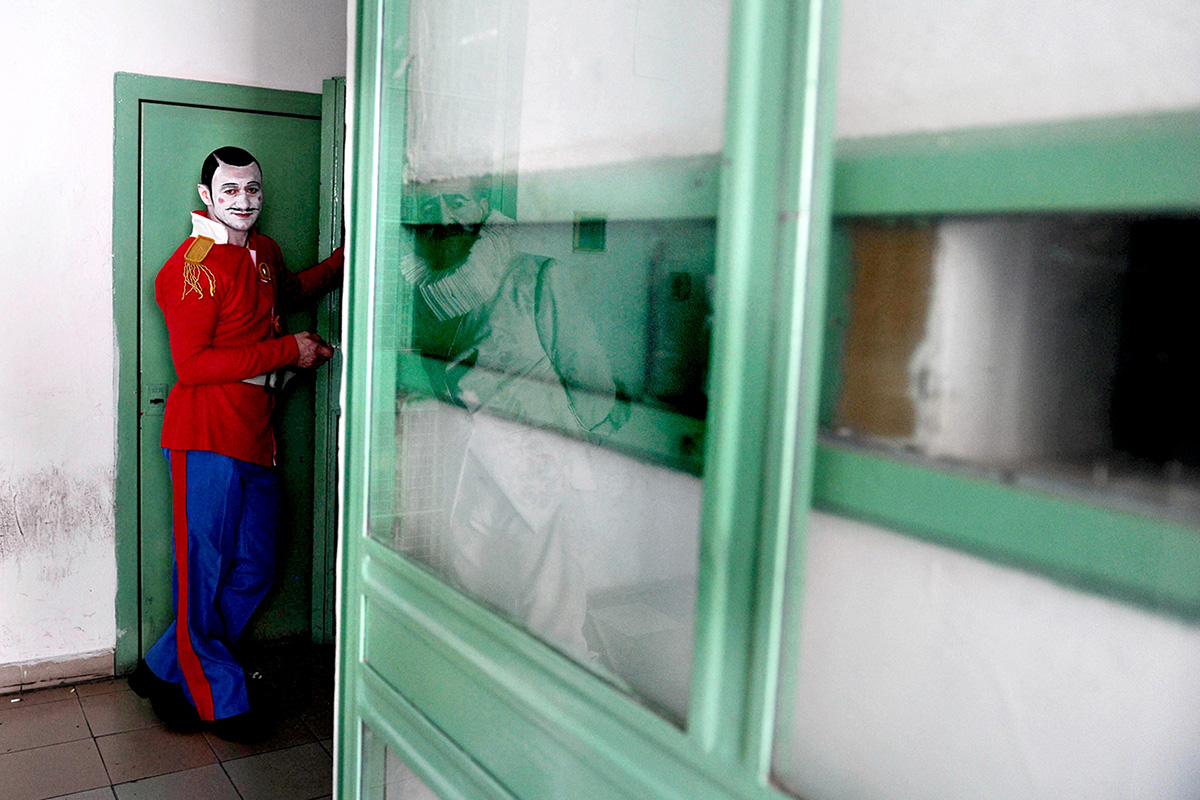
I meet the photographer Clara Vannucci one morning at a café in the center of town. I wanted to interview her because I’ve just come back from New York, and I’m roughly the age she was when she moved there to chase her dream of becoming a professional photographer. But while I returned home before long, she stayed in America for years and built a successful career there, venturing into inaccessible worlds and uneasy, delicate, sometimes dangerous realities. Still very young, she made her debut with the photo reportage Crime and Redemption, on the theater project director Armando Punzo launched inside the Volterra prison to help inmates through acting — a deeply positive, therapeutic practice.
The birth of Clara Vannucci, photographer
The intensity of those images earned her the respect of photojournalist and activist Donna Ferrato, who chose her as her assistant in New York and handed her what would become her second prison project, the Rikers Island Battered Women Section, documenting the daily lives of female inmates at the largest jail in the United States — an island between the Bronx and Queens. These experiences led to further projects, such as Bail Bond – Bondsmen, Defendants and Bounty Hunters, on the controversial American bail system, and Arlene, the moving story of a former inmate who helps women who, like her, have survived domestic violence reintegrate into society.
After a fashion shoot and many travel reportages — among them Pyramiden, a former Soviet coal-mining settlement in the Svalbard islands — Clara Vannucci has resettled in Florence, where she lives and works with her daughter and her partner. She spoke to FUL about her path, her present and her future.
I read in an interview that before you started Crime and Redemption you had already worked in prisons. How did you come to the world of the penal system? It’s not an obvious subject — did you have to go through some kind of training?
I started very young. At eighteen I joined a group of Florentine directors working on a documentary about various prison-theater projects across Tuscany — in Pisa, Florence and Lucca — all the way to Armando Punzo’s project in Volterra, which struck me more than any of the others. I immediately realized I’d come into contact with something out of the ordinary. From then on I focused on Volterra. I had just started studying Industrial Design at the Architecture faculty, and my wish was to document something I was passionate about, a world hidden from the outside, to step into intimate dimensions and learn to tell them.
What was it like arriving in New York as a young woman and starting to work with Donna Ferrato?
After graduating I wanted to leave, though I wasn’t sure exactly where. I sent out emails — more than five hundred — looking for an internship in New York, and I got so many replies, some truly incredible. Paul Fusco, a photographer with Magnum Photos, wrote back and took me on as an intern, while Donna Ferrato offered to have me work with her. I found myself alongside two legends; I was living the dream. Of course I wasn’t earning anything, so I tried to invent jobs for myself: I shot weddings at City Hall for fifty dollars, or took portraits of newborns in the hospital. I got by. That’s when I started working for the New York Times, which I’m now a correspondent for in Italy.
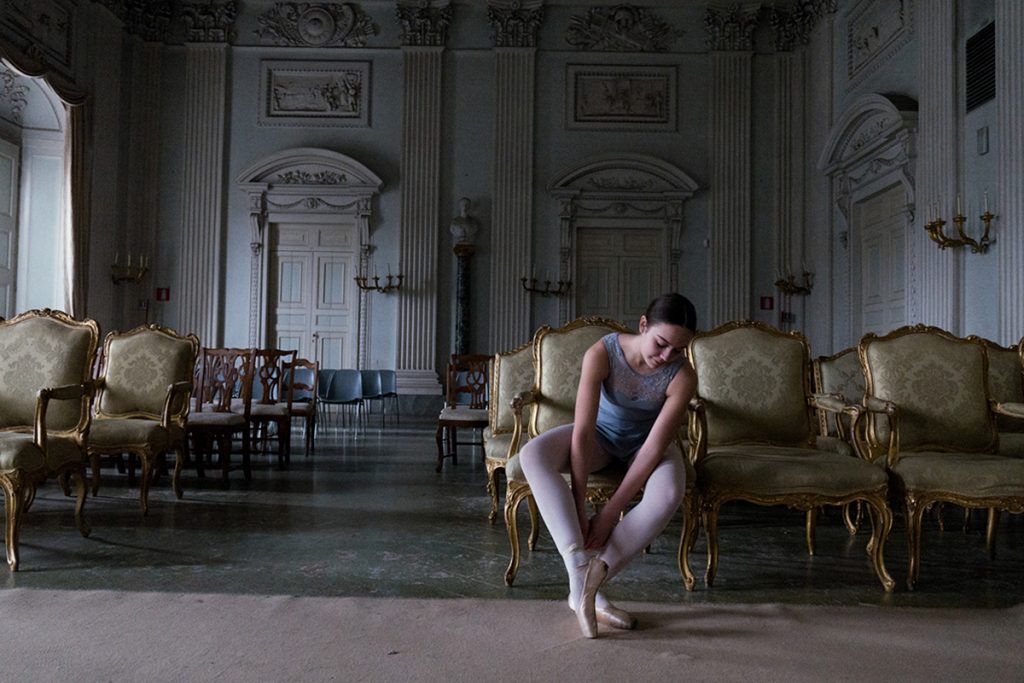
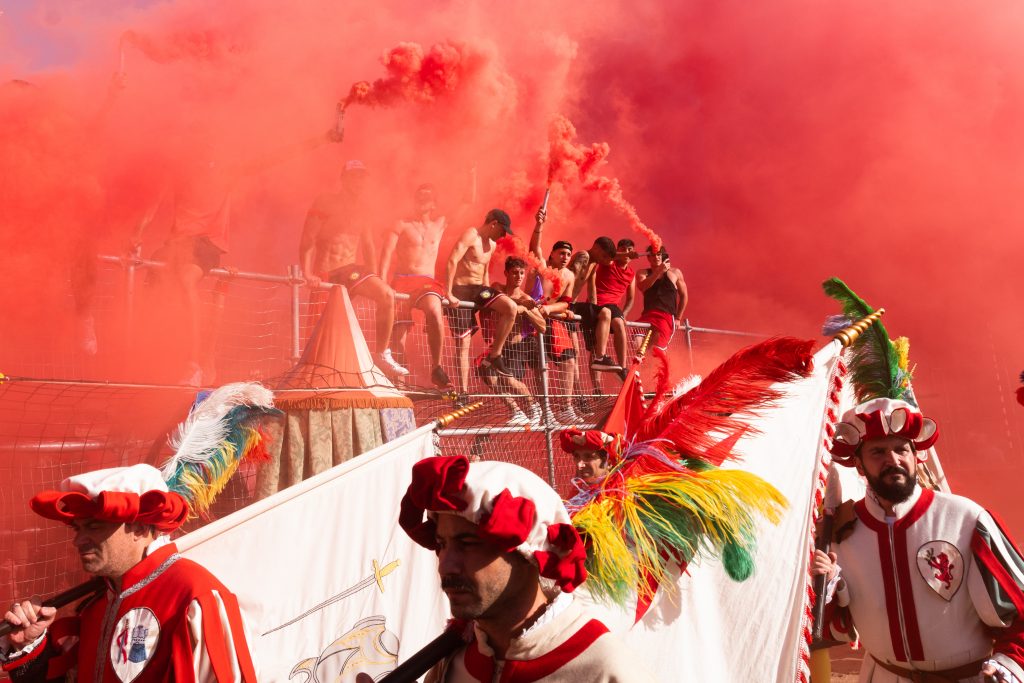
In many of your projects you’ve chosen subjects from closed communities, often made up entirely of women or entirely of men — I’m thinking of your work on the young women of the Poggio Imperiale or on Calcio Storico, but also your prison projects. What fascinates you about these worlds?
That’s a good question. I think these microcosms interest me precisely because they’re inaccessible to the outside world. I’m drawn to the taboo, driven by the urge to tell stories whose unfolding would otherwise go unseen. I’d never really thought about my preference for strictly male or strictly female subjects — it was a natural process, one project leading to the next. I wanted to report what I observed, entering the lives of the people I photographed as discreetly as possible. Access isn’t easy to get; with Rikers Island, for instance, it was Donna Ferrato who suggested I take it on. That project was the key that let me tell other stories, like Bail Bond, a reportage on a largely male world of bounty hunters and fugitives, and Arlene. I met Arlene in the Battered Women section of Rikers Island, and when she got out she reached out to me to tell her story and her daughters’.
In the prisons, did you notice differences between male and female subjects in how they related to you as a photographer, or in how they interacted with one another?
I noticed that in both cases there’s a strong desire to appear, to be seen. That often surprised me — the fact that even in the most surreal situations people were so willing to be photographed. The camera was a perfect tool for getting close to inmates, both men and women. Photography became a mirror for recognizing themselves — since in the American prisons they can’t have mirrors, it was also the only way for them to look at themselves, to see themselves.
Where do you locate beauty in photojournalism? In building the image, or in the choice of your subjects?
I think beauty can be found anywhere; I work with it. I’m also a fashion photographer, and there it’s easy to find — you have the models, the right light, beautiful locations. But beauty is also in the subject in front of you, in the way they carry themselves when they feel at ease. In that case beauty arises spontaneously. So I generally try to build images from an aesthetic standpoint, trying to be as invisible as possible, moving to find the right frame and catch the moment, waiting for the situation to unfold naturally. Beauty is present in my work, but it shows up in ever-different ways. I think of fashion the way I think of Arlene: it’s a very simple project, but beautiful because it centers on feelings. Beauty also serves to draw the eye to the subject, and therefore to themes that would otherwise be hard to swallow. I’ve often wanted to tell certain stories but abandoned the idea because they wouldn’t have worked aesthetically, or because I didn’t know how to approach them visually.
Spontaneity matters to you, but you’ve often found yourself in situations that demanded the utmost caution. Has your approach ever put you in danger?
Bail Bond was definitely the most complicated project in that respect. I had to get the people I was going to photograph to sign releases, so the naturalness was “compromised” from the start. I was afraid, and I think you can sense it in the shots. We were tracking down fugitives and ended up in dangerous situations, which limited how I could move and shoot. I couldn’t get too close, and I often wore a bulky bulletproof vest. There was no perfect setup, but the story was strong, and it was a constant challenge that forced me to make very deliberate aesthetic choices.
What’s your relationship with cinema?
Cinema has a huge influence on my work. I built the book Bail Bond like a thriller from the Nineties or the early 2000s. There are the various protagonists, there’s the antagonist, and it follows a clear plot. Crime and Redemption is about theater, so I couldn’t help drawing on Fellini — and I think that’s part of why it was so successful in America. I later made Eritrea. Cinema Impero, a reportage on Asmara, with my partner, who is a director. We’d have liked to make a documentary but weren’t given the permits; it’s very complicated. There, movie theaters are hugely important and well attended — they still screen Italian films from the 1950s.
Do you have a secret dream, or something you’re working on that’s especially close to your heart?
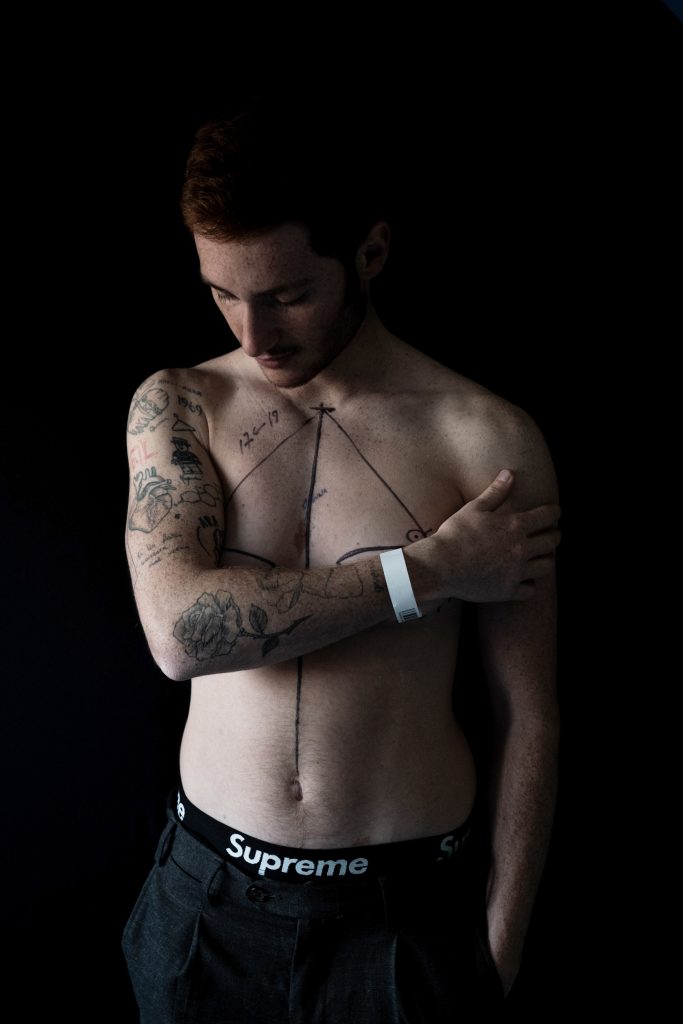
I’m very attached to a project I started recently about Edoardo, a young trans man from Venice who dreams of becoming a gondolier. It’s different from my other work, maybe because I began it during my pregnancy; for me it was especially intense. The reportage was published in the New York Times and in L’Espresso, but I hope it keeps traveling, both in Italy and abroad. During the pandemic I started a project on the prison on the island of Gorgona, and I’m waiting for the right moment to finish it. In stories like these it’s hard to decide where the ending is.
Do you have any advice for aspiring photojournalists?
It’s not an easy job — there’s a lot of competition, and you have to be very determined and ready to evolve, always open to learning, aware that you carry a great responsibility: telling other people’s stories. I thought I’d “made it” in 2019, then the pandemic changed everything; I had to reinvent my work and adapt it to “zero kilometers,” since I couldn’t travel. I was afraid, but I understood how important it is to keep reinventing yourself and adapting to change. Stories are everywhere, and the ones closest to us — often the hardest to see — can be the most extraordinary.
Photos by Clara Vannucci