Life at the border, a reportage by Nicolò Filippo Rosso
The civil war in Sudan has triggered one of the largest refugee crises in the world. Millions of people have been forced to leave their homes and flee to neighbouring countries in search of safety. In Chad, photographer Nicolò Filippo Rosso has documented the lives of people hit by violence, hunger and the threat of disease because of this forgotten conflict.
The civil war in Sudan has its roots in a failed democratic transition. Since April 2023, when fighting broke out between the regular army (SAF) and the Rapid Support Forces (RSF) militias, the country has sunk into one of the most brutal conflicts in the world.
Now approaching its fourth year, the war has unleashed a wave of desperation: more than 12 million people have been forced to abandon their homes, lives uprooted and families torn apart. Of those, more than 2 million have sought refuge across national borders to escape conditions bordering on famine.
Chad in particular — a country already burdened by extreme poverty, food insecurity and internal tensions — has taken in more than 800,000 Sudanese refugees. Against this dramatic backdrop, in 2024 the United Nations High Commissioner for Refugees (UNHCR) commissioned photographer Nicolò Filippo Rosso to document the emergency response in eastern Chad, along the border with Darfur.
Traveling to the region several times between the summer of 2024 and the spring of 2025, Rosso has shone a light on a conflict often obscured by the media, capturing the lives of those surviving between violence, hunger and the threat of epidemics.

Most of these refugees — largely women and children — crossed the Adré border en masse, day after day, arriving in precarious health and often with nothing but the clothes they were wearing. Overcrowding and poor sanitary conditions in Adré have set off a serious health crisis, with numerous cases of Hepatitis E.
The rainy season (between June and September) makes things worse still, raising the risk of communicable diseases such as cholera and hampering access to humanitarian aid.
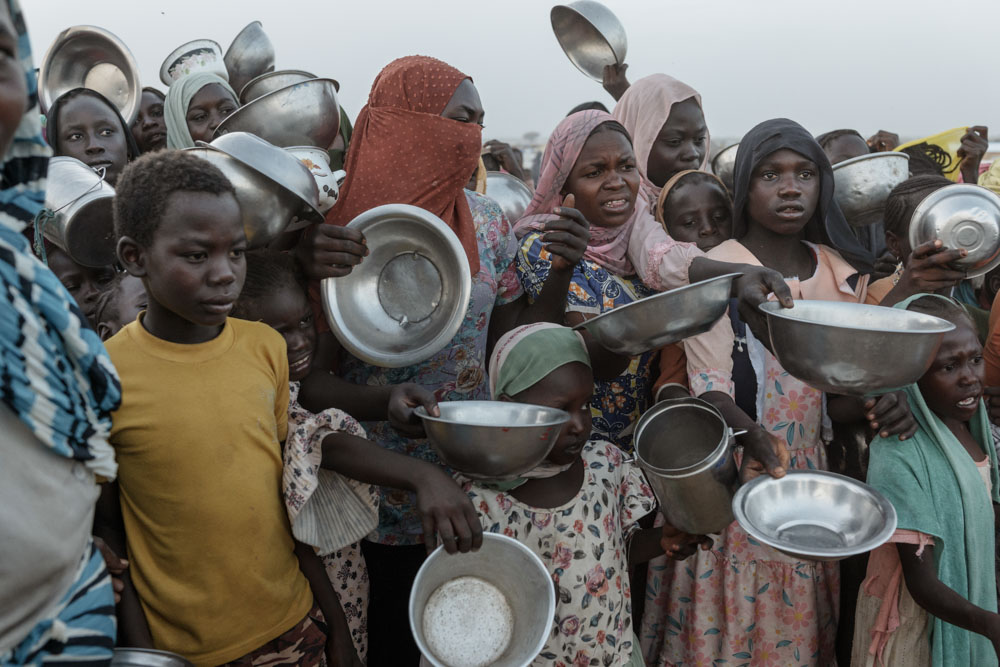
Malnutrition is a widespread concern, especially among the youngest. UNICEF has reported that almost 4 million children in Sudan suffer from acute malnutrition and, inside refugee camps such as Aboutengue in Chad, budget shortfalls have forced a drastic reduction in food rations.
At the time of the reportage only 19% of the necessary funding had been received: terribly insufficient to cover even the most basic needs.
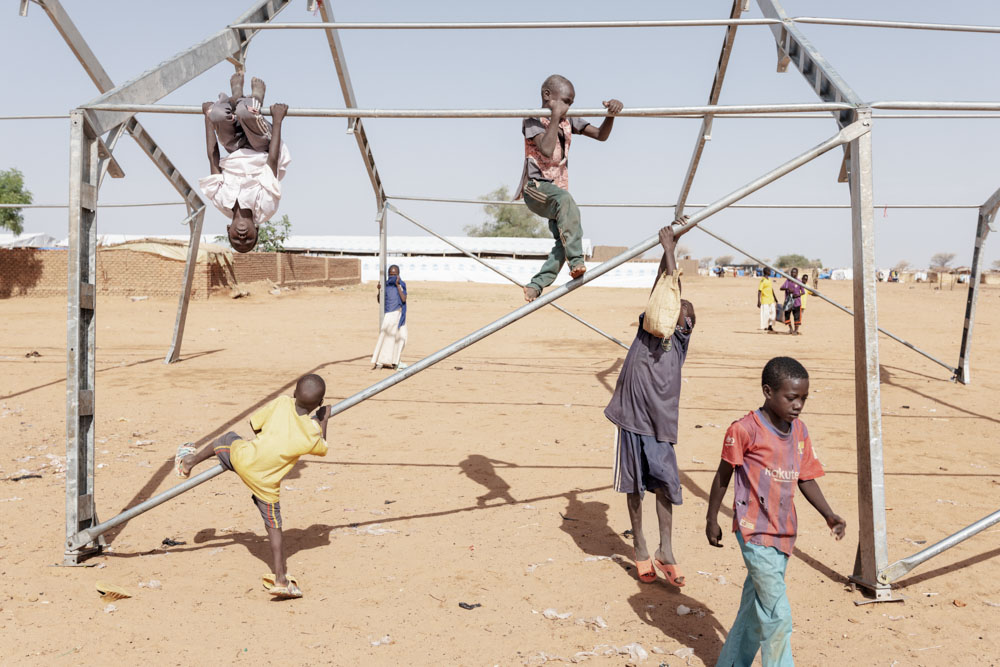
That urgency now runs into a further, dramatic barrier: on 23 February Chad officially closed its eastern border with Sudan until further notice. The decision came after violent military clashes that caused the deaths of five Chadian soldiers when RSF militiamen crossed the border.
This development marks a point of no return: the conflict is no longer only consuming Sudan from within, it is spilling across borders, dragging Chad into a spiral of instability. For those fleeing in search of safety, the border can turn into a trap, making this testimony not merely necessary but an alarm call for a catastrophe that risks remaining sealed off and invisible.

As this piece is published, it is exactly three years since the war began. At the end of 2025 the United Nations estimated at least 150,000 dead and more than 30 million people in need of aid; and yet this tragedy is almost absent from mainstream news coverage, which is polarised around Ukraine and the Middle East.
How is such silence possible about what has been called the worst humanitarian crisis in the world?
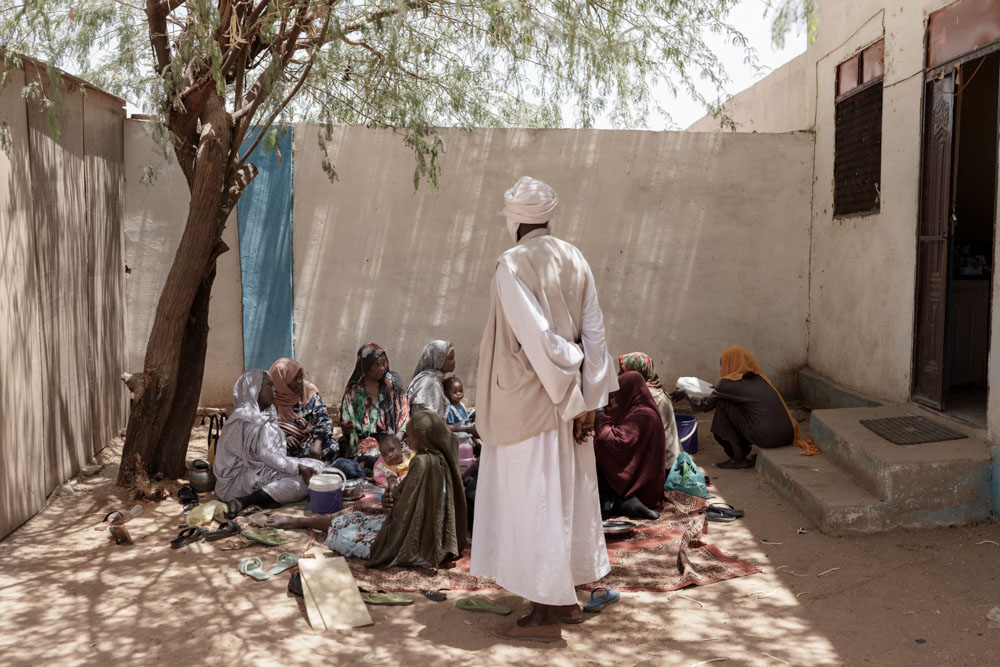
Nicolò Filippo Rosso reminds me that he is not a war photographer: he has always worked on the consequences of conflict, such as migration or the health crisis.
“What I feel I can say, looking at the new theaters of war, is that the level of violence has risen. Genocidal language, which was pushed against the Palestinians, has broken through the barrier of the unacceptable. Seeing that Israel got away with it, the RSF, who are committing atrocities in Darfur, have started to adopt the same system.
In the same way, this language has allowed the new paradigm to be applied to every other conflict, from the tensions between India and Pakistan to those between Thailand and Myanmar. Or the treatment of immigrants by the Trump administration. If you dehumanise a group of people, then there is no longer any limit to what you can do to them.”
The RSF use the same rhetoric of Arab supremacy to strike at settled African populations. “The nomadic Arab tribes of the Sahel, as desertification advanced, pushed towards the more fertile Darfur, which is also rich in minerals, gold among them. The worsening of climate change has led Arab populations to seize the land of the local indigenous tribes.”
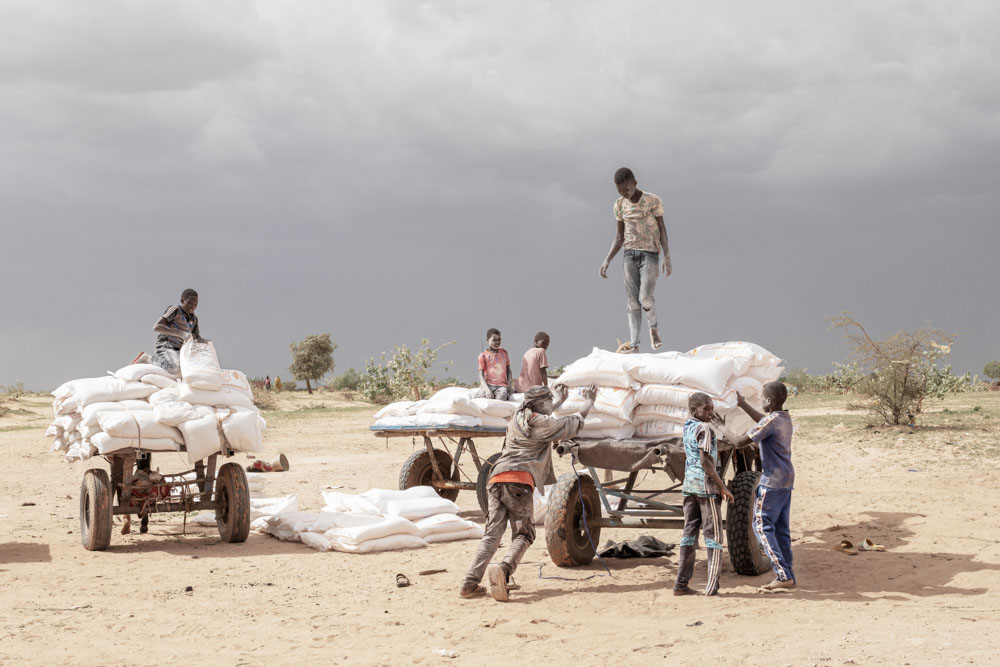
Life at the Border is a color reportage, so I asked the photographer why he had not used the black and white style he is known for, which marked Exodus (see FUL #48) and his more recent work. “When I arrived in Chad in 2024 it was my baptism in Africa; I had never worked there, because life had taken me to spend a decade in Latin America. I felt some reticence about going to photograph Africa, but once I was there it vanished and I saw scenes that reminded me of the photographs of the great reporters who inspired me, from Sebastião Salgado to James Nachtwey.
Although I usually work with a “classic” photographic approach — and in black and white — I felt the need to break with the tradition of photographing Africa for Western consumption. I wanted to avoid reproducing certain patterns that have shaped the way we look at this continent, and so I used color, even though compared with black and white it adds distractions for the viewer.
But the work done with photographer Valentino Bellini on the treatment of color sought a language that could tell of the tragedy and the crises that recur cyclically, continuous with my style and without chasing an aesthetic for its own sake. So I stayed faithful to my process of reducing observation to its essence.”

In a world distracted by conflicts that are louder in the media, the work UNHCR commissioned from Rosso is an act of resistance against media oblivion. It forces us to confront the void of Sudan, turning the invisibility of refugees into a visual presence that cannot be avoided.
Photographs: ©Nicolò Filippo Rosso
Nicolò Filippo Rosso (1985) is an award-winning documentary photographer who lives and works between Italy, Colombia and the United States. Through his lens he tells stories of marginalised communities, migration crises, conflicts and climate change. His project Exodus, devoted to the condition of migrants, has received prestigious international awards, among them the World Press Photo, the Getty Editorial Grant and the Eugene Smith Fund Grant. His work is published by the most important global titles and he collaborates regularly with Bloomberg News, TIME, Stern, Zeit and the United Nations High Commissioner for Refugees (UNHCR).