Villa Demidoff and the Secrets of Giambologna’s Giant
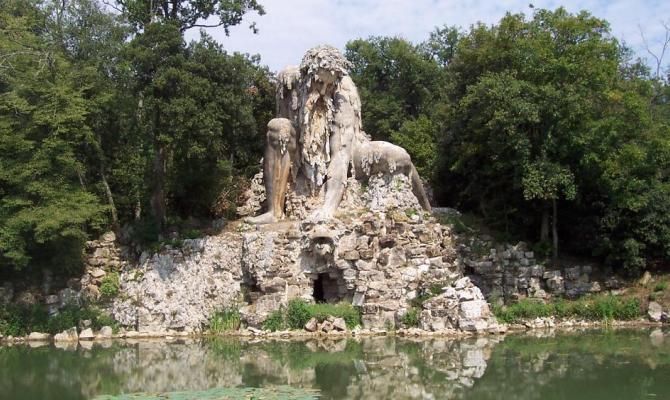
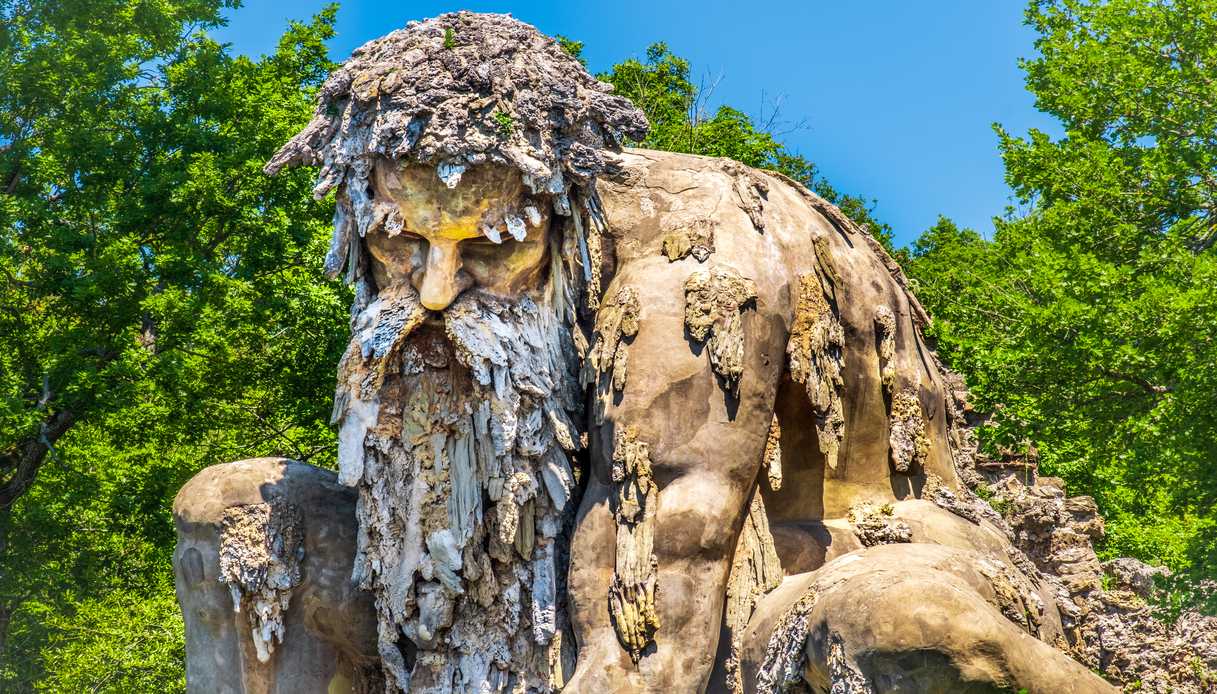
The work everyone knows simply as “the Giant” was created between 1579 and 1583. Built from a design by Buontalenti, the statue looks as though it has just risen from the little lake in front of it, portrayed still coated in lichen and mud.
The Colossus of the Apennines — the giant’s original name — hides a secret chamber carved into the head and the upper part of the body. According to researchers, the statue originally seemed to emerge from a grotto in an artificial mountain, and inside it held colored rooms, statues and paintings. Two small chambers still survive within it, both of which have been restored: the underground grotto — now made safe — and the so-called grotticina superiore (upper little grotto), where a small marble statue known as the Venerina (Little Venus) has been put back in place. The artificial mountain was probably demolished toward the end of the 1600s, when Giovan Battista Foggini built the sculpture of a dragon on the back of the colossus — itself later the object of restoration work.
An external staircase behind the Appennino leads to another room set in the sculpture’s back. From there you reach a small space inside the head, where a support structure made entirely of iron stands.
“Giambologna made the Appennino but regretted having made it at Pratolino,” runs an old popular saying. Who knows whether the artist would still feel the same today, seeing his giant in the park of Villa Demidoff on the outskirts of Florence, more than five centuries after he first conceived it.