Florentine Love Stories
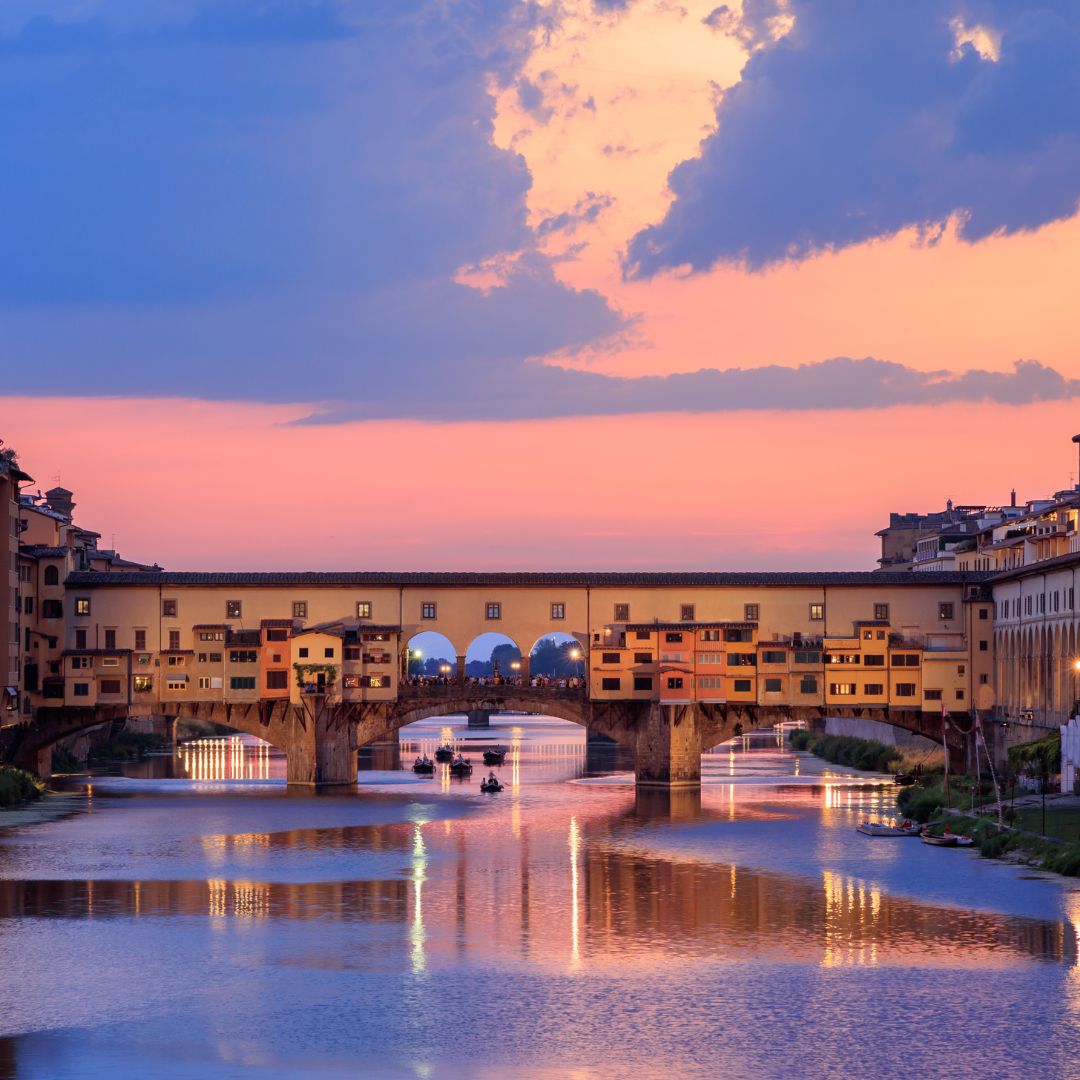
Florence is known above all as the cradle of the Renaissance — for good reason — but it belongs just as fully among the most romantic cities of all. Picture a stroll along the lungarni at sunset, the city admired from the heights of Piazzale Michelangelo, a sunny afternoon in the Giardino di Boboli or amid the greenery of the Giardino delle Rose. Caught up in this romantic mood, we decided to recount the affairs of Florence’s most famous couples in love, as one more proof of how the city has inspired some beautiful love stories. From the squares of the Oltrarno to Santa Croce, following these couples traces an itinerary devoted to love.
Bianca Cappello and Francesco I de’ Medici
Both already married, Bianca Cappello and Francesco I de’ Medici fell in love. Suspicious events surround their affair, such as the deaths of their respective spouses in what were said to be accidents. The symbol of their clandestine love is the Palazzo Bianca Cappello in Via Maggio, which the Grand Duke himself had built for his beloved. The two did marry, but sadly their story has no happy ending. In fact, shortly after the wedding they both fell ill and died. Perhaps a punishment for their extramarital affair? No one knows. What remains, in memory of this love story, is the fifteenth-century residence with its remarkable façade, the earliest testimony to the art of Buontalenti. There is also an underground passage here that the two lovers used to meet in secret.
Elizabeth and Robert Browning
Florence was also the setting for the love of the English poet Elizabeth Browning and her husband Robert, who chose the Tuscan city to escape her father, who opposed their marriage. Their home was Casa Guidi in Piazza San Felice, where — as Elizabeth herself writes — they were able to enjoy their freedom. The writer was buried in Florence in the English Cemetery; in her memory two commemorative plaques can be found: one above the doorway of the palazzo — where she lived, now a museum — and one in Via Mazzetta.
Dianora de’ Bardi and Ippolito Buondelmonti
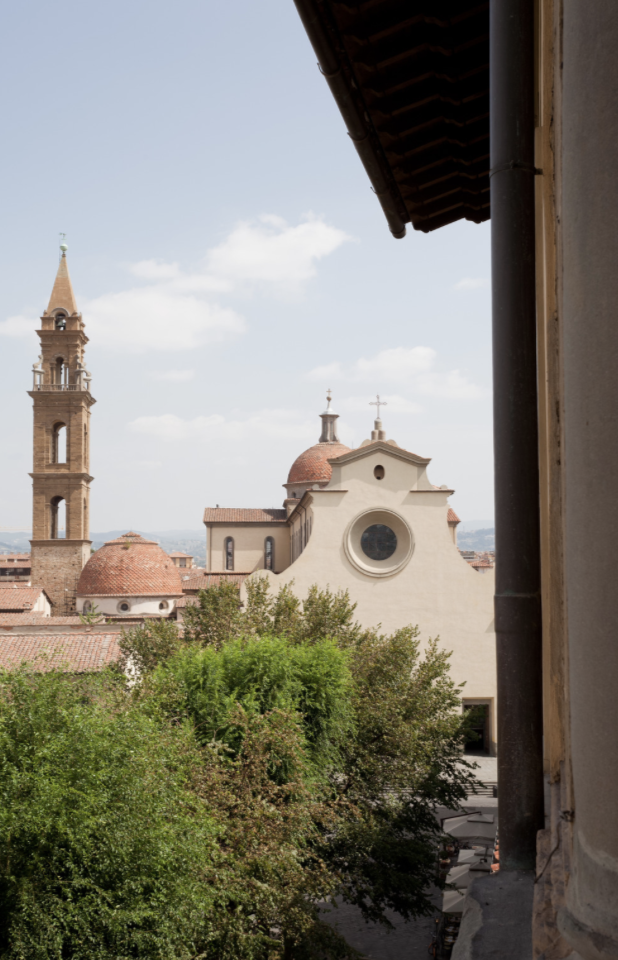
Considered the Florentine Romeo and Juliet, the tale of Dianora and Ippolito is a happy-ending story likewise set in the Oltrarno district — chiefly in Santo Spirito, where, during the feast of San Giovanni, the young man fell head over heels for the girl. The two, however, belonged to families that were historic enemies, and when Ippolito discovered her surname he despaired to the point of falling ill. His mother — anxious for him — decided to help the young lovers marry in secret. After the wedding, Ippolito and Dianora were ready to flee together, but they were discovered.
As the young man climbed up to his beloved’s window, he was caught by the guards, who — believing his intent was theft, a version Ippolito confirmed so as not to sully Dianora’s honor — condemned him to death. It was the power of love that saved him: passing right beneath Dianora’s window on the day of the execution, the girl rushed out and explained everything to the guards, begging them to spare her beloved. The misunderstanding was cleared up, and the union of the two was made official by the families, who set aside their hostilities.
Dante and Beatrice
Among the most famous Florentine love stories is surely the one whose protagonist is Dante Alighieri. The pivotal place where, at just nine years old, Dante first saw Beatrice Portinari is the church of Santa Margherita dei Cerchi. We know that Beatrice actually married Simone de’ Bardi, but if the supreme poet’s feeling could never be fulfilled, it nonetheless inspired him in the writing of his most beautiful works. It thus remains eternal and indestructible — just as the church of their first meeting, in Via Santa Margherita, still stands and can be visited.
Vittorio Alfieri and Luisa Stolberg
Another famous clandestine Florentine love is that of Vittorio Alfieri and the Countess of Albany, Luisa Stolberg. They too met in a church — precisely at the Basilica of Santa Croce. At the time the countess was married to Charles Stuart of England. The two lived out their passion openly, in spite of the gossip, and the poet drew inspiration from her for some of his famous works. When Alfieri died, it was the countess herself who had him buried inside Santa Croce — commissioning a funerary monument from Canova — to make their first meeting eternal.

Lisabetta Capponi and Pier Gaetano Grifoni
One of the most heart-wrenching Florentine love stories is surely that of Lisabetta Capponi and Pier Gaetano Grifoni, whose emblematic place is Palazzo Budini-Gattai in Piazza Santissima Annunziata. Here the window at the top right is always open, and the reason is a promise Lisabetta made to Gaetano — recently her husband — when he left for war: “at this window I will wait for you until you return to me.” And so she did!
Simonetta Vespucci and Giuliano de’ Medici
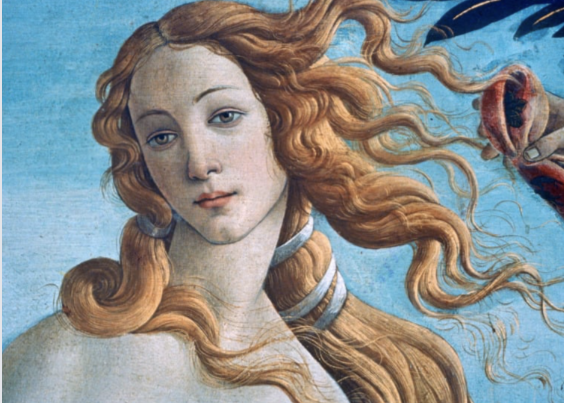
She inspired Botticelli’s Venus, and her eloquent beauty captivated many men of the age. Simonetta Vespucci Cattaneo came to Florence following her marriage to Marco Vespucci. The young Simonetta enchanted first Lorenzo de’ Medici and then Giuliano. The latter dedicated to her his victory in a Giostra (joust) at which he had appeared — as Poliziano describes — with a banner made by Botticelli depicting Simonetta in the guise of the goddess Minerva, described as “La Senza Pari” (the Peerless One).
The details of their love are unclear, but it is known that at the young woman’s death in 1476, Giuliano’s grief was so great that he asked Simonetta’s father-in-law for her garments as a keepsake. The two were bound by a single feeling even in death: just like Simonetta, in fact, Giuliano died on the same day — the 26th of April — two years later.
If you would like to round off your tour of Florentine loves in style, you can head to the Giardino di Boboli, which Cosimo I de’ Medici had built for Eleonora da Toledo, so that from Palazzo Pitti, every spring, she could watch her love bloom!
Follow us for more stories and curiosities about Florence