Why the Opera Still Matters
We were invited to Palazzo Corsini al Prato to watch Broken Vows. Rivalry and Infidelity, a program staged by the Mascarade Opera Foundation — and let us say it right away: it changed our minds about (almost) everything we thought we knew about opera.
Because no, it isn’t only for a chosen few. No, you don’t need to know music or to have studied singing. And no, you don’t have to turn up in a tuxedo or an evening gown. What is true, instead, is that opera carries a reputation that doesn’t belong to it: that of being a show for old people — difficult, remote. In reality it is a living, powerful, ironic experience, full of passion and drama. And, above all, surprisingly contemporary.

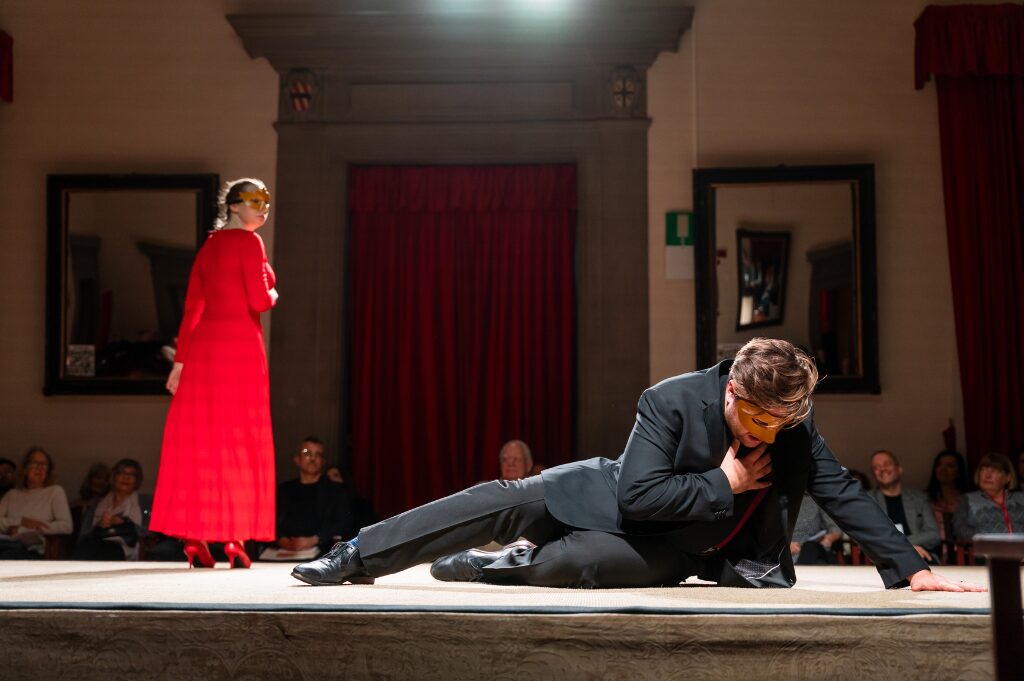
An evening of duels, jealousy and betrayal
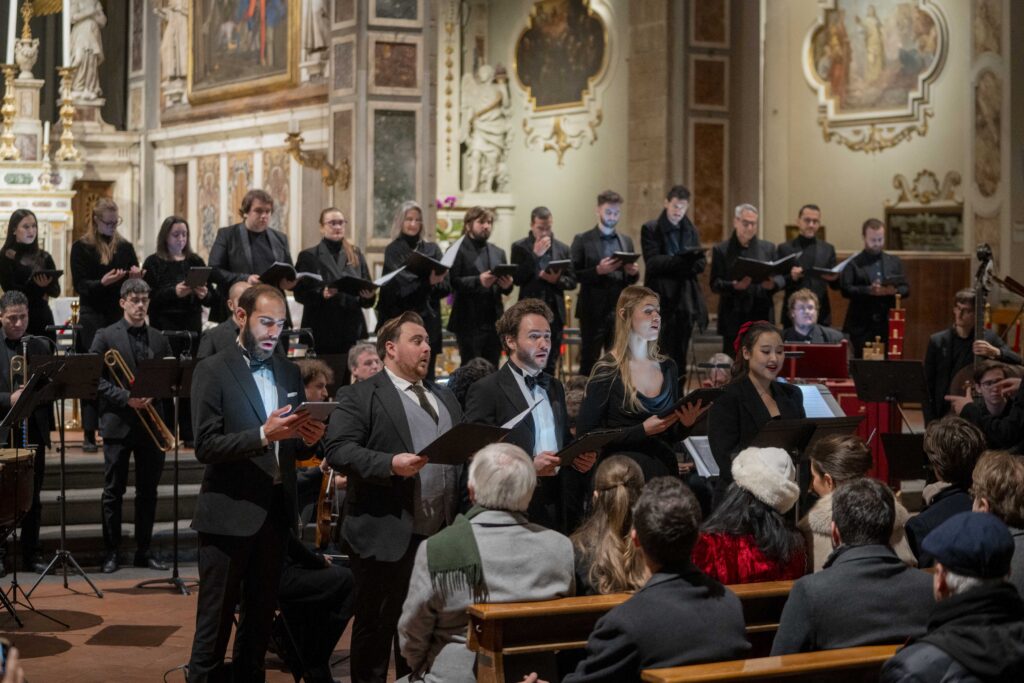
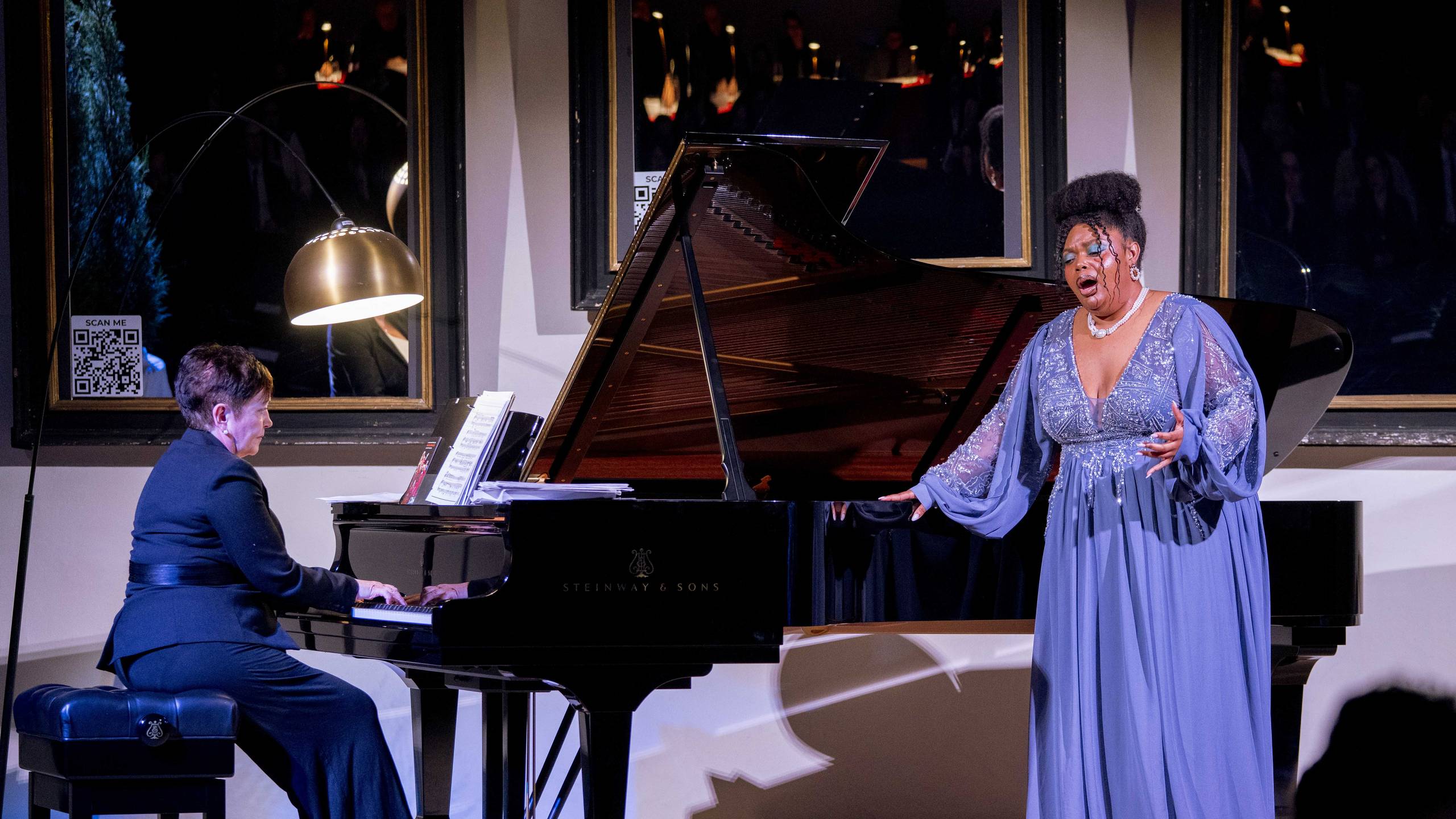
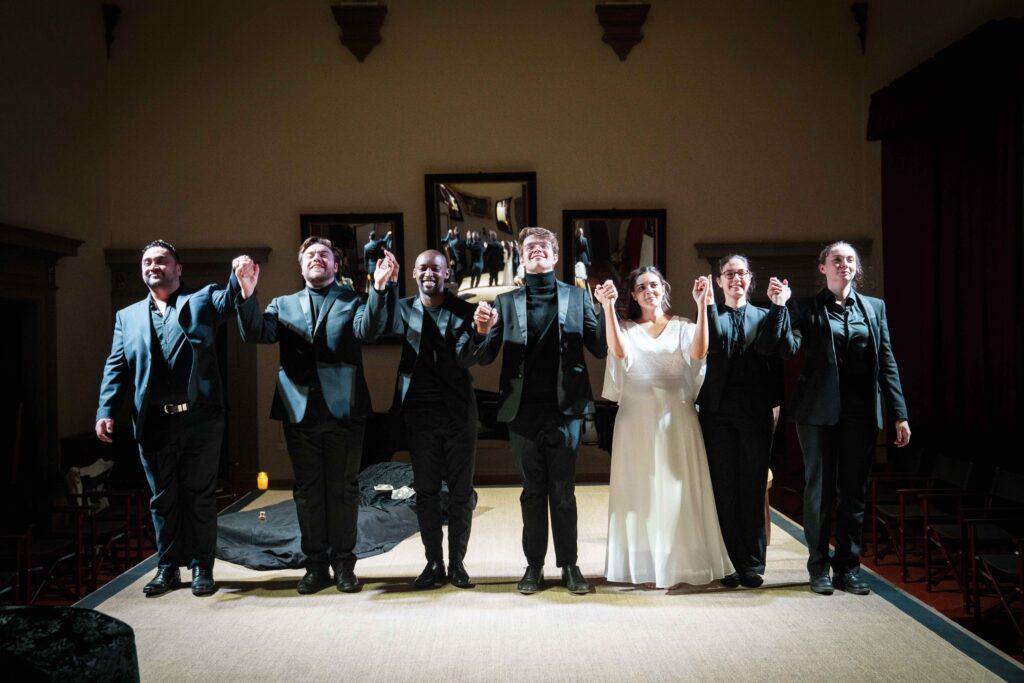
On the program: Mozart’s Idomeneo and Così fan tutte, and Bellini’s I Capuleti e i Montecchi. On stage, seven young artists from around the world — Benjamin Gautier, Anna-Helena MacLachlan, Mariam Suleiman, Taylor Wallbank, Vuyisa Xipu, Jamie Andrews and Rebeka Dobracev — all students of Mascarade Opera‘s two-year program. A cast of international talent that, with grace and intensity, restored opera to its most authentic nature: that of a popular art form able to speak to anyone, in any language.
The audience was almost entirely made up of visitors from abroad. And that gave us pause: people come to Italy from all over the world to study our language and our opera, yet we Italians seem to have forgotten it.
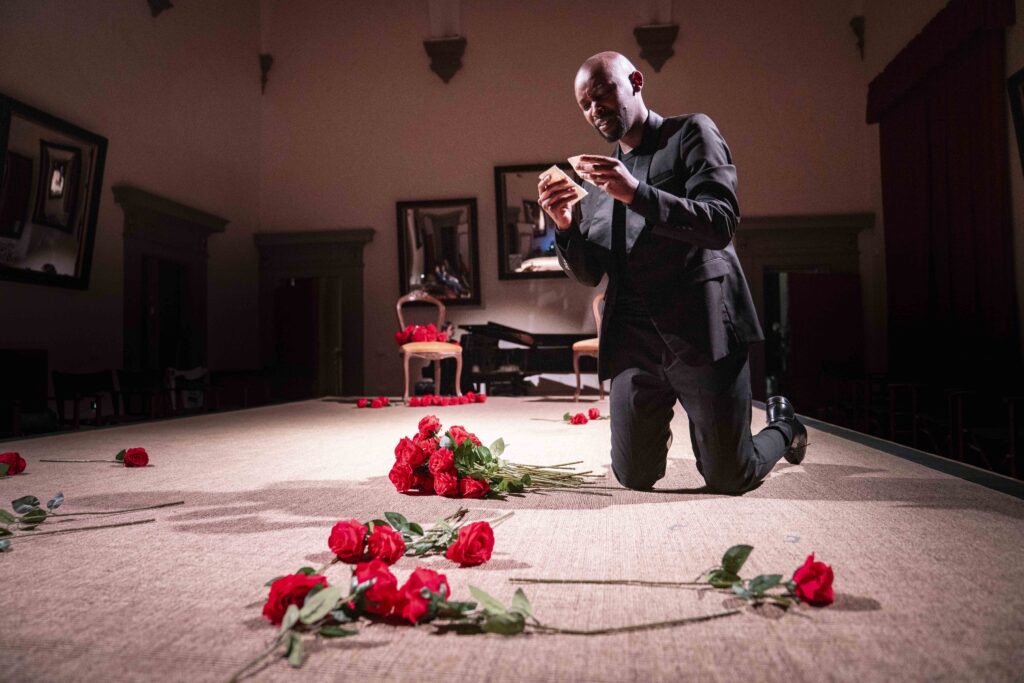
The other thing that struck us was the staging. Contemporary, essential, stripped of almost everything that, in the popular imagination, “makes” opera: no monumental sets, no pompous costumes, none of the 19th-century crinolines you expect the moment you hear the names Mozart or Bellini. Everything was pared to the bone — a few elements, minimal dress, an open stage that left room for the bodies, the voices and the story.
For longtime opera-goers this may be nothing new, but for the inexperienced spectator (like us, honestly) it is disorienting — in the best sense. You feel yourself shutting out the world and, without thinking too hard about it, you accept that people sing instead of speaking, that the story moves through the voice more than through grand stage movement. At first it seems strange; then you realize the involvement comes from exactly there — from the intensity of a voice filling the space and carrying the story forward, letting you follow the emotional current without asking too many “whys.”
We discovered that opera has a direct, almost physical way of hitting you. It’s a matter of taste, of course. But the idea that it is an outdated, distant language “for the few” holds up less and less after an evening like this.

The (very Italian) crisis of opera
Over the last thirty years, opera in Italy has been dismantled piece by piece. Since 1996 — the year Law no. 367 turned the country’s opera houses into private-law foundations — the State has progressively withdrawn from its role as guardian and funder, shifting onto the theaters financial burdens that few could bear.
The result? A slow desertification: theaters in debt, productions scaled back, artists forced to emigrate in order to make a living from their craft. All of this in the country that invented melodramma and that, paradoxically, now treats it as a niche entertainment.
As Gianluca Floris, then president of Assolirica, put it in 2020: “The State has done to opera what it would never do to, say, its archaeological sites. What would you say if the State announced today: ‘Fine — if the Imperial Forums can’t sustain their restoration and upkeep on ticket sales alone, then as far as I’m concerned they can close’?“
It is a thoroughly Italian paradox: on one hand the State cuts its economic and cultural support for opera; on the other it celebrates its symbolic value, having secured, in 2023, UNESCO recognition of Italian opera singing as intangible cultural heritage.
Fortunately, some are holding the line
And this is where organizations like the Mascarade Opera Foundation come in. Based in Florence, at Palazzo Corsini al Prato, it is part of the New Generation Foundation, a non-profit structure that each year offers twelve young international artists a fully funded two-year program: intensive training, housing, a scholarship, live performances, and collaborations with partner theaters.
It is a model that works because it pairs artistic training with a real chance to build a career — anything but a given in Italy. Mascarade doesn’t just teach technique and repertoire: it builds genuine pathways, makes room for young artists, and creates connections. In a country where, for many singers, the only alternative is to move abroad, having a program of this caliber in Florence is an encouraging sign. And to think that opera was born here, and for centuries was a byword for “Italy” around the world — our cultural calling card alongside painting, sculpture and architecture.
Reasons to come back to the opera
The first is the most obvious: the music. Few things can move you like a voice that fills a hall without a microphone. Then there are the stories. Let’s be honest: many operas don’t end well. But isn’t that exactly their strength? Impossible passions, betrayals, heartbreaking farewells — what we’d now call “drama” existed long before Netflix series. At the opera you find it all: those who lie, those who die, those who flee, those who kill, those who win, those who lose. And, often, those who laugh. There is tragedy and comedy, and the beauty of it is that you never have to change the channel.