Why Now Is the Time for Opera in Florence
A while back we wrote that we had changed our minds about almost everything we thought we knew about opera. Not because anyone talked us into it, but because we went to a performance and realized that the old idea of opera as an art form for the few simply did not hold up.
Now the Mascarade Opera Foundation has launched its 2026 season, once again at Palazzo Corsini, and the question comes back on its own: are we really so sure that opera is something remote and out of reach? Because here in Florence it is being rethought in very concrete terms.

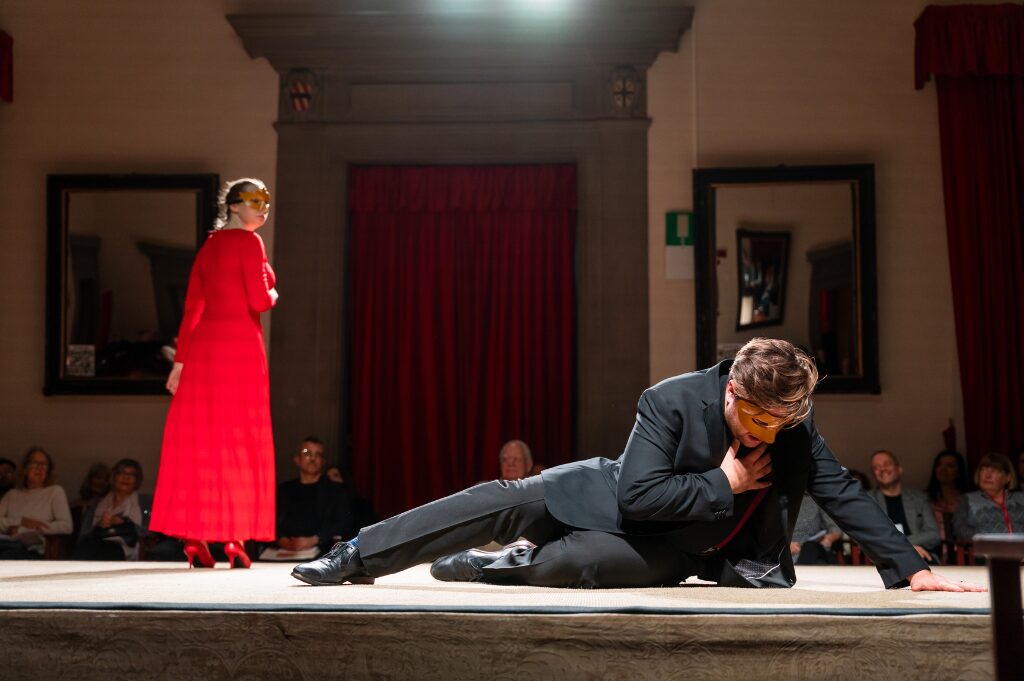
The season opens with an evening called Dreams and Dualities. The title fits: there are dreams here, of course, but also betrayals, deceptions, ambitions, and vanities. Several works are set in dialogue across the program — Rossini’s Il viaggio a Reims (The Journey to Reims), Mozart’s Le nozze di Figaro (The Marriage of Figaro), and Offenbach’s Les Contes d’Hoffmann (The Tales of Hoffmann). A mix of Rossini, Mozart, and Offenbach.
Strip away the music and these sound like thoroughly contemporary dynamics: power struggles, illusions that shatter, obsessive love. The staging is by Andrea Bernard, already a familiar name at the Teatro del Maggio Musicale Fiorentino, and his approach is clear: to peel off the museum-piece aura that some people still insist on attaching to opera.
The most interesting part? The experience does not begin when the lights go down. You arrive earlier, move through the rooms, and encounter works of contemporary art thanks to a collaboration with the Pneuma Art Foundation. Opera becomes a journey, not just a show. It is also a way of telling you: you belong here, this is not a closed room.
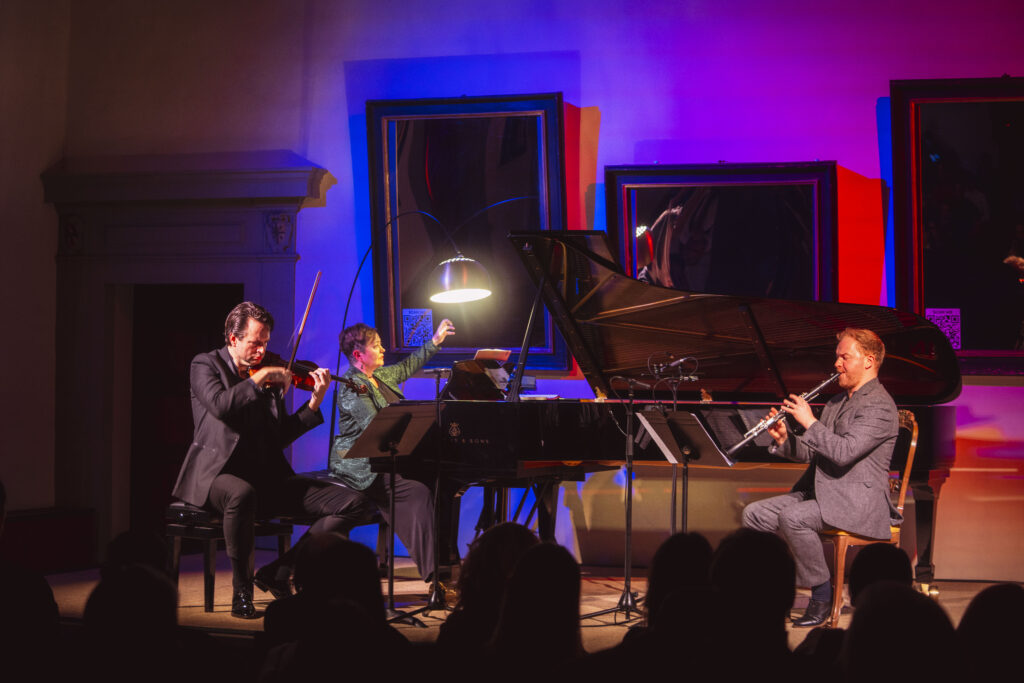
Later in the season the mood shifts. The Trio Mascarade — with Julia Lynch at the piano — brings Schubert, Schumann, and Mendelssohn to the Salone dei Concerti (the mansion’s concert hall). Romanticism, chamber music, no sets, no costumes. At the center, only melancholy, longing, and unease: the emotions we now file under “overthinking,” which turn out to have existed two centuries ago already.
Then comes a public masterclass with the mezzo-soprano Marina Prudenskaya, an artist who sings regularly at the Royal Opera House in London and in Berlin, Vienna, and Bayreuth. This is not a concert but an open lesson, and something rare happens in it: the audience sees the work itself — the corrections, the technical detail, the building of a role. You watch the craft, not just the result.
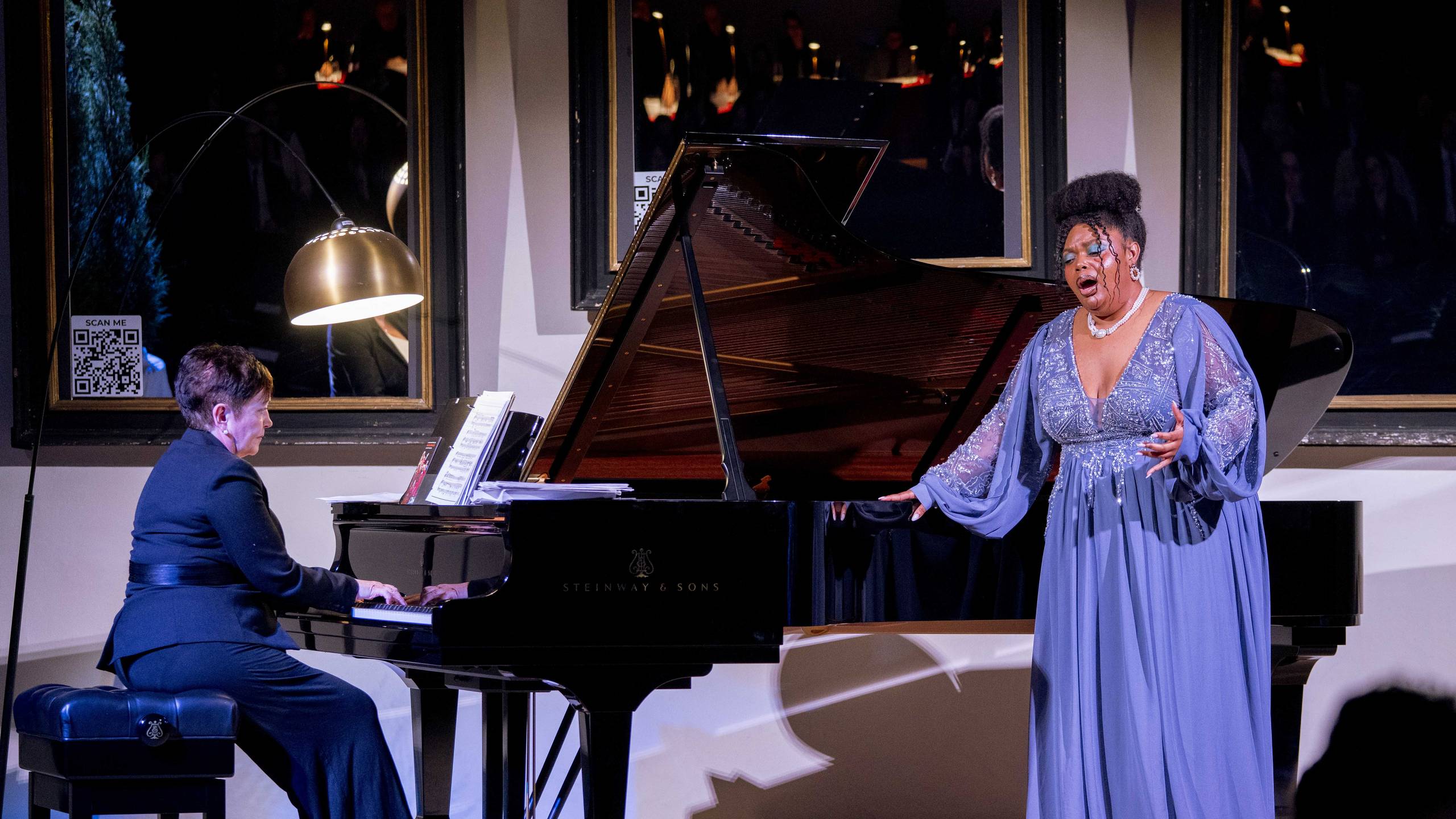
The following day, Prudenskaya returns to the stage alongside Julia Lynch for a recital. First the process, then the performance. It is a choice that fits everything Mascarade has been doing for years: investing in young artists, building real training paths, not just “elegant evenings.”
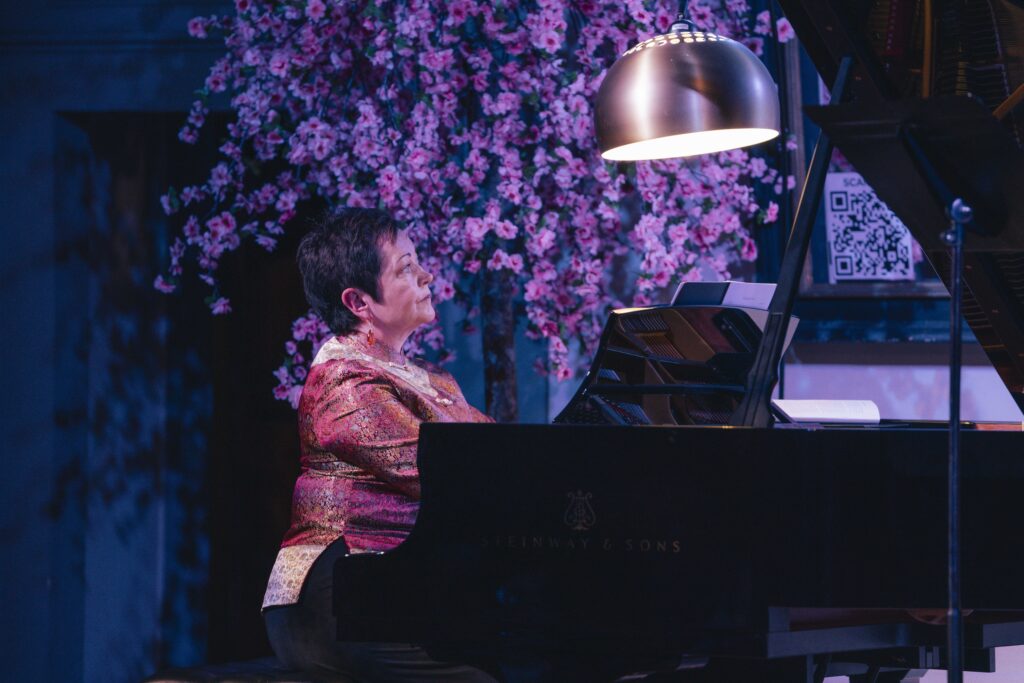
We wrote it once before: opera in Italy has been progressively dismantled over the past thirty years. We celebrate it as heritage while supporting it less and less. Meanwhile, young artists come to Florence from all over the world to train here. The contradiction is glaring.
Mascarade answers it simply: it invests in young performers, keeps tickets affordable (they start at 10 euros), and creates a space that is intimate rather than intimidating.
So the question stands: is opera really in crisis? Or is it we who stopped going, content to repeat that it is difficult, boring, and old-fashioned?
At Palazzo Corsini, at least this spring, the impression is a different one. It does not feel like a cultural relic. It feels like a language that keeps transforming and still speaks to a more contemporary audience. And perhaps, before pronouncing it dead, it would be worth listening to it again.