The neighborhood bars of Florence we all actually need
A thousand of them open, each one different and each one lovelier than the last. They are designed to give us an experience, to feed us something good, to pour us something interesting, to let us work on a laptop, meet someone or shoot the most enviable Instagram story going. There are the ones designed down to the last detail, with the perfect counter, the perfect light, the perfect chair and that faint sense of having walked into a place that wants to tell you something before it will have you.
Florence is full of places like this. Beautiful places, sometimes genuinely stunning ones, that every so often have a problem: they seem more interested in being looked at than in being lived in. This is not a criticism of design, still less of beauty — let us be clear. The trouble starts when beauty becomes an end in itself, when aesthetics begin to stand in for identity and even authenticity turns into something you can draw up on a plan. The peeling wall left peeling on purpose, the vintage chair bought for the wow factor, the counter that looks fifty years old but went in yesterday. In short, in this city you increasingly find yourself walking into places that have studied how to seem authentic so well that they end up entirely fake.
And then something curious happens: sometimes the ugly places are lovelier than the lovely ones. A bar with strip lighting, plastic chairs, the television on, a counter that has seen distinctly better days and perhaps a floor no contemporary interior designer would dare to suggest can have something a perfectly considered venue cannot buy. It has nothing to prove. It does not ask you to photograph it, to talk about it, to appreciate it. You can simply go in. That, perhaps, is what some of the old Florentine bars still have: the possibility of being places, full stop.
Here is our list of the Florence bars we all need.
Bar Argentina
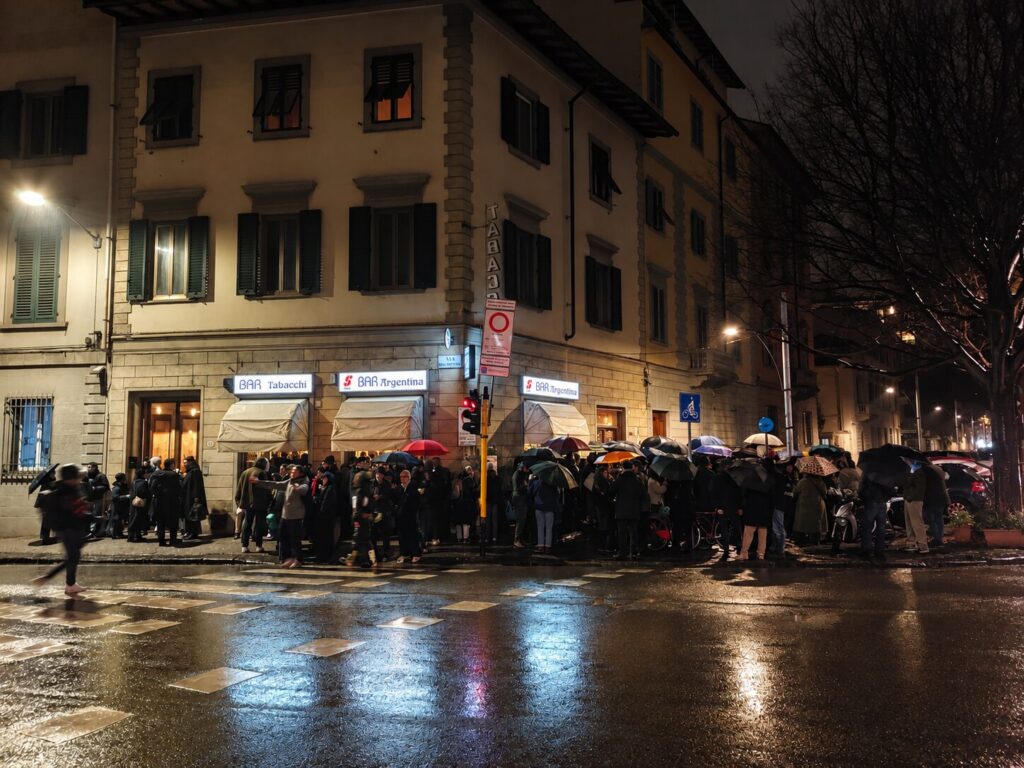
Bar Argentina, on via della Mattonaia, is one of them. It still works as a bar and tobacconist, and as the aperitivo spot next door, keeping the hours and the routine of a neighborhood business. It is not a place you necessarily choose. It is one of those you end up in: because you live there, because you walk past, because you need a coffee (or a Negroni), or because you are waiting for someone. And the difference is enormous. A contemporary venue often wants to become a destination — ever heard of the place to be? — whereas a neighborhood bar can simply afford to be, and to be there.
Bar Consigli
To find one of the stories furthest from the Florence of new openings you have to head up towards Monte Morello, as far as Ceppeto. Bar Consigli has been open since 1952 and still appears on the city’s official register of historic and traditional businesses. When it opened, the road at Ceppeto was not the one we know today and daily life ran to entirely different rhythms. Seventy years on, though, the bar is still there. It did not become well known by building an image around its own history: it became historic by carrying on existing while the world around it changed. It is a distinction worth making. Because these days we happily call any place with an old sign “historic”, but the history of a bar is not only the years that have passed. It is in the people who have kept walking through the door.
Bar Francesconi
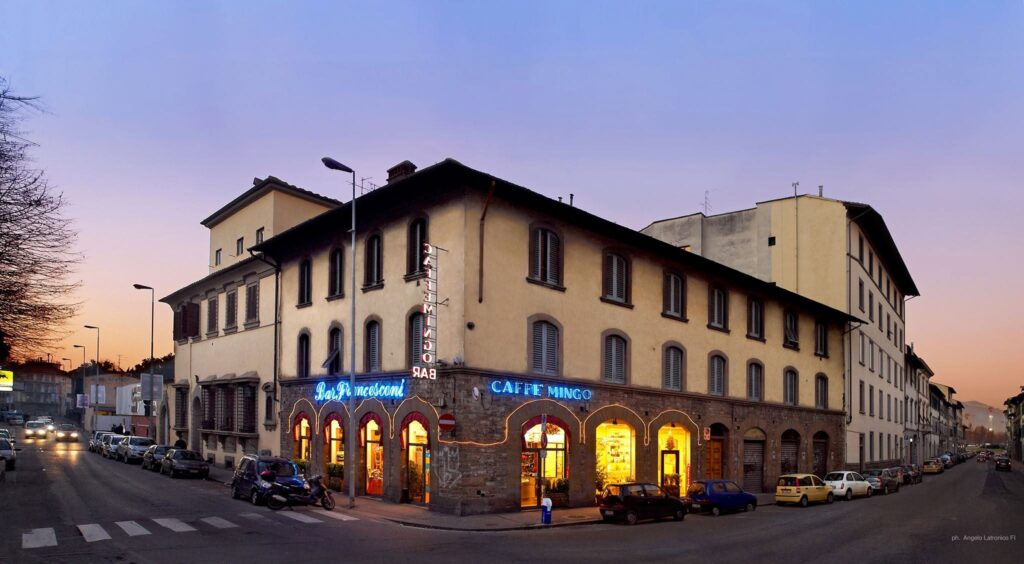
Back in the city itself, Bar Francesconi, on via del Ponte Sospeso, is one more example of our sideways, slightly vintage way of looking at things. The family has been tied to the place since 1966 and it is still trading; the city council itself lists it among Florence’s “traditional businesses”. There is no need here to build a stage set of working-class Florence: outside the bar there is a road, cars, buses, shops, people on their way to work. It is a part of the city that does not need to seem authentic because it still genuinely is.
Caffè Dogali
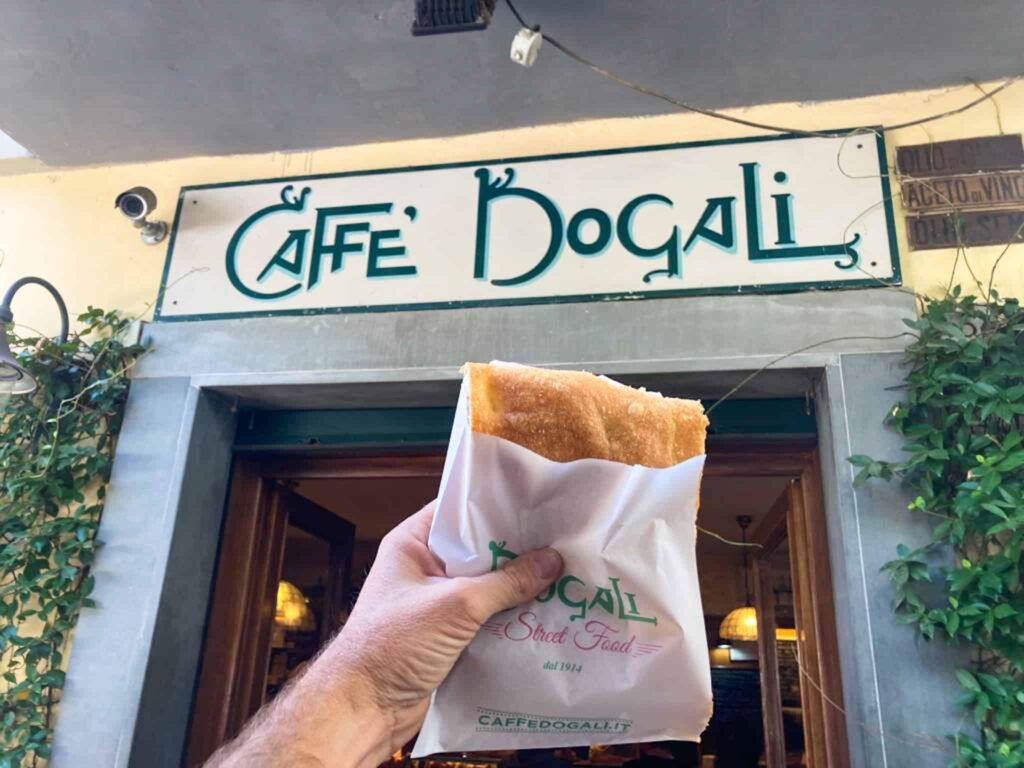
On viale Malta you will find Caffè Dogali, another name on the council’s historic list and still going strong. This one, too, is a long way from postcard Florence and from the streets where tourism now sets most of the rules. It is one of those places that have a function before they have an image: you go because you need to, because it is handy, because it is part of somebody’s daily geography. Who has never tried their schiacciate, or stopped for lunch at least once before the match?
Caffè degli Artigiani
Caffè degli Artigiani, on via dello Sprone, is still open and working in the heart of the Oltrarno. It is another of those places that do not need to be universally beautiful in order to work: it has a particular scale, snug, almost domestic, and above all a colorful history made by the very people who drink there. It is cheap, and it does not have to be to everyone’s taste. A bar, after all, should not necessarily be to everyone’s taste.
Caffè de’ Serragli
Staying in the area, Caffè de’ Serragli, on the street of the same name, is also still running as a bar and tobacconist. There is more to it, because this address tells the contradiction of the contemporary Oltrarno rather well: a street increasingly walked by people visiting Florence, yet still full of businesses working above all for the people who live here. Being a bar, only and simply a bar, is perhaps the most interesting thing it has to offer.
Bar Giardino
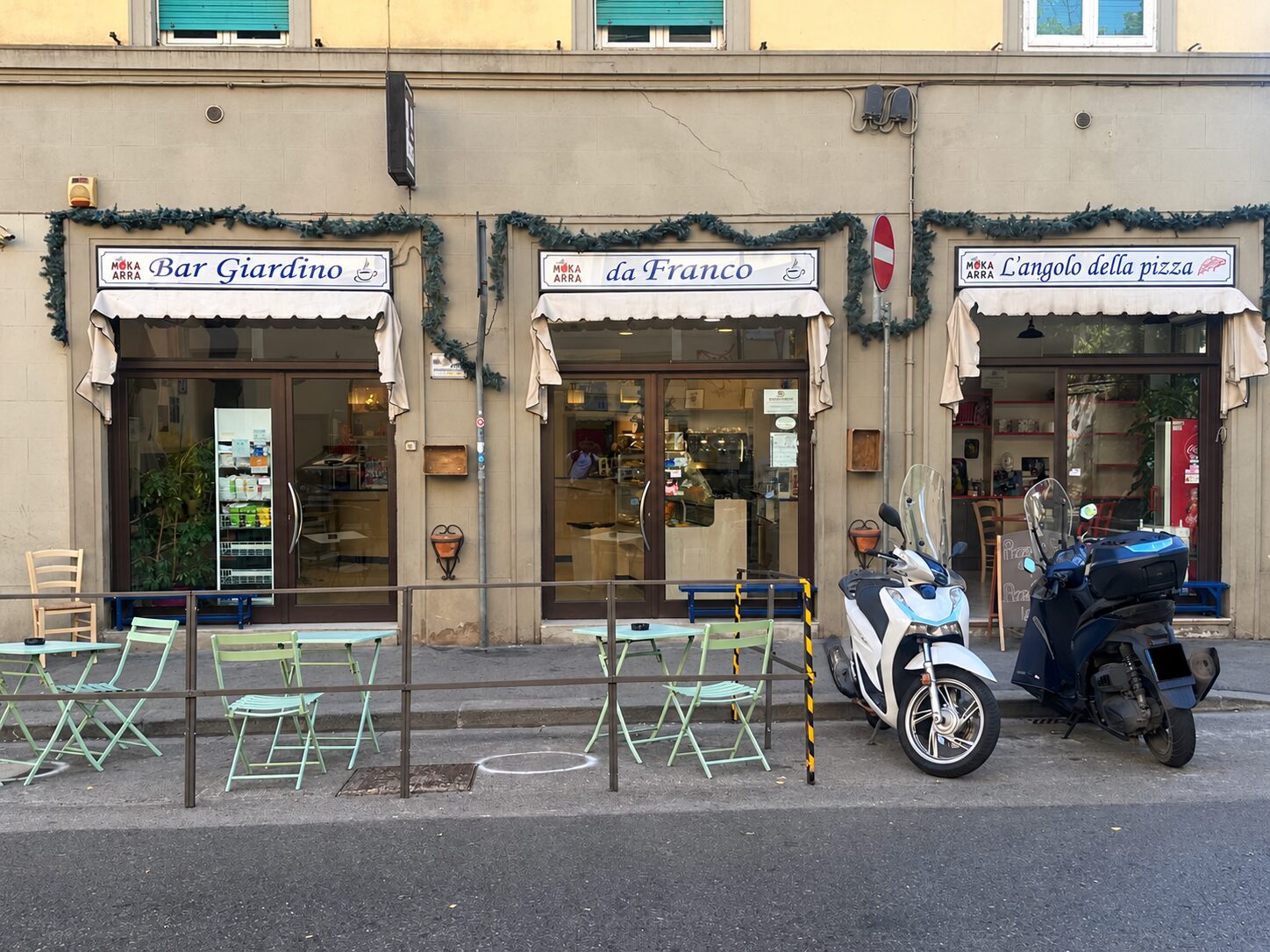
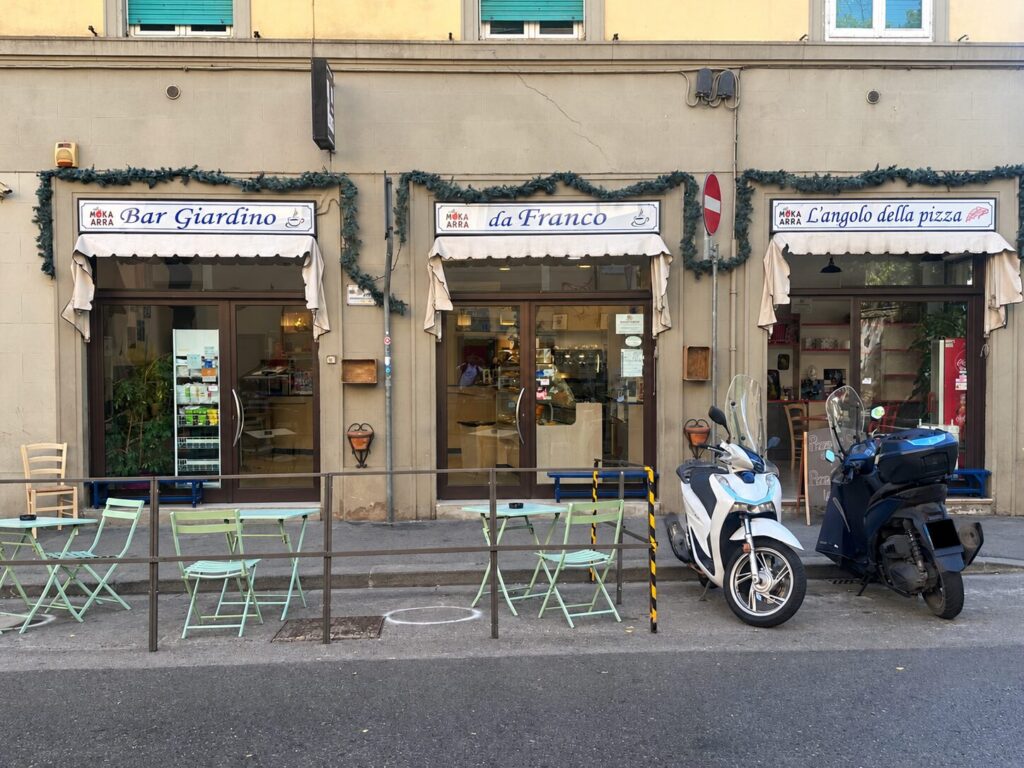
At Le Cure there is Bar Giardino, another example of those places where, in a few square meters, practically everything still happens. Cigarettes, phone top-ups, breakfast, lunch, aperitivo and, why not, a pizza for dinner too. It is a family-run bar and above all a bar you pass through, in the best sense of the phrase: one of those places that end up inside your day without needing to be planned. You go in the morning for breakfast, for a quick coffee after lunch, to read the paper or swap a few words with Betty and Katiuscha. And then there is the inevitable Gratta e Vinci scratch card, because a self-respecting neighborhood bar must also offer the chance to daydream for a few minutes about the stroke of luck that changes everything. Bar Giardino still belongs to this idea of a bar: a place that does not have a single function because, in the end, its function is to keep the daily life around it company.
Bar Pappagallo
Then there are the bars that exist while most of the city is still asleep. Bar Pappagallo, on via Fra’ Giovanni Angelico, opens at half past four in the morning. An opening time that already says a good deal about the kind of place it is. Before the slow breakfasts, the brunches and the photographed cappuccinos, there is a Florence that gets up early: the people clocking on, the ones who have just come off shift, the ones who drive, who deliver, who are already out on the street while it is still dark. Pappagallo belongs to this city too. It is the bar in its most elementary and perhaps most important function: being open when somebody needs it to be. Getting there on purpose is not the point; knowing it is there is.
Bar Pasticceria Marchionne
In piazza Leon Battista Alberti stands Bar Pasticceria Marchionne, opened by the family in 1962, when they took over the former Bar Nannoni. Then came the flood of 1966, the tobacconist’s licence, a few years later the pastry kitchen and, above all, a city that was changing completely in the meantime. Marchionne stayed put, passing from one generation to the next and carrying on doing what bars do when they become part of a neighborhood: adapting without needing to reinvent themselves. Breakfast, pastries, cigarettes, a quick stop on the way to work or a coffee taken without having to consult reviews and menus online. Sixty years on, the interesting thing is not so much that it has become a historic venue as that it carries on being an ordinary bar. And it is precisely ordinariness that this article of ours is about.
Bar Marisa
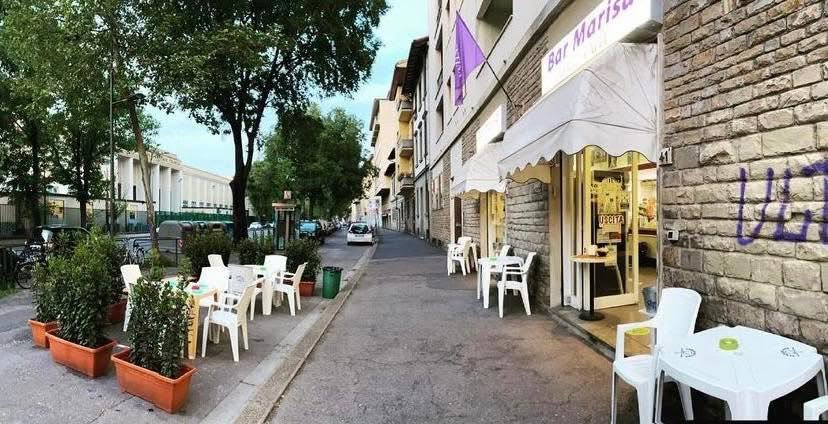
There are bars that, by dint of staying in the same spot, end up becoming something more than a bar. On viale Manfredo Fanti, opposite the Artemio Franchi stadium, Bar Marisa was for generations of Viola supporters a meeting point, almost a natural extension of the terraces. People came here before the match, but above all they talked about Fiorentina. They argued about the line-up, the manager, the transfer market, the referee and of course the latest defeat, because in Florence football has always also been a marvelous excuse for an argument. As early as 1991 the papers were describing it as the traditional meeting place of Florentine fandom, among purple flags and photographs of the teams of the past.
For years one of the leading voices in those huddles was Mario Ciuffi, who at the Marisa turned discussions about Fiorentina into small rallies, surrounded by supporters, journalists and figures from the Viola world. It is no accident that it is still remembered as one of the temples of Florentine “spoken football”. Banners have appeared outside the Marisa, protests and Curva Fiesole call-ups have set off from it, victories have been celebrated there and defeats digested. Directors, presidents, journalists and above all thousands of supporters have passed through.
It remains a bar, of course: coffee, beer, cigarettes, newspapers, something on the run. But on Fiorentina days those things become almost secondary. Because at Bar Marisa, before you even get into the Franchi, the match has already begun.
The bar of the old days is an intangible asset, and we are forgetting it. In recent years we have turned even the way we sit in a bar into a form of performance. We work anywhere, we take calls anywhere, we network, we co-work, we have working aperitivi and working breakfasts. Even when we go out for a drink, we often choose a place that becomes an extension of ourselves: it says something about us, about our taste, about the way we live. The contemporary bar must not only be good. It must have an identity, and that identity must be legible at a glance. The old bars, on the other hand, can afford to be ugly. Indeed, perhaps it is their very ugliness that makes them beautiful.
They are the places where the plastic chairs were not chosen because they are “seventies”, but because they were cheap and lasted. Where the little tables can all be different from one another and the television is on because somebody wants to watch the match, not because it adds to the atmosphere. Where elderly gentlemen can play cards for hours without anyone thinking they are “having an experience” and posting every move on TikTok. Where you can sit and watch the cars go by, read the paper, talk about the weather or not talk at all.
Not everything old is authentic, naturally. And not everything new is fake. There are contemporary venues of great beauty with a real soul, and old bars that are simply… old. The difference, perhaps, lies in the reason a place exists. Which is why a bar can be full of flaws and still be enormously valuable. Because it does not ask us to live up to it, to have the right outfit, the right job, the right age or the right social media manager. It does not even ask us to be interesting. You can walk in without being anyone.
That matters far more than it sounds, above all in a city like Florence, where almost every place now risks becoming a shop window of itself. The tourist city needs to be beautiful, of course. But a liveable city also needs places where you are allowed to be ugly, tired, anonymous, silent.
The neighborhood bars are still there for that. They are not necessarily the best bars in Florence, and it would be foolish to turn them into yet another category to collect. We do not need more addresses to save on Google Maps, more “unmissable” spots, more places to photograph to prove we found them.
We need places to go back to, for no reason at all.