Lucca Art Fair 2026: Getting Lost to See Again
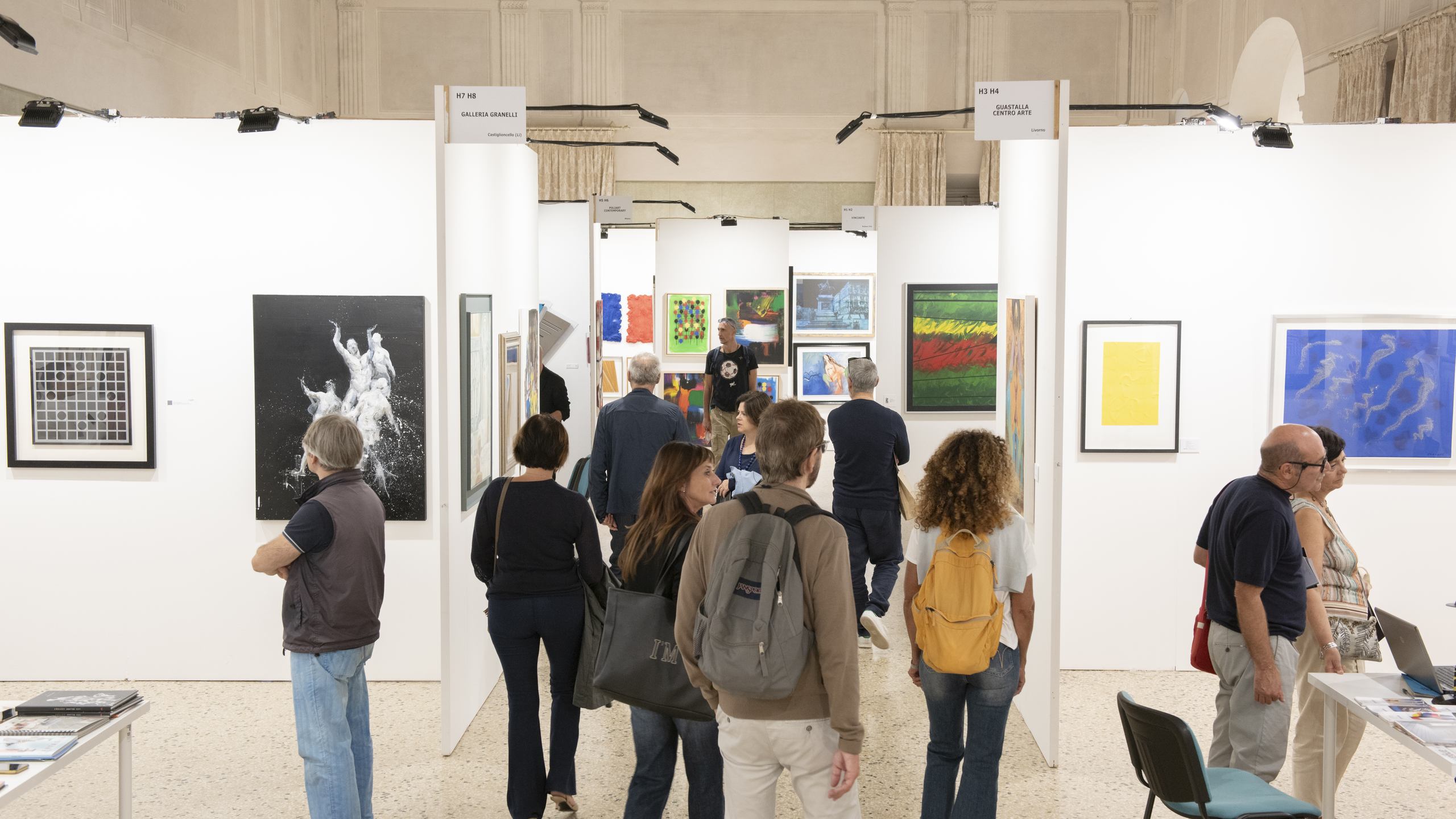
Just a few days to go before the tenth edition of Lucca Art Fair opens: from Friday, September 25 to Sunday, September 27, it returns to the historic spaces of the Real Collegio in Lucca. For three days, the city center will host 49 Italian and international exhibitors, spread across four sections, Main Section, Art Projects, Independent and Editor, along a route that spans modern and contemporary art, experimentation, new research and independent publishing.
Alongside the booths, the fair offers a Public Programme of exhibitions, installations, sound performances and talks, building an experience that goes beyond the display itself. It is precisely this plurality that makes the tenth edition so interesting: Lucca Art Fair reaches its tenth appointment not just to celebrate a milestone, but to ask what it means to put on an art fair today and, above all, what a fair can do for the people who visit it.
The theme chosen for 2026, Let’s Get Lost, offers a first key to reading it. Getting lost, in this case, doesn’t mean losing your way, but agreeing to leave a familiar path for a while and opening yourself up to the chance of running into something unexpected. It is an invitation to shift perspective, to break the automatic habits of the eye and to go back to looking at what routine threatens to make invisible.
Why We Still Need Art Today
After all, this is also one of art’s deepest functions in everyday life. We need art because it forces us to look at things from a point of view other than our own. It can shake a certainty, prompt a question, make visible something we had stopped seeing, or show us a completely different way of interpreting reality.
You don’t need to know art history or be a collector to experience all this. A work can interest us simply because, for a few minutes, it changes the way we look. It can show us a body, a landscape, an object, a conflict or a relationship through someone else’s eyes.
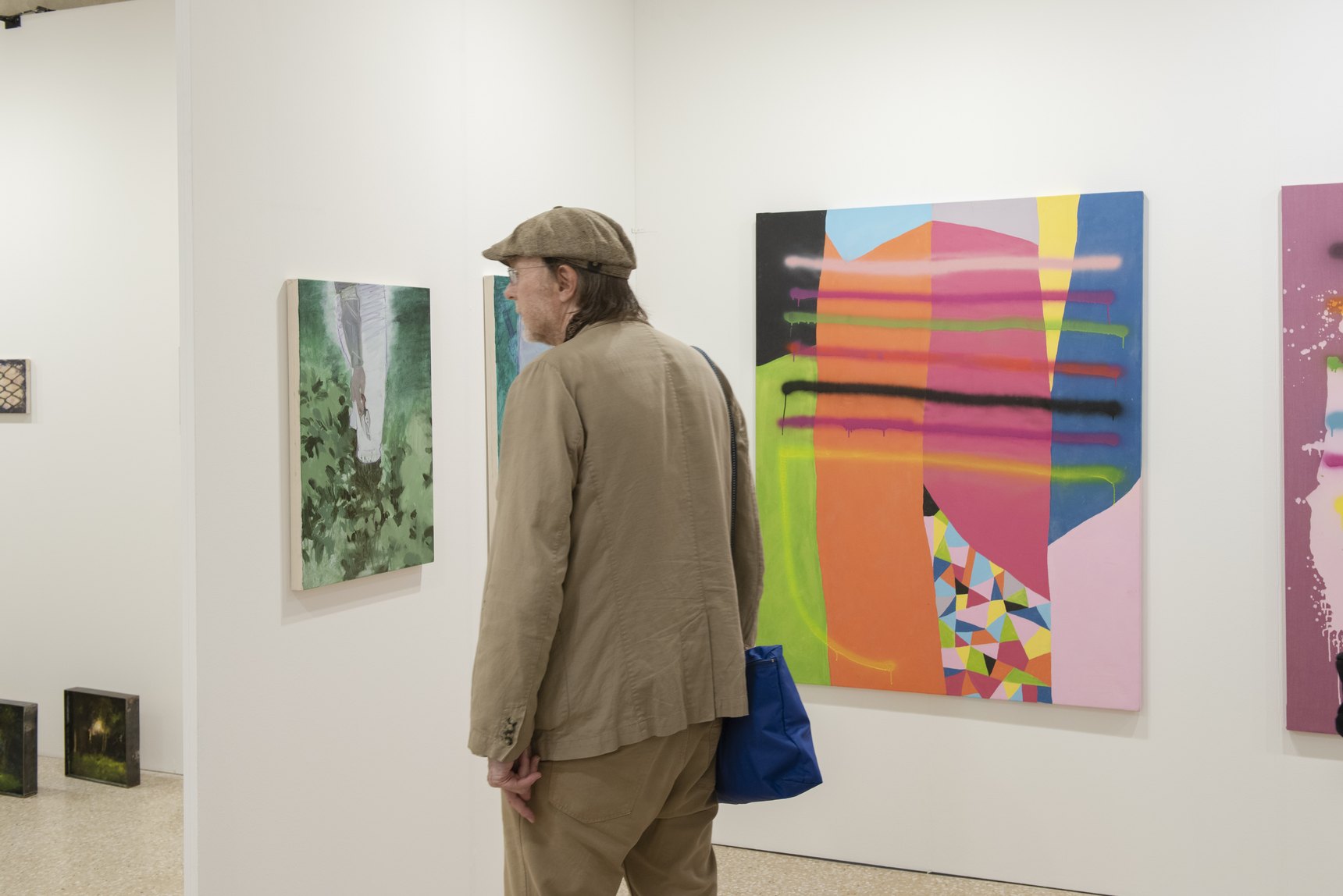
Seen this way, a fair can become a particularly effective place: it brings many different practices together in one space and lets you move quickly from one language to another, from one generation to the next, from what we already know to what we don’t know yet.
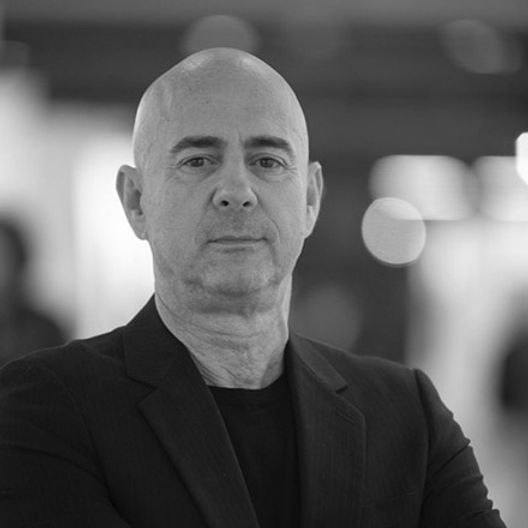
And it is precisely the possibility of discovery that Paolo Batoni, director of Lucca Art Fair, keeps coming back to. Reflecting on the future of the art fair model, Batoni stresses the need not to measure an event only by its size or its immediate sales. A fair can also be a space for relationships, positioning and discovery: a place where one encounter can lead to a lasting connection, where an artist can be discovered by a new audience and where a body of work can find new ways to circulate.
That is also why Lucca Art Fair chooses to stay small. The goal, Batoni explains, is not to build “a big fair in miniature,” but a different model, more selective and more relational, where there is time to stop in front of the works, talk with a gallerist, retrace your steps and come across something you weren’t looking for.
From Big Names to Emerging Artists
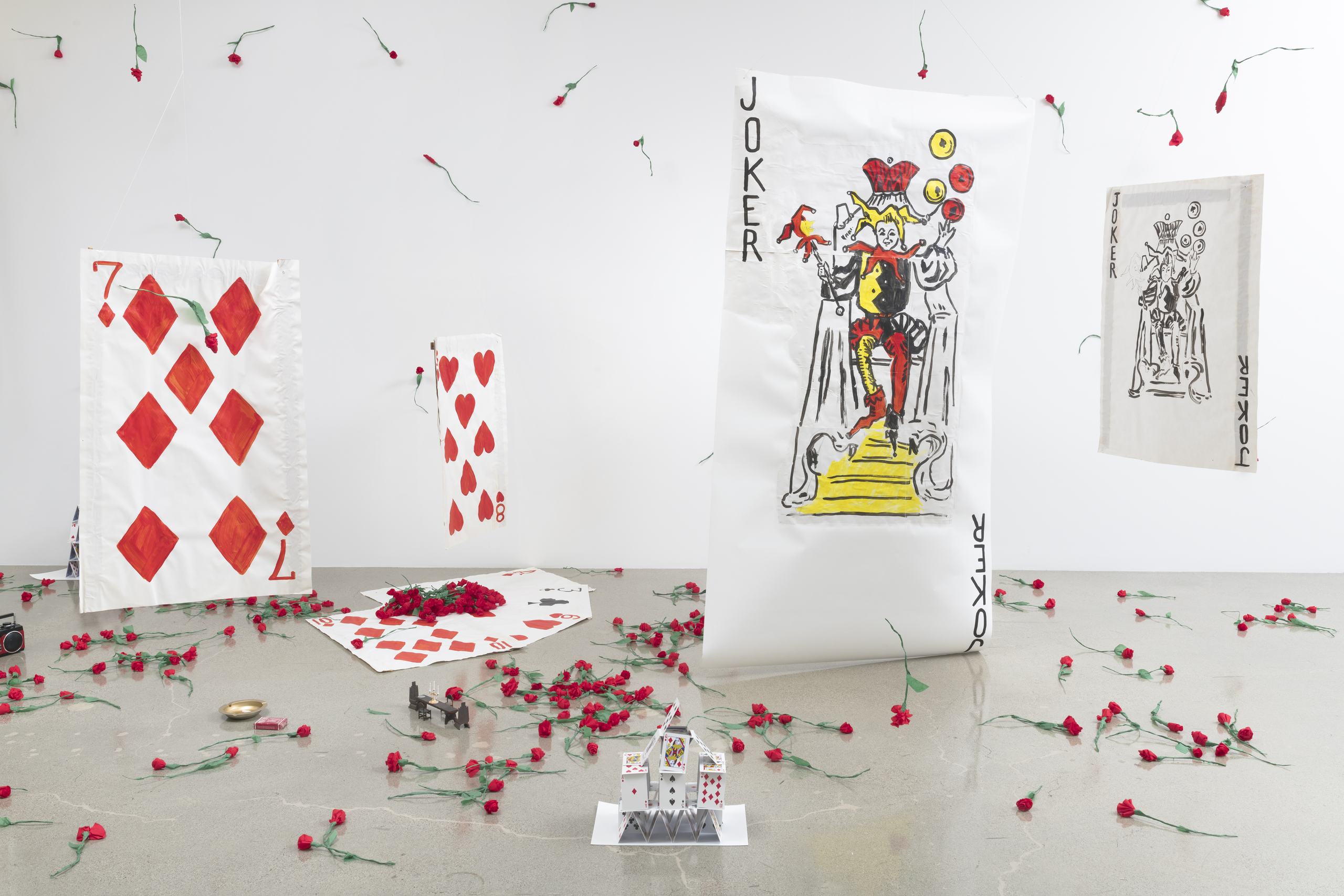
The layout of the fair makes this chance to move across eras and perspectives tangible. In Lucca you will be able to encounter artists who have already entered art history, Marc Chagall to name just one, and, along the same route, discover the work of emerging artists who are only now stepping onto the art scene. It is precisely this dialogue between what is already recognized and what is still waiting to be discovered that makes a fair so interesting: not just meeting familiar names, but having the chance to discover new artists, follow research that has only just begun and get to know paths still rarely seen on the exhibition circuit.
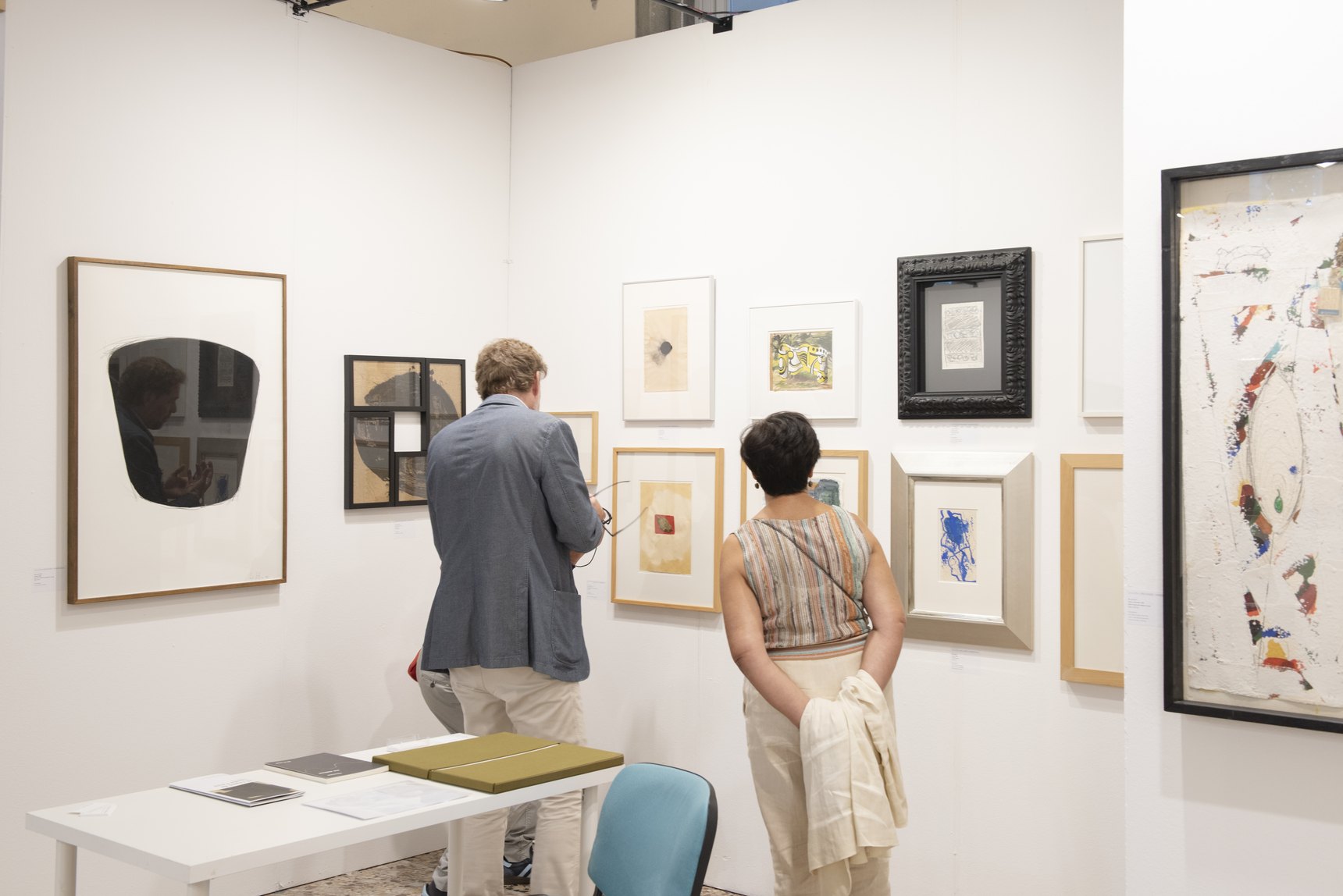
The Main Section brings together 29 galleries and puts established historical figures, mid-career and emerging artists in dialogue through painting, photography, sculpture, installation and conceptual work. Alongside the Italian galleries there are also international ones from Buenos Aires, Celrà and Belgrade.
The Art Projects section, by contrast, focuses on experimental projects, mostly solo and duo shows, while Independent brings project spaces, artist and curator collectives and hybrid organizations into the fair.
It is a mix that lets you read the fair as a kind of moving map of art, where historical figures and work still in the making sit side by side. For visitors, it means coming into contact with established artists and, at the same time, stumbling upon names that could become new discoveries.
A Fair to Wander Through, Not Just to Visit
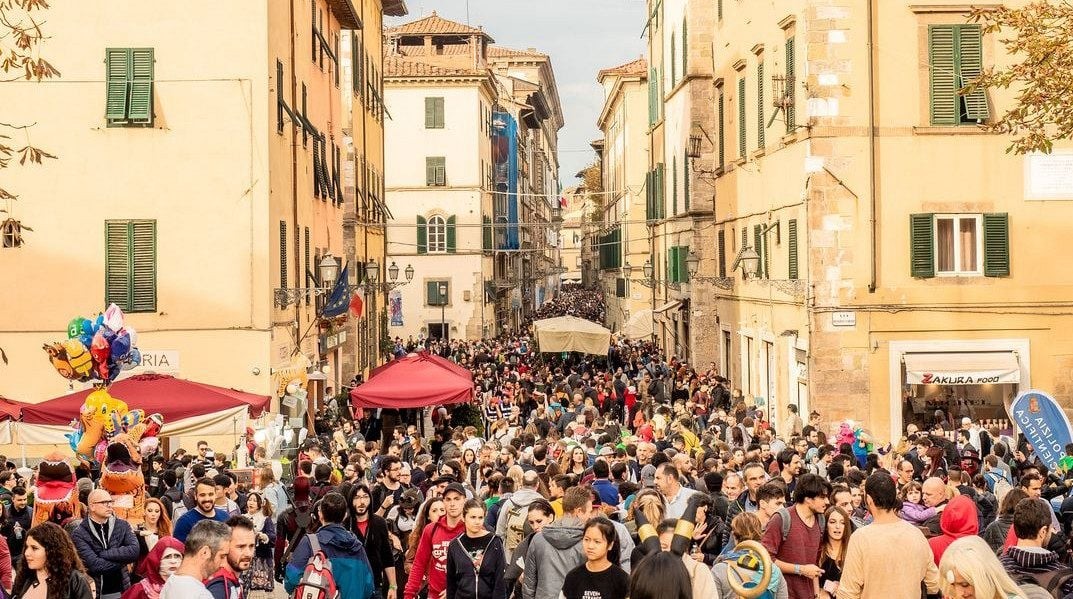
The venue plays its part in this experience too. The Real Collegio, with its halls, cloisters and passageways, is not just a backdrop but an integral part of the project. The layout of the complex makes it possible to build a less linear, more exploratory route, in which the different sections and languages gradually start talking to one another.

It is a feature Batoni considers central: the relationship with Lucca and with the Real Collegio also sets the pace of the visit. Instead of rushing from one booth to the next, the idea is to leave room to stop, talk, go back to look at a work again and even step off the route and then rejoin it.
In this sense, Let’s Get Lost is not only the title of the edition, but can become a concrete way of moving through it. You can arrive looking for something specific and end up discovering something else. You can come in to see a well-known artist and leave with the name of an emerging one saved on your phone. You can drop by out of curiosity and find yourself listening to a performance, leafing through an artist’s book or talking with a publisher.
Giuseppe Chiari: When Art Crosses Boundaries
One of the most significant events of the tenth edition will be a project that shows just how broad the fair’s idea of art can be: Giuseppe Chiari. ART IS EASY, an exhibition curated by ArmandaGoriArte and hosted in the Sala Museum.
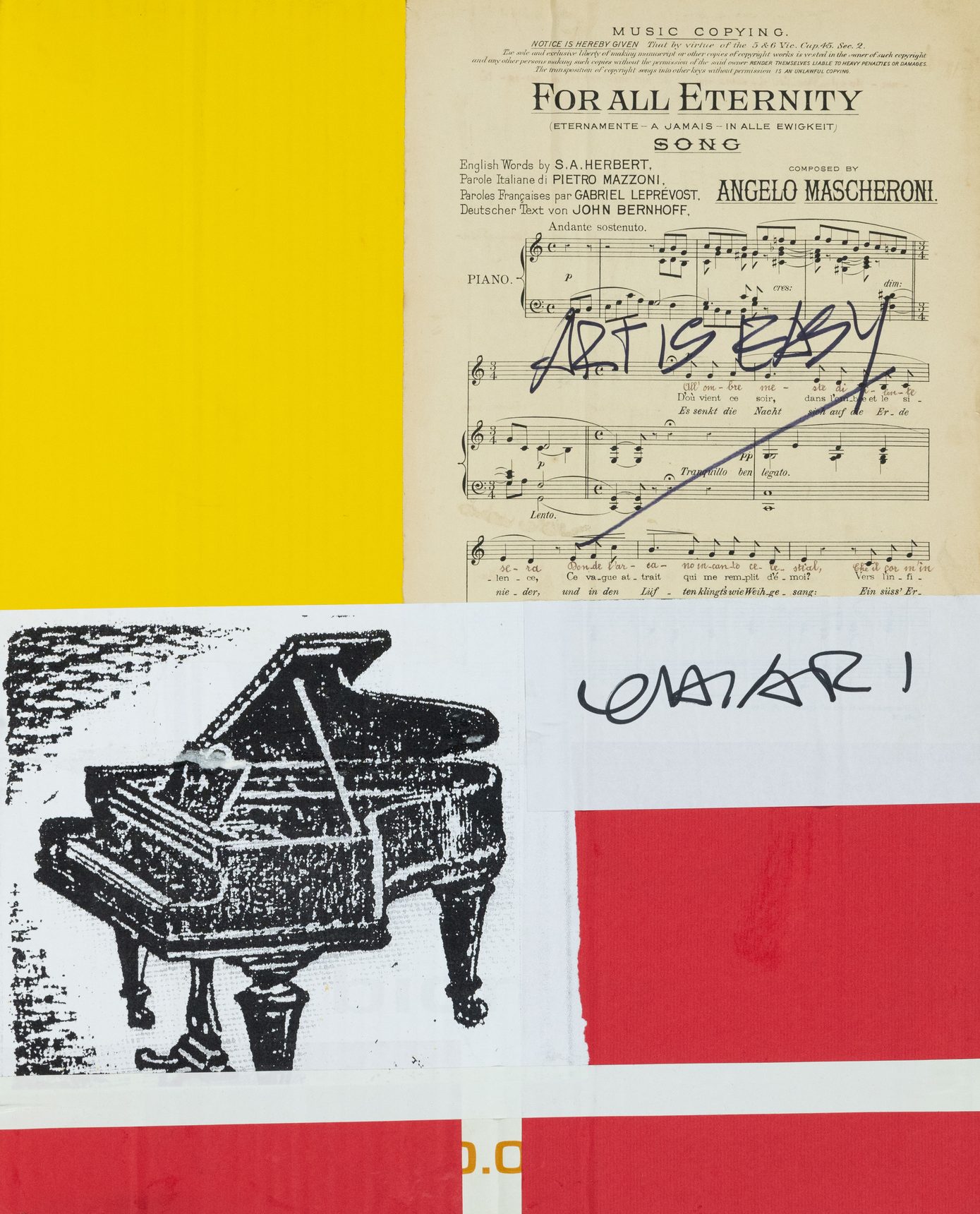
The exhibition takes on special meaning because it coincides with the centennial of Giuseppe Chiari’s birth: he was born in Florence on September 26, 1926, so the anniversary falls right in the middle of the fair.
Musician, composer, conceptual artist and a key Italian member of Fluxus, Chiari was one of the most radical and hardest-to-classify figures in Italian art and culture of the second half of the twentieth century. His work constantly challenged the boundaries between music, visual art, performance and language, turning the score into a field of visual experimentation and the musical gesture into an artistic one.
The works on view in Lucca, made between the 1960s and the 2000s, reveal exactly this transformation: staff paper, graphic interventions, photographs, collages and works on panel turn music into something to be seen as well as heard.
Chiari’s presence fits Let’s Get Lost particularly well because it questions the categories we usually rely on to classify art. Where does music end and visual art begin? Is a score still just a score once it becomes an image? Can a gesture be musical, performative and visual all at once?
These are questions that lead visitors beyond familiar definitions and invite them to build their own interpretation.
Art From Every Angle
It is precisely in this openness that the program of the tenth edition finds one of its most interesting features. Lucca Art Fair doesn’t stop at the route through the booths: around the fair it builds a program that connects visual art, music, performance, publishing and moments of discussion, offering visitors several ways into contemporary work.
In the first cloister of the Real Collegio, at the entrance to the fair, visitors will find a light sculpture by Bruno Bani, part of the project Esercitarsi allo sguardo nel chiostro del Real Collegio di Lucca (roughly, “training the eye in the cloister of the Real Collegio in Lucca”), curated by Leonardo Conti. The piece changes the way the architecture is perceived through light, suggesting new vanishing lines and inviting visitors to look at the space with different eyes.
On Friday, September 25 at 6 p.m., sound takes center stage with the performance by Dimitri Grechi Espinoza, Love Is a Losing Game, in the cloister known as Chiostro B. The saxophonist and composer’s work brings together jazz, spirituality and the acoustic qualities of spaces, turning the cloister into a place for listening.

Independent publishing also plays an important role. The Editor section, devoted to artist’s books, publications, magazines and rare editions, will be accompanied by a program of talks with artists and publishers, scheduled for Saturday, September 26 and Sunday, September 27. The talks will explore the relationship between artistic production, publishing and research, showing how a book can be not only a tool for documentation but also an independent space for experimentation.
The program also takes on the relationship between art and the business world with the series of talks Arte, Imprese e Fondazioni. Alleanze strategiche nella produzione culturale contemporanea (Art, Businesses and Foundations: Strategic Alliances in Contemporary Cultural Production), on Saturday, September 26 at 3:30 p.m. Andrea Savino and Valentina Ciarallo will discuss the relationship between art, business, collecting and patronage, exploring the possibilities for collaboration between culture, local industry and the territory.
The exhibition Giuseppe Chiari. ART IS EASY, Bruno Bani’s sculpture, Grechi Espinoza’s performance, the publishing talks and those on art and business add up to a fair that can be experienced in many different ways. Not only looking at works, but also listening, digging deeper, meeting artists and publishers, understanding the dynamics of cultural production and engaging with issues that shape the contemporary art system.
In this sense, Lucca Art Fair presents itself as a place to meet and a 360-degree gateway to art, aimed not only at those already part of the art world, but also at those who want to get closer to it, better understand how it works and discover new artists and ideas.
A Fair for Looking Beyond What We Already Know
The tenth edition of Lucca Art Fair thus arrives with a reflection that concerns both the art system and its audience. At a time when fairs keep getting bigger and more complex, Lucca chooses to bet on a smaller scale, on the quality of what is on show and on the chance to create opportunities for people to meet.
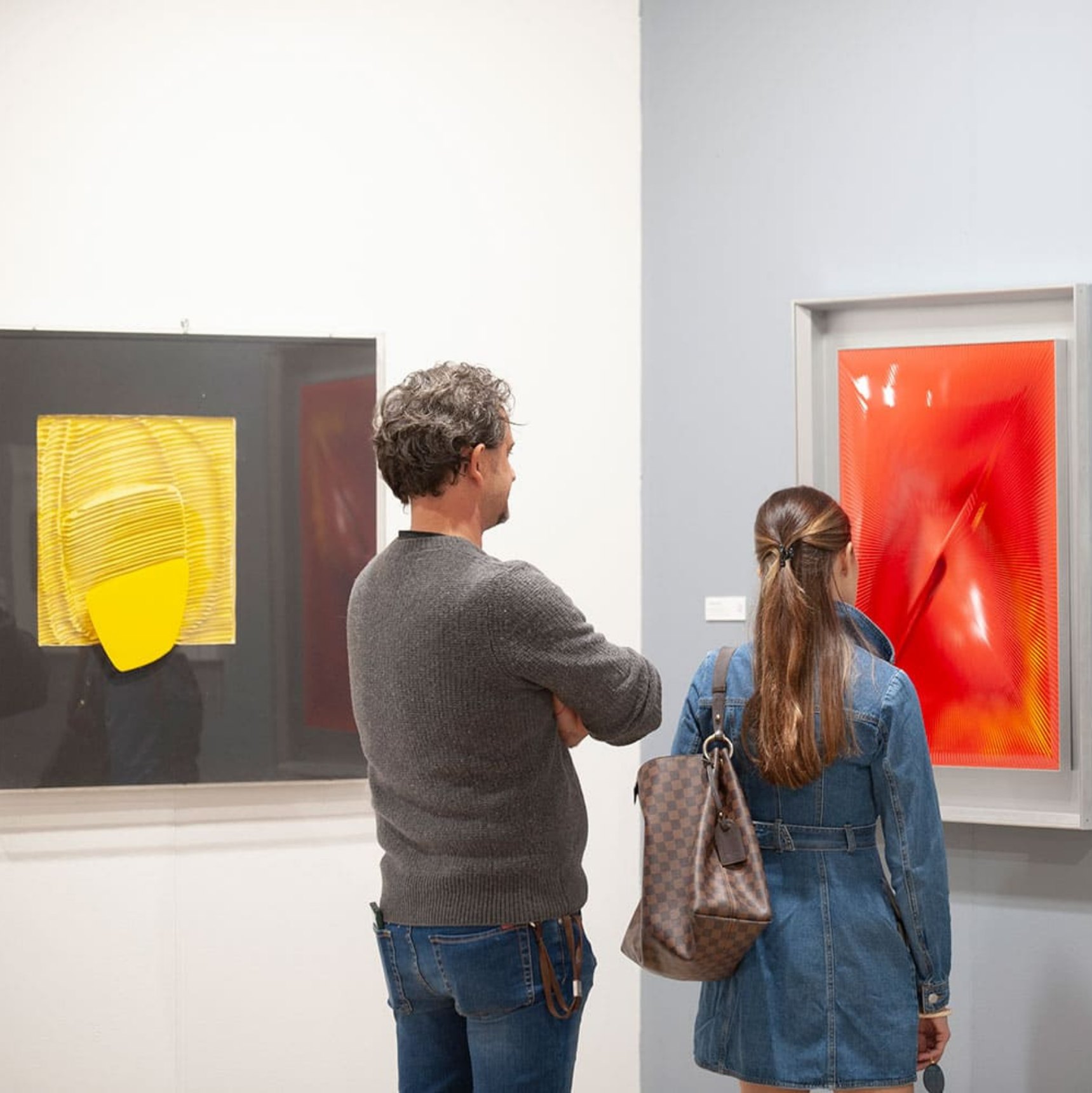
This is exactly where Paolo Batoni’s perspective begins: a fair should not be judged only by what happens during the days of the event, but also by the relationships it manages to build and the new work it brings to light. It is a vision that widens the role of the fair, seeing it not merely as a marketplace but as a platform for discovery, exchange and training the eye.
From September 25 to 27, the Real Collegio will offer the chance to meet established artists and new generations, Italian and international galleries, publishers, musicians and culture professionals. A program designed for those who already know the art world, but also for anyone who simply wants to get closer and understand what is happening on the contemporary scene.
This, in the end, is the way to read Let’s Get Lost: not an invitation to get lost for its own sake, but the chance to step off familiar paths and make room for discovery. A principle that can apply to an art fair, but also to the way we choose to look at the world around us.