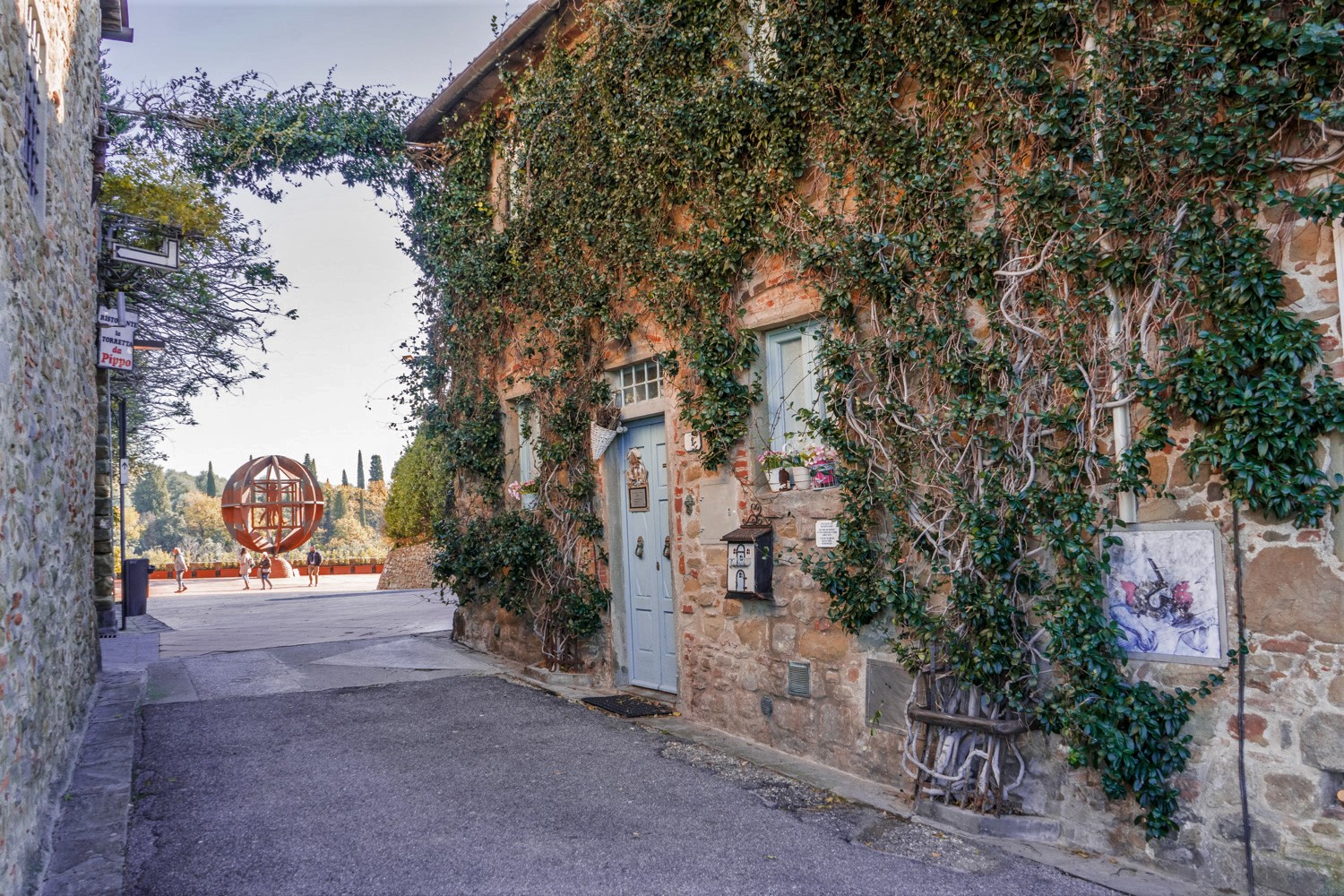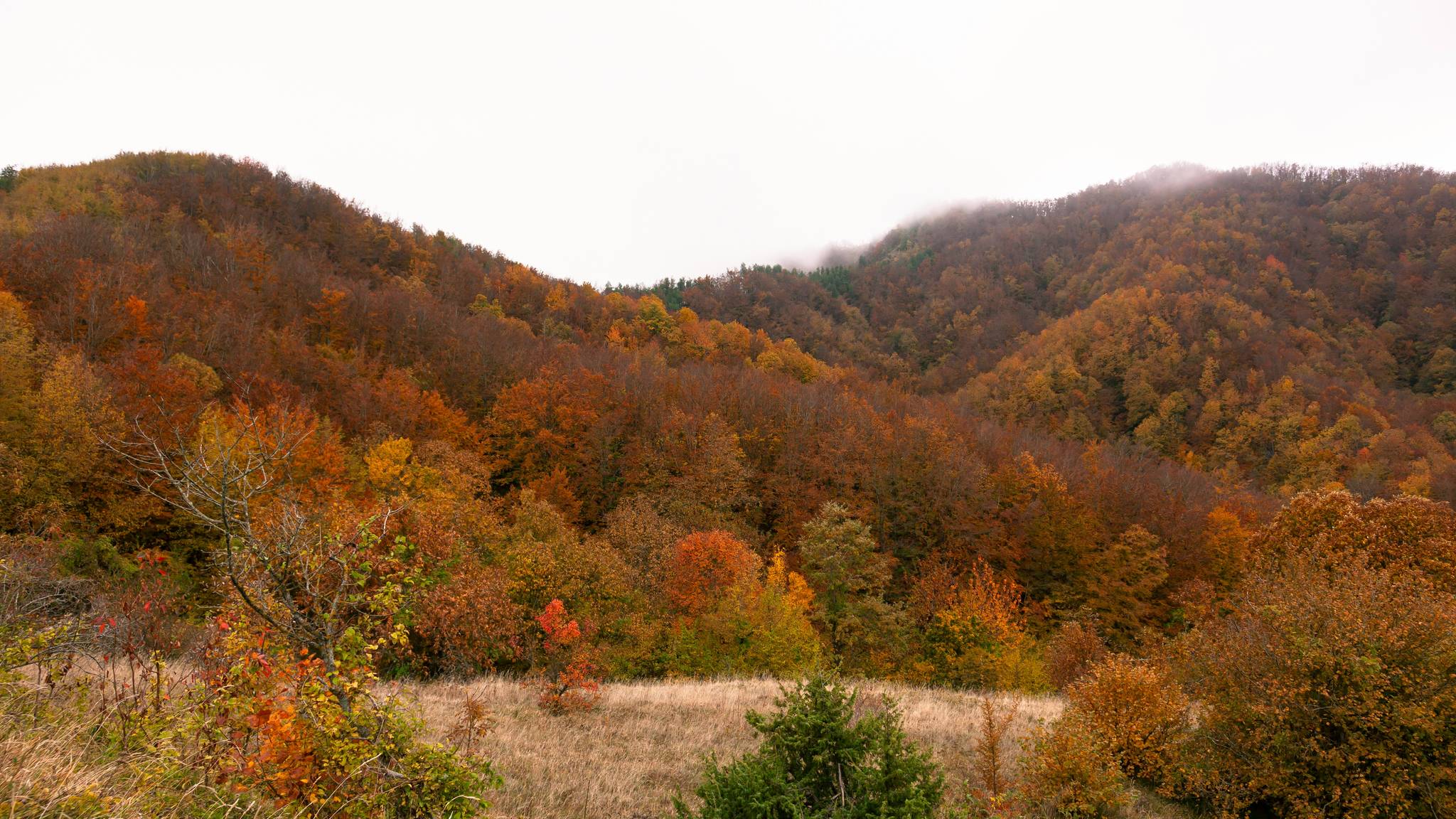
Fall Foliage in Tuscany: 10 Places to Go When Autumn Arrives
There is a Tuscany that lasts only a few weeks. It is the one in which green gives way to yellow, ocher, copper and red; the chestnut groves begin to shed their leaves and the beech forests change color almost overnight.
This is the season of fall foliage, the change in leaf color that comes with autumn: as chlorophyll fades, the other pigments in the leaves come through, and they are what give the yellow, orange and red tones. To understand better what happens to plants when autumn arrives, you can read up on the role of chlorophyll in the Treccani encyclopedia (in Italian).
In recent years, foliage has also become a good reason to explore the region out of season. And Tuscany, with the variety of its woods and landscapes, offers very different options: from the great forests of the Apennines to the wine roads, from small mountain villages to the woods that surround ancient abbeys.
The best moment depends on altitude and on how the season goes, but October and the first part of November are generally the months to watch. Here are ten places to mark on the map.
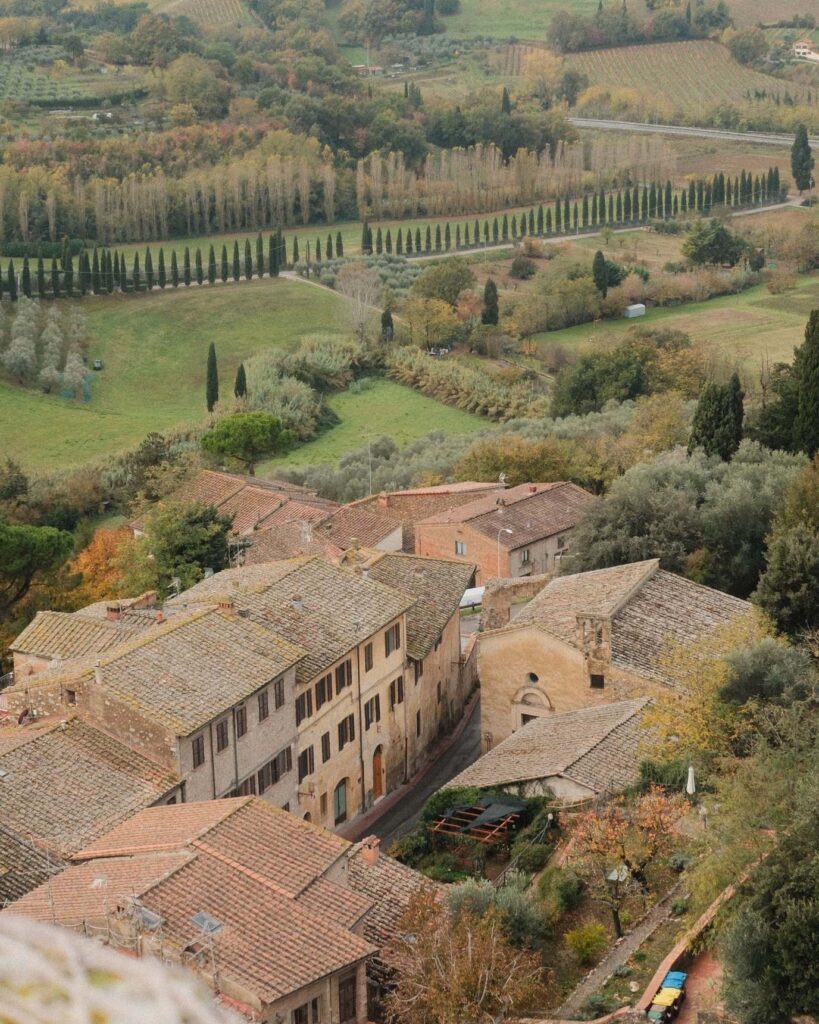
1. Foreste Casentinesi: the great classic
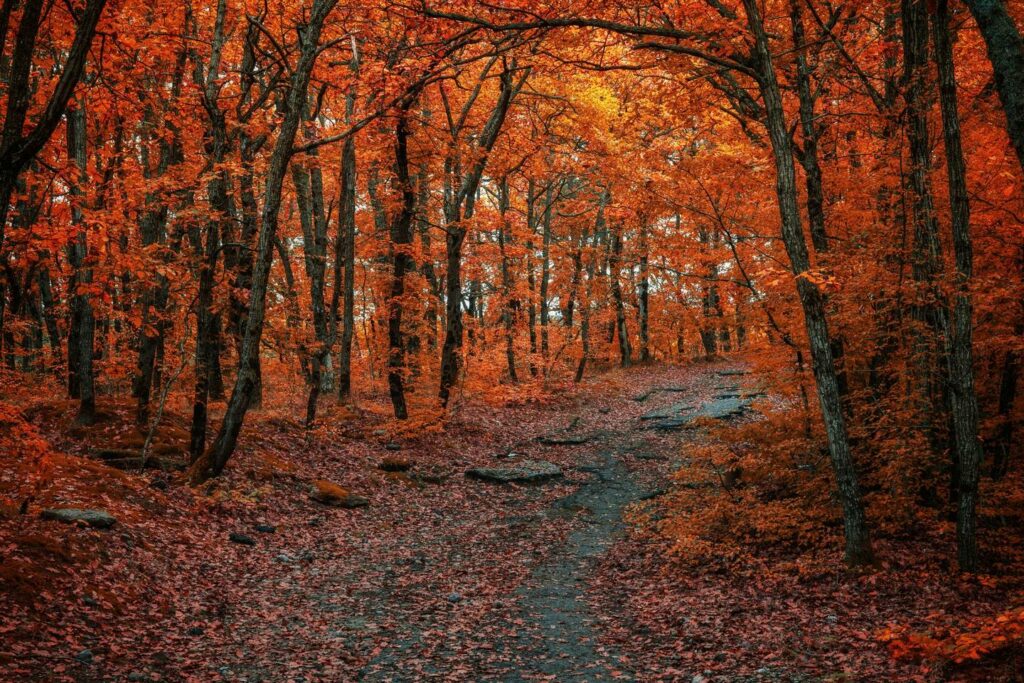
If we had to tie Tuscan foliage to a single place, it would probably be this one. The national park of the Foreste Casentinesi, Monte Falterona e Campigna protects one of the most important forest areas in the Apennines. In autumn, beeches, maples, Turkey oaks and other species turn whole mountains into a succession of yellows, oranges and reds.
To really experience it, it is worth leaving the car and walking. Among the most spectacular areas is the Foresta della Lama, which can also be seen from above, from Monte Penna. Another option is to start from Badia Prataglia and head into the park’s network of trails.
Don’t miss the Eremo di Camaldoli hermitage, Badia Prataglia and the Foresta della Lama.
2. Vallombrosa: foliage an hour from Florence
You don’t need to go far from Florence. Around the abbey of Vallombrosa stretches a monumental forest where firs, beeches, chestnuts and other species create, in autumn, a scene completely different from the summer one.
It is one of the easiest destinations for a day trip: you can visit the abbey and then continue on foot into the woods, choosing trails of different lengths. The combination of monumental trees, trails and architecture makes Vallombrosa worthwhile even for those who aren’t looking for a demanding hike.
Don’t miss a walk in the Riserva Naturale Biogenetica di Vallombrosa.
3. Monte Amiata: inside a mountain of beeches and chestnuts
The ancient volcano that dominates southern Tuscany is covered by a wide belt of woods. At the lower elevations chestnuts prevail, while climbing toward the summit you enter the beech forests. It is precisely this succession that makes autumn on Amiata so interesting: the colors shift gradually with altitude.
You can start from Abbadia San Salvatore, Arcidosso or Santa Fiora and drive up the mountain, or pick one of the trails that cross the woods. At this time of year chestnuts and mushrooms join the foliage, long a part of the area’s food culture.
Don’t miss the road and the trails that climb from Abbadia San Salvatore toward the summit.
4. Garfagnana: autumn between the Apuan Alps and the Apennines
Here the landscape changes constantly. The Garfagnana is squeezed between the Apuan Alps and the Tuscan-Emilian Apennines, and it holds on to large wooded areas, chestnut groves and small mountain villages.
In autumn it is one of the parts of Tuscany where it is worth simply driving without much of a rush, stopping in the villages and taking the odd trail. The contrast between the walls of the Apuan Alps, the woods and the small towns of the valley makes the trip worthwhile even without planning a demanding hike.
Don’t miss Isola Santa and the woods of the upper Garfagnana.
5. Abetone and the Montagna Pistoiese
When October comes, Abetone stops being associated only with snow for a few weeks. Before winter, the woods of the Montagna Pistoiese, the mountains above Pistoia, go through one of the most beautiful moments of the year.
Beeches and other broadleaf trees color the slopes of the Apennines, and the many trails let you choose between short walks and longer hikes. It is an especially good destination for anyone who wants to combine foliage and mountains without straying too far from central Tuscany.
Don’t miss the woods around Abetone and the Campolino area.
6. Mugello: chestnut groves, passes and mountain roads
The Mugello in autumn is very different from the one you drive through in summer. As you climb toward the Apennines, chestnuts and woods take over and the landscape changes quickly.
One of the most interesting areas is around Marradi, historically tied to growing the marrone, the prized local chestnut, and surrounded by chestnut groves. But the country toward Palazzuolo sul Senio and the Apennine passes is also worth a detour. Autumn here also coincides with chestnut season, one of the most deeply rooted parts of local culture.
Don’t miss Marradi and the roads that climb toward the Apennines.
7. Pratomagno: watching autumn from above
The long ridge that separates the Casentino from the Valdarno is one of the finest viewpoints in central Tuscany. But before reaching the grasslands of the highest part, you have to cross miles of woods.
The Pratomagno lets you alternate between immersion in the foliage and open views over the valleys. On the Casentino side, small villages like Raggiolo and the other hamlets on the slopes of the massif make excellent bases for autumn walks.
Don’t miss Raggiolo and the trails that climb toward the ridge.
8. Lunigiana: castles wrapped in autumn colors
At the far northern tip of Tuscany, the Lunigiana offers a different kind of foliage, made of woods, mountains and small villages watched over by castles and country churches.
The land rises quickly from the area around Pontremoli and Fivizzano toward the Apennines. One of the most interesting spots is the Passo del Lagastrello, a mountain pass on the border with Emilia-Romagna, surrounded by woods that change their look completely in autumn.
Don’t miss the Passo del Lagastrello and the upper Lunigiana.
9. Chianti: when the vineyards change color
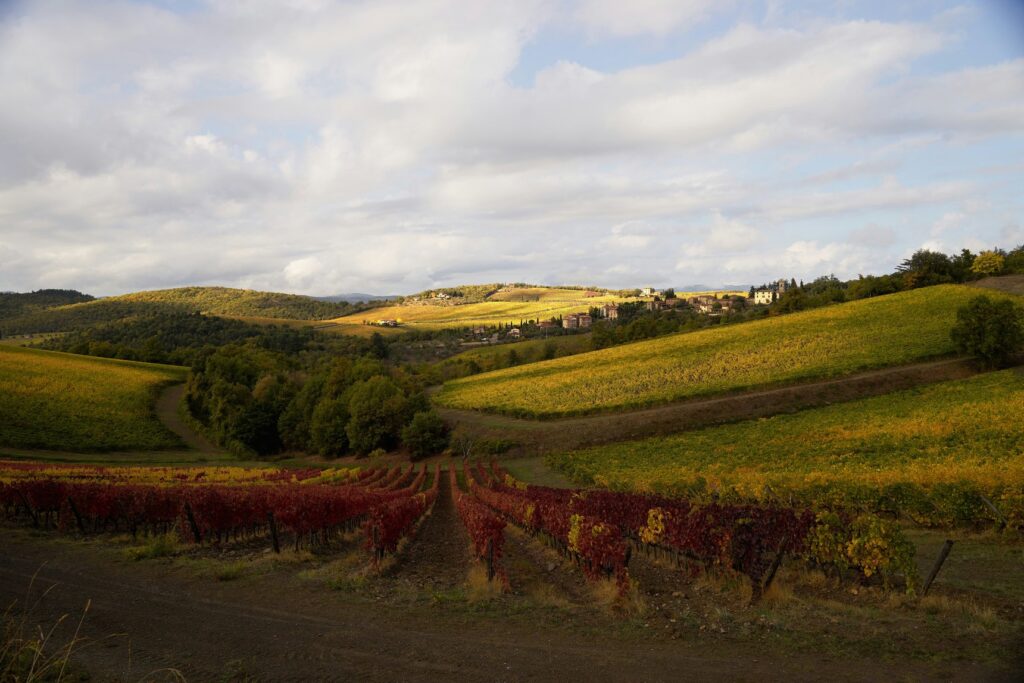
Foliage doesn’t necessarily mean forest. In the Chianti, the show comes from the vineyards.
After the grape harvest, the vine leaves turn from green to yellow, copper and red, drawing geometries of color across the hills. It is a different foliage from that of the Apennines, but perhaps even more recognizably Tuscan. The back roads between Greve, Panzano, Castellina and Radda are perfect for taking it in slowly, by car or by bike.
Don’t miss the road between Panzano and Radda in Chianti.
10. La Verna: the forest around the sanctuary
Back to the Casentino, but for a place that deserves an entry of its own. The Santuario della Verna stands more than 1,000 meters (3,280 feet) up and is surrounded by a monumental forest of beeches and firs.
In autumn, the contrast between the stone of the sanctuary, the rocks of the mountain and the colors of the woods makes this corner of the Casentino especially evocative. La Verna can also be one stop on a longer itinerary through the villages and forests of the valley.
Don’t miss the trails through the monumental forest around the sanctuary.
When to see fall foliage in Tuscany?
There is no exact date. Temperature, rain, exposure and above all altitude can bring the change of color forward or push it back.
As a rule of thumb, in the Apennine areas and at higher elevations it is best to start looking from the first half of October, while in lower areas, in the chestnut groves and in the vineyards, the show can carry on toward the end of the month and into early November.
So the advice is not to wait for the perfect weekend: within a few days the same forest can look completely different.