the relationship between Florence and “Calcio”
This summer, Fiorentina celebrates its centenary. But despite the Viola’s disappointing last season, football is alive and well in Florence, starting with the centuries-old ritual of Calcio Storico.
Being a fan of Football in Florence is not easy. The Serie A team Fiorentina are fighting relegation this year, and will be trophyless for the 25th straight season. The Italian national team failed to qualify also for its third straight World Cup, becoming the first former World Champion to do so. Renovations for the Stadio Artemio Franchi, the home of Fiorentina, have already been pushed back and look to be a dream rather than a reality. However, despite all of this, Football has never been more alive in the Cradle of the Renaissance.
There are many things which make life in Florence unique. Renaissance art, the world famous Duomo, the Arno river, and the surrounding mountains are just a few of the things which make Florence stand out. Another aspect which might be just as distinctive is the relationship between the city and “Calcio”.
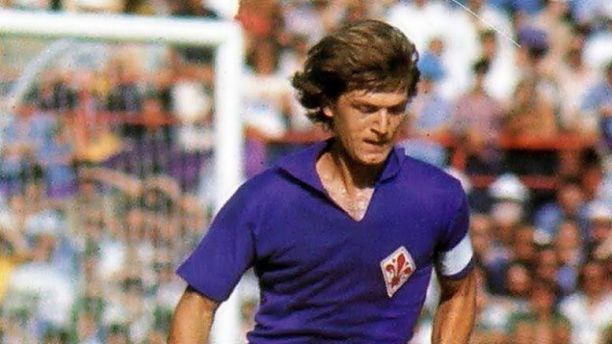
Football is a sport which is played worldwide, but there aren’t many places where a game is tied so strongly into the culture of the city. Fiorentina stands out as the main symbol for Fiorentines, representing history and a flair for life which is unique to Florence. La Viola will celebrate its 100th year this August, a moment which is a symbol of pride for the city. While the team hasn’t won a trophy since the 2001 Coppa Italia, the support has never changed. That fandom has become especially important now for Fiorentines, including shop owner Storni Simona.
While being a fan of Fiorentina, Simona helps run “Sisters Bar”, a cafe located in Florence’s Santa Croce area. She has been a fan her entire life, and represents her team with many different photos of the Artemio Franchi which she has in her cafe. For her, the support of Fiorentina is eternal, especially in a time such as now.

Resilience & Tradition
“We know it is not a good period now because of the team and the stadium. However, that means it is more important to be a fan now than before”.
Streets in Florence are filled with just as my references to Fiorentina as they are with references to the Renaissance. “Forza Viola!” is not just a chant, but also a way of greeting a friend or a stranger. That love, fueled by an intense pride for the region of Tuscany, bonds people together for life. Guglielmo Perfetti, who has a PhD in Italian Studies, believes that the connection and pride between Florentines and their team is different from others in Italy.
“Fiorentina is a meeting point for people of all classes. Fiorentines think that Florence is the best you can get”.
This pride is felt throughout the city in every street, cafe, and local enoteca. Like many other places in Italy, Florence can often feel like the entire world to the people living inside the city. A common phrase heard in Florence is, “Firenze ha sempre ragione”, illustrating the centrist idea felt here. This sentiment is echoed by Christian Tarchi, who is an expert in Psychology with a PhD from the University of Florence. He told me:
“The regional pride is felt in everything, just like our recipes. Football is a way to remind Florentines of what Florence is about”.
During older periods such as the Renaissance, citizens might have used this intense regionality to start wars. Nowadays, the outlet for that is at the Stadio Artemio Franchi, the home of Football in Florence since 1931. While inside the stadium violence is not codoned, there is a time unique to Florence where Football and violence are mixed into one. To understand why Florentines stay so loyal to a struggling team like Fiorentina, it is helpful to look at what happens every June in the Piazza Santa Croce.

While the rest of the world plays the “beautiful game”, Florence reverts to Calcio Storico, a brutal, sandy collision of soccer, rugby, and bare-knuckle boxing that dates back to the 16th century. The world famous square is covered in dirt, and the four historic neighborhoods—the Rossi, Bianchi, Verdi, and Azzurri—send their toughest men to settle old scores.
These players, known as “calcianti”, don’t wear high-tech jerseys; they instead wear traditional 16th-century pants and fight shirtless. The goal is to get the ball into a narrow slit at the end of the field, but to get there, you have to survive a literal war zone. Headbutts, wrestling, and punches are all part of the strategy. This isn’t just a spectacle for tourists. It’s a tribute to the year 1530, when the city was under siege by the Emperor’s army.
Instead of hiding, the Florentines played a match in Santa Croce just to show they weren’t afraid. That same “us against the world” mentality is shown at the Stadio Artemio Franchi today. In Calcio Storico, there are no trophies or massive salaries. The winning team used to just get a Chianina cow and the bragging rights to the city. It’s raw, it’s violent, and it’s deeply personal.
It reminds every person in the stands that being a fan in Florence isn’t about cheering for a winner—it’s about standing your ground. When the dust settles in the Piazza, you realize that for a Florentine, football isn’t just a sport; it’s a bloodline.

Calcio Storico represents the provincial pride ever present in Florence. As an American, I have been fascinated by all of the differences between Football culture in Florence, and the culture of sports in America. Sports such as Football and Basketball dominate the financial world.
Of the top 50 richest sports teams in the world, the United States is home to 45. The experience of supporting a team and going to a game can oftentimes feel like a circus more than it does an experience. While financial success has allowed for the growth of American sports worldwide, it has meant that money is now the name of the game. This process of financialization has taken over America, but it has not taken over Florence. Right now is a turning point for soccer in the heart of Tuscany.
The 193 million Euro renovation of the Stadio Artemio Franchi looms over the city, but it hasn’t taken away the heart of Florence. No matter what happens now or in the future, fans of the city filled with culture and food will always have space in their lives for Football. Whether it be through Calcio Storico, Fiorentina, or even small games in Piazza Tasso, Football lives on in Florence.
Articolo di Andrew Forster, Syracuse University intership.
Photo credit: DepositPhotos.com