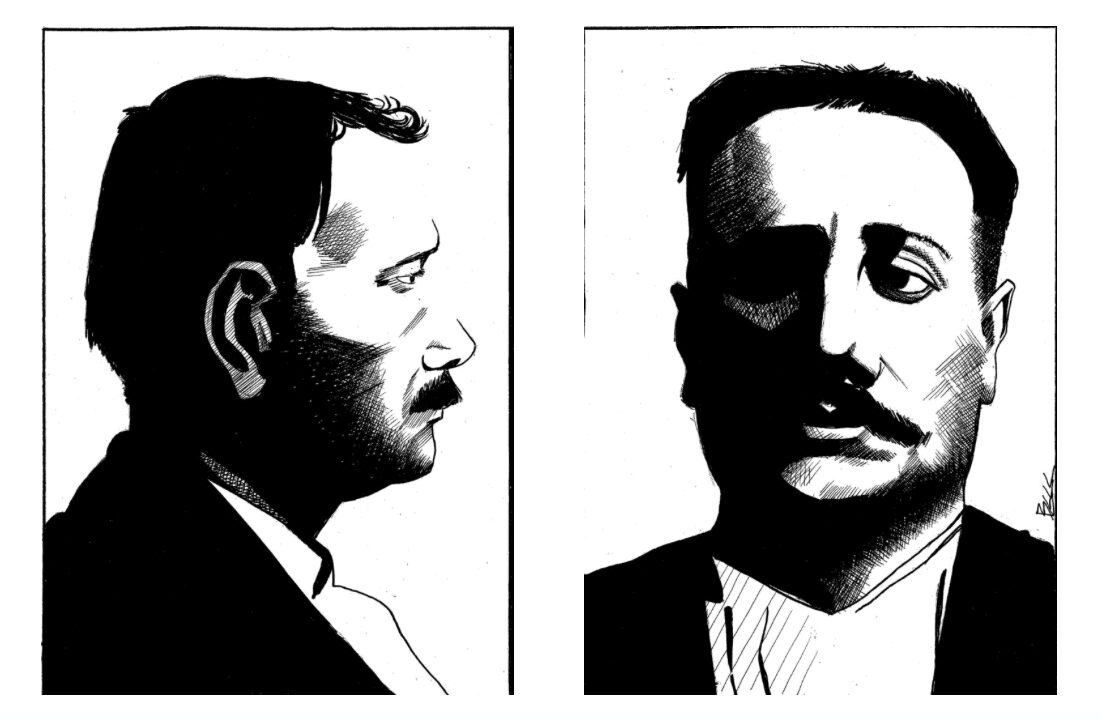
Oreste Ristori: The Legendary Tuscan Anarchist
Why remember, and why now, an intellectual who left Tuscany to live in Argentina, Uruguay, and Brazil and who — between prisons and persecutions — took part in the Spanish Civil War, only to end up shot by the Fascists?
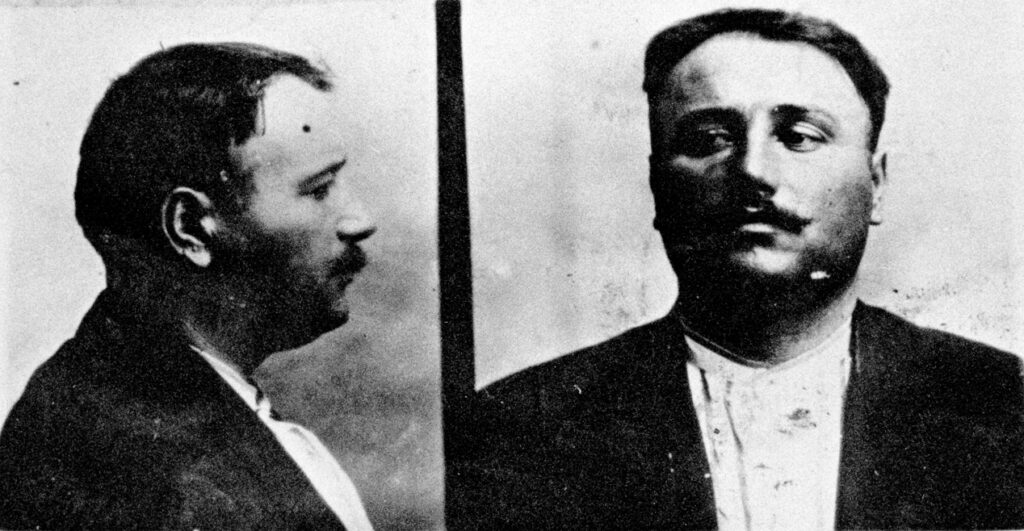
The libertarian journalist Oreste Ristori was born in 1874 in San Miniato, in the hamlet of Poggio al Pino. As a young man he frequented the anarchist circle of Empoli — his peasant parents had moved there for work and argued politics in the local taverns — and his political activity had him arrested many times as a “subversive.” The first arrest came when he was just eighteen, in 1892. After the 1894 uprisings in the Lunigiana, the Crispi government launched a broad crackdown on the anarchists, and Ristori, along with other comrades, was arrested again in 1895. Imprisoned at Porto Ercole, he managed to escape during a revolt but was recaptured, tried, and this time shipped off to Pantelleria.
Back in Empoli once his sentence was served, he began spreading the work of Errico Malatesta and helped distribute the newspaper I Tempi Nuovi (“The New Times”). By 1898, with the anarchist and workers’ movement on the rise, he knew the authorities had their eyes on him again for his political propaganda, and so he fled in secret to Marseille, where a large Italian community was already living.
The gendarmerie arrested him at Nîmes and sent him back to Tuscany. In 1899 he began working with the socialist paper l’Avanti, and the following year he organized a demonstration in memory of the victims of the Paris Commune. Well known to the authorities — the police archives held a dossier on him that highlighted his gifts as a propagandist journalist — he was sentenced to forced residence at Favignana. In 1901 he was released once more and sent back to Empoli, but the hostility surrounding him hardened his resolve to move to South America.
In 1902 he decided to emigrate to Argentina. His standing as an orator earned him an invitation to speak at the Centro Studi Sociali de la Boca in Buenos Aires, and he joined the editorial staff of Avvenire (“The Future”), the mouthpiece of Argentina’s anarcho-communist groups. Watched by the authorities here too, he was arrested for his subversive ideas after taking part in a congress of the Argentine Workers’ Federation. During his deportation, however, he managed to flee, escaping police gunfire by throwing himself into the sea, where boatmen rescued him and carried him to safety.
Oreste Ristori’s name began to be celebrated across every anarchist circle in Latin America, even as he chose to take refuge in Montevideo.
In the Uruguayan capital he met the great love of his life, Mercedes Gomes, with whom he would later found the successful magazine El Burro (“The Donkey”) in Buenos Aires in 1917. In 1904, invited to São Paulo by his Sienese friend Toni Boni, he decided to settle in Brazil with Mercedes. There he gave lectures and founded the newspaper La Battaglia (“The Battle”), which soon became the most important libertarian periodical in Latin America. By the early twentieth century, Ristori was the foremost Italian-language anarchist propagandist in Brazil. In those years Latin America was a place where one could work and build transnational networks within the radical labor movement in relative peace.
His firsthand knowledge of the harsh working conditions endured by many Italian emigrants in South America — it is estimated that at least 14 million people left Italy between 1871 and 1914 — led him to write the essay Contro l’emigrazione (“Against Emigration”), which earned him the hostility of the Brazilian authorities, who no longer welcomed his presence in the state of São Paulo. As Europe was convulsed by the Great War, Ristori returned once again to Buenos Aires, where he lived as a journalist and editor of the aforementioned El Burro. Then, in 1919, the social situation in Argentina grew tense. That January a workers’ revolt broke out and the repression was brutal: the most violent popular protest the country had ever seen left a devastating toll of roughly a thousand dead and as many arrests.
Ristori was on the “blacklist” of dangerous individuals and was expelled, forced aboard a ship bound for Genoa. But off the coast of Buenos Aires he threw himself into the water and swam all the way to the Uruguayan shore. Having welcomed the Soviet experiment of the October Revolution of 1917, in 1921 he helped organize, in Montevideo, the Third International, which aimed to found a communist party where the social and political ground seemed most fertile: Brazil. It was in that country, that very year, that the Communist Manifesto was published in Rio de Janeiro.
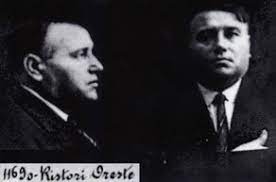
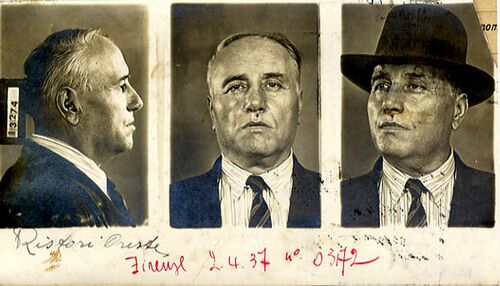
Leading figures in the battles of the labor movement, Oreste and Mercedes were forced by police persecution to move constantly among Argentina, Uruguay, and Brazil — where they struck up a friendship with a young man destined to become a giant of Latin American literature: Jorge Amado.
The Brazilian Communist Party was indeed founded in 1922, but the mood in Brazil had shifted, and by 1933 a political movement had emerged there too, one that openly modeled itself on Mussolini’s Fascism. In 1935 a failed communist uprising was seized upon as a pretext by the government of President Vargas to arrest foreigners engaged in any political activity. And so, in 1936, because of his part in the popular agitations, Ristori decided to return to Europe alone. After a brief stop in Italy — where the air was foul, the Fascist regime having been in power for more than ten years — he chose to join the anarchist brigades in Spain and take his place in the anti-Franco resistance. When the civil war ended in the defeat of the Popular Front, he took refuge in Paris to try to reunite with Mercedes. But in 1940 the French authorities arrested him as an illegal alien and repatriated him yet again, this time compelled by the Fascist authorities to reside in Empoli.
Ristori kept quiet for a while, working as a typographer, but on 25 July 1943 he was among the first to organize a demonstration in Empoli to celebrate the fall of Mussolini. Arrested once more, he was sent to Florence and the Le Murate prison. On 2 December the Fascists of the Banda Carità shot him at the firing range in the Parco delle Cascine, together with three anti-Fascist comrades, in reprisal for a partisan action. He is said to have died singing the Internationale. He is buried in the Capuchin cemetery of Empoli, where the Empoli Anarchist Federation still tends his grave and keeps his memory alive, spreading his extraordinary story.
Oreste Ristori, like Garibaldi, was a kind of “hero of two worlds,” a convinced internationalist and one of the first Italian thinkers of his era to grasp the importance of transnational networks of ideas. Those ideas, sharpened by the debates of societies across the ocean, were then meant to return to Europe to defeat the Fascist regimes, the despotisms, and the injustices.
Today, Empoli has a square named in his honor, and a number of local associations have funded the building of a monument.
Illustrations: © Alessandro Beccari / BECC